







To work out how to retrieve dashcam footage, first determine whether the recording is still accessible or already missing. An accessible clip should be saved or exported using your model’s controls. A deleted clip calls for stopping further recording and protecting the card. Do this only after parking safely. The goal is not merely to find a thumbnail, but to preserve the complete event before and after the moment that matters.
how to retrieve dashcam footage: safe diagnosis
Dashcams commonly divide a journey into separate clips. Their save controls, protected folders, apps, and shutdown behavior vary. Do not assume that switching off immediately is always the safest way to preserve an unsaved recording. For example, Garmin’s recording and loop-overwrite documentation describes model-specific settings that can remove unsaved video after a short period or on shutdown.
If the incident is still visible
Use the documented save or export control for that camera before taking actions that could discard the clip. Include surrounding footage when the interface allows it. Check whether a front camera and rear camera produce separate files. A protected label should not replace a verified copy elsewhere; retention settings and storage behavior depend on the model.
If the recording has already disappeared
Stop further recording and follow the camera’s safe shutdown and card-removal procedure. Do not keep driving with the same card merely to see whether the clip returns. New footage can overwrite deleted data. Avoid formatting prompts, card repair, and test recordings until needed files are copied or recovered. A physically damaged or repeatedly disconnecting card needs specialist assessment.
Locate the event by a time window, not one filename
Write down the real-world time, approximate journey segment, and direction of travel. Compare the camera clock with a known time if it is still safely available. An incorrect time zone or clock can move the expected clip away from the obvious filename. Search a wider interval before concluding that the recording was deleted. Keep your estimated offset separate from the original file information.
Check channels and recording categories
Look through the folders or categories actually shown by your model. Normal recordings, event recordings, parking footage, and separate camera channels may appear in different places. Their names are not universal. Search the surrounding clips in each relevant location. A front-facing file cannot establish whether a rear-facing recording also exists, and a phone app may initially show only one selected channel.
An event can cross a clip boundary. The last seconds of one file may explain what happens in the next. Preserve both neighbors even when only the middle clip has an obvious incident thumbnail. For a longer sequence, make a simple list of files and start times rather than relying on memory. This helps expose gaps before the card is returned to use.
A short event checklist
- Approximate real-world time and any camera-clock difference.
- The clip containing the incident, plus earlier and later clips.
- All available front, rear, or interior channels relevant to the event.
- Original filenames, folder locations, and any export choices.
- A separate healthy destination with enough free space for the complete sequence.
Export originals and prove the transfer finished
Use the supported camera app, a documented connection method, or a reliable card reader. The correct route depends on the model. Copy rather than move files from the card, so a failed transfer does not also remove the source. Where the app offers both an original download and a shareable edit, retain the original as well as any edited version.
Do not confuse a phone preview with a saved video
A clip visible inside an app may not yet exist as a complete local file. Check the exported file in its destination and play it without relying on the camera connection. Messaging services and social platforms can create reduced or altered copies. Those copies may be convenient for communication, but they should not be your only preserved recording.
On a computer, keep the copied folder structure when practical. Record where each channel came from and avoid replacing identical filenames from separate cameras. If exported files seem hard to locate, the methods for finding video files on a computer address the destination search. Searching the PC is different from rescanning a card whose files are already present.
Verify the whole interval
Play the opening, the incident, and the end, then check the surrounding clips. Confirm useful audio if the camera recorded it. Look for missing sections, abrupt endings, or the wrong channel. A file that displays a thumbnail but stops halfway is not a verified copy. Compare with another stable original copy before deciding that the recording itself is damaged.
An existing video that will not play needs a separate diagnosis. The dashcam video playback troubleshooting article covers that branch. Keep the untouched recording and work on duplicates. Retrieval does not automatically repair a broken container, missing segment, or unsupported playback format.
When deleted local clips need a recovery search
Check existing phone downloads, computer copies, and any configured backup before scanning the card. A clip absent from the camera may already have been exported. Cloud-only content must be investigated through its service; scanning a local card cannot reveal a file that was never stored there. Once deletion is the likely explanation, leave the source unused and assess its stability.
Drecov’s role in a missing dashcam sequence
PandaOffice Drecov is Windows data recovery software for memory cards, USB storage, HDDs, SSDs, and other supported local sources. Its read-only recovery mode, Quick Scan, Deep Scan, filtering, and supported previews help locate missing video files. Lost Partition Recovery can address a lost source partition; it does not repair the camera or reconstruct its partition table.
⚠ Warning: Install it on a drive different from the one where your data was lost to prevent overwriting.
Here the useful task is retrieving deleted local candidates from a stable card. Drecov cannot guarantee footage after loop recording has fully overwritten it. It does not fix physical damage or certify a recording’s legal status. Prepare a different healthy drive for output and do not install recovery software on the source partition. Stop repeated scanning when the card becomes unreliable; consider professional imaging or recovery instead.
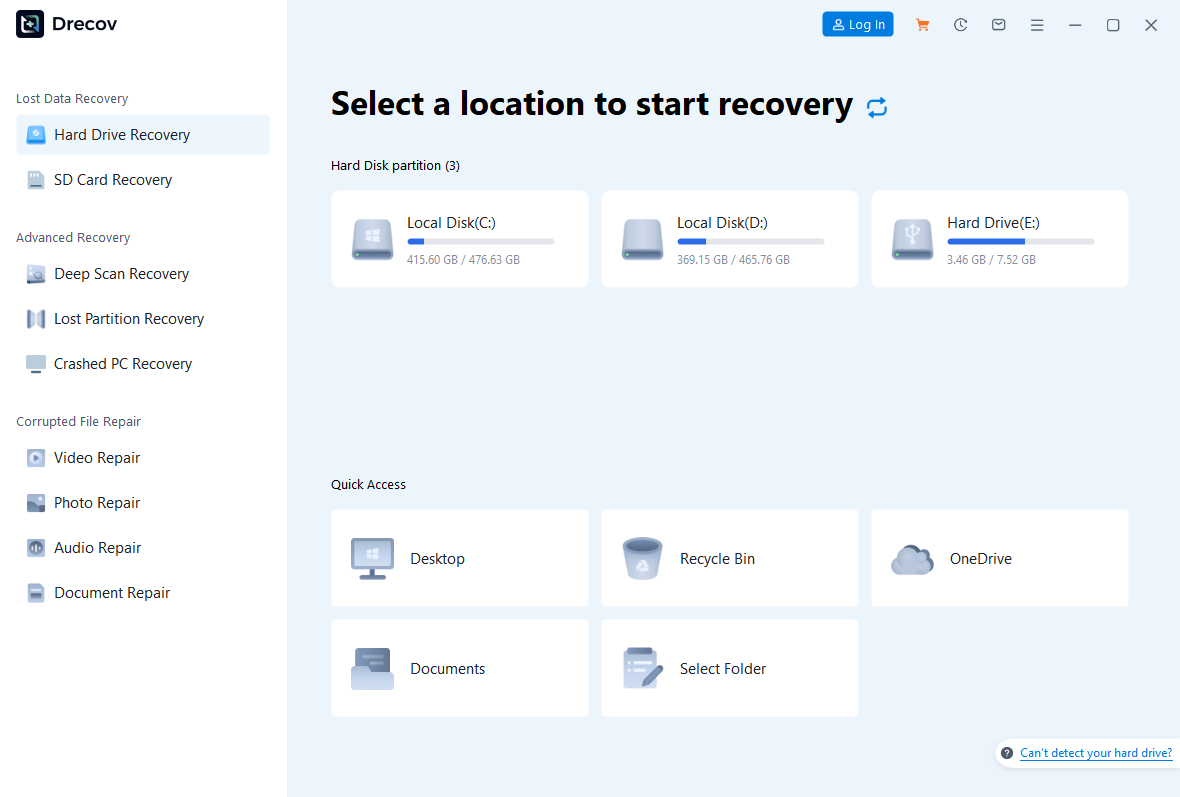
Step 1: Open Drecov and select the camera card
Connect the stable card through a suitable reader, open Drecov, and select its original storage location. Confirm capacity and device identity. A similarly named computer folder is not the same source. If the footage had already been copied and was later deleted from the PC, select that original PC location instead.
Step 2: Examine Quick Scan for the event sequence
It helps diagnose how to retrieve dashcam footage without changing the source data. Run Quick Scan and inspect recognizable recording folders or filenames. Compare the results with your event checklist. Search beyond the presumed minute, allowing for the camera-clock difference. Keep neighboring clips and camera channels in view rather than selecting the first promising video and ending the search.
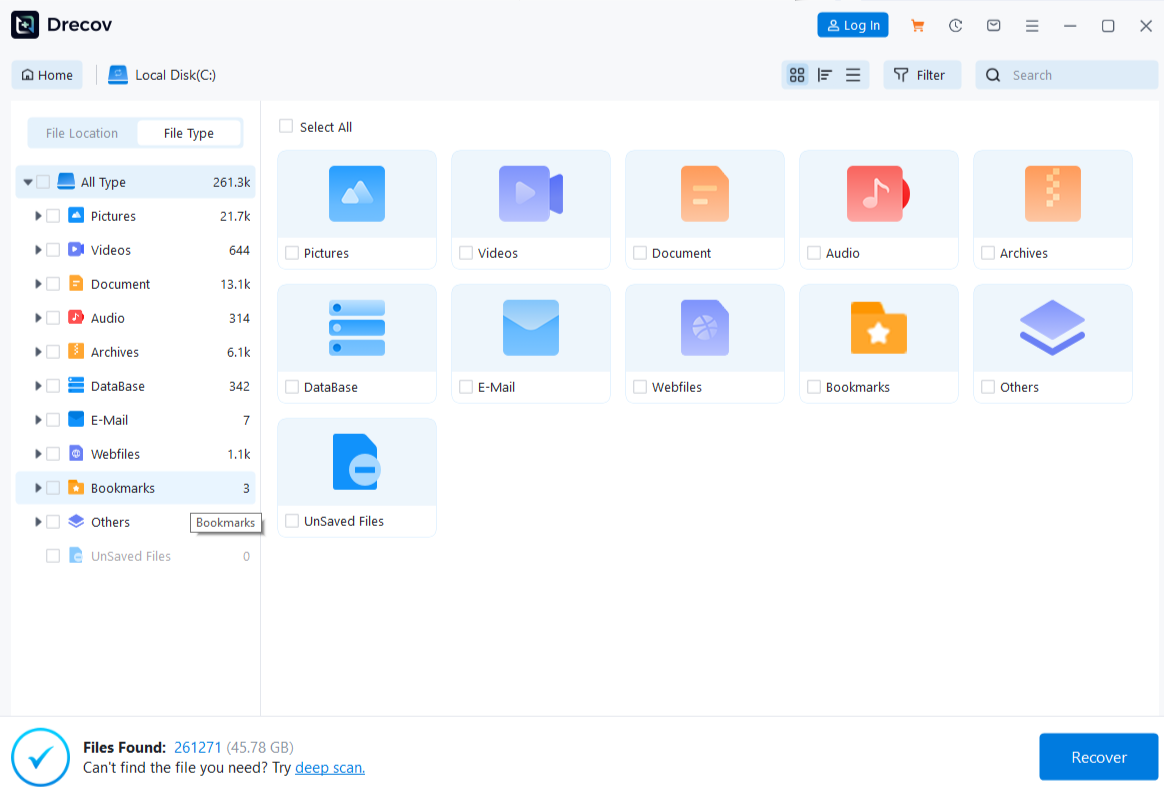
Step 3: Consider Deep Scan while the card remains stable
This check is especially useful for how to retrieve dashcam footage. Use Deep Scan when Quick Scan does not locate the needed footage and the card reads reliably. A deeper search may produce candidates requiring more manual comparison. It cannot reverse a completed overwrite. Disconnects or serious reading errors are reasons to stop, not to repeat the same scan indefinitely.
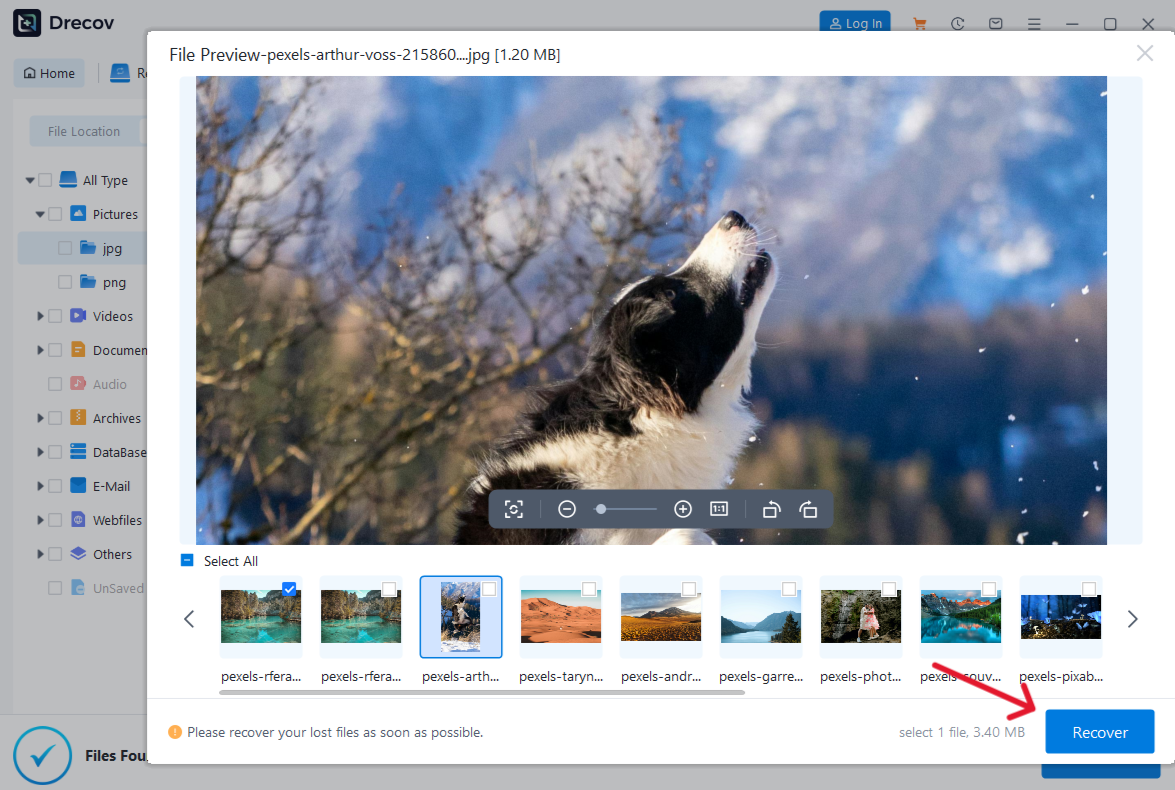
Step 4: Filter videos and preview representative candidates
Narrow results using available video types, names, and locations. Treat timestamps as clues rather than unquestionable evidence of the real-world event time. Preview supported files from the relevant interval. An unavailable preview does not establish that every candidate is worthless, while a successful preview does not confirm uninterrupted full-length playback.
Step 5: Recover the sequence onto another healthy device
Save selected clips to a new folder on the prepared destination, never back to the dashcam card. Keep variants separate to avoid replacing equal filenames. Include adjacent files and channels that may complete the event. Record which group came from each source so later playback comparisons remain understandable.
⚠ Warning: Install it on a drive different from the one where your data was lost to prevent overwriting.
Step 6: Open the results before making changes to the card
Check the Drecov Folder or Recovery Folder if output is absent from the expected location. Play the recovered sequence, inspect beginnings and endings, and compare channels. Only after verification should card repair, formatting, or reuse be considered. Replace a card that remains unreliable instead of trusting it to record the next important journey.
Keep a usable recording and an untouched reference
Separate the untouched exported or recovered files from copies prepared for sharing. Keep a second verified copy on another device. An external backup you can actually restore matters more than a folder that has never been opened. Test representative files from that backup before deleting any temporary working copy.
Preserve context without claiming more than the file proves
Keep original names, relevant folder relationships, and a note of the retrieval method. Avoid editing the only saved version to correct a clock or trim a clip. Any adjusted or shortened copy should be clearly separate. If an insurer, employer, or other recipient needs a particular submission format, ask what they accept while retaining the originals.
Retrieving a file does not establish its completeness or guarantee its acceptance for a dispute. Your practical responsibility is to preserve what exists and document obvious gaps. A short missing interval should remain recorded as a gap, not hidden by joining files. This also helps you decide whether another source, such as a different camera channel, could add useful context.
How to retrieve dashcam footage FAQs
Should I turn the camera off immediately?
First park safely and check the model’s preservation behavior if the clip remains accessible. Some settings affect unsaved footage on shutdown. Once footage is already deleted, prevent further recording and remove the card using the documented procedure.
Does an event lock guarantee the clip will remain forever?
No universal guarantee applies across cameras and settings. Export the event and verify the copy. A label inside the camera is less reliable than an independently playable file stored elsewhere.
Can a recovery scan restore overwritten loop video?
Not when the relevant data has been fully overwritten. Stop new recording promptly, but avoid promising a result based only on how recently the event occurred. Actual storage changes determine what remains.
Why is the expected time missing from the filenames?
The camera clock, time zone, folder category, or selected channel may differ from your expectation. Search a broader interval and compare visible scene details. Do not alter originals merely to make their names match your notes.
Is a video thumbnail enough to confirm recovery?
No. Check the event and both sides of it in full playback, including relevant audio and channels. A thumbnail may survive even when the complete recording is not usable.
Conclusion
Retrieve accessible dashcam footage through the model’s supported controls, then preserve the surrounding sequence and verify playback. For genuinely deleted local clips, Drecov offers a separate search on a stable source card. Recover onto another device and check the complete event before formatting, repairing, or reusing the original storage.
⚠ Warning: Install it on a drive different from the one where your data was lost to prevent overwriting.





