







Understanding Outlook PST Files and Backup Importance
What PST Files Are and Why They Matter in Outlook
A backup Outlook PST file is essential for protecting your emails, contacts, calendars, and task data stored in Microsoft Outlook. PST (Personal Storage Table) files act as the core data container for Outlook users, especially in desktop-based versions such as Outlook 2010 and later.
When users ask how do i backup my outlook pst file, they are essentially trying to protect their entire email history from accidental deletion, corruption, or system failure. Without a proper backup, losing a PST file can mean permanent loss of critical business or personal communication data.
Many users underestimate the importance of PST backups until they face issues like system crashes or file corruption. Understanding how PST files work is the first step toward building a reliable backup strategy.
This guide explains multiple safe and effective ways to backup outlook pst file across different Outlook versions, including legacy systems like Outlook 2010.
Why You Need to Backup Outlook PST File
Common Risks That Make PST Backup Essential
Backing up Outlook data is not optional for users who rely heavily on email communication. PST files are vulnerable to multiple risks that can lead to sudden data loss.
The most common risks include:
- System crashes causing file corruption
- Accidental deletion of PST files
- Malware or ransomware attacks
- Storage device failure
- Outlook software errors or updates
These issues can affect both modern and legacy versions, including backup microsoft outlook 2010 pst file scenarios where older systems are more prone to corruption.
Without a backup, recovering lost data becomes difficult and sometimes impossible. That is why users frequently search for how to backup outlook pst files 2010 or newer versions.
How to Backup Outlook PST Files
Method 1: Manual PST File Backup from Default Storage Location
Test Environment: Outlook 365 on Windows 11 with local PST storage
The simplest way to backup outlook pst file is by manually copying it from its default storage location. Outlook stores PST files locally, making them accessible for direct backup.
Steps:
- Close Microsoft Outlook completely
- Navigate to default PST location (Documents or AppData folder)
- Locate the PST file
- Copy it to external drive or secure folder
- Verify file integrity after copying
This method is widely used by users searching how do you backup outlook pst files because it requires no additional tools.
Method 2: Export PST Using Outlook Import/Export Feature
Test Environment: Outlook 2019 with Exchange account
Outlook provides a built-in export tool that allows structured backup of mailbox data.
Steps:
- Open Outlook
- Go to File > Open & Export
- Select Import/Export
- Choose Export to a file
- Select Outlook Data File (.pst)
- Choose folders and save location
This method is ideal for users looking for a controlled way to backup outlook pst files with folder structure preserved.
Method 3: Backup Outlook PST Files 2010 via Control Panel Settings
Test Environment: Outlook 2010 on Windows 7 system
For legacy users, especially those still on older systems, PST backup is often managed through system settings.
Steps:
- Open Control Panel
- Go to Mail Settings
- Click Data Files
- Locate PST file path
- Copy file manually to backup location
This method is commonly used for backup outlook pst files 2010 environments where modern export tools may be limited.
⚠️ Warning: Older PST files are more prone to corruption, so frequent backups are recommended.
Method 4: Cloud or External Storage Backup
Test Environment: Windows 10 with OneDrive integration
Cloud storage provides an additional layer of protection for PST backups.
Steps:
- Locate PST file on local system
- Copy file to OneDrive or external drive
- Enable sync or scheduled backup
- Verify file accessibility
This method ensures redundancy and is ideal for users asking best way to backup outlook pst files in modern workflows.
Method 5: Advanced Backup and Recovery Using PandaOffice Drecov
Test Environment: Windows 10 with damaged PST file scenario
When PST files are corrupted or inaccessible, standard backup methods may fail. In such cases, PandaOffice Drecov can help recover and rebuild Outlook data before creating a backup.
Steps:
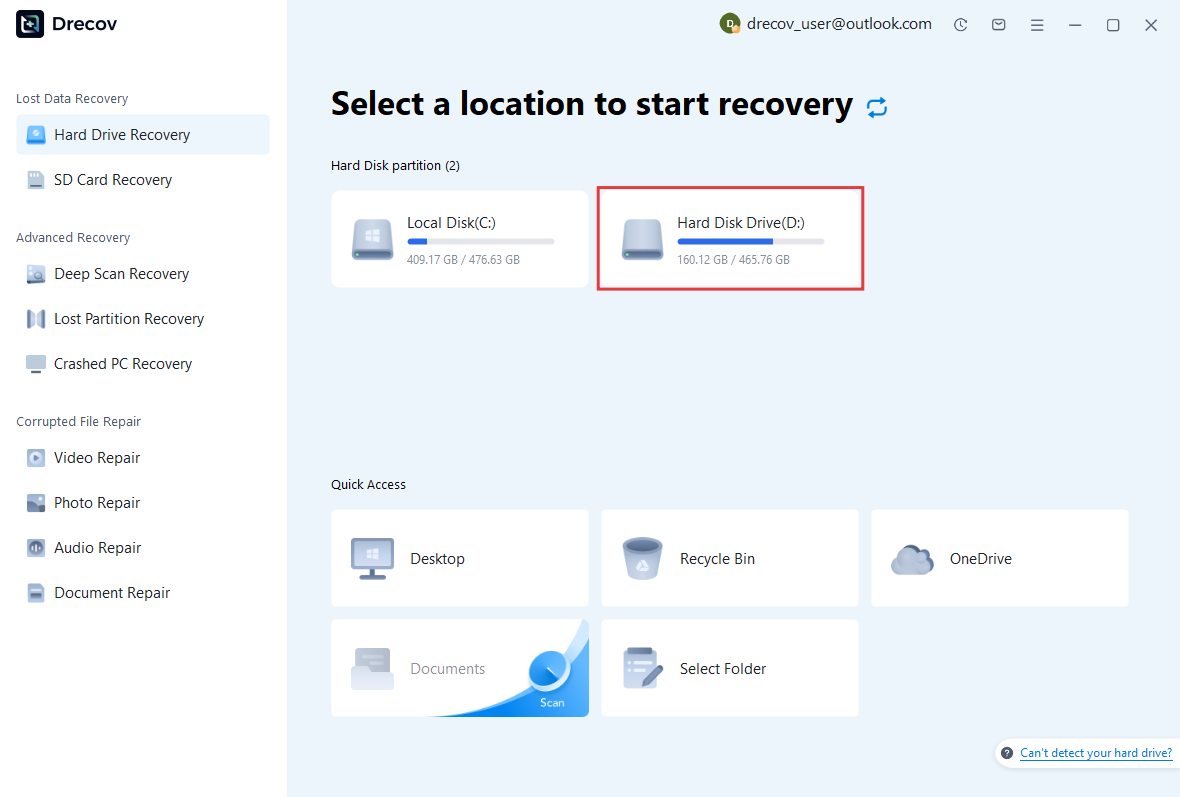
- Launch PandaOffice Drecov
- Select PST file location or disk drive
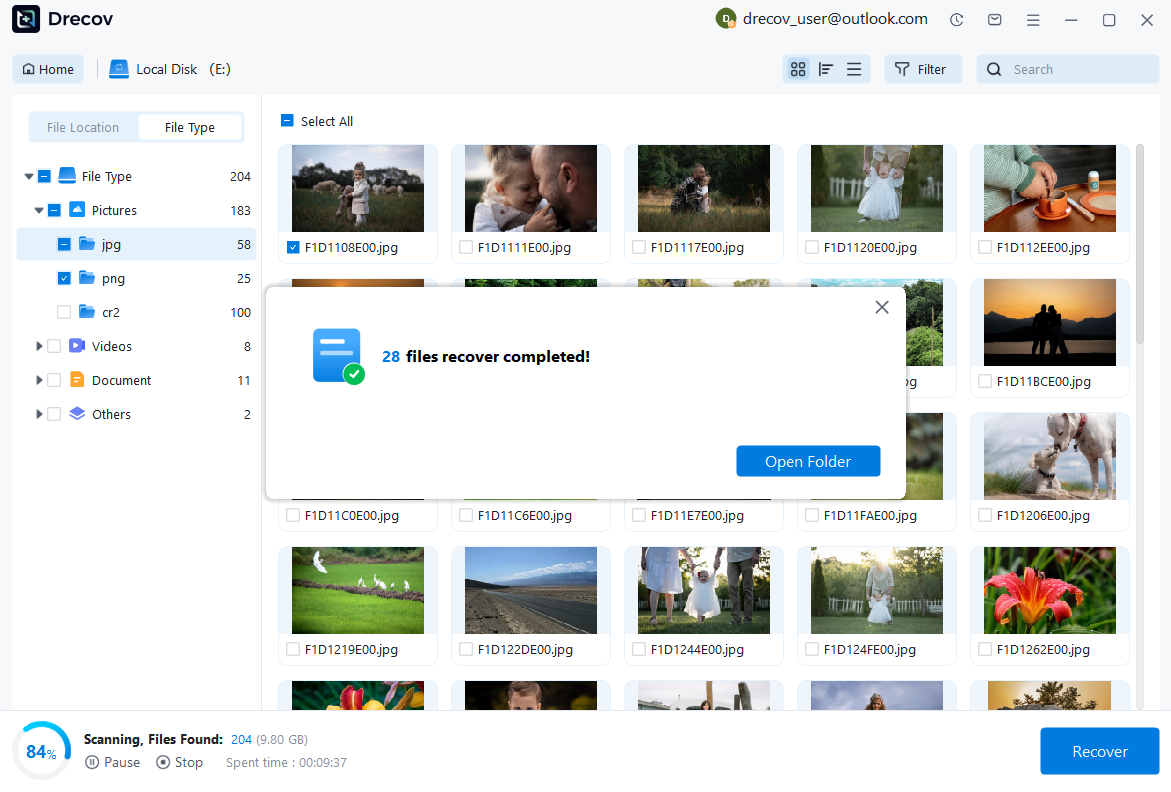
- Run deep scan for recoverable data
- Preview Outlook mailbox items
- Restore and export clean PST file
This method is especially useful when users cannot normally perform how to backup outlook pst files due to file corruption or system failure.

Why Choose PandaOffice Drecov Data Recovery Software?
When it comes to reliable data recovery, PandaOffice Drecov stands out as a powerful, all-in-one solution designed to handle a wide range of data loss scenarios. Whether you’re trying to perform TikTok deleted video recovery, restore files after formatting, or recover important documents, Drecov delivers fast and dependable results.
One of its biggest advantages is versatility. From format data recovery to lost partition recovery, the software can scan deeply and accurately locate files that other tools often miss. Even if your drive has been accidentally formatted or a partition has disappeared, Drecov uses advanced algorithms to reconstruct and retrieve your data with high success rates.
Drecov also supports specialized recovery needs. If you’ve lost important documents, its PDF recovery tool ensures that files retain their original structure and quality. For media users, the audio recovery feature helps restore music, recordings, and other sound files without corruption, making it ideal for both personal and professional use.
Ease of use is another key benefit. The intuitive interface allows beginners to recover files in just a few clicks, while still offering advanced options for more experienced users. Plus, it supports a wide range of storage devices, including HDDs, SSDs, USB drives, and memory cards.
In short, PandaOffice Drecov combines powerful recovery capabilities with user-friendly design, making it a trusted choice for anyone facing data loss.
Method 6: Create a Versioned Backup System for PST Files
Test Environment: Outlook 365 on Windows 11 with local + cloud storage enabled
Instead of simply copying a PST file, advanced users implement a version-controlled backup system. This method ensures multiple historical snapshots of the same PST file are preserved.
This is especially useful for users who frequently ask best way to backup outlook pst files, because it allows recovery from multiple time points, not just one backup.
Steps:
- Create a dedicated backup folder structure (e.g., PST_Backup_2026)
- Save PST files with date stamps (e.g., outlook_jan01.pst)
- Maintain weekly or monthly versions
- Store copies in separate physical locations
- Rotate old backups to prevent storage overflow
This approach ensures that even if corruption goes unnoticed for weeks, earlier clean versions are still available.
⚠️ Warning: Without version control, overwriting backups can permanently erase usable restore points.
Method 7: Configure Automated PST Backup Using Windows Task Scheduler
Test Environment: Windows 10 Pro with Outlook 2019 and scheduled scripts
Manual backups often fail due to human error. A more advanced approach is automating PST backup using system scheduling tools.
This method is widely used in IT environments where users ask how do you backup outlook pst files at scale.
Steps:
- Create a batch script to copy PST files
- Open Windows Task Scheduler
- Set daily or weekly trigger
- Link script to scheduled task
- Enable logging for backup confirmation
This ensures PST files are automatically copied without user intervention.
Automation significantly reduces risk of missed backups and improves consistency.
Method 8: Implement Network Drive Centralized PST Backup (Enterprise Method)
Test Environment: Corporate Windows domain environment with Exchange and shared NAS storage
In enterprise environments, individual backups are not enough. Organizations often centralize PST storage to network drives.
This method is critical for compliance-heavy industries.
Steps:
- Map shared network drive for PST storage
- Redirect Outlook PST path via policy
- Enforce automatic save to server location
- Restrict local-only PST storage
- Monitor backup logs centrally
This approach ensures all users maintain consistent backup outlook pst file practices under IT governance.
Method 9: Disaster Recovery Backup Strategy for Outlook PST Files
Test Environment: Hybrid cloud + offline backup infrastructure
A disaster recovery (DR) strategy ensures PST files remain safe even during system-wide failure such as ransomware attacks or hardware collapse.
This is not just backup—it is full resilience planning.
Steps:
- Store PST backups in 3 locations:
- Local system
- External drive
- Cloud storage
- Encrypt all backup copies
- Perform monthly restore testing
- Maintain recovery documentation
- Set automated alert for backup failure
This method is considered the highest level of how to backup outlook pst files strategy for business continuity.
Method 10: Validate PST Backup Integrity Using Recovery Simulation
Test Environment: Windows 11 with Outlook 365 and test PST environment
Many users create backups but never test them. A backup is only useful if it can be restored successfully.
This method introduces backup validation via simulation testing.
Steps:
- Load PST backup into isolated Outlook profile
- Check email, contact, and calendar accessibility
- Verify folder structure integrity
- Test export/re-import process
- Replace backup only if validation passes
In advanced scenarios, PandaOffice Drecov can be used here to scan PST backups and confirm whether they are structurally healthy before archiving.
This ensures users don’t discover backup failure only during emergencies.
Professional Outlook PST Backup Framework
Multi-Layer Backup Architecture (Recommended Standard)
Test Environment: Windows 11 enterprise + OneDrive + external storage + Exchange
Professional environments no longer rely on single backups. Instead, they use layered architecture:
- Layer 1: Active PST file
- Layer 2: Local scheduled backup
- Layer 3: Cloud synchronization
- Layer 4: Offline disaster recovery copy
This architecture ensures full protection for backup outlook pst files across all failure scenarios.
Risk-Based Backup Frequency Strategy
Test Environment: Business email systems with high-volume Outlook usage
Not all users need the same backup frequency.
Recommended model:
- High usage users → daily backup
- Business users → weekly backup
- Light users → monthly backup
This ensures efficient storage use while maintaining protection for how do i backup my outlook pst file scenarios.
Backup Security and Encryption Strategy
Test Environment: Windows 10 with BitLocker + encrypted external drives
PST files often contain sensitive business data, so security is critical.
Key practices:
- Encrypt PST backups
- Use password-protected archives
- Restrict access permissions
- Store backups in secure locations
This prevents unauthorized access even if backup files are stolen.
FAQ: Advanced Outlook PST Backup
What is the most reliable way to backup Outlook PST file?
The most reliable method is a multi-layer backup system combining local, cloud, and offline storage.
How often should I backup Outlook PST files?
It depends on usage, but weekly backups are recommended for most users.
Can PST backups be automated completely?
Yes, using Task Scheduler and cloud sync tools, PST backup can be fully automated.
What happens if PST file is corrupted?
If corrupted, tools like Outlook repair utilities or PandaOffice Drecov can help recover data before restoring backups.
Conclusion: Building a Professional PST Backup Strategy
Final Summary
Properly learning how to backup outlook pst file is not just about copying files—it is about building a reliable, layered, and validated backup system.
To ensure long-term safety:
- Use versioned backups
- Automate backup tasks
- Apply enterprise-grade storage strategies
- Validate backups regularly
- Include disaster recovery planning
Whether for personal use or enterprise systems, a structured approach ensures your Outlook data remains secure under all conditions.





