







In the rapidly evolving landscape of digital content, 2026 has become the year of the “authenticity pivot.” As AI-generated content saturates every corner of the web, readers have developed a sixth sense for robotic phrasing. If you want your message to resonate, you must learn how to remove ChatGPT speak and inject genuine human vitality into your prose.
This guide serves as a comprehensive masterclass for writers, SEO experts, and creators who need to bridge the gap between AI efficiency and human connection. We will also explore the technical side of content creation, including how to recover deleted AI writing drafts using professional tools like PandaOffice Drecov data recovery software.
What Is “ChatGPT Speak”?
Common Characteristics of AI-Sounding Text
You’ve probably felt it before. You’re reading something, and within seconds, you just know it was written by AI. That smooth, overly polished tone. The perfectly structured sentences. The suspicious lack of personality. That’s what people now call “ChatGPT speak.”
This style didn’t appear out of nowhere. AI models are trained on massive datasets and tend to generate what’s statistically “average” language. The result? Safe, predictable, and emotionally flat writing. According to recent research, exposure to AI-generated language is even influencing how humans communicate, creating what experts call an “echo effect,” where people unconsciously adopt AI-preferred vocabulary and phrasing.
Typical signs include:
- Balanced sentence lengths that feel too perfect.
- Repetitive transitions like “however,” “moreover,” or “in addition.”
- A formal, almost corporate tone.
- Lack of strong opinions or emotional nuance.
It’s like reading something written by a very polite robot who never had a bad day.
Why People Want to Remove It
Here’s the real issue: AI-sounding text kills connection. It doesn’t matter if your content is technically correct—if it feels generic, people stop caring. Readers want personality, not perfection.
Businesses are noticing this too. When customers detect AI-generated responses, trust drops significantly. That’s a big deal. Whether you’re writing emails, blogs, or marketing copy, sounding human isn’t optional anymore—it’s the difference between being remembered and being ignored.
Why ChatGPT Writing Sounds Robotic
The Predictability Problem
At its core, AI writing is based on probability. It predicts the most likely next word based on patterns. That sounds smart—and it is—but it creates a problem: predictability.
Human writing is messy. Sometimes you ramble. Sometimes you cut yourself off mid-thought. AI doesn’t do that. It produces clean, symmetrical sentences with almost identical rhythm. That’s why AI text often feels like every sentence has the same length and every paragraph follows the same structure. Real humans don’t talk like that. We will interrupt ourselves, emphasize some trivial details, and also go off-topic.
The Neutral Tone Trap
Another major issue is tone. AI is designed to be safe and neutral. It avoids strong opinions because it doesn’t want to be wrong. This “hedging” is one of the biggest giveaways of AI-generated text. To remove ChatGPT speak, you must be willing to take a stand.
Signs Your Content Sounds Like ChatGPT
Repetitive Structure
One of the easiest ways to spot AI writing is structure. It’s too consistent. You’ll often see paragraphs of identical length and sentences that follow the same rhythm. It feels… engineered.
Common ChatGPT Overused Words List
If you want to remove ChatGPT speak, you must first identify the culprits. There is a specific common chatgpt overused words list that triggers the “AI alarm” in most readers. These include:
- Delve: AI loves “delving” into topics. Humans usually just “look at” or “explore” them.
- Tapestry: Unless you are discussing medieval decor, avoid this word.
- Unlock: “Unlock your potential” is a classic AI trope.
- Invaluable: While a fine word, AI uses it as a default praise.
- Comprehensive: AI uses this to describe every guide it writes.
By swapping these out for more natural alternatives, you immediately improve the “human score” of your text.
Telltale Signs of AI Writing
Beyond specific words, there are telltale signs of AI writing that relate to the logic of the piece. AI often provides “balanced” views that lack a “soul.” For instance, an AI will often list pros and cons without ever suggesting which side is actually better. Humans have biases; AI has filters. Furthermore, AI often uses “the transition of doom”—starting every single paragraph with a connector like “Additionally” or “Furthermore.”
How to Remove AI Detection from Content
To truly remove AI detection from content, you need to disrupt the mathematical patterns the detectors look for. Detectors measure “perplexity” (complexity of word choice) and “burstiness” (variation in sentence structure).
- Introduce Slang or Idioms: AI is often too formal to use regional slang or modern idioms correctly.
- Use Personal Anecdotes: AI cannot recall a time it spilled coffee on its keyboard. You can.
- Break Grammar Rules Purposefully: Starting a sentence with “And” or “But” can make a piece feel much more conversational.
Core Principles to Remove ChatGPT Speak
Write Like You Talk
Instead of writing, “Users can benefit from this feature,” try, “You’ll actually find this useful.” This shift feels more direct. Replace “users” with “you” to instantly make content more conversational.
Add Personality and Opinion
AI avoids opinions. Humans don’t. If you want to remove ChatGPT speak, you need to take a stance, show preference, and add judgment.
Step-by-Step: How to Humanize AI Text
Step 1: Rewrite the Introduction
AI introductions are usually dead giveaways. They’re generic and detached. Instead of defining the topic, start with a problem or a shocking statistic.
Step 2: Break Sentence Patterns
Mix short and long sentences. Add pauses. Use fragments occasionally. For example: “It works. Really well, actually.” That’s human rhythm.
Step 3: Add Real Examples
Specificity breaks the “AI illusion.” Instead of saying “Many people struggle with this,” say “I’ve seen this happen in emails, blog posts, even LinkedIn comments.”
Data Management: Recover Deleted AI Writing Drafts
Sometimes, in the process of trying to remove ChatGPT speak, we accidentally delete our best drafts or lose a file during a system crash. In the high-stakes world of professional content creation, losing a 3,000-word humanized draft is a nightmare. This is where technical data recovery becomes essential.
Recover Deleted AI Writing Drafts with Professional Tools
When you need to recover deleted AI writing drafts, time is of the essence. When a file is deleted, the operating system marks the space as “available” but doesn’t immediately wipe the data. Using specialized software can pull that data back before it’s overwritten.
⚠ Warning: Install it on a drive different from the one where your data was lost to prevent overwriting.
PandaOffice Drecov Data Recovery Software: A Step-by-Step Guide
If you have lost your humanized content, PandaOffice Drecov data recovery software is the industry standard for retrieving lost documents from SSDs, HDDs, and external drives. Here is how to use it:
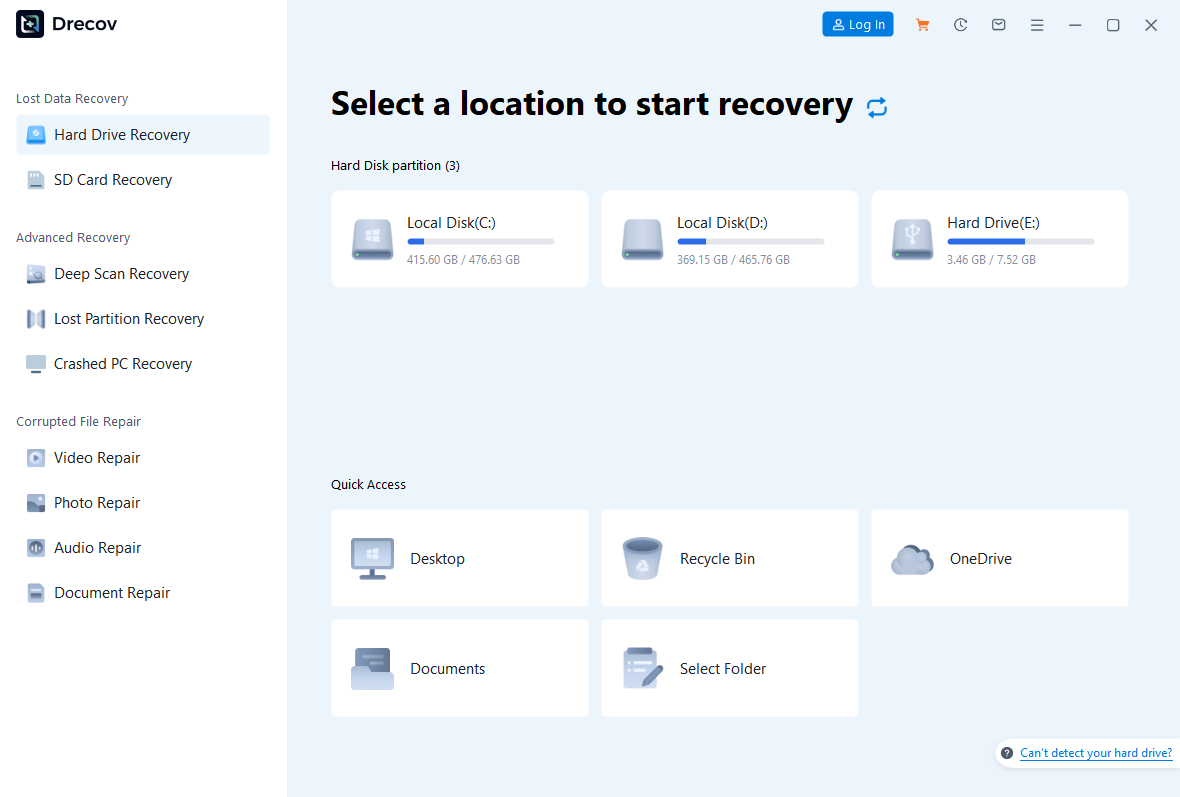
- Step 1: Select the Location. Launch the program. You will see a list of drives. Select the partition (usually *C:* for documents) where your drafts were stored.
- Step 2: Deep Scan for Document Files. Click “Scan.” PandaOffice Drecov will perform a quick scan followed by a Deep Scan. You can filter the results by file type (e.g., .docx, .txt, .pdf) to find your writing faster.
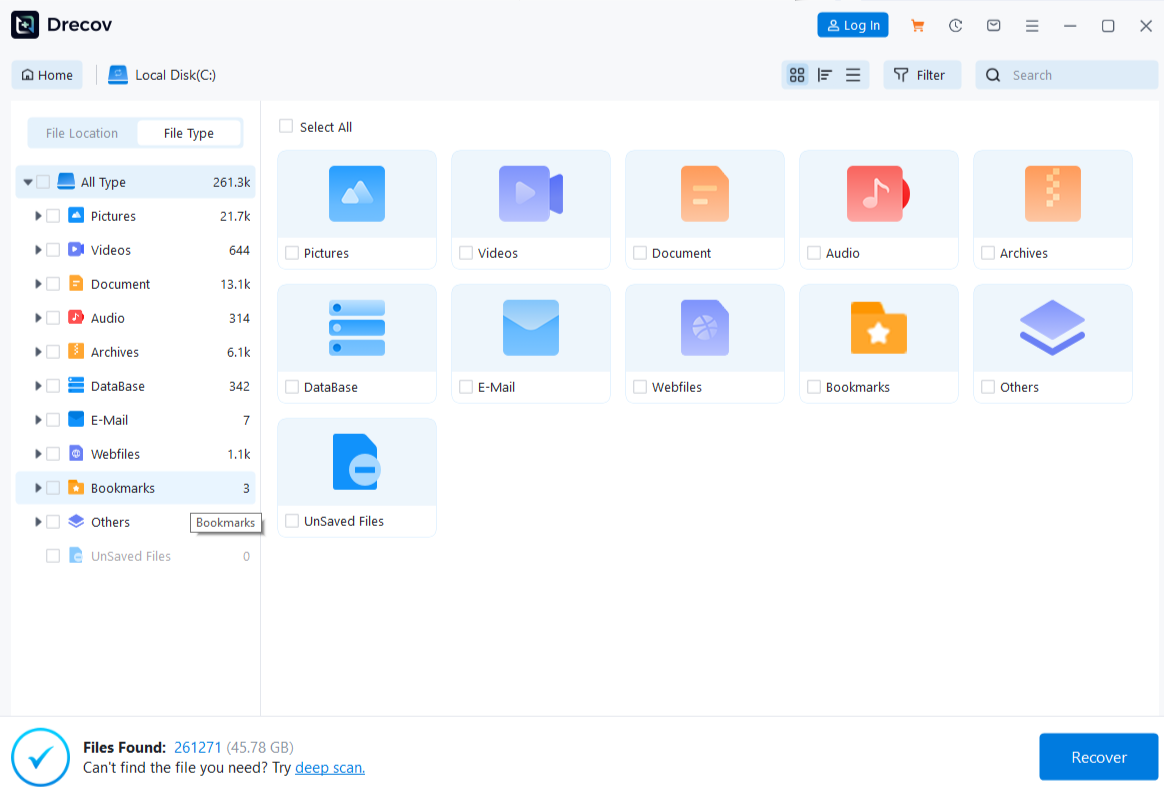
- Step 3: Preview and Recover. Once the scan is complete, use the preview window to verify the content of the drafts. Select the files and click “Recover.”
Key Point: Always save the recovered files to a different drive (like a USB stick) to ensure data integrity.
Internal Resources for Content Management
Once you have recovered your files and learned to humanize your tone, you might want to manage your AI footprint more effectively.
- Learn how to delete ChatGPT account if you are moving toward a fully manual writing process.
- Check out this guide on how to delete ChatGPT history to keep your prompts private.
- Understand how to use ChatGPT properly to ensure your initial drafts are higher quality from the start.
Best Techniques to Remove AI Tone
Use Short and Long Sentences
This is called “burstiness.” AI tends to produce evenly sized sentences. Humans don’t. Mix it up: one long, descriptive sentence followed by a short, punchy one.
Avoid “Glue Words”
Words like “Moreover,” “Furthermore,” and “In addition” are AI’s comfort zone. Remove most of them, and your writing instantly improves. Use natural transitions like “But here’s the thing” or “To make matters worse.”
Prompt Engineering to Avoid ChatGPT Speak
Example Humanization Prompts
Fix the problem before it starts by using better prompts:
- “Write like you’re explaining this to a friend over a coffee.”
- “Avoid formal tone; use contractions and a bit of dry humor.”
- “Write this for a cynical audience that hates corporate jargon.”
Style Constraints That Work
Force better writing by adding rules like “No buzzwords,” “Maximum 15 words per sentence,” or “Use the active voice exclusively.”
Tools That Help Remove ChatGPT Speak
AI Humanizers vs. Manual Editing
There are two main approaches. Manual editing gives you full control and an authentic voice but is time-consuming. AI humanizers are fast but can sometimes create “word salad” that sounds even weirder than the original AI text. The best results usually come from a “Cyborg” approach: let AI draft, and let the human refine.
Common Mistakes to Avoid
Over-editing
Trying too hard to sound human can backfire. If you add too many slang words or force humor where it doesn’t belong, the text feels “uncanny” in a different way.
Losing Meaning
While you want to remove ChatGPT speak, don’t sacrifice clarity. Your goal is to communicate better, not just differently.
Remove ChatGPT Speak FAQs
1. What is the most effective way to remove ChatGPT speak?
The most effective way is to rewrite the first and last sentences of every paragraph and replace all formal transitions (like “Furthermore”) with conversational ones.
2. Does Google penalize AI content?
Google penalizes low-quality content. If your AI content is helpful and humanized, it can rank well. However, purely robotic text often fails user engagement signals.
3. Can PandaOffice Drecov recover unsaved Word drafts?
Yes, it can often recover temporary files and autosave versions that were deleted or lost during a crash.
4. How do I stop AI from using the word “tapestry”?
Include a “Negative Prompt” such as: “Do not use the words tapestry, delve, or multifaceted.”
Conclusion
Removing ChatGPT speak isn’t about hiding your use of AI; it’s about reclaiming your unique voice. In 2026, the most successful content creators aren’t those who reject AI, but those who master the art of “polishing the robot.”
By identifying the common chatgpt overused words list, watching for telltale signs of AI writing, and knowing how to remove AI detection from content, you can create pieces that rank high and read beautifully. And should you ever lose your hard work, tools like PandaOffice Drecov data recovery software ensure your intellectual property is never truly gone.
Break the patterns. Add opinions. Talk like a real person. Because at the end of the day, people don’t connect with perfect sentences—they connect with you.






