







In the rapidly evolving digital landscape of 2026, knowing how to use ChatGPT has shifted from being a niche tech skill to a fundamental necessity for productivity. Whether you are a student trying to simplify complex physics or a professional managing large-scale data recovery projects, this AI assistant acts as a force multiplier for your efforts. This guide provides a comprehensive walkthrough of the platform, from your first login to advanced data analysis and technical troubleshooting.
What Is ChatGPT and How Does It Work?
Understanding AI Conversations
If you’ve ever wished for a tool that could answer your questions instantly, help you write content, or even brainstorm ideas like a human partner, then ChatGPT is exactly what you’re looking for. At its core, ChatGPT is an AI-powered conversational assistant designed to understand and respond to natural language. Instead of typing rigid commands like you would into a traditional search engine, you simply talk to it as if you were messaging a friend.
Here’s the fascinating part: ChatGPT doesn’t “think” like a human, but it has been trained on massive amounts of text data to predict and generate meaningful responses. Imagine it as a supercharged autocomplete engine that doesn’t just finish your sentences—it builds entire ideas, explanations, and solutions. Whether you ask it to explain a concept, write a blog post, or debug code, it analyzes your input and delivers a tailored response in seconds.
What makes this tool truly powerful is its versatility. You can use it for casual conversations, professional work, or even creative projects. It adapts to your tone, your needs, and your level of expertise. The more clearly you communicate with it, the better the results you get. That’s why learning how to use ChatGPT effectively isn’t just about typing questions—it’s about understanding how to guide the AI to give you exactly what you need.
Key Features of ChatGPT in 2026
Fast forward to 2026, and ChatGPT has evolved far beyond simple text responses. Today, it’s a multi-functional productivity tool that integrates several advanced features designed to enhance user experience. One of the most notable upgrades is its ability to handle not just text, but also images and files. You can upload a screenshot, ask for analysis, and receive detailed insights within seconds.
Another standout feature is contextual memory within conversations. ChatGPT can follow long discussions, remember previous inputs, and build on them naturally. This makes it incredibly useful for complex tasks like writing reports, planning projects, or learning new skills over time. Additionally, ChatGPT now supports specialized tools for coding, data analysis, and even creative design assistance. It’s like having a team of experts packed into a single interface. Whether you’re a student, professional, or entrepreneur, these features open up endless possibilities.
Getting Started with ChatGPT
How to Use ChatGPT for Beginners 2026
If you are just starting your journey, the first step is setting up your digital workspace. The interface in 2026 is cleaner than ever, focusing on “Agentic” workflows where the AI can help you plan tasks.
- Step 1: Account Creation. Visit the official OpenAI website and sign up. You can use a standard email or link your Google/Microsoft accounts for a faster setup.
- Step 2: Profile Customization. Navigate to “Settings” and look for “Custom Instructions.” This allows you to tell the AI who you are (e.g., “I am a data recovery specialist”) so it provides more relevant answers without you repeating yourself.
- Step 3: Choose Your Model. Depending on your plan, you might see options like GPT-4o or the newer GPT-5. For basic tasks, the faster models are excellent, but for deep reasoning, always opt for the most advanced version available.
When you first open ChatGPT, you’ll notice a clean and minimal interface. On one side, there’s a sidebar displaying your chat history. In the center, you’ll find the conversation area where all the magic happens. At the bottom, there’s a text box where you type your prompts. This simplicity is intentional. It removes distractions and allows you to focus entirely on your interaction with the AI. Starting a new conversation is as easy as clicking a button and typing your question.
How to Write Effective Prompts
The Basics of Prompting
The quality of your results depends heavily on the quality of your prompts. If you ask vague questions, you’ll get vague answers. If you provide clear instructions, you’ll receive precise and useful responses. Think of prompts as directions you give to a driver. If you say, “Take me somewhere nice,” you might end up anywhere. But if you say, “Take me to the best Italian restaurant within 5 miles,” you’ll get exactly what you want.
Advanced Prompting Techniques
Once you’re comfortable with basic prompts, you can take things to the next level. Advanced prompting involves structuring your requests in a way that maximizes output quality. You can ask ChatGPT to adopt a specific role, such as “Act as a senior SEO consultant,” or “Act as a hardware engineer.” Furthermore, breaking down complex tasks into smaller steps ensures the AI doesn’t skip crucial details. Providing examples of what you want—a technique known as “few-shot prompting”—is also a highly effective way to shape the AI’s responses more precisely.
Common Ways to Use ChatGPT
Writing and Content Creation
One of the most popular uses of ChatGPT is content creation. Whether you’re writing blog posts, emails, social media captions, or even scripts, the AI can help you generate ideas and refine your writing. It’s not just about speed; it’s about inspiration. Sometimes, all you need is a starting point, and ChatGPT provides that effortlessly.
Learning and Research
ChatGPT is also a powerful learning tool. You can ask it to explain complex topics in simple terms, provide summaries, or even quiz you on specific subjects. It’s like having a tutor available 24/7, ready to help you understand anything from basic concepts to advanced theories.
Best ChatGPT Prompts for Data Analysis
In 2026, the AI’s ability to interpret datasets is unparalleled. If you are dealing with log files from a failed hard drive or trying to categorize thousands of recovered files, the right prompt is key. Here are some of the best ChatGPT prompts for data analysis tailored for technical users:
- Dataset Summarization: “I have a CSV list of 5,000 recovered files with their extensions and sizes. Can you categorize them by file type and provide a percentage breakdown?”
- Anomaly Detection: “Analyze this system log from a crashed Windows 11 machine. Identify any error codes related to ‘disk.sys’ or ‘ntfs.sys’ that occurred right before the crash.”
- Trend Identification: “Looking at these three different scan reports from a corrupted SD card, which sectors are consistently failing, and what does this suggest about the physical health of the NAND flash?”
Solving Data Loss: The Ultimate Recovery Workflow
While ChatGPT is an incredible intellectual partner, it cannot physically reach into your hard drive to pull back deleted photos. For that, you need specialized software. When files are accidentally deleted or a partition goes missing, PandaOffice Drecov provides a reliable, high-success-rate solution. It supports over 2,000 file types and works on everything from local SSDs to external USB sticks.
⚠ Warning: Never install the software on the same drive where you lost your data. This prevents the “overwriting” of your deleted files, which would make them unrecoverable.
PandaOffice Drecov Data Recovery Software: A Step-by-Step Guide
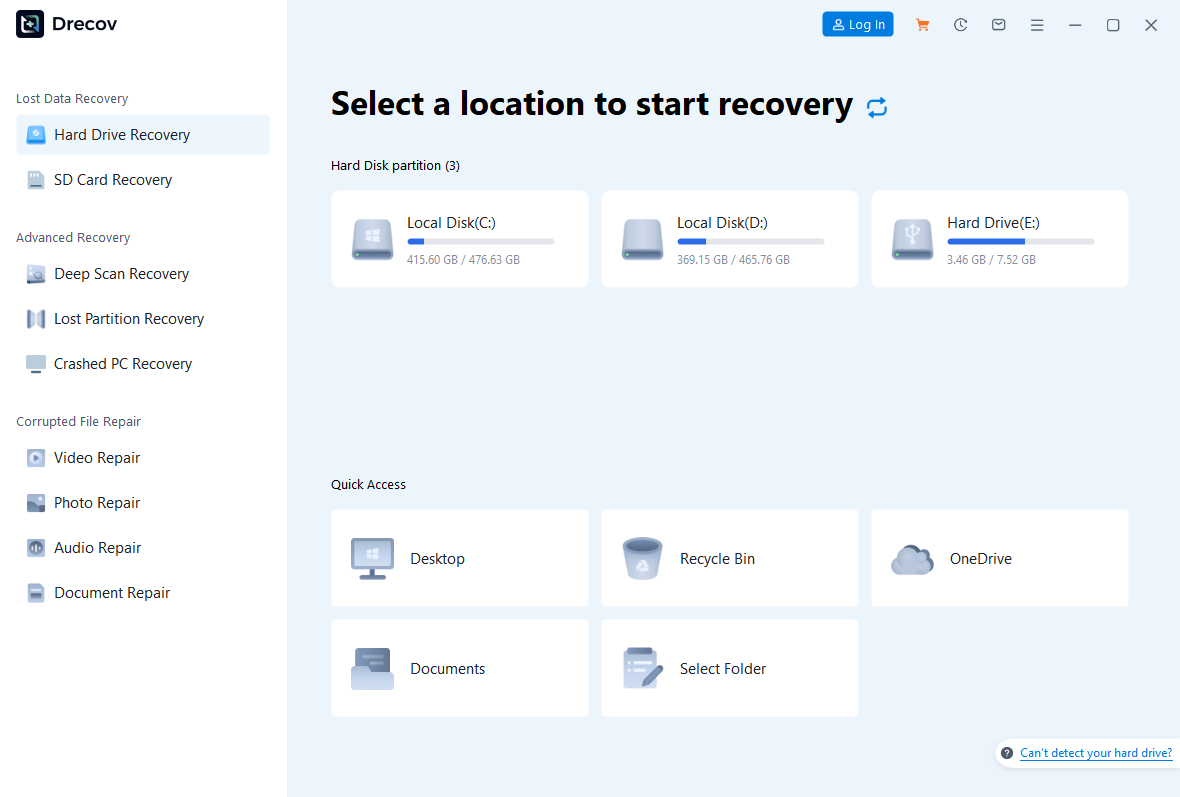
Step 1: Select the Scan Location
Launch the application. You will see a list of available drives, including your primary C: drive, external disks, and even specific locations like the “Recycle Bin” or “Desktop.” Select the drive where the data was last seen.
Step 2: Perform the Scan
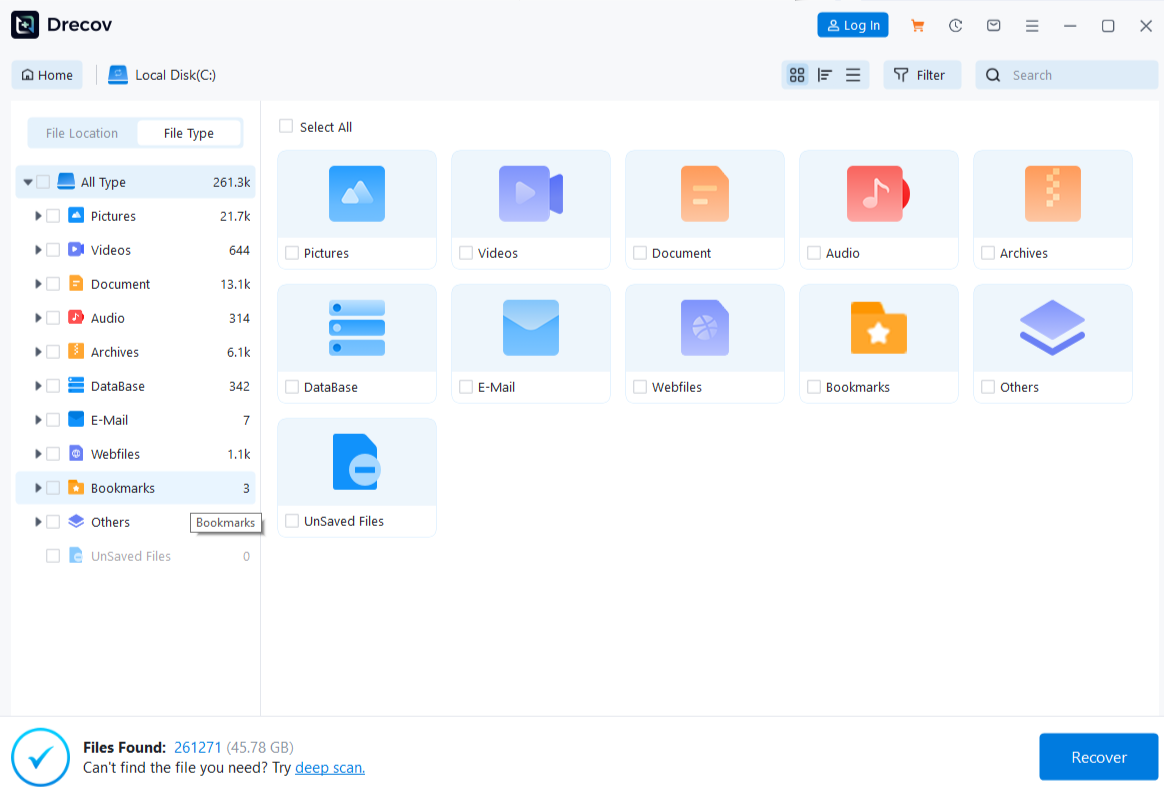
Click the “Scan” button. PandaOffice Drecov will perform a “Quick Scan” followed by a “Deep Scan.” The Deep Scan is essential for formatted drives or lost partitions, as it looks for the underlying data signatures of your files.
Step 3: Preview and Filter
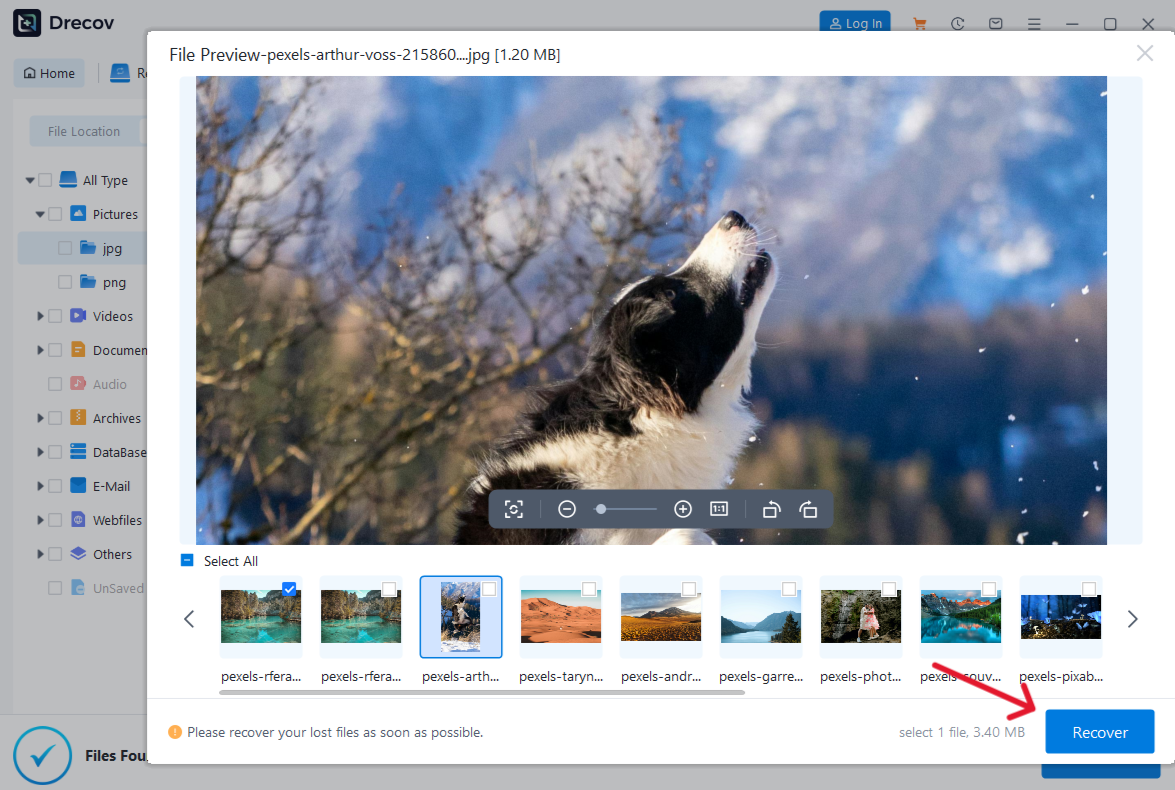
Once the scan is complete, use the filter sidebar to find specific file types (e.g., .jpg, .docx, .mp4). One of the best features of Drecov is the “Preview” function—you can actually see the photo or read the document before deciding to recover it. This ensures you aren’t wasting time on corrupted fragments.
Step 4: Execute Recovery
Select the checkboxes for the files you need and click the “Recover” button.
Key Point: Always save the recovered files to a different physical drive (like an external HDD or a cloud folder) to ensure 100% data integrity.
ChatGPT Features You Should Know
Image Uploads and Analysis
Modern ChatGPT versions allow you to upload images and ask questions about them. For instance, if you see a strange error message during a data recovery process, you can simply take a photo of your screen and ask ChatGPT, “What does this Windows Stop Code mean?” This visual context helps the AI provide much more accurate troubleshooting steps.
File Handling and Tools
You can also upload documents and get summaries, edits, or insights. If you have a long PDF manual for an obscure RAID controller, you can upload it and ask, “How do I rebuild the mirror if Disk 0 is missing?” This makes ChatGPT a powerful productivity tool for handling large amounts of technical information quickly.
Tips to Get Better Results
Iterating and Refining Responses
Don’t settle for the first answer. If ChatGPT gives you a data recovery plan that seems too complex, ask it to “Simplify these steps for a non-technical user.” Refining the output is a standard part of the workflow.
Using Context Effectively
Provide background information to help ChatGPT understand your situation. If you are using PandaOffice Drecov and encounter a specific “Sector Read Error,” tell ChatGPT the exact error code and the model of your hard drive. The more context you give, the more tailored the advice will be.
Mistakes to Avoid When Using ChatGPT
Vague Prompts
Avoid asking “How do I fix my computer?” Instead, be specific: “My computer is stuck in a ‘Preparing Automatic Repair’ loop after a Windows update. I have important files on the desktop. What should I do?”
Over-Reliance Without Verification
Always double-check important information. ChatGPT is powerful, but it can occasionally “hallucinate” or provide outdated registry paths. For critical tasks like editing the Windows Registry or formatting drives, always cross-reference the AI’s advice with official documentation or expert tools like PandaOffice Drecov.
Free vs Paid Versions of ChatGPT
Key Differences
| Feature | Free Version | Paid Version (Plus/Pro) |
| Model Access | Limited access to GPT-4o | Full access to GPT-5 and O1 |
| Speed | Standard | Priority High-Speed |
| Data Analysis | Basic | Advanced (Python-powered) |
| Image Gen | Limited DALL-E 3 | Unlimited High-Res |
Which One Should You Choose?
If you use ChatGPT occasionally for writing emails, the free version is enough. However, if you are a professional who needs the best ChatGPT prompts for data analysis and file processing, the paid version is a worthwhile investment for the time it saves.
Is ChatGPT Safe to Use?
Privacy Considerations
Be mindful of what you share. Avoid uploading sensitive personal documents or corporate secrets unless you have a dedicated Enterprise account with privacy “opt-out” enabled.
Best Practices for Safe Usage
Use strong passwords and review your “Chat History & Training” settings regularly. If you need to clear your footprint, you can learn how to delete ChatGPT history or even how to delete ChatGPT account if you decide to start fresh.
How to Use ChatGPT FAQs
1. Is ChatGPT free to use?
Yes, OpenAI continues to offer a very capable free tier in 2026, though it has usage caps on the most advanced models.
2. Can ChatGPT recover my deleted files?
No, ChatGPT is a language model. To recover files, you should use a dedicated tool like PandaOffice Drecov data recovery software.
3. Why can’t I upload images to ChatGPT?
This is often due to server load or account restrictions. For a deeper look, check out our 2026 guide on ChatGPT image uploads.
4. Is it safe to give ChatGPT my data for analysis?
For non-sensitive data, it is safe. However, for private records, ensure you are using a plan that does not use your data for training.
Conclusion
Mastering how to use ChatGPT in 2026 is about more than just typing in a box; it’s about integrating AI into your problem-solving toolkit. From generating the best ChatGPT prompts for data analysis to knowing when to switch to a professional tool like PandaOffice Drecov, the synergy between human intent and machine intelligence is the key to success. As you continue to explore this technology, remember to stay curious, be specific in your requests, and always keep a backup of your most precious data!






