







This documented comparison matches Drecov, R-Studio, TestDisk and PhotoRec-style workflows to user conditions without invented benchmarks, prices, ratings, or recovery rates. It separates ordinary Windows recovery from advanced imaging, RAID, and specialist cases. Classify the loss before comparing recovery products. Protect the affected source before any scan or repair changes its evidence.
⚠ Warning: Install it on a drive different from the one where your data was lost to prevent overwriting.
Define the Alternative by the Recovery Job
An alternative is useful only when it matches the loss event, operating system, storage layout, source condition, and operator skill. This distinction keeps the comparison tied to the storage job instead of the interface. A read-only comparison preserves the evidence needed for escalation.
This page compares workflow fit and documented controls; it does not repeat a brand-safety review or a two-product contest. Log the source condition before moving to another recovery method. Each candidate should be judged against one defined recovery requirement.
Stop writing to the source, check backups, and distinguish stable logical loss from unstable hardware before launching any scanner. A read-only comparison preserves the evidence needed for escalation. Document device identity and loss time so later scan results can be interpreted.
Protect the Source Before Comparing Interfaces
A clicking, disconnecting, overheating, or capacity-changing device belongs with imaging expertise or professional recovery rather than software trials. Each candidate should be judged against one defined recovery requirement. When the case exceeds the chosen workflow, stop and escalate it.
PandaOffice Drecov targets Windows recovery from stable recognized PCs, drives, USB media, memory cards, and supported lost partitions. Document device identity and loss time so later scan results can be interpreted. This distinction keeps the comparison tied to the storage job instead of the interface.
Drecov offers read-only recovery mode, Quick Scan, Deep Scan, filtering, preview, and recovery to a selected healthy destination. When the case exceeds the chosen workflow, stop and escalate it. Log the source condition before moving to another recovery method.
Where Drecov Fits a Standard Windows Recovery
For ordinary deleted-file, formatted-volume, or lost-partition cases on Windows, a guided path can reduce selection mistakes. This distinction keeps the comparison tied to the storage job instead of the interface. A read-only comparison preserves the evidence needed for escalation.
R-Studio is positioned for users who need more control, including disk imaging, advanced layouts, RAID reconstruction, and technical inspection. Log the source condition before moving to another recovery method. Each candidate should be judged against one defined recovery requirement.
TestDisk emphasizes partition and boot-related reconstruction, while PhotoRec-style carving searches file signatures without preserving the original tree. A read-only comparison preserves the evidence needed for escalation. Document device identity and loss time so later scan results can be interpreted.
For a stable Windows source, PandaOffice Drecov provides a guided read-only recovery path. Use it only after backups have been checked and the source passes the stability gate.
Step 1 — Select the original source
Install and run Drecov from a healthy Windows volume. Select the stable recognized device or partition that originally held the missing files. Never select the recovery destination as the source.
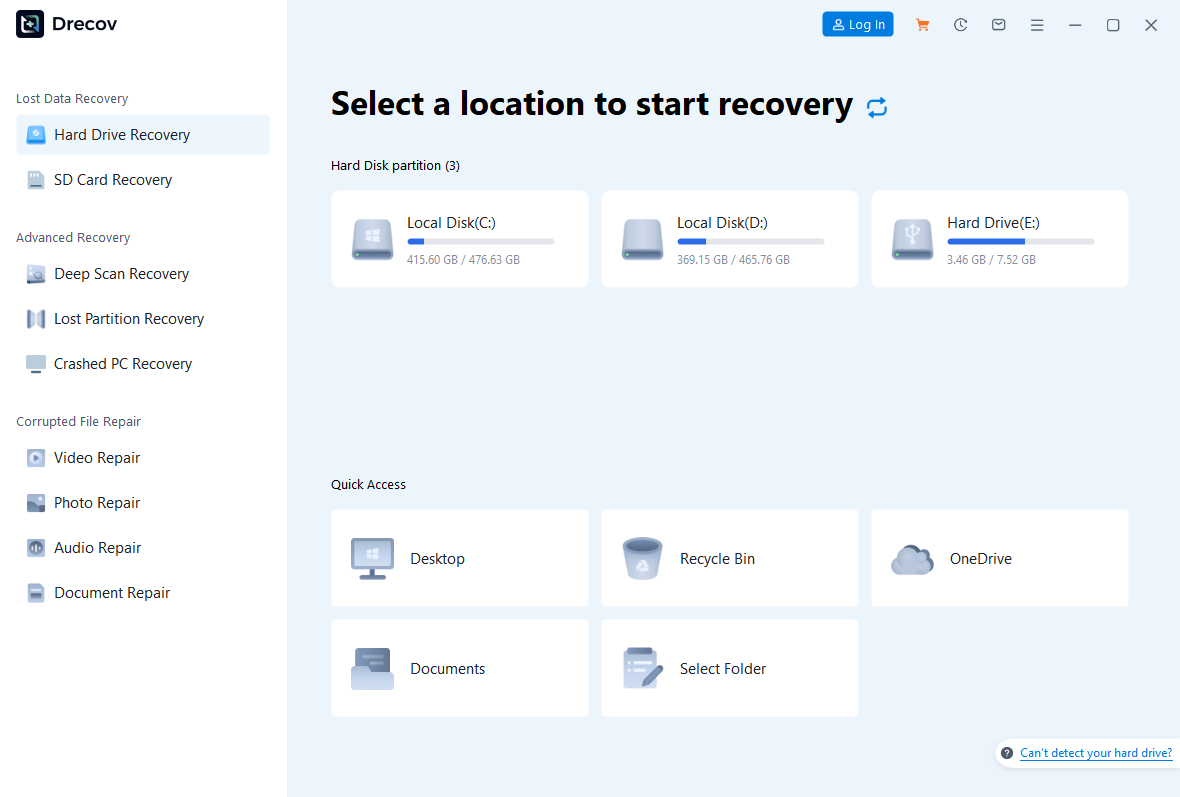
Step 2 — Run Quick Scan first
Start Quick Scan and let it finish. It is the proportionate first pass for recent deletion or a straightforward logical loss. Do not browse or write to the source while it runs.
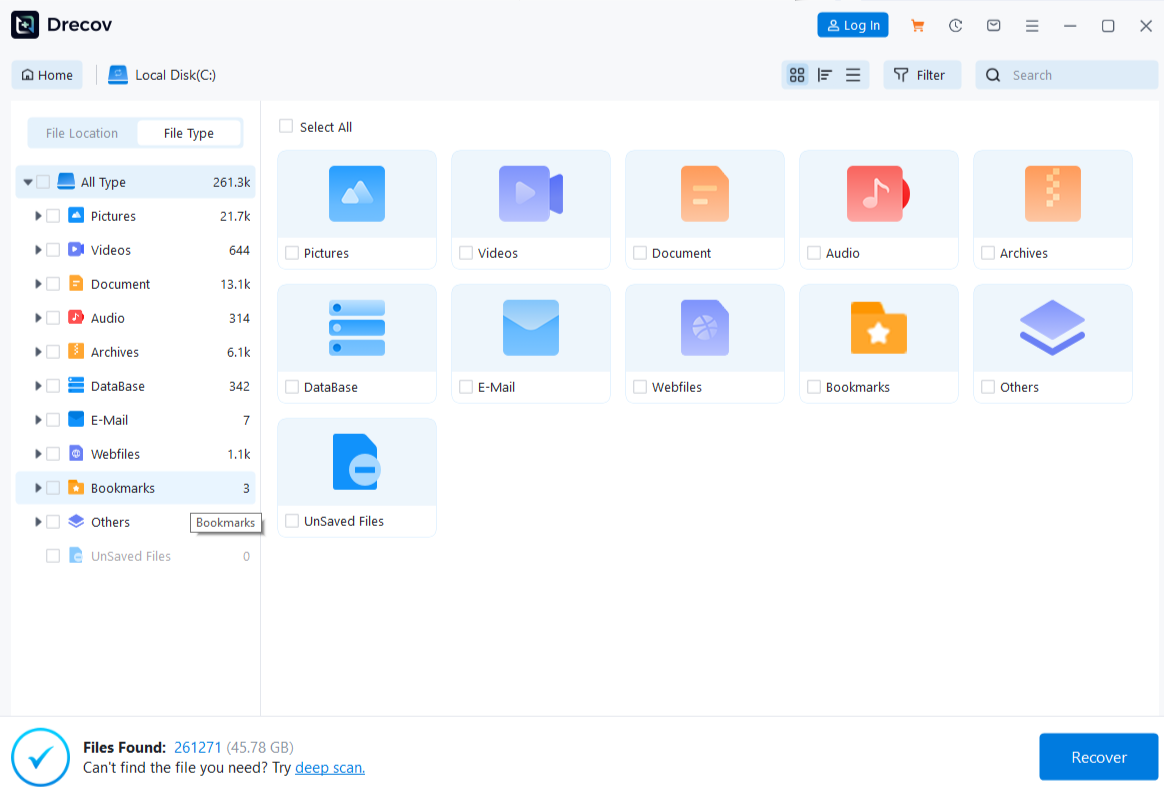
Step 3 — Use Deep Scan only when needed
If the source remains stable and Quick Scan does not find the required files, run Deep Scan on the same original source. Do not repeat direct scans on a disconnecting or physically suspicious device.
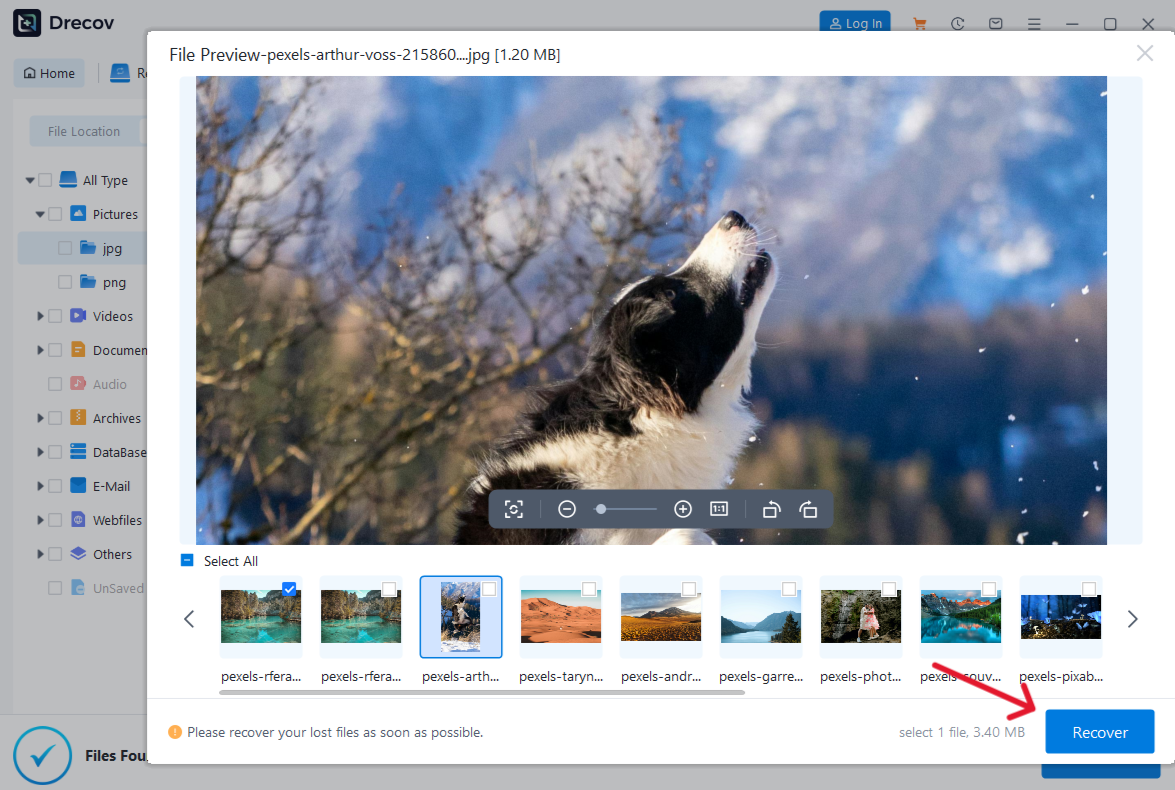
Step 4 — Filter, preview, and select
Filter by file type, path, date, and size. Preview representative files where supported. A valid preview is evidence for that sample, not a promise about every result.
Step 5 — Recover elsewhere and verify
Recover selected files to a healthy different physical device. Open several important files and check folder coverage. If a result seems absent, inspect the Drecov or Recovery folder on the chosen destination.
⚠ Warning: Install it on a drive different from the one where your data was lost to prevent overwriting.
Compare Control, Imaging, RAID, and Learning Cost
Command-line or specialist tools can be powerful, but ambiguous device names and write-capable actions increase the cost of operator error. Each candidate should be judged against one defined recovery requirement. When the case exceeds the chosen workflow, stop and escalate it.
Preview proves only that selected samples can be decoded; it does not create a recovery rate or guarantee every file. Document device identity and loss time so later scan results can be interpreted. This distinction keeps the comparison tied to the storage job instead of the interface.
File-system support matters only when it matches the source and loss; a long feature list does not override the actual case. When the case exceeds the chosen workflow, stop and escalate it. Log the source condition before moving to another recovery method.
The comparison below uses documented capabilities. The official R-Studio documentation supports the imaging and RAID-control description; it does not make this article a ranking.
| Workflow | Best documented fit | Control and caution |
|---|---|---|
| Drecov | Guided recovery on stable recognized Windows storage | Quick then Deep Scan, preview, separate destination |
| R-Studio | Imaging, advanced layouts, RAID, technical inspection | More parameters require experienced interpretation |
| TestDisk | Partition and boot-structure work | Write-capable repairs demand a verified plan |
| PhotoRec-style carving | Signature search when metadata is weak | Names and folder tree may be lost |
Choose a Workflow for the Actual Loss Scenario
RAID work requires member order, parameters, minimal writes, and often imaging before reconstruction; it is not an ordinary single-disk scan. This distinction keeps the comparison tied to the storage job instead of the interface. A read-only comparison preserves the evidence needed for escalation.
No independent benchmark, price audit, or current licensing survey is supplied here, so the comparison makes no ranking claim. Log the source condition before moving to another recovery method. Each candidate should be judged against one defined recovery requirement.
Never install a recovery product on the partition that held lost files or save recovered output back to that source. A read-only comparison preserves the evidence needed for escalation. Document device identity and loss time so later scan results can be interpreted.
A recently deleted document on a stable Windows volume needs a different workflow from a degraded RAID. The former may suit a guided scan and preview. The latter requires geometry, member order, imaging, and specialist judgment.
A formatted external drive can remain a logical-recovery case if it is stable and correctly recognized. Stop writing, document the original file system, choose another destination, and scan once in an ordered way.
A missing partition demands caution because repair and recovery are different goals. Recover important files first when possible. Writing a new partition table can change the evidence that a later tool or specialist needs.
Verify Recovered Data Before Retiring the Source
Quick Scan should be assessed before Deep Scan when the source is stable, and unstable media should not endure repeated direct scans. Each candidate should be judged against one defined recovery requirement. When the case exceeds the chosen workflow, stop and escalate it.
Verification means opening representative recovered files, checking folder coverage, and retaining the source until the result is accepted. Document device identity and loss time so later scan results can be interpreted. This distinction keeps the comparison tied to the storage job instead of the interface.
Choose the least complex workflow that safely covers the actual storage layout, then escalate when evidence exceeds that workflow. When the case exceeds the chosen workflow, stop and escalate it. Log the source condition before moving to another recovery method.
A source that clicks or repeatedly disconnects fails the stability gate. Comparing friendly interfaces is then irrelevant. Power it down and consider professional imaging before further reads worsen the condition.
An advanced operator may value images, hexadecimal inspection, manual parameters, and RAID reconstruction. A home user may instead value an explicit source-to-destination sequence. Neither profile creates a universal winner.
Signature carving can find content after metadata is lost, but filenames and folder relationships may disappear. Judge the output by identifiable, openable files rather than by a large raw result count.
Further evidence for choosing a recovery workflow
is Disk Drill safe. When the case exceeds the chosen workflow, stop and escalate it.
Disk Drill vs R-Studio. When the case exceeds the chosen workflow, stop and escalate it.
partition recovery software. When the case exceeds the chosen workflow, stop and escalate it.
Frequently Asked Questions
What is the best Disk Drill alternative?
There is no context-free best option. Match the tool to operating system, loss type, source stability, imaging need, RAID complexity, preview requirements, and operator skill.
Why introduce Drecov before the comparison?
It establishes the guided Windows baseline: stable recognized storage, read-only scanning, Quick then Deep Scan when needed, preview, and a separate recovery destination. Other tools can then be compared against a concrete job.
Is R-Studio always better for RAID?
Its documentation describes imaging and RAID reconstruction controls, but suitability still depends on the array, available metadata, member condition, and operator knowledge. Complex or unstable arrays may require a specialist.
Are TestDisk and PhotoRec the same kind of alternative?
They address different jobs. TestDisk focuses on partition and boot structures, while PhotoRec-style carving searches signatures. Carving may lose original names and folders even when file content is found.
Can any recovery tool guarantee my files?
No. Overwriting, physical damage, encryption, file fragmentation, and metadata loss affect results. Preview and verification provide evidence for specific files, not a universal recovery guarantee.
⚠ Warning: Install it on a drive different from the one where your data was lost to prevent overwriting.





