







Accidentally hitting the “Empty Recycle Bin” button is a heart-sinking moment for any computer user. Whether it was a crucial work presentation or years of family photos, the immediate thought is often that the data is gone forever. However, as an expert in data recovery and SEO, I can tell you that “gone” is a relative term in the digital world.
In this comprehensive guide, we will explore how to get data deleted from recycle bin using professional techniques, built-in Windows tools, and specialized software. By understanding the mechanics of file systems, you can significantly increase your chances of a successful restoration.
Understanding What Happens When You Empty the Recycle Bin
Why Deleted Files Are Not Immediately Destroyed
Emptying the Recycle Bin often feels like the final step of deleting a file. The icon empties, the file disappears, and most people assume the data is permanently erased. Surprisingly, that assumption isn’t entirely accurate. When files are removed from the Recycle Bin, the operating system doesn’t instantly destroy them. Instead, it simply removes the file’s reference from the file system, making the storage space available for new data.
Think of your storage drive as a huge library. When a file is deleted, the librarian removes the catalog entry pointing to the book. The book itself may still be sitting on the shelf, but without the catalog reference, the system no longer knows where it is. Data recovery tools essentially act like investigators searching the shelves for books that have lost their catalog records.
This is why recovery is sometimes possible even after emptying the Recycle Bin. The file’s actual data remains on the disk until something else overwrites that storage space. If new files are written to the same location, the original data is replaced and becomes extremely difficult—or impossible—to recover.
How Operating Systems Mark Deleted Data
Operating systems like Windows manage files through structures called the Master File Table (MFT) or File Allocation Table (FAT). These tables store information about file names, locations, and storage blocks on the disk. When you recover data from recycle bin successfully, it is because the software found these “unindexed” blocks before they were reused.
Instead of wiping the data immediately, the system marks the storage space as “free.” This tells the operating system it can use the space for future files. Until that happens, the original data may still exist on the disk in its original form. Research and industry testing show that deleted files remain recoverable until they are overwritten by new data.
How File Recovery Actually Works
Storage Space vs Actual File Removal
To understand how to recover deleted data from recycle bin, imagine writing on a whiteboard with erasable markers. When you erase the writing, the board looks blank, but faint traces might still exist. Specialized tools could reveal what was previously written. File recovery works in a similar way.
When a file is deleted, the operating system removes the “pointer” but leaves the raw binary data intact. Recovery software scans the storage device sector by sector, searching for fragments that match known file types. For example, .jpg images, .docx documents, and .mp4 videos each have unique digital signatures (headers).
Recovery Success Rates and Time Window
Data recovery isn’t magic, and it doesn’t guarantee success every time. Several factors influence whether deleted files can be restored. The most important ones include storage type, time since deletion, and disk activity.
- HDD vs. SSD: Traditional hard drives (HDD) often retain deleted data longer. Solid-state drives (SSD) use a command called TRIM, which proactively clears deleted data blocks to maintain write speeds, making recovery much harder.
- The 24-Hour Rule: Recovery attempts performed shortly after deletion have significantly higher success rates. Some reports indicate that recovery within the first 24 hours can reach over 80% success.
Immediate Steps to Take After Emptying the Recycle Bin
Stop Using the Storage Drive
The moment you realize a file has been deleted from the Recycle Bin, stop using the storage drive immediately. This is the most critical rule in data recovery. Every action—browsing the web, downloading a small file, or even letting the system run background updates—can write new data to the “free” space where your deleted file lives.
Identify the Location Where the File Was Stored
Before attempting recovery, identify the original location of the deleted file. Was it on the C:\Users\Documents path or an external USB drive? Knowing the path allows recovery tools to perform a targeted scan, which is faster and more accurate than a full-disk sweep.
Method 1 – Restore Data Using Windows File History
If you are wondering how to get data deleted from recycle bin without third-party software, File History is your best friend. This built-in Windows feature creates snapshots of your files over time.
What File History Is and How It Works
Windows File History periodically backs up versions of files in the Documents, Music, Pictures, Videos, and Desktop folders. If you had this feature enabled prior to the deletion, you can roll back the folder to a state before the Recycle Bin was emptied.
Steps to Recover Files from File History
- Step 1: Open the Windows Search bar and type “Restore your files with File History”.
- Step 2: Look for the folder where your deleted file was originally located.
- Step 3: Use the arrow buttons at the bottom to browse through different backup versions (organized by date and time).
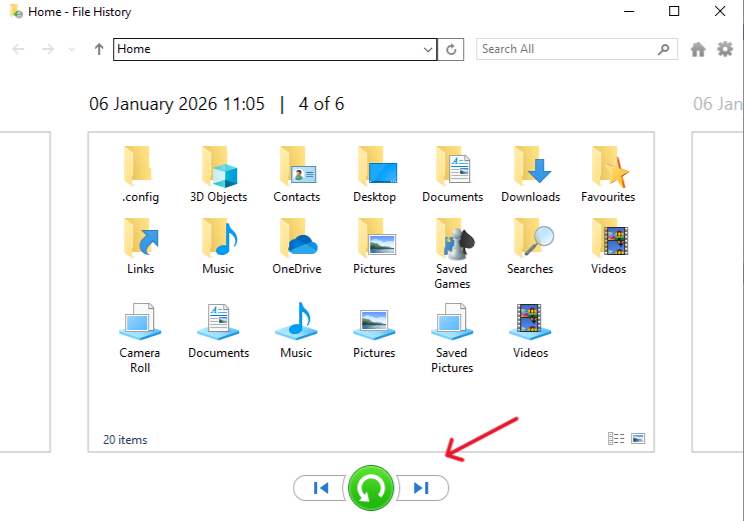
- Step 4: Select the file you want to retrieve and click the green Restore button to put it back in its original location.
Checking Previous Versions of Folders
You can also right-click any folder in File Explorer and select “Restore previous versions”. This pulls data from both File History and System Protect restore points. If a list of older versions appears, you can open them to find your missing data.
Method 2 – Recover Files Using Data Recovery Software (PandaOffice Drecov)
When backups fail, professional software is the most reliable way to recover data from recycle bin. PandaOffice Drecov is a premier tool designed for both beginners and pros to retrieve lost data from formatted drives, emptied bins, and system crashes.
How Recovery Software Scans Deleted Data
PandaOffice Drecov uses advanced algorithms to perform a “Deep Scan.” It ignores the file system’s “free space” labels and looks directly at the raw data bits on the disk platter or flash memory to reconstruct files.
⚠ Warning: Install it on a drive different from the one where your data was lost to prevent overwriting.
Step-by-Step Recovery Process with PandaOffice Drecov
- Step 1: Select the Location. Launch the program and select “Recycle Bin” or the specific drive letter (usually
C:) where the files were before deletion.

- Step 2: Scan for Data. Click the “Start” button. The software will perform a Quick Scan followed by a Deep Scan.
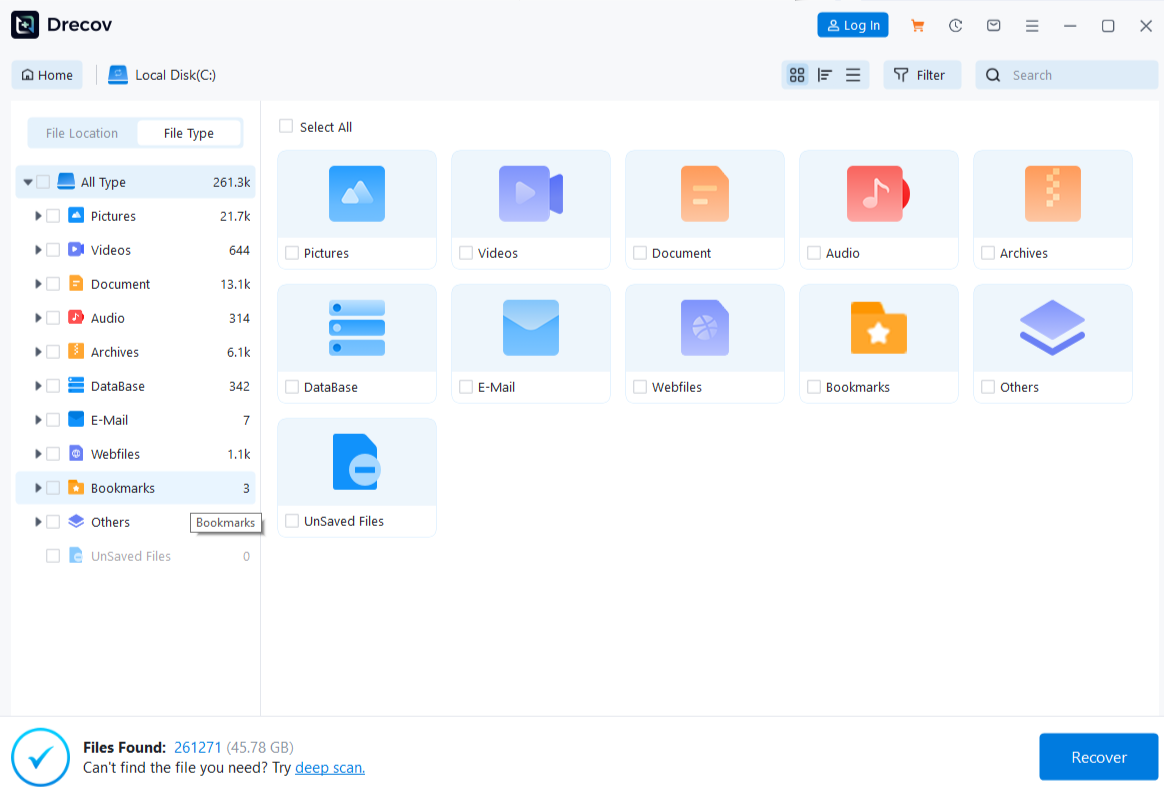
- Step 3: Filter and Preview. Once the scan is complete, use the sidebar to filter by file type (e.g., Photos, Documents). PandaOffice Drecov allows you to preview files before recovering them to ensure they aren’t corrupted.
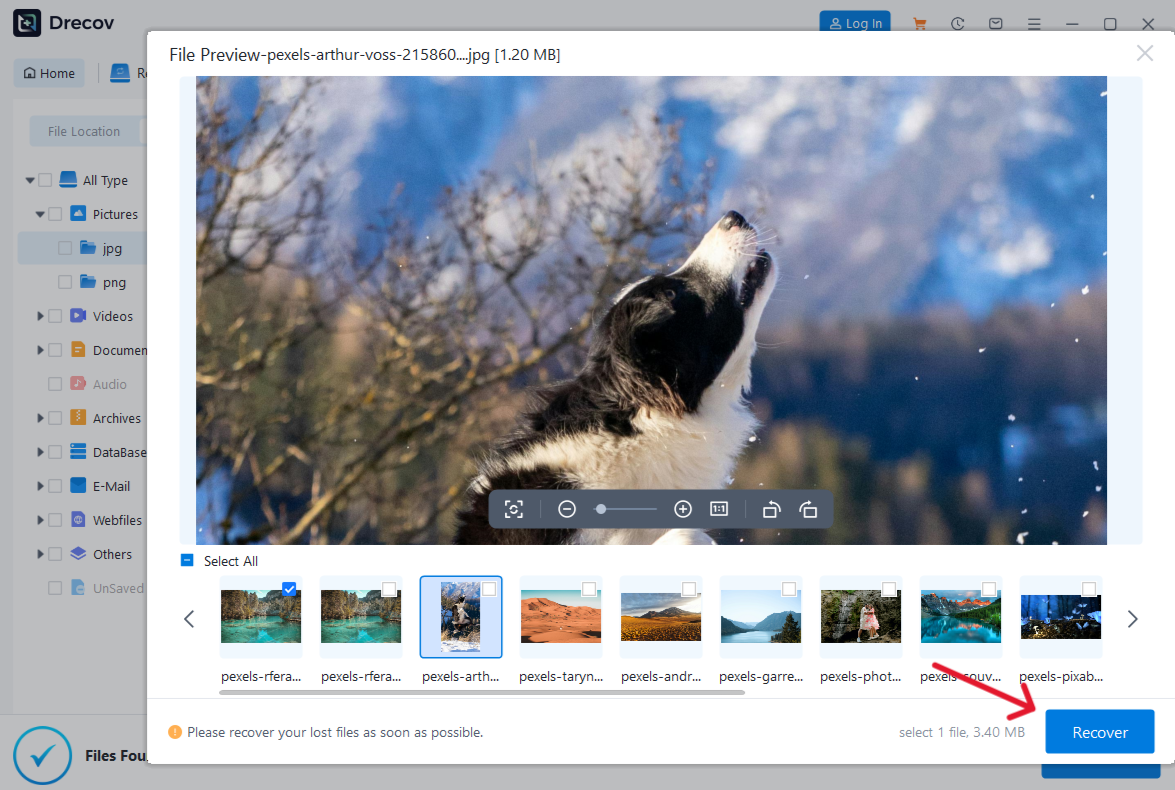
- Step 4: Recover. Select the files you need and click “Recover”.
Pro Tip: Save the recovered files to an external hard drive or a cloud folder, never back to the same partition.
Method 3 – Restore Files from Cloud Backups
OneDrive and Google Drive Recycle Bins
If your folders are synced with OneDrive or Google Drive, deleting a file on your PC also moves it to the cloud’s internal trash can.
- OneDrive: Visit onedrive.live.com, log in, and check the Recycle Bin on the left sidebar. Files are kept here for 30 days.
- Google Drive: Check the “Trash” folder.
Version History Recovery
Both services offer a “Version History” feature. If you accidentally saved over a file before deleting it, you can right-click the file in the cloud web interface and select Version History to download an older, intact copy.
Method 4 – Recover Data from System Restore or Backup Images
If you created a System Image or a full system backup using Windows Backup and Restore (Windows 7), you can recover your entire environment.
- Step 1: Connect your backup media.
- Step 2: Go to Settings > Update & Security > Backup.
- Step 3: Select “More options” and click “Restore files from a current backup.”
Note: System Restore Points generally do not back up personal files (like Word docs or photos); they primarily protect system files and registry settings. However, it is always worth checking if a “Previous Version” was triggered by a restore point.
When to Use Professional Data Recovery Services
While software like PandaOffice Drecov is incredibly powerful, there are times when you should put the mouse down and call a pro:
- Mechanical Failure: If your hard drive is making clicking or grinding noises.
- Physical Damage: If the device was dropped or exposed to fire/water.
- Critical Business Data: If the data is worth thousands of dollars, a cleanroom recovery service provides the highest success rate (approx. 85-95%).
Tips to Prevent Losing Files from the Recycle Bin Again
- Enable File History: Always keep an external drive plugged in for automatic Windows backups.
- Use Cloud Syncing: Services like OneDrive provide an extra layer of “Trash” protection.
- Adjust Recycle Bin Settings: Right-click the Recycle Bin > Properties. You can increase the “Maximum Size” so files aren’t automatically purged too quickly.
- Think Before You Shift+Delete: Using
Shift + Deletebypasses the Recycle Bin entirely. Use it sparingly!
More Data Recovery Resources
To further optimize your computer’s health and understand how to manage your workspace, check out these helpful guides:
- Windows 10/11: How to Remove the Recycle Bin from Desktop
- Where Do I Find Recycle Bin in Windows 10?
- Where is Recycle Bin in Windows 10? 3 Quick Ways to Find It
- Comprehensive Guide: How to Recover Files Deleted from the Recycle Bin
How to Get Data Deleted From Recycle Bin FAQs
1. Can files be recovered after emptying the Recycle Bin?
Yes, as long as the physical space on the disk where the file lived hasn’t been overwritten by new data.
2. How long can deleted files be recovered?
There is no set time, but rather a “usage” limit. If you delete a file and then download a 50GB game, the file is likely gone. If the computer stays off, the file could stay recoverable for years.
3. Is data recovery software safe to use?
Reputable tools like PandaOffice Drecov are safe. Avoid “cracked” versions of software, as they often contain malware that could further damage your data.
4. Does the “Empty Recycle Bin” command wipe the hard drive?
No. It only clears the index. To actually wipe a drive, you would need a “Secure Erase” or “Drive Shredder” tool.
Conclusion
Learning how to get data deleted from recycle bin is a vital digital literacy skill. While the disappearance of a file can be stressful, the architecture of modern operating systems actually works in your favor by delaying the actual destruction of data. Whether you use Windows File History, cloud backups, or specialized tools like PandaOffice Drecov, your chances of success are high if you act quickly and stop writing new data to the drive.






