







If you have ever plugged in a USB drive or peripheral only to be greeted by a notification stating Unknown USB Device (Device Descriptor Failed), you are certainly not alone. This error is one of the most common USB-related issues in modern Windows environments, particularly within Windows 10 and Windows 11. It typically manifests in the Device Manager accompanied by a small yellow warning triangle, leaving users puzzled about why their hardware has suddenly become unresponsive.
At its core, this error indicates that your computer attempted to communicate with the USB device but failed during the initial “handshake.” Think of it like two people trying to introduce themselves but speaking completely different languages—they simply cannot establish a connection. According to technical documentation, the issue occurs when Windows cannot successfully complete the USB enumeration process, which is the vital sequence required for identifying and configuring any connected hardware.
What Is the “Unknown USB Device (Device Descriptor Failed)” Error?
When you encounter the unknown usb device descriptor failed error, your operating system is essentially telling you that it knows something is plugged in, but it cannot figure out what it is. Because the communication link is broken at the very beginning, the system cannot load the appropriate drivers, making the device unusable.
Understanding USB Device Enumeration
When you connect a USB device, your computer does not instantly “know” its identity. Instead, it performs a structured process called enumeration. During this sequence, the host system (your PC) sends a series of requests to the device to learn about its type, manufacturer, and power requirements. If any step fails—specifically the retrieval of the device descriptor—the entire connection logic collapses, and Windows labels the unit as an “Unknown Device.”
What a Device Descriptor Actually Does
The device descriptor acts like a digital ID card. It contains essential information such as the Vendor ID (VID) and Product ID (PID). This data allows Windows to look through its database and find the correct driver to make the hardware work. If the descriptor request fails or returns garbled data, Windows has no choice but to block the device to prevent potential system instability.
Why This Error Happens in Windows
To solve the unknown usb device descriptor failed mystery, we must first understand the root causes. Generally, these fall into two categories: hardware malfunctions and software conflicts.
Hardware-Related Causes
Faulty USB Ports or Cable Damage
Physical wear and tear is a frequent culprit. A worn-out USB cable or a loose port on your laptop can interrupt the delicate electrical signals required for data transfer. Even microscopic damage to the internal wiring can cause inconsistent data packets, leading to a failed descriptor request.
Insufficient Power Supply
USB devices rely on the bus for power. If your system’s power supply is strained—which often happens when using unpowered USB hubs—the device might not receive enough voltage to respond to the computer’s queries. This is why high-speed external hard drives often fail to initialize when plugged into a front-panel port versus a motherboard port.
Software-Related Causes
Corrupted Drivers
Drivers are the “translators” between your hardware and the OS. If a driver becomes corrupted due to a bad update or a sudden system crash, the unknown usb device descriptor failed error is a likely result. The system tries to use old or broken logic to talk to the device, which inevitably fails.
Windows Power Management Conflicts
Windows is designed to be energy-efficient. Sometimes, the “USB Selective Suspend” feature puts a port into a low-power state to save battery. Unfortunately, it may fail to “wake up” the port correctly when you plug a device in, leading to recognition errors.
Common Symptoms of the Error
Identifying the symptoms early can save you hours of troubleshooting.
Device Not Recognized
The most obvious sign is the Windows toast notification: “The last USB device you connected to this computer malfunctioned, and Windows does not recognize it.” Upon checking Device Manager, you will see the entry under Universal Serial Bus controllers.
Continuous Disconnect/Reconnect Loop
In some cases, you might hear the Windows “connect” and “disconnect” sounds playing repeatedly. This happens because the OS is persistently trying to restart the enumeration process, but it keeps hitting the same unknown usb device descriptor failed wall every single time.
Quick Fixes You Should Try First
Before moving into deep system edits, try these “low-hanging fruit” solutions.
Restart and Reconnect
It sounds cliché, but a “cold boot” can clear the electrical charge in the capacitors of your motherboard. Shut down your PC, unplug the power cable (if using a desktop), wait 30 seconds, and restart. This resets the USB Root Hubs and often clears temporary glitches.
Try Different USB Ports
Always test the device in a different port. If you are using a USB 3.0 (blue) port, try a USB 2.0 (black) port. Sometimes, older devices struggle with the power states of modern USB 3.0/3.1 controllers. For more technical details on USB standards, you can visit the Official USB Implementers Forum.
Advanced Fixes for Persistent Issues
If the basic steps didn’t work, we need to take more direct action within the operating system.
Reinstall USB Drivers
- Step 1: Press Windows Key + X and select Device Manager.
- Step 2: Expand the Universal Serial Bus controllers section.
- Step 3: Right-click the item labeled Unknown USB Device (Device Descriptor Failed) and select Uninstall device.
- Step 4: Restart your computer. Windows will automatically attempt to reinstall the driver upon reboot.
Disable USB Power Saving Settings
- Step 1: In Device Manager, right-click on USB Root Hub (check all of them if there are multiple).
- Step 2: Select Properties and navigate to the Power Management tab.
- Step 4: Uncheck the box that says “Allow the computer to turn off this device to save power”.
- Step 5: Click OK and restart your PC.
Update Windows System Files
Corrupted system files can prevent the USB stack from functioning. Open the Command Prompt as an administrator and type sfc /scannow. This tool, provided by Microsoft Support, will verify the integrity of your system files and repair any issues related to the unknown usb device descriptor failed error.
How to Recover Data from Unknown USB Device
When your USB device shows the “Descriptor Failed” error, the most terrifying prospect is losing the files stored on it. If the hardware is still physically spinning or receiving power, you have a high chance of recovery. At this stage, you need a professional-grade solution like PandaOffice Drecov data recovery software.
PandaOffice Drecov Data Recovery Software: Your Safety Net
This software is specifically engineered to handle logical errors where the operating system cannot “see” the file structure. Even if Windows labels the drive as unknown, PandaOffice Drecov can often bypass the standard Windows API to scan the raw sectors of the drive.
⚠ Warning: Install it on a drive different from the one where your data was lost to prevent overwriting.
Step-by-Step Data Recovery Guide
- Step 1: Connect the Problematic Device. Plug in the USB drive. Even if the unknown usb device descriptor failed error appears, keep the software open.
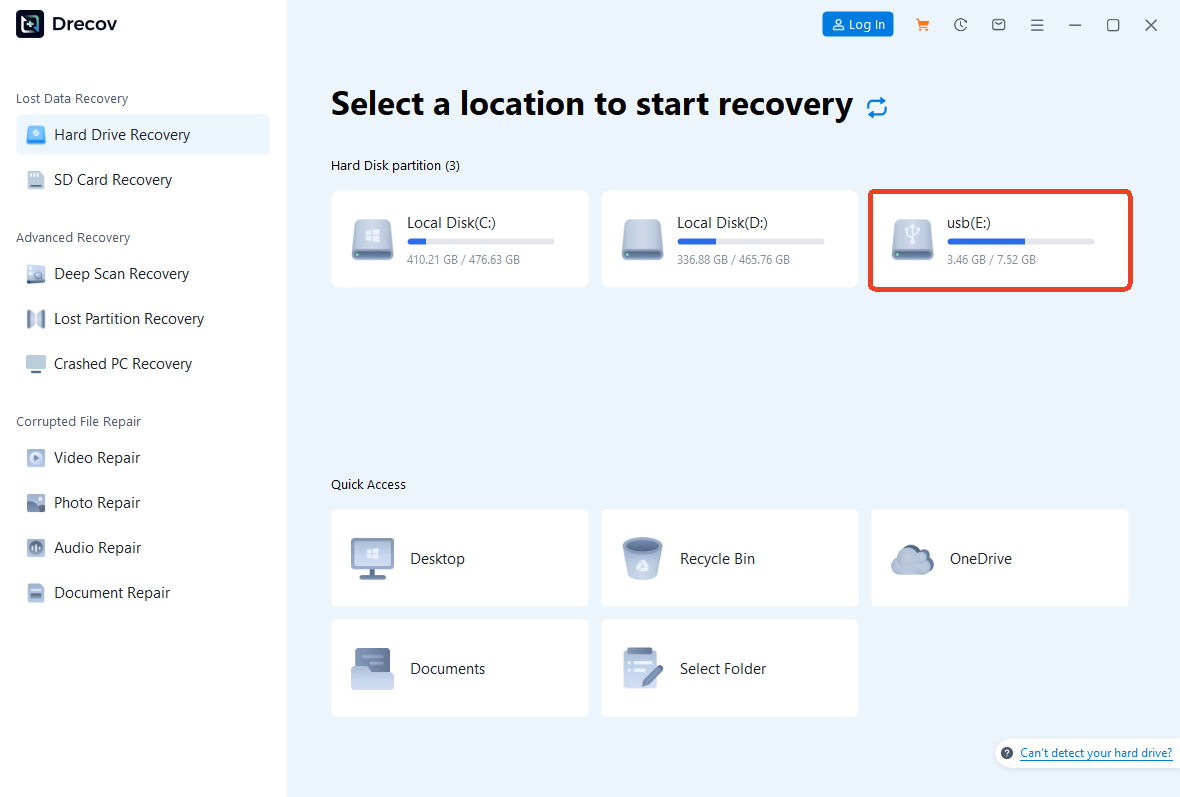
- Step 2: Select the Drive. Within the PandaOffice Drecov interface, look for “External Drives” or “Unallocated Space.” Select the entry that corresponds to your USB’s capacity.
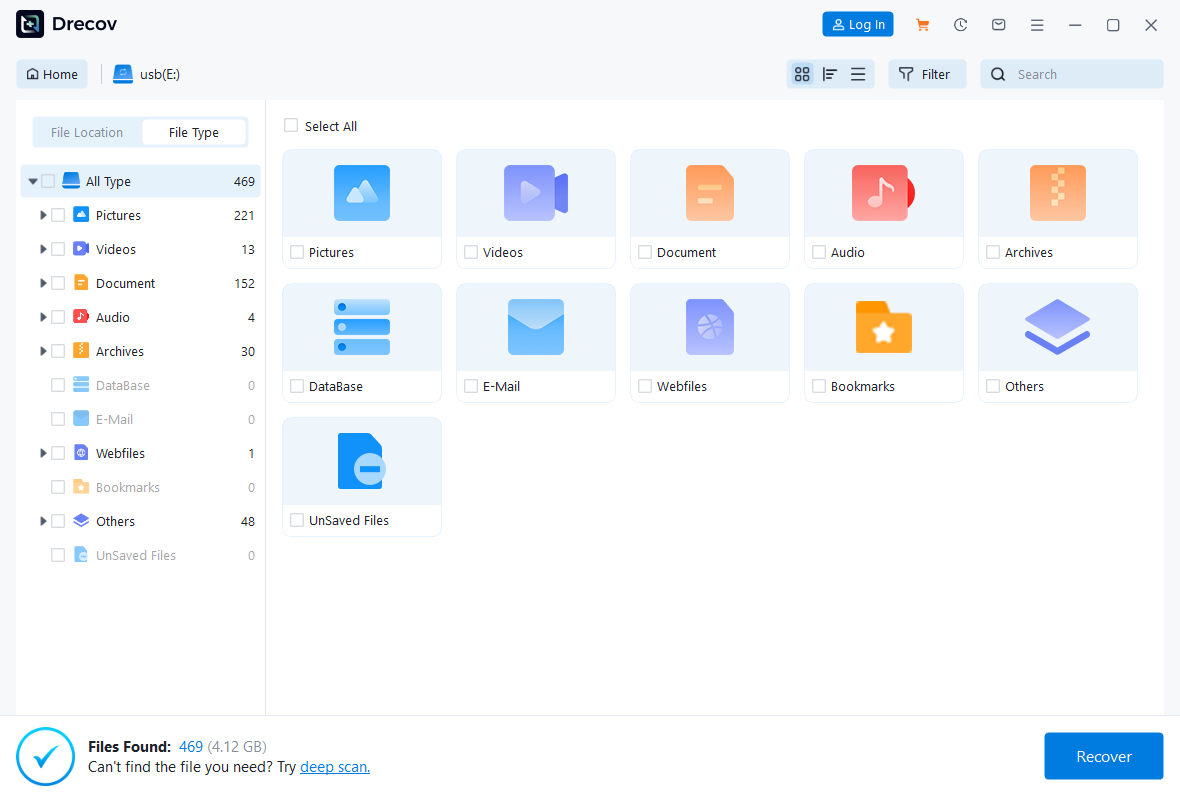
- Step 3: Deep Scan. Click the Scan button. The software will begin a deep dive into the drive’s memory modules to reconstruct lost folders and files.
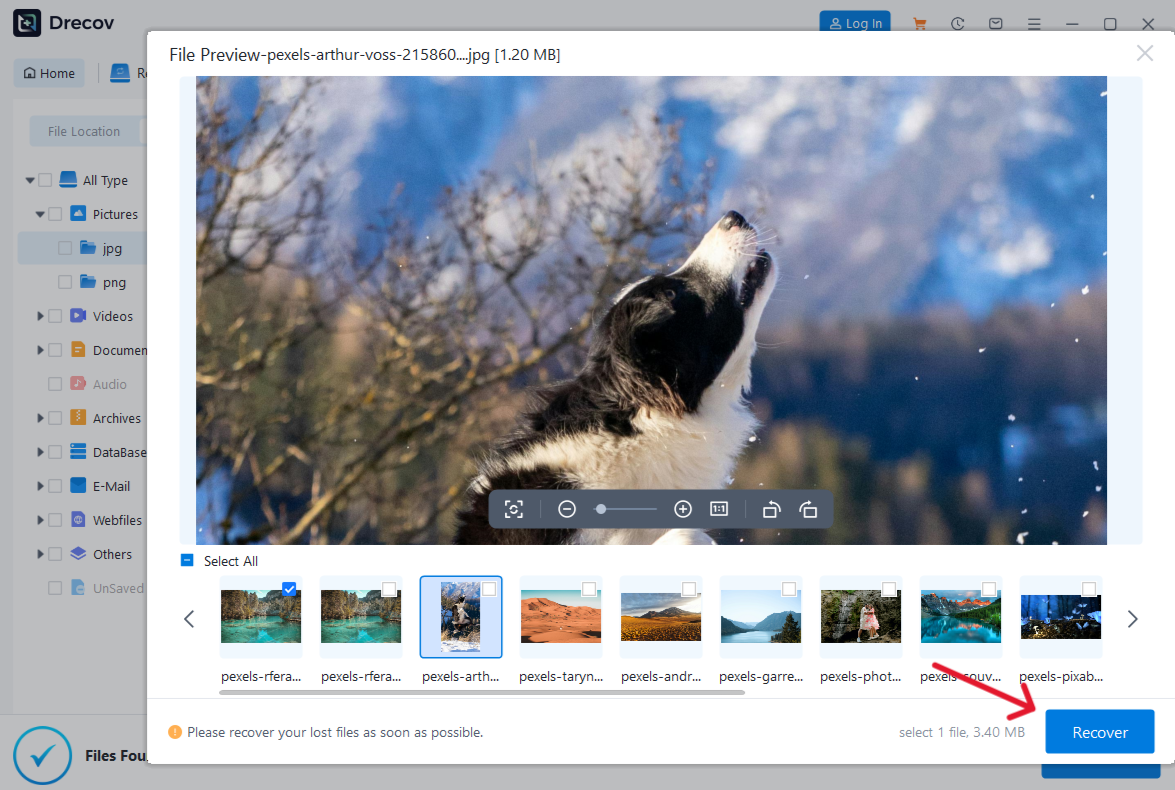
- Step 4: Preview and Recover. Once the scan is complete, browse through the files. You can preview photos or documents to ensure they aren’t corrupted.
- Step 5: Save to a New Location. Select the files you need and click Recover. Important: Always save the recovered files to your computer’s internal hard drive or a different cloud storage, never back onto the failing USB device.
Warning: If your USB device is making clicking sounds or is physically hot to the touch, stop the recovery process immediately and consult a hardware professional.
After you have secured your files, you might find these resources helpful for organizing your digital life:
- Learn about browser storage to keep your bookmarks safe.
- Check out this 2026 video download guide for managing media.
- See how to restore Chrome bookmarks if you’ve lost them during a system reset.
Hardware Troubleshooting Techniques
If software fixes and recovery tools don’t resolve the unknown usb device descriptor failed error, the problem is likely physical.
Testing with Another Computer
This is the ultimate litmus test. If the USB device fails on a completely different computer (especially one running a different OS like macOS or Linux), the device’s internal controller is likely fried. If it works on another PC, your original computer has a deep-seated driver or motherboard issue.
Checking for Physical Damage
Use a flashlight to look into the USB plug. Are the four gold pins straight? Is there lint or dust packed into the bottom? Sometimes, a simple toothpick and a blast of compressed air can fix a “dead” device by restoring the electrical contact points.
Preventing the Error in the Future
Prevention is always better than recovery. To avoid seeing unknown usb device descriptor failed again, follow these best practices.
Safe USB Usage Practices
Never “yank” a USB drive out while data is being written. Use the “Safely Remove Hardware” icon in the system tray. This ensures that all data buffers are flushed and the device is electronically “parked” before power is cut.
Keeping Drivers Updated
Make it a habit to check for chipset updates from your motherboard manufacturer. These updates often contain stability patches for USB controllers that solve the unknown usb device descriptor failed bug before it even happens.
When to Replace Your USB Device
USB flash drives and external hard drives have a finite lifespan. If a device consistently gives you the unknown usb device descriptor failed error even after formatting and driver reinstallation, it is signaling its retirement. Flash memory cells eventually wear out (program/erase cycles), and the internal controller can fail due to heat. If the device is more than 5 years old and starts showing this error, it is time to migrate your data to a new, reliable storage medium.
Unknown USB Device Descriptor Failed FAQs
1. What does “Device Descriptor Request Failed” mean?
It means the communication between the hardware and the Windows OS failed at the identification stage. The computer knows something is plugged in but can’t read its “ID card.”
2. Can this error damage my computer?
Generally, no. It is a communication error. However, if the error is caused by a short circuit in the USB device, it could potentially damage the port. Always unplug a device if it smells like burning or feels excessively hot.
3. Why does my USB keep disconnecting and reconnecting?
This is usually caused by an unstable power supply or a physical loose connection. The system tries to initialize the device, fails, and restarts the process indefinitely.
4. Is this a driver issue or a hardware issue?
It can be either. The best way to tell is by testing the device on a second computer. If it works there, it’s a driver/software issue on your first PC.
5. How do I permanently fix this error?
There is no single “permanent” fix because the cause varies. However, disabling USB Selective Suspend in Power Options and keeping your Chipset Drivers updated are the best long-term preventative measures.
Conclusion
Dealing with an Unknown USB Device (Device Descriptor Failed) error can be an incredibly frustrating experience, especially when you need to access important files urgently. However, as we have explored, the solution is often just a few clicks away. Whether the problem is a minor power management glitch, a corrupted driver, or a physical port issue, systematic troubleshooting is the key.
By utilizing tools like PandaOffice Drecov, you can ensure that even if the device itself is failing, your precious data remains safe. Remember to always prioritize data integrity by performing regular backups and using high-quality USB hardware. With the right knowledge and the right tools, you can turn a tech nightmare into a simple weekend fix.





