







You plug in your USB flash drive expecting quick access to your files, and suddenly Windows throws a curveball: [please insert disk into usb drive]. That message feels confusing because—well—the disk is already there. So what’s going on?
At its core, this error means your computer detects the USB hardware but cannot access its storage memory. It’s like recognizing a locked safe but having no way to open it. The system sees the outer shell but fails to communicate with the internal storage chip. Because this issue is so common, understanding how to navigate it is essential for anyone who relies on portable storage.
What Does “Please Insert Disk Into USB Drive” Mean?
When you encounter the [please insert disk into usb drive] prompt, your operating system is essentially saying it has identified a drive letter assigned to a port, but it cannot find any readable media within that logical path. This is a frustrating barrier, especially when you have critical documents or irreplaceable photos stored on the device.
How USB Storage Devices Work
USB drives are essentially compact storage systems with two main components: a controller chip and NAND flash memory. The controller acts like a translator between your computer and the storage cells. When everything works smoothly, you plug in the drive, the controller communicates with your operating system, and your files appear instantly.
The internal architecture is designed for speed and portability. However, because the NAND flash cells have a limited number of write cycles, they can eventually wear out. If the controller can no longer “talk” to these cells, the drive essentially becomes a ghost—present in the hardware list but empty in practice.
Why Windows Shows This Error
Windows displays this error when it fails to read the drive’s partition table or file system. Without that information, it doesn’t know how the data is organized, so it assumes the disk isn’t properly inserted—even when it is. This often happens when the USB drive becomes corrupted or partially damaged. Furthermore, if the drive is assigned a drive letter that conflicts with a network drive or another internal partition, the [please insert disk into usb drive] error might pop up as a result of this logical confusion.
Main Causes of the Error
Understanding the cause of the [please insert disk into usb drive] error is like finding the root of a problem instead of trimming the branches. Let’s break it down into physical and logical categories.
Hardware Failures
Damaged USB Flash Drive
Physical damage is one of the biggest culprits. USB drives may look tough, but inside they’re delicate. Dropping them, exposing them to heat, or even frequent plugging and unplugging can wear them out. Over time, the internal memory chips degrade, making data inaccessible. If the connection between the USB plug and the circuit board is cracked, the power might flow, but data signals will fail, leading to the [please insert disk into usb drive] message.
Faulty USB Port
Sometimes the issue isn’t the drive—it’s the port. Dust, debris, or electrical faults can disrupt the connection. If the port isn’t supplying consistent power or data transfer, your system might misinterpret the device status. You should always check for physical obstructions inside the port before assuming the drive is dead.
Software Issues
Corrupted File System
If your USB drive was removed without safely ejecting it, the file system could become corrupted. This means the structure that organizes your files is damaged, making the data unreadable even if it still exists. A RAW file system is a frequent result of such corruption, where Windows can no longer recognize the format as FAT32 or NTFS.
Driver Problems
Outdated or corrupted drivers can also cause communication failures. Drivers act as interpreters, and when they malfunction, your system struggles to understand the device’s structure. This often happens after a major Windows update where older hardware drivers are no longer fully compatible with the new system kernel.
Common Symptoms You May Notice
Before the [please insert disk into usb drive] error message appears, your USB might show warning signs that something is wrong under the hood.
USB Shows 0 Bytes
You plug in the drive, and it appears—but shows 0 bytes used and 0 bytes free. That’s a strong indication that the system can’t read the storage properly. When you see 0 bytes, the computer is basically looking at an empty container where the memory chip should be.
Drive Letter Appears but No Access
Sometimes the USB gets assigned a drive letter, but clicking it triggers the error. It’s like having a door with a handle that doesn’t open. This specific symptom often leads users to search for how to fix the [please insert disk into usb drive] error because the drive is tantalizingly close to being accessible, yet remains just out of reach.
Quick Fixes to Try First
Before diving into technical solutions or using heavy-duty software, start simple. You’d be surprised how often basic fixes work for the [please insert disk into usb drive] error.
Restart Your Computer
Restarting resets your system’s USB controllers and clears temporary glitches. It’s the digital equivalent of turning something off and on again—which works more often than people admit. This refreshes the stack of drivers and can clear up minor resource conflicts.
Try Another USB Port or PC
Switch ports or test the drive on another computer. This helps isolate whether the problem lies with the device or your system. If the drive works on a different laptop, you know the [please insert disk into usb drive] error is local to your original PC’s hardware or software configuration.
Advanced Fixes That Actually Work
If the error persists, it’s time to roll up your sleeves and dig deeper into the Windows system tools to resolve the [please insert disk into usb drive] issue.
Update or Reinstall USB Drivers
Corrupted drivers are a frequent silent killer of USB functionality. By refreshing these, you ensure the “bridge” between hardware and software is stable.
- Step 1: Right-click the Start button and select Device Manager.
- Step 2: Expand the Universal Serial Bus controllers section.
- Step 3: Right-click your USB Mass Storage Device and select Uninstall device.
- Step 4: Unplug the USB drive and restart your computer.
- Step 5: Once Windows reboots, plug the drive back in. Windows will automatically search for and install the latest drivers.
Use Disk Management Tool
Disk Management is a powerful built-in tool that lets you see what’s really happening behind the scenes. If your USB appears as “No Media”, it usually indicates hardware failure. If it shows as “Unallocated”, you might be able to fix it by creating a new partition.
| Status in Disk Management | Meaning | Possible Fix |
| No Media | Hardware failure or disconnected chip | Replace device or check connection |
| Unallocated | Partition table is missing or wiped | Create new partition / Recovery |
| RAW | File system corrupted or unrecognized | Format drive or use recovery software |
Run CHKDSK Command
The Check Disk utility (CHKDSK) scans your drive for errors and attempts to repair them. This is particularly useful if the [please insert disk into usb drive] error is caused by minor directory corruption.
- Step 1: Press the Windows Key, type
cmd, and select Run as Administrator. - Step 2: In the window, type
chkdsk X: /f(Replace X with your actual USB drive letter). - Step 3: Press Enter and allow the process to complete.
- Step 4: If the utility fixes the errors, try accessing your drive again through File Explorer.
Warning: If CHKDSK reports that it cannot open the volume for direct access, the drive might be too corrupted for a standard Windows repair.
Data Recovery Options
Let’s be honest—sometimes fixing the drive isn’t the priority. Recovering your data is the most important part when you encounter the [please insert disk into usb drive] error.
cannot open usb drive please insert disk
If you find that you cannot open usb drive please insert disk, the logical structure of the drive is likely compromised. In this scenario, Windows sees the drive’s existence but cannot find the “map” to your files. Before you attempt any formatting, which would wipe your data, you must use a professional recovery tool to extract the existing bits and bytes.
recover files from no media usb flash drive
When you look at Disk Management and see the “No Media” status, your options are limited. To recover files from no media usb flash drive, you generally need a tool that can interact with the controller at a lower level than Windows File Explorer. If the software cannot see the drive at all, the hardware may require a professional clean-room intervention. However, if the software detects even a few megabytes of capacity, recovery is still on the table.
recover photos from corrupted removable disk
Photos are often the most precious data we lose. If you need to recover photos from corrupted removable disk, time is of the essence. Avoid writing any new data to the drive, as this could overwrite the very sectors where your photos are stored. Using a specialized recovery algorithm that recognizes file signatures (like .jpg or .png) can often bring back memories even when the folder structure is gone.
PandaOffice Drecov data recovery software
For those who need a reliable, user-friendly solution, PandaOffice Drecov data recovery software is a premier choice. It is designed specifically to handle scenarios where Windows says [please insert disk into usb drive]. It uses advanced deep-scanning technology to bypass corrupted file systems and locate your missing data.
⚠ Warning: Install it on a drive different from the one where your data was lost to prevent overwriting.
How to use PandaOffice Drecov for recovery:
- Step 1: Connect the USB. Plug your problematic USB drive into a working port on your computer.
- Step 2: Select the Drive. Launch PandaOffice Drecov. You will see a list of available drives. Select the USB drive that is currently showing the error.
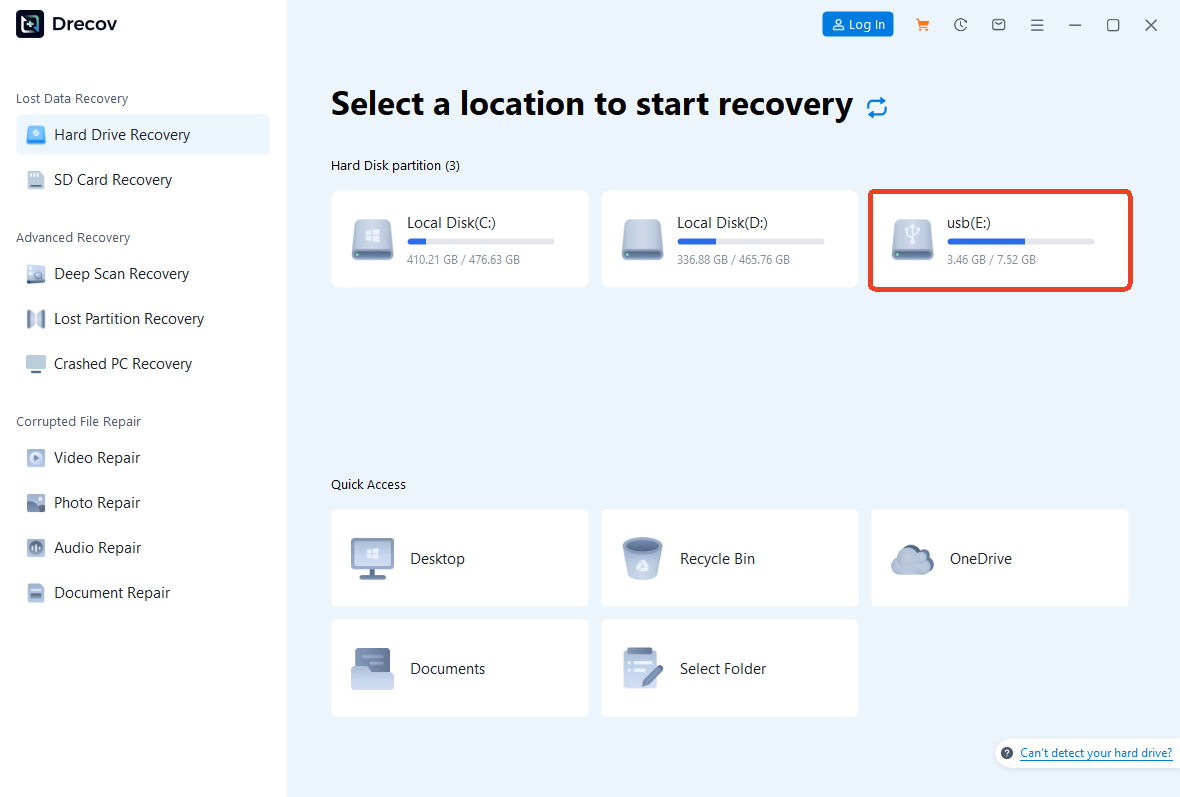
- Step 3: Deep Scan. Click the “Scan” button. The software will perform a comprehensive scan of the NAND flash memory, looking for file fragments.
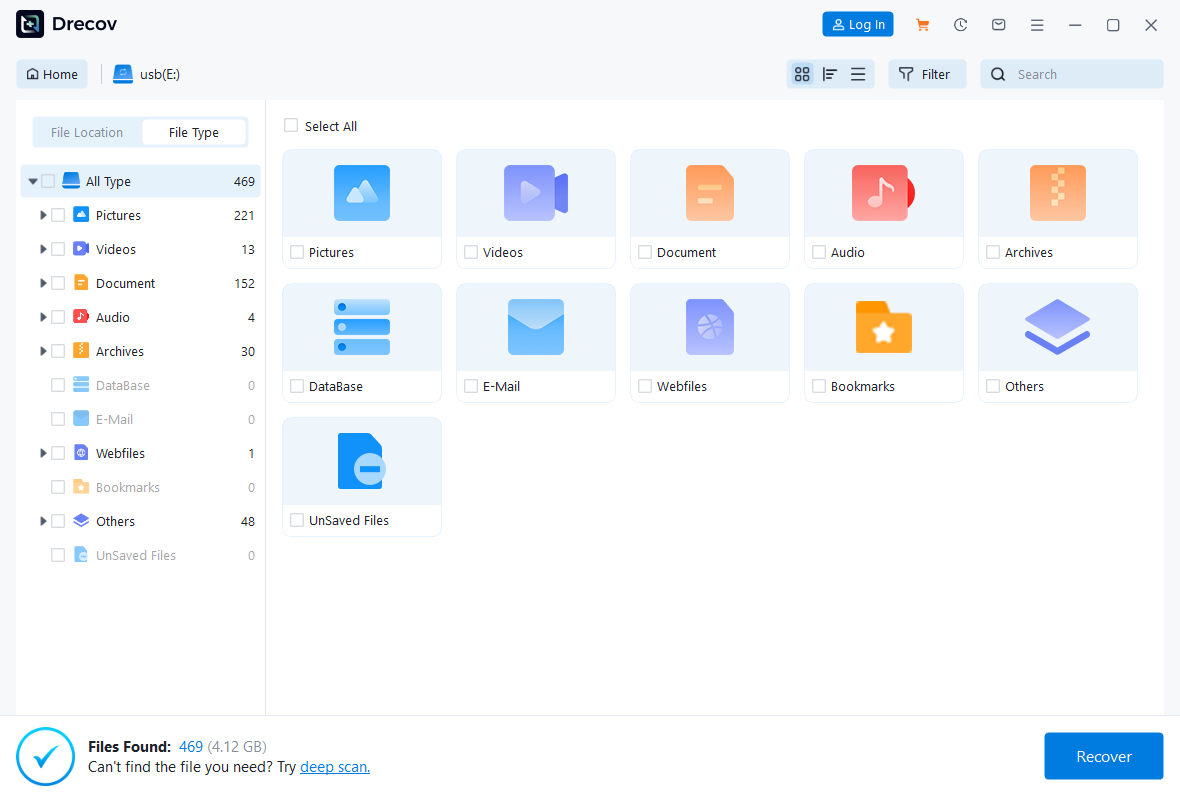
- Step 4: Preview and Recover. Once the scan is complete, browse the list of found files. You can preview photos and documents to ensure they are intact. Select the files you need and click “Recover”.

- Step 5: Save to a Safe Location. Always save your recovered files to your computer’s internal drive or a different external storage device to prevent further data loss.
When Data Recovery Is Impossible
If the drive shows “No Media,” the controller may have failed completely. In such cases, even professional recovery services may struggle. It’s like trying to read a book that’s been burned—there’s simply nothing left to recover. If the physical chip is cracked or the silicon has shorted out, the [please insert disk into usb drive] error becomes a permanent state of the hardware.
For further reading on maintaining your USB devices, check out these helpful guides:
- How to install drivers for USB devices
- Repair USB drive and recover data step-by-step
- Repair corrupted USB flash drive without losing data
Preventing This Error in the Future
You can’t eliminate all risks, but you can reduce them significantly so you never have to deal with the [please insert disk into usb drive] error again.
Safe Removal Practices
Always eject your USB drive properly. Pulling it out without warning can interrupt data transfers and corrupt the file system. In Windows, use the “Safely Remove Hardware and Eject Media” icon in the system tray. This ensures that all write operations are finished and the drive is logically “parked” before physical disconnection.
Regular Backups
Treat USB drives as temporary storage, not permanent vaults. Keep backups of important files on cloud storage or external drives. If you have a backup, the [please insert disk into usb drive] error becomes a minor hardware annoyance rather than a data catastrophe.
When to Replace Your USB Drive
USB drives don’t last forever. If your device repeatedly shows the [please insert disk into usb drive] error across multiple systems, it’s time to let it go. Storage devices degrade over time, and pushing them beyond their limits can lead to permanent data loss. If you notice the drive getting excessively hot or making the Windows “device disconnected” sound randomly, these are early warning signs of impending failure.
Please insert Disk into USB Drive FAQs
1. Why does my USB show “Please insert disk” but it’s already plugged in?
Because your system detects the physical connection of the USB controller, but the controller cannot “see” or read the NAND flash memory where your data is stored. This is often due to file system corruption or a hardware fault within the drive itself.
2. Can I fix this error without losing data?
Yes, in many cases. If the error is caused by a driver issue or a minor file system glitch, methods like reinstalling drivers or running CHKDSK can fix it without affecting your files. If those fail, using PandaOffice Drecov data recovery software can help you pull data off the drive before you attempt to format it.
3. What does “No Media” mean in Disk Management?
“No Media” means the operating system recognizes the USB bridge/controller chip, but the controller is reporting that there is no storage memory available to read. This is a common symptom of a physically failing flash drive.
4. Is formatting the USB a good solution?
Formatting is a great way to fix the [please insert disk into usb drive] error if the cause is purely logical (like a corrupted file system). However, formatting erases all data on the drive. You should only format the drive after you have successfully recovered your important files.
5. How long do USB drives typically last?
Most high-quality USB drives last between 5–10 years. However, this depends heavily on how often you write data to them. Cheap, promotional USB drives often have a much shorter lifespan and are more prone to the [please insert disk into usb drive] error.
Conclusion
The [please insert disk into usb drive] error might seem confusing at first, but it’s usually a sign of deeper communication issues between your system and the device. Whether it’s a corrupted file system, faulty driver, or hardware failure, the solution depends on identifying the root cause. Sometimes a simple restart fixes everything, while other times the drive itself has reached the end of its lifespan. Think of USB drives like notebooks—useful, portable, but not indestructible. Handle them carefully, back up your data, and you’ll avoid most of these headaches. By following the steps outlined above and utilizing tools like PandaOffice Drecov, you can often reclaim your data and get back to work.





