







If you ask, “Why does my computer freeze when I play games?” start with the exact moment it happens. A game that hangs on launch is different from a PC that locks after twenty minutes of heavy play. Note whether sound continues, the mouse moves, Windows responds, or the entire machine powers off. Close the game without deleting its files, save a copy of local game saves, and test one change at a time. If the computer shuts off rather than freezing, follow the power and heat path first.
Describe the freeze before changing settings
A frozen game with a working Windows desktop often points to the game, its graphics settings, files, or a background overlay. Press Alt + Tab once. If another app opens, the system itself may still be responsive. Save a screenshot of any error and close the game normally if possible. A full lockup where keyboard shortcuts and the mouse stop working needs wider checks of drivers, memory, temperature, and storage.
Write down whether the freeze happens at the title screen, during a loading screen, after entering a specific area, or only after longer play. A repeatable crash at the same loading point may involve one game file or save. A failure after the PC has warmed up suggests checking airflow and temperatures. When several different games freeze, a single game’s installation is less likely to be the cause.
If the PC turns off without an error, do not call it a freeze. A shutdown can involve power delivery or thermal protection. The random-shutdown guide covers that route. Avoid stress tests on a machine that already shuts down unexpectedly before you have backed up important files.
Make the least disruptive checks first
Restart Windows once after saving work and try the same game for a short period. Close browsers, recording software, and overlays that you do not need. If the freeze began immediately after enabling an overlay or mod, disable only that recent addition and retest. Do not uninstall the game or delete its settings folder before finding where your local saves are stored.
Check free space on the Windows drive and the game library drive. Games may need room for updates, shader caches, or temporary files. A nearly full drive can turn a loading pause into a long stall. Free space by moving your own large files to a healthy drive after verifying the copy; avoid deleting unfamiliar folders in ProgramData or AppData. If Steam reports a disk read error rather than a frozen image, use the Steam disk-read diagnosis.
Open Task Manager while the game is running in windowed mode, if the PC remains responsive. Watch whether memory use climbs continually or whether the drive stays at high activity while loading. This does not prove a specific fault, but it tells you where to look next. A program that keeps consuming more memory over time warrants a closer check of the app that keeps growing. Do not close Windows processes at random to lower the percentage.
Choose a test that matches the timing
A freeze right after a graphics update points to the driver change. Open Device Manager, expand Display adapters, and inspect the graphics device’s Properties and Driver tab. If Roll Back Driver is available and the trouble began immediately after that update, record the current version before rolling back. Otherwise, obtain a compatible driver from the PC or graphics-card maker. Do not install an unrelated driver package found on a download site.
A freeze only after longer play calls for a simpler physical check first. Feel whether the exhaust is unusually hot, listen for a fan that no longer spins normally, and inspect vents for dust without pushing tools inside the computer. Move a laptop to a hard surface with open airflow. If the computer shuts down or smells hot, stop testing and seek service. The point is to prevent another sudden shutdown, not to find the highest temperature the machine can tolerate.
A repeatable freeze in one area of one game suggests that game’s own files, save, or add-ons. Use the platform’s verify-files feature only after copying local saves. Verification may replace game installation files, but it should not be treated as a backup of personal saves or custom mods. Check the game’s official support page for the exact menu. If several games freeze in the same way, return to system drivers, memory, or storage rather than reinstalling every title.
Microsoft’s clean-boot guidance provides a controlled way to check whether background software interferes with an app or game. Use it only after recording which services you change and after confirming you can sign back in. If the game works in a clean boot, restore services in groups to identify the culprit. Return Windows to normal startup when the test ends.
Protect local saves before repair or reinstall
A freeze does not mean the save file has been deleted. Reopen the game and check the latest in-game save, but do not overwrite the only older slot. Then look for local saves in the game’s documented folder and the platform’s cloud-sync status. Copy the whole save folder to another drive. Keep separate copies from before and after a sync conflict; choosing the wrong cloud version can replace newer progress with an older one.
Game locations vary. Some titles store saves under Documents, others under AppData, Saved Games, or a launcher-managed directory. Find the title’s official support instructions rather than guessing a path from another game. The Steam save-location explanation helps distinguish a library folder from a save folder. If a game starts with a blank profile, check which Windows account and game profile are active before declaring the files lost.
If the saves were deleted after a crash, stop installing new games or updates onto the drive that held them. SSD TRIM and later writes can reduce recovery prospects. First check the game’s cloud history, local backup, Recycle Bin, and File History if enabled. Recovering an older save is useful only if it belongs to the correct account and actually loads in the game.
If a save truly vanished, recover from its original drive
Drecov is Windows data recovery software for stable, detectable drives. It can search for deleted local game saves, screenshots, clips, and related files when backups do not contain the needed copy. Quick Scan, Deep Scan, filters, and preview help narrow results before you restore them to a different healthy drive. Drecov also supports Lost Partition Recovery if the save’s former partition is missing. It does not fix overheating, graphics drivers, a game bug, or a cloud account conflict. Do not scan a drive that clicks, drops offline, or repeatedly freezes Windows; consider imaging or professional help instead.
⚠ Warning: Install it on a drive different from the one where your data was lost to prevent overwriting.
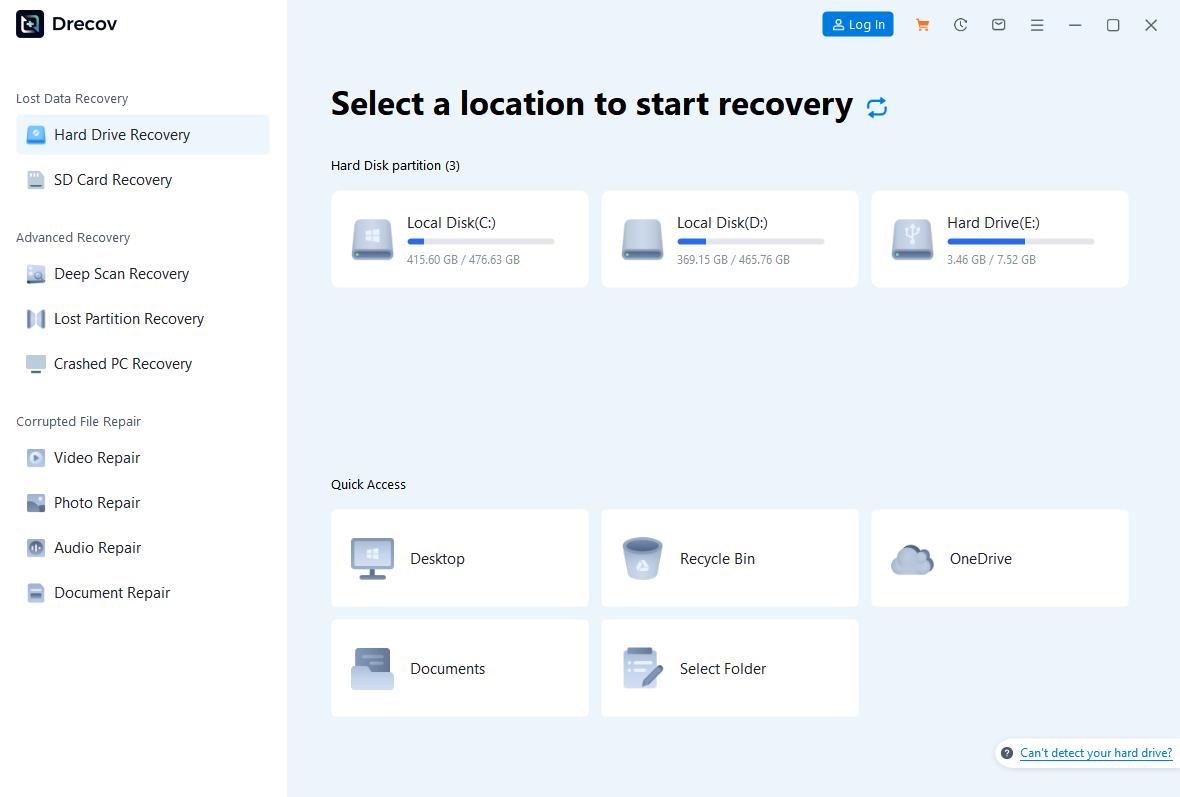
Step 1: Open Drecov and select the former save location
Prepare another healthy drive first. Run Drecov from the healthy Windows drive, not the partition where the save disappeared. Select the original volume that held the game’s local save folder. Do not select the Steam installation library by habit; the save may have lived in AppData or Documents on a different volume. If the source is physically unstable, stop before scanning.
Step 2: Start Quick Scan
Run Quick Scan and look for the former game folder, save extensions, profile files, and nearby screenshots. Compare dates with the last successful session. A newer file is not automatically the correct one if a crash or sync conflict replaced it with blank progress.
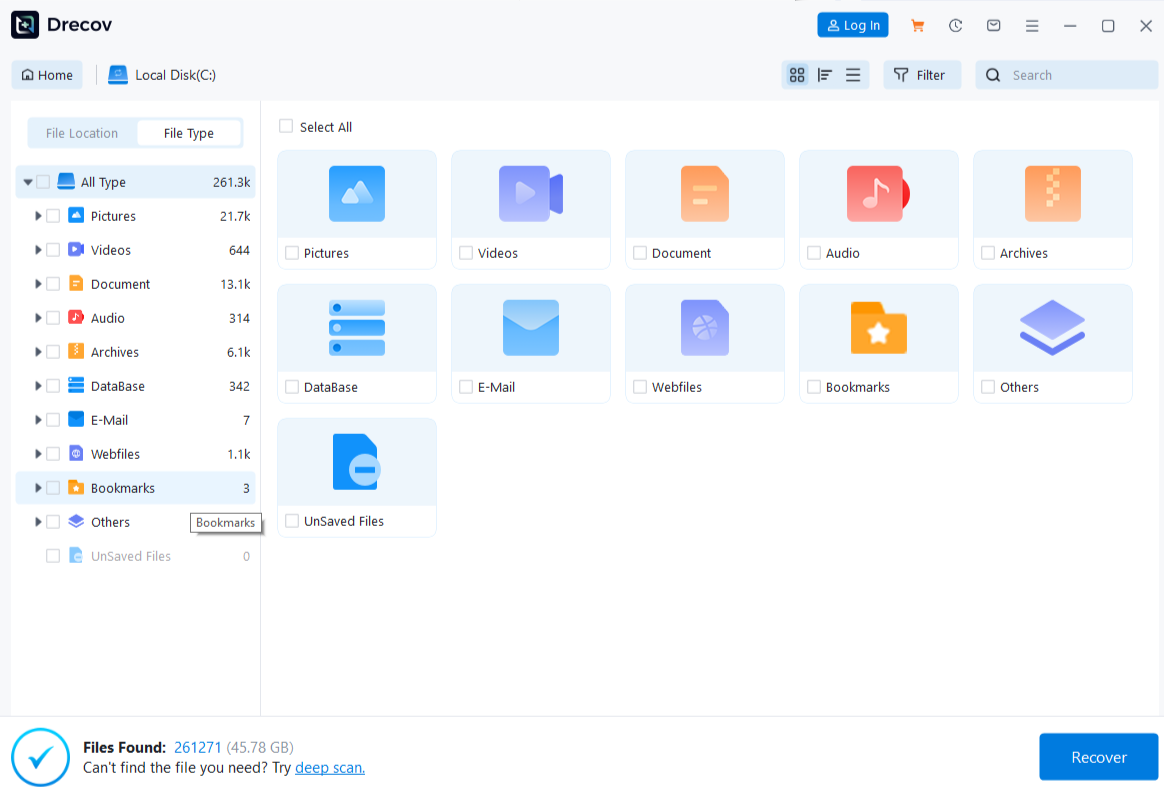
Step 3: Try Deep Scan if the drive remains stable
Use Deep Scan only when Quick Scan misses the needed copy and the device continues to respond normally. A broader search can return files without the old folder structure. If scanning makes the PC freeze again, stop. Software recovery should not become a stress test for a failing drive.
Step 4: Filter and preview candidates
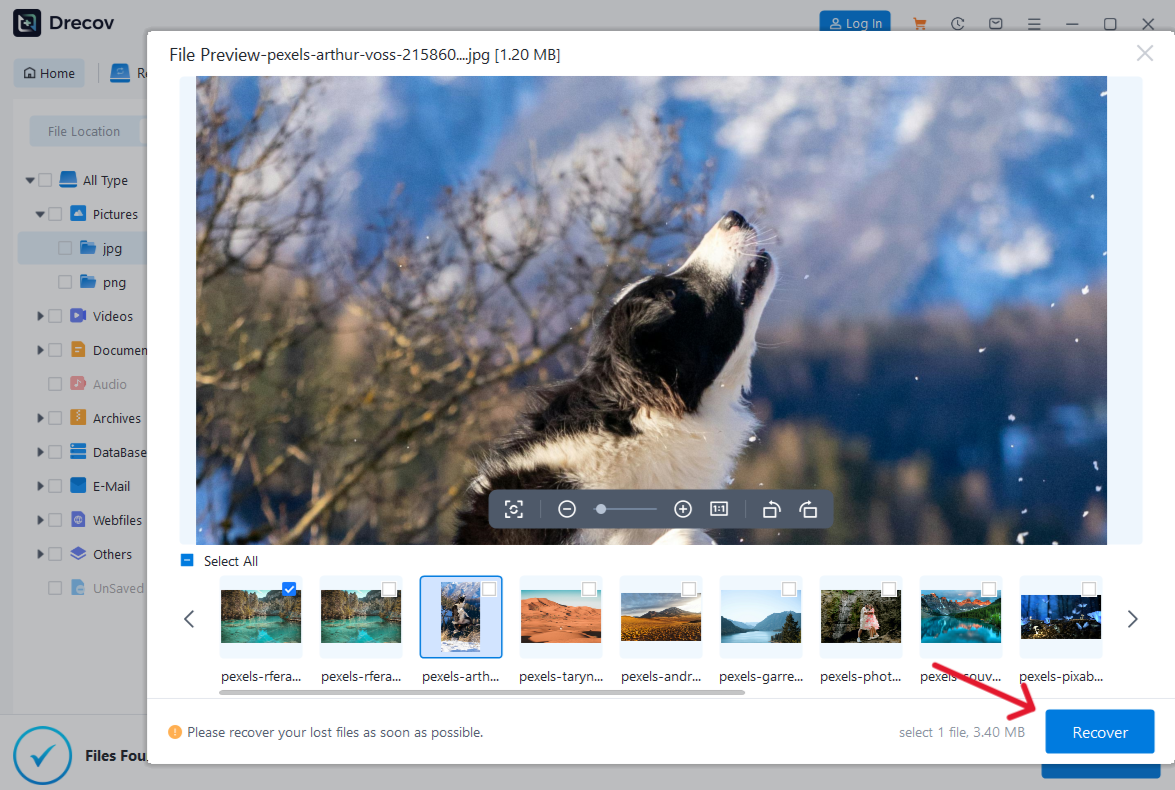
Filter by file type, former path, name, and date when available. Preview representative screenshots and videos. A game save may not have a readable preview, so its file size and known folder context become more important. Recover several plausible versions separately rather than letting one overwrite another.
Step 5: Save elsewhere and test the recovered save
Recover results to the separate healthy drive. If the output is not where expected, check its Drecov Folder or Recovery Folder. Keep the live save folder untouched while testing a recovered version. Follow the game’s supported restore procedure, load the correct profile, and verify progress in-game. Make a fresh backup before enabling cloud sync again.
⚠ Warning: Install it on a drive different from the one where your data was lost to prevent overwriting.
After each change, repeat the same short game scene that previously froze. Keep the resolution, save, and background apps otherwise unchanged so the result means something. One successful minute is not proof of a permanent fix if the original failure occurred after an hour. If the freeze returns only after installing a particular mod or graphics update, keep that finding and reverse that single change. If every game still locks the entire PC, stop reinstalling games and ask a technician to check hardware. Tell them whether the screen froze, the sound looped, or power went off; those observations narrow the fault without risking the save folder.
Conclusion
To answer why a computer freezes during games, first separate a game-only hang from a full system lockup or shutdown. Match the timing to a recent driver change, heat, background software, or storage activity, then test one cause at a time. Back up local saves before repairs. If a stable Windows drive truly lost those files, Drecov can search their original location and save recoverable copies elsewhere for careful in-game verification.
⚠ Warning: Install it on a drive different from the one where your data was lost to prevent overwriting.