







A VOB, or Video Object, file is a container used by DVD-Video. It may carry MPEG video, audio tracks, subtitles, and related streams, while the surrounding VIDEO_TS structure supplies navigation and playback information. One VOB is therefore not always a self-contained movie, and a numbered set may represent consecutive parts of the same title.
Read VOB as Part of a DVD Structure
Look first at the folder context. Files named VIDEO_TS.IFO, VIDEO_TS.BUP, and VTS_01_1.VOB indicate a DVD layout. IFO files describe navigation; BUP files are backups of control information. Copying only the largest VOB may preserve the visible program but lose menus, chapters, alternate audio, or subtitle behavior.
Use a player that documents DVD or VOB support, and test the folder or disc mode as well as the individual file. Do not change .vob to .mp4 and expect a conversion. Renaming an extension changes the label, not the streams, timestamps, interlacing, aspect metadata, or compatibility.
Open the File Without Renaming It
If one player fails, compare another trusted player and a second known-good VOB. A failure at the same timestamp across players suggests damaged source data. Failure only in one application points toward its decoder, settings, or disc-navigation handling rather than deletion.
Commercial DVDs may use access controls or copy protection. Respect applicable law and use authorized sources. Recovery software cannot defeat encryption or manufacture decryption keys, and ordinary file copying may not reproduce a protected disc’s behavior.
Separate Playback Failure From File Damage
Before converting, duplicate the entire VIDEO_TS folder or create an authorized image of the source. Work from that copy. Choose the output around the real goal: broad playback, editing, archiving, subtitles, or multiple audio tracks. A quick conversion that keeps only the first stream can silently discard material.
Inspect the converted result from beginning to end at several chapter boundaries. Confirm audio language, subtitle timing, aspect ratio, frame cadence, and duration. Keep the untouched source until the new file survives that review and a second-device playback test.
Copy and Convert Without Losing the Original
A zero-byte VOB, missing segment, unreadable optical disc, or copy that stops with errors is not fixed by changing container. Try one clean drive and inspect the disc for damage. Repeated reading of deteriorating media can waste time; irreplaceable content may justify specialist optical-media help.
When a VOB was deleted from a Windows disk, external drive, USB device, or memory card, stop writing to that source. PandaOffice Drecov can search stable recognized media in read-only recovery mode for supported video files. It does not repair an optical drive, bypass disc protection, or guarantee recovery of overwritten sectors.
⚠ Warning: Install it on a drive different from the one where your data was lost to prevent overwriting.
Recover a Deleted VOB From Stable Storage
Open Drecov and select the original storage location rather than the folder where you hope to save results. Run Quick Scan first, filter for video and the former VIDEO_TS path, and preview representative results when supported. If the needed segment is absent and the device stays stable, use Deep Scan.
Recover the selected files to another healthy device, never the source. Check the Drecov folder or Recovery folder when output is not where expected. Verify every recovered segment, especially joins between numbered VOB files, before conversion, formatting, or further repair.
Use neighboring guidance only when the evidence matches: see corrupted video file repair, finding video files in Windows, or recovering deleted videos. If a separate event has actually deleted local files, PandaOffice Drecov provides a Windows recovery path; it is not a substitute for diagnosing the problem described here. Current platform-specific facts are documented in the VideoLAN’s Windows playback documentation.
Keep a Rollback Path Through the Final Test
Create a short case record covering VIDEO_TS structure, streams, and playback point. Include the exact wording, time, account or device involved, and the last known-good state. Reproduce the symptom once with the fewest variables possible. This record is more useful than a collection of screenshots taken after several settings have already changed.
Before conversion or repair, preserve the current working material and note how to undo the change. Apply one action that directly matches the evidence, then repeat the same test. If access becomes worse or a new error appears, stop and roll back instead of adding another speculative fix.
Compare scope around VIDEO_TS structure, streams, and playback point: one file versus every file, one account versus every account, and one device versus the whole computer. A narrow failure deserves a response narrower than conversion or repair. Broad resets can erase useful evidence and create extra work without resolving this boundary.
Verification must include full-duration playback with every wanted track. Observe the result long enough to catch delayed recurrence. Keep backups, logs, and the previous configuration until the corrected state survives ordinary work; an isolated successful click is not a completed diagnosis.
Check the Details That Common Fix Lists Miss
A useful diagnosis also accounts for timing. Note whether the symptom began after an update, account change, new peripheral, power event, synchronization conflict, or application crash. Compare that moment with VIDEO_TS structure, streams, and playback point. A change that immediately precedes the failure is a hypothesis to test, not automatic proof of cause.
Keep original material available while testing. Copy readable files, export settings when the application supports it, and record current versions before conversion or repair. Screenshots are useful for messages, but plain-text logs, filenames, timestamps, and version numbers are easier to compare after a restart.
Use a known-good control that resembles the failing case. That may be another account, file, device, cable, application, or network. The control must change one meaningful variable while leaving the rest of VIDEO_TS structure, streams, and playback point intact. Otherwise, success cannot identify which difference mattered.
Negative evidence matters for VIDEO_TS structure, streams, and playback point. When the problem does not follow the tested file, account, or device, avoid modifying that item further. When it follows consistently, a system-wide response may still be excessive until full-duration playback with every wanted track has been observed. This boundary removes many implausible causes.
Before accepting the result, perform full-duration playback with every wanted track. Then inspect logs or status indicators for warnings that did not reach the screen. A workaround that merely suppresses the message is weaker than a correction that restores normal behavior without disabling security, backup, updates, or verification.
Document what remains uncertain. If escalation is needed, provide the original symptom, protected-copy location, steps already tested, and observations about VIDEO_TS structure, streams, and playback point. That package helps support staff avoid repeating risky work and makes it clear that copy-protection circumvention was deliberately kept outside this repair path.
Additional Checks for This Specific Case
A VOB copied from a finalized home DVD differs from a VOB still managed inside an authoring project. Preserve project files, menus, source clips, and the authored VIDEO_TS output when available. Rebuilding from original footage usually retains more quality and editing control than transcoding an already compressed DVD stream.
File size alone cannot identify the main title reliably. Menus, extras, and alternate angles can also occupy large segments. Use authorized playback to identify duration and chapters, then map the numbered VTS group. Never delete smaller companions until the preserved copy proves they are unnecessary.
Optical media should be copied at a conservative pace when errors appear. Clean the disc appropriately, try one known-good drive, and save a readable image or folder to healthy storage. Repeated aggressive retries on unique media may produce heat and delay professional imaging.
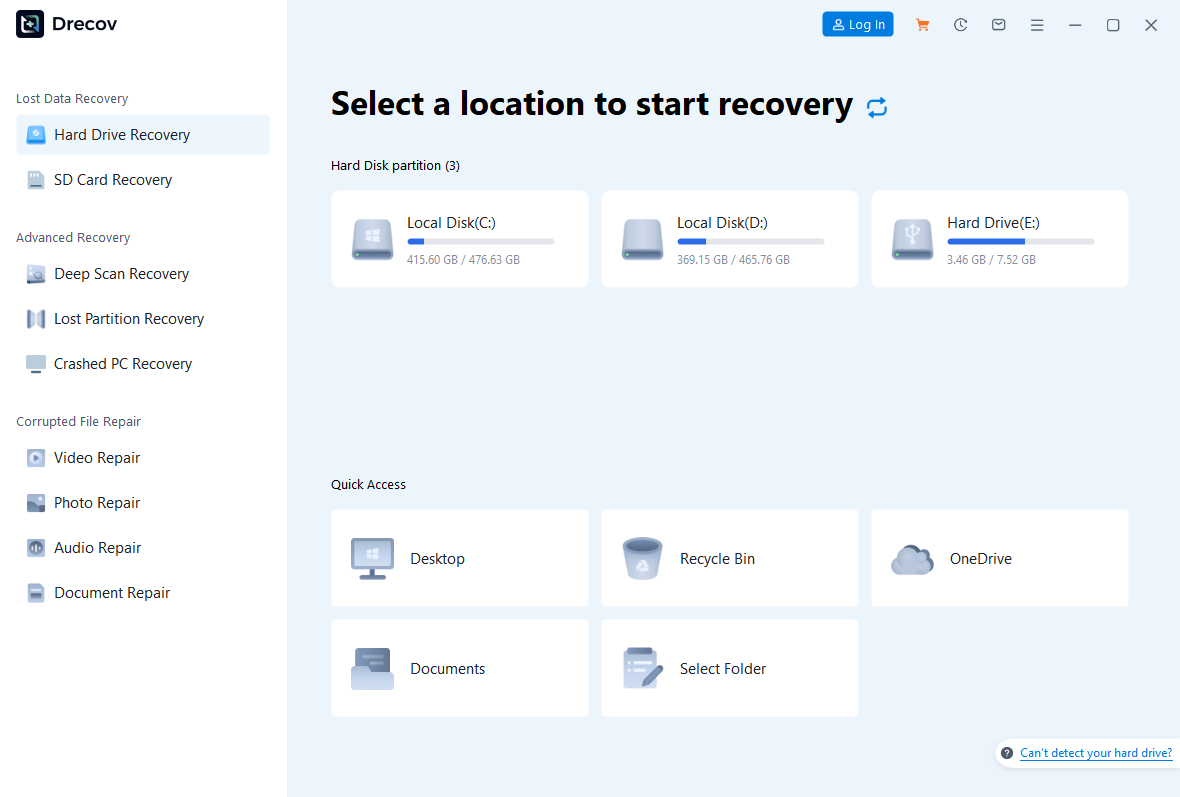
Step 1: Open Drecov and select the original loss location
For the What Is VOB Format? Understand the DVD File Before Converting loss branch, use the stable source that actually held the missing files. Keep installation away from that source, and prepare another healthy device for recovered output in this case.
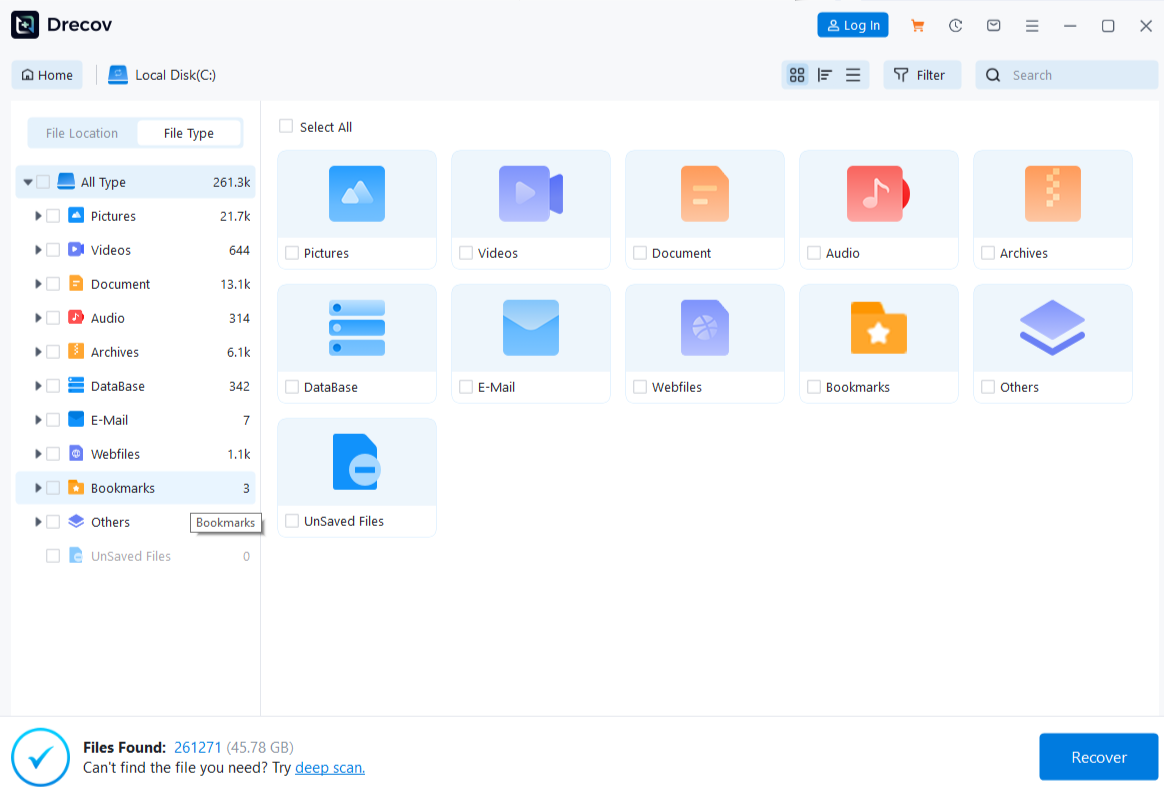
Step 2: Run Quick Scan and review the likely paths
Begin the What Is VOB Format? Understand the DVD File Before Converting search with Quick Scan. Browse its relevant former folder structure; then narrow candidates by available filename, date, location, and file-type filters.
Step 3: Continue with Deep Scan only on stable media
Run Deep Scan for this What Is VOB Format? Understand the DVD File Before Converting case only when required files remain absent and the device stays connected without severe read errors. Physical instability ends direct scanning.
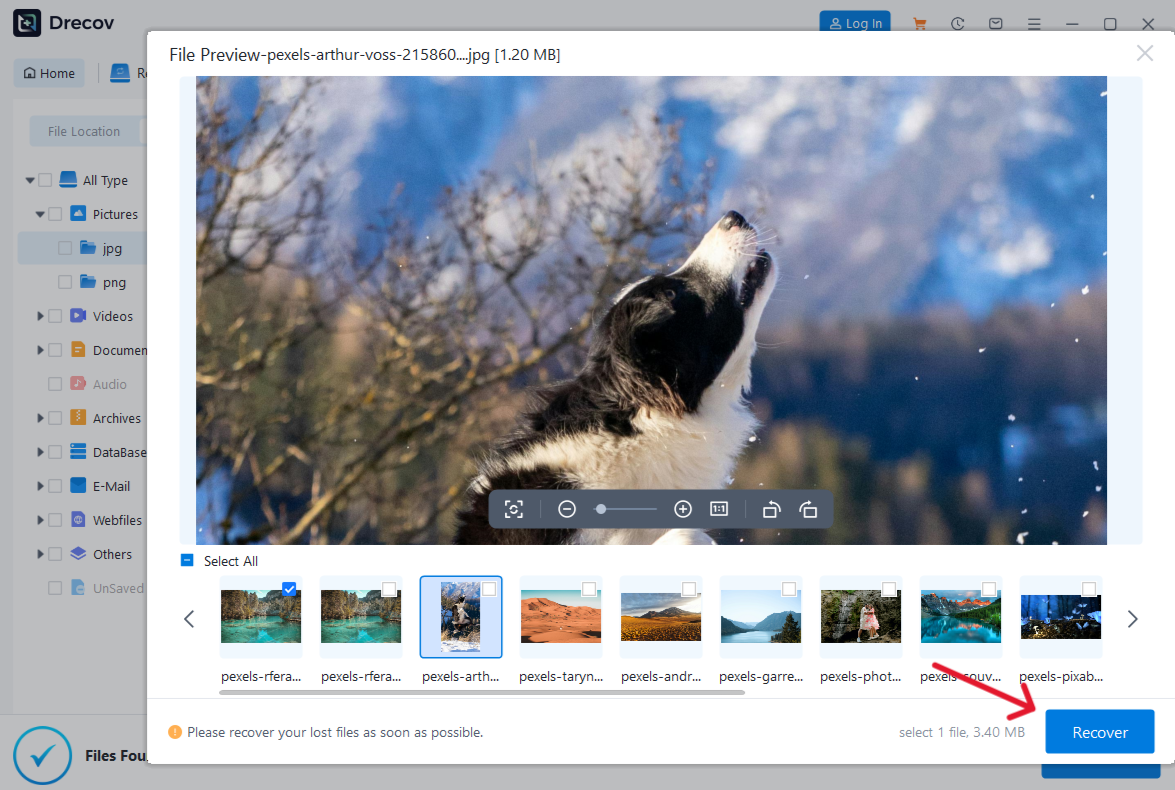
Step 4: Preview representative candidates
Preview several supported candidates related to What Is VOB Format? Understand the DVD File Before Converting before selecting the set. A readable sample provides useful evidence without certifying every page, frame, attachment, or linked object.
Step 5: Recover to another healthy device and verify
Save this What Is VOB Format? Understand the DVD File Before Converting recovery set away from the source. If output seems absent, check the Drecov folder or Recovery folder; open representative samples before any repair or deletion.
⚠ Warning: Install it on a drive different from the one where your data was lost to prevent overwriting.
Five Questions About VOB Files
Can Windows open VOB files?
A compatible media player can open many VOB files, but DVD menus and track selection may work better when the whole VIDEO_TS structure is opened.
Is VOB the same as MPEG?
VOB commonly contains MPEG-based video, but it is a DVD-oriented container with audio, subtitles, and other streams.
Can I rename VOB to MP4?
No reliable conversion occurs by renaming. Use a trusted converter on a preserved copy and verify all wanted tracks.
Why are there several VOB files?
DVD-Video commonly splits titles into numbered segments. They may belong to one continuous program.
Can Drecov repair a corrupt VOB?
Drecov recovers logically lost files. It does not repair optical hardware or guarantee reconstruction of damaged video content.
Conclusion
For a damaged but present VOB, preserve a byte-for-byte copy before trying remuxing or repair. Recovery retrieves missing data; conversion repackages readable streams; repair attempts to work around damaged structures. Treating those three jobs as interchangeable can destroy the best remaining evidence.
⚠ Warning: Install it on a drive different from the one where your data was lost to prevent overwriting.






