







Introduction: Understanding Floppy Disk and Floppy Drive
Background on Floppy Disk and Floppy Drive
The floppy disk is one of the earliest forms of portable digital storage, first introduced in the 1970s. Coupled with the floppy disk drive, it allowed users to store, transfer, and access data easily. Unlike modern storage devices, floppy drives disk operated using magnetic surfaces to encode binary information. These disks were essential for software distribution, data backup, and file transfer before CDs, USB drives, and cloud storage became widespread.
Early personal computers depended heavily on floppy disk drive systems. To function correctly, an operating system required the proper driver for floppy disk drive to read or write data. With the floppy inserted, the drive’s read/write heads would access the magnetic surface, spinning the disk and allowing data transfer.
⚠️Warning: Avoid touching the magnetic disk surface. Any scratch, dust, or magnet exposure can permanently corrupt the data stored on a floppy drive disk.
The Evolution and Significance of Floppy Drives Disk
Historical Importance
In the 1980s and 1990s, floppy drives disk were indispensable for businesses and personal users. They enabled the easy exchange of documents, software installation, and backup of critical files. Most early operating systems, word processors, and spreadsheets were distributed on these disks.
Decline and Continued Relevance
Despite their declining use due to CDs, USB drives, and cloud storage, understanding floppy disk and floppy drive is still relevant today. Many legacy systems, museums, or archives still rely on these drives to access old data. For modern computers lacking built-in drives, an external floppy disk drive can still retrieve files from old disks.
Common Types of Floppy Disks and Drives
3.5-Inch vs. 5.25-Inch Floppy Disk
The most widely used floppy drive disk formats are 3.5-inch and 5.25-inch disks. The 3.5-inch disk, enclosed in a hard plastic shell, offers durability and easier handling. The 5.25-inch version is larger, more flexible, but more prone to physical damage. Capacities ranged from 360 KB on early disks to 1.44 MB on later 3.5-inch disks, which is minuscule compared to modern storage standards.
External Floppy Disk Drive Options
As modern laptops and desktops rarely include floppy disk drive ports, external floppy disk drives have become the practical solution. These USB-connected drives allow users to access legacy data, including software installers and archived documents.
Test Environment and Steps:
- Test Environment: Windows 10 laptop, USB external floppy disk drive, sample 3.5-inch floppy disk
- Steps:
- Connect the external floppy disk drive to the laptop via USB
- Insert the floppy disk and wait for the system to detect it
- Install the necessary driver for floppy disk drive if prompted
- Open File Explorer to view, copy, or modify files
⚠️Warning: Do not forcibly remove the disk during read/write operations to prevent corruption.
Challenges and Limitations of Floppy Drives Disk
Storage Capacity Constraints
One major limitation of the floppy disk drive is its extremely low storage capacity. The standard 3.5-inch disk can hold only 1.44 MB, which is insufficient for modern files like videos, high-resolution images, or large documents.
Reliability Issues
The magnetic nature of floppy drive disk makes it vulnerable to environmental factors like heat, moisture, dust, and magnetic fields. Frequent usage can lead to read/write errors or permanent data loss, emphasizing the need for careful handling and regular backups.
Methods to Access and Use Floppy Disk Data
Method 1: Reading Data Using a Standard Floppy Disk Drive
Test Environment and Setup:
- System: Windows 10 desktop computer
- Hardware: Built-in floppy disk drive or USB external floppy disk drive
- Disk Type: 3.5-inch floppy drive disk (1.44MB)
If you still have access to a working floppy disk and floppy drive, this is the simplest way to open and transfer your files. Many older computers came with a built-in floppy disk drive, but modern devices typically require an external floppy disk drive connected via USB.
Steps to Access the Floppy Drive Disk:
- Insert the floppy drive disk into the floppy disk drive
- Connect the drive to your computer (if using external hardware)
- Open “This PC” and locate the floppy drive disk (usually labeled A:)
- Double-click to view files and copy them to your hard drive
This method works best when the disk is still in good condition and readable.
⚠️Warning: Avoid repeatedly inserting a damaged floppy drives disk, as this may worsen physical degradation.
Method 2: Recovering Data from a Floppy Disk Using PandaOffice Drecov
Test Environment and Setup:
- System: Windows 11 laptop
- Hardware: USB external floppy disk drive
- Software: PandaOffice Drecov installed
- Disk Type: Old floppy drive disk with partially corrupted data
When your floppy disk drive cannot properly read files or shows errors, using a professional recovery tool can help retrieve lost or inaccessible data. This is especially useful if the disk is aging or has minor corruption.
Steps to Recover Data:
- Connect the external floppy disk drive to your laptop
- Insert the floppy disk into the drive
- Launch PandaOffice Drecov on your system
- Select the floppy disk drive as the scan location
- Start scanning and wait for the software to analyze the disk
- Preview recoverable files and choose what to restore
- Save recovered data to a different storage device
This method is ideal when basic access fails but the disk is still detectable.

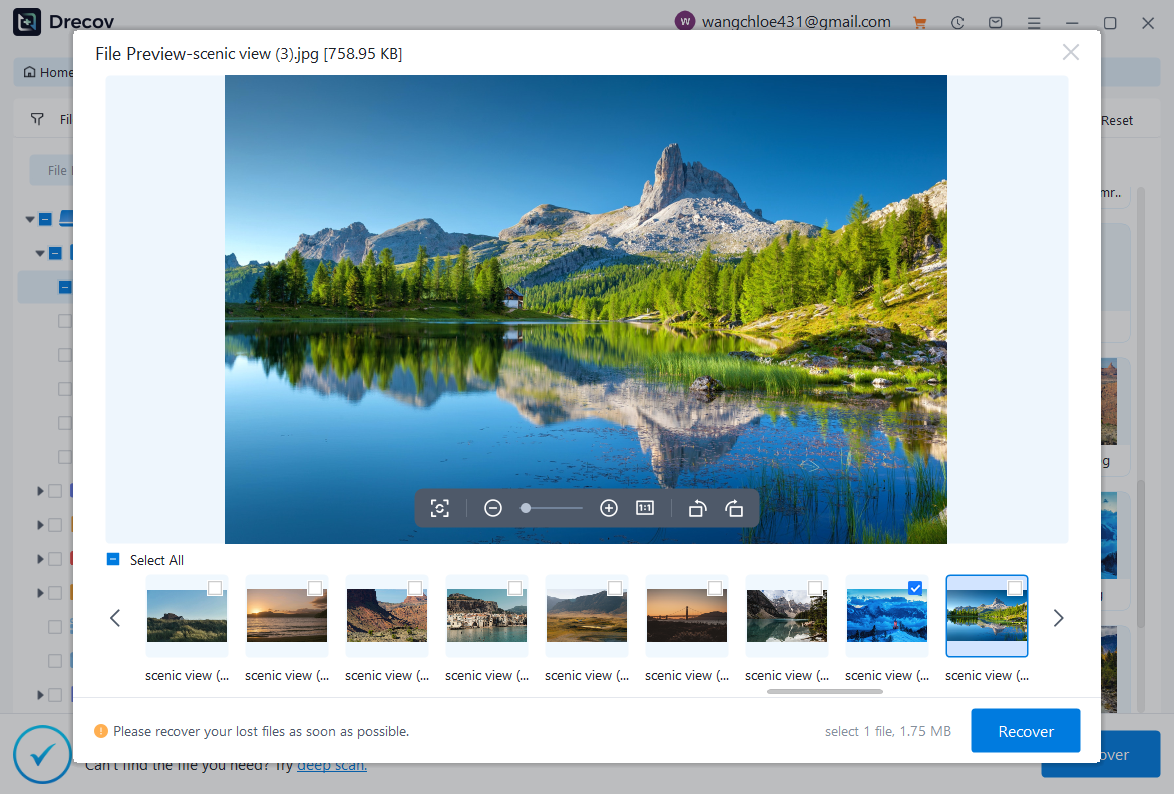
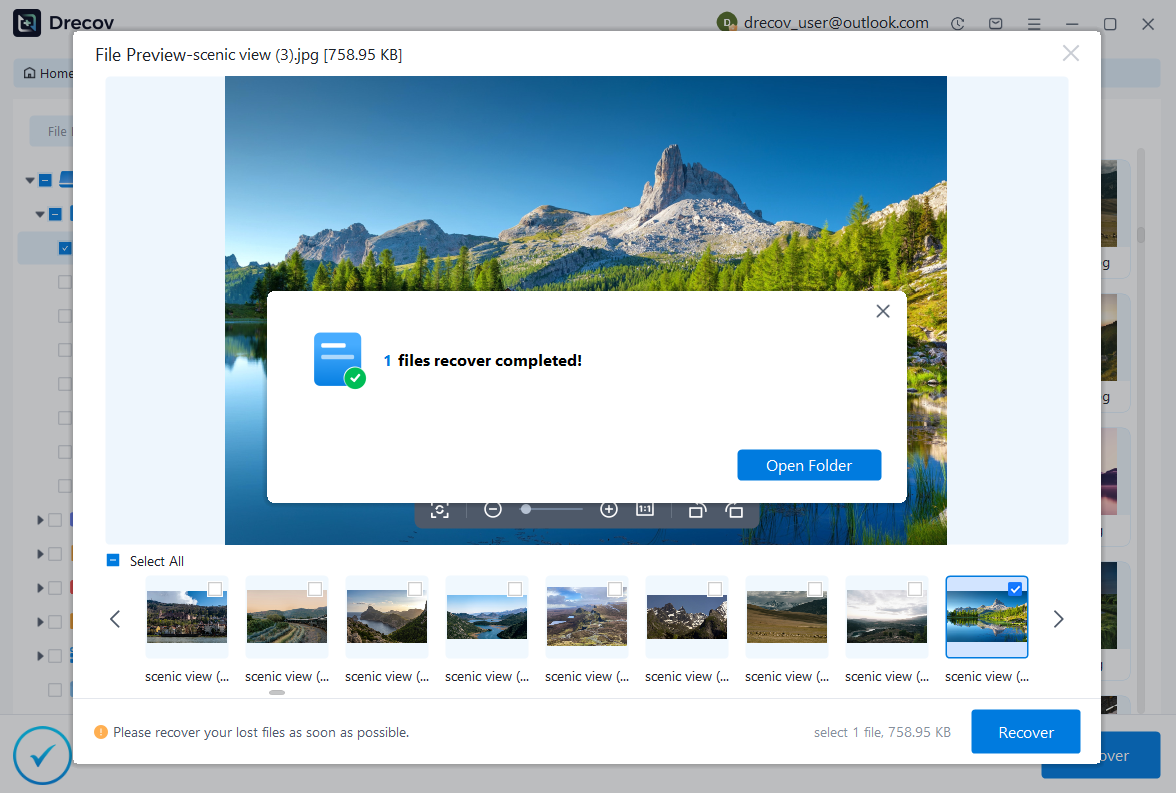
Why Choose PandaOffice Drecov?
PandaOffice Drecov is a versatile and reliable solution for recovering a wide range of lost or inaccessible files. Whether you need audio recovery, video recovery, or excel recovery files, PandaOffice Drecov provides fast and efficient results, ensuring your important data is safely restored.
For creative professionals, it supports file recovery Illustrator projects, allowing designers to retrieve unsaved or accidentally deleted artwork without compromising file integrity. Businesses and individuals can also benefit from its restore Windows previous date feature, which helps recover documents or spreadsheets that were lost due to system errors or accidental deletions.
When external storage devices fail, such as a Lacie hard drive not showing up, PandaOffice Drecov can detect and restore files from these drives, ensuring you do not lose critical data. Even deleted files in the recycle bin can be recovered using its advanced recycle bin recovery software capabilities.
Additionally, the software supports recovering data from lost partitions, making lost partition recovery straightforward and reliable. Its intuitive interface allows users to perform audio recovery, video recovery, and excel recovery effortlessly, even for large or complex files.
⚠️Warning: Do not save recovered files back to the same floppy disk drive, as it may overwrite recoverable data.
Method 3: Using a Virtual Floppy Drive in Emulators
Test Environment and Steps:
- Environment: Windows 10 PC, DOSBox emulator, disk image of 3.5-inch floppy disk (.IMG file)
- Steps:
- Install DOSBox or another PC emulator that supports floppy images
- Load the floppy disk image into the virtual drive
- Mount the image as a virtual floppy disk drive
- Access and transfer files from the virtual floppy as if using a real disk
⚠️Warning: Ensure the disk image is not corrupted, or data extraction may fail.
Virtual drives are useful when physical disks are unavailable, allowing old software and games to run on modern systems without external floppy disk drive hardware.
Method 4: Data Transfer Using Another Legacy PC
Test Environment and Steps:
- Environment: Old PC with built-in floppy disk drive, Windows XP, USB flash drive
- Steps:
- Insert the floppy disk into the legacy PC
- Copy files from the floppy drive disk to a USB flash drive
- Safely eject the disk
- Transfer the data to a modern computer
This method ensures data is physically retrieved before relying on emulators or external floppy disk drives.
Method 5: Recovering Data from Damaged Floppy Disks
Test Environment and Steps:
- Environment: Slightly scratched 3.5-inch floppy disk, Windows 10 PC, disk recovery software
- Steps:
- Connect an external floppy disk drive
- Insert the damaged disk and run disk recovery software
- Scan the disk for readable sectors
- Recover and save files to a separate storage device
⚠️Warning: Do not attempt to manually repair scratches; professional recovery software is safer.
Test Environment and Steps:
- Environment: Legacy PC with floppy disk drive, modern laptop, network sharing enabled
- Steps:
- Insert the floppy disk into the legacy PC
- Share the floppy drive folder over the network
- Access the shared folder from the modern laptop
- Copy files to local storage
This method avoids direct physical connection to modern devices and is effective when multiple modern computers need access to old floppy drives disk.
FAQ: Common Questions About Floppy Disks
Question 1: Can I still use a floppy disk today?
Yes, but you need either a legacy PC with a built-in floppy disk drive or an external floppy disk drive. Modern systems rarely include native floppy support. Virtual emulators can also simulate a floppy environment for legacy software.
Question 2: How do I find a driver for a floppy disk drive?
Most operating systems provide built-in support for standard floppy drives disk. For external drives, the manufacturer usually provides a compatible driver for floppy disk drive. Windows will often prompt you to install the driver when the device is first connected.
Question 3: Are there limitations using floppy disks today?
Yes. Capacity is extremely low (360 KB–1.44 MB), disks are fragile, and compatibility with modern software and hardware is limited. ⚠️Warning: Avoid storing critical files exclusively on floppy disks.
Conclusion: Key Takeaways About Floppy Disks and Drives
Floppy disk and floppy drive technology may be obsolete in modern computing, but understanding its structure, operation, and data access methods remains valuable. Whether you use external floppy disk drive, virtual emulators, or legacy PCs, multiple strategies exist to recover data from floppy drives disk. Proper handling, including avoiding scratches, magnets, and dust, is essential for preserving data integrity. Even with limitations in storage capacity and durability, floppy disks are an important part of computing history and a critical resource for legacy data recovery.






