







When a how much space does windows 11 take problem appears, begin by identifying the exact device, file, account, or Windows state involved. The Windows storage budget should end with a repeatable observation, not a quieter warning. Verify the same Windows storage budget condition after an ordinary restart or reconnection. Keep the Windows storage budget narrow enough to interpret. Logs, paths, capacities, and account identity make the Windows storage budget result stronger than a visual change alone.
The Minimum Is Not a Comfortable Working Size
Microsoft lists 64 GB or larger storage as a Windows 11 minimum, not a comfortable long-term recommendation. Use the Windows storage budget to separate cause from coincidence. A useful Windows storage budget result should explain both the failure and the known-good comparison. Within the Windows storage budget, protect the current state before testing. If access worsens, stop and reassess the Windows storage budget boundary instead of stacking another fix. If the Windows storage budget points to unstable hardware or declining access, stop direct experiments. Escalation is safer than forcing another Windows storage budget scan or write.
Edition, language packs, optional features, drivers, update state, and manufacturer software change the footprint. Within the Windows storage budget, protect the current state before testing. If access worsens, stop and reassess the Windows storage budget boundary instead of stacking another fix. For the Windows storage budget, change only one relevant variable at a time. Record the outcome, then return to the Windows storage budget evidence before choosing a broader repair. A durable result should survive normal use.
Break the Footprint Into Visible and Hidden Parts
The Windows folder is only part of usage; programs, profiles, recovery files, and system-managed files also matter. Within the Windows storage budget, protect the current state before testing. If access worsens, stop and reassess the Windows storage budget boundary instead of stacking another fix. For the Windows storage budget, change only one relevant variable at a time. Record the outcome, then return to the Windows storage budget evidence before choosing a broader repair.
The Windows storage budget should end with a repeatable observation, not a quieter warning. Verify the same Windows storage budget condition after an ordinary restart or reconnection. A controlled Windows storage budget compares like with like. Repeat the original task under the same Windows storage budget conditions before replacing hardware or reinstalling software. If access worsens, stop stacking fixes. For the Windows storage budget, change only one relevant variable at a time. Record the outcome, then return to the Windows storage budget evidence before choosing a broader repair.
| Evidence | Next decision |
|---|---|
| The Windows folder is only part of usage; programs, profiles, recovery files, and system-managed files also matter | Check directly |
| Pagefile.sys supports virtual memory and crash dumps while hiberfil.sys supports hibernation and Fast Startup | Compare with a control |
| Reserved storage holds capacity for updates, temporary files, and servicing | Protect the current state |
Measure Your Current Windows Installation
Reserved storage holds capacity for updates, temporary files, and servicing. For the Windows storage budget, change only one relevant variable at a time. Record the outcome, then return to the Windows storage budget evidence before choosing a broader repair. A controlled Windows storage budget compares like with like. Repeat the original task under the same Windows storage budget conditions before replacing hardware or reinstalling software.
Feature updates may retain Windows.old temporarily, producing a higher short-term peak. Before extending the Windows storage budget, preserve readable work and rollback information. Do not let the Windows storage budget become an unplanned reset, cleanup, or overwrite. Before extending the Windows storage budget, preserve readable work and rollback information. Do not let the Windows storage budget become an unplanned reset, cleanup, or overwrite. Interface wording and product limits can change.
For the adjacent issue, use temporary-file explanation only when its symptoms match this result.
Budget Space for Updates and Rollback
Settings System Storage shows categories while Storage Sense exposes supported cleanup targets. Confirm the Windows storage budget outcome with a second representative case. Retain the protected source until the Windows storage budget result survives normal use. For the Windows storage budget, change only one relevant variable at a time. Record the outcome, then return to the Windows storage budget evidence before choosing a broader repair.
Adding folder sizes manually can mislead because hard links, permissions, and system storage affect totals. Confirm the Windows storage budget outcome with a second representative case. Retain the protected source until the Windows storage budget result survives normal use. Keep the Windows storage budget narrow enough to interpret. Logs, paths, capacities, and account identity make the Windows storage budget result stronger than a visual change alone.
Plan an Installer USB Separately From the System Drive
An upgrade needs room to download, stage, install, and preserve rollback data. The Windows storage budget should end with a repeatable observation, not a quieter warning. Verify the same Windows storage budget condition after an ordinary restart or reconnection. For the Windows storage budget, change only one relevant variable at a time. Record the outcome, then return to the Windows storage budget evidence before choosing a broader repair.
During the Windows storage budget, compare this observation with the last working state. Keep that Windows storage budget baseline until the next test gives the same result twice. This observation gives you a practical boundary. For how much space does windows 11 take, note the device, account, file, or screen involved and the last time the task worked normally. That small baseline keeps later tests comparable.
For the adjacent issue, use disk management software comparison only when its symptoms match this result.
Free Space Without Deleting Recovery Options Blindly
Applications, games, offline cloud data, creative caches, and virtual machines often exceed Windows itself. If the Windows storage budget points to unstable hardware or declining access, stop direct experiments. Escalation is safer than forcing another Windows storage budget scan or write. Within the Windows storage budget, protect the current state before testing. If access worsens, stop and reassess the Windows storage budget boundary instead of stacking another fix. Several simultaneous changes can hide the cause.
During the Windows storage budget, compare this observation with the last working state. Keep that Windows storage budget baseline until the next test gives the same result twice. During the Windows storage budget, compare this observation with the last working state. Keep that Windows storage budget baseline until the next test gives the same result twice. Confirm the Windows storage budget outcome with a second representative case. Retain the protected source until the Windows storage budget result survives normal use. A controlled Windows storage budget compares like with like. Repeat the original task under the same Windows storage budget conditions before replacing hardware or reinstalling software.
Recover Missing Local Files Before the Risky Change
PandaOffice Drecov is Windows data recovery software for stable, recognized PCs, hard drives, SSDs, external drives, USB drives, SD cards, and memory cards. It works in read-only recovery mode and can search for photos, videos, documents, email data, audio, and archives. In this case it is appropriate only when important local files are genuinely missing or inaccessible on a stable Windows-recognized source. It cannot repair physical damage, a controller, a boot configuration, cloud retention, or fully overwritten data.
⚠ Warning: Install it on a drive different from the one where your data was lost to prevent overwriting.
Step 1: Open Drecov and choose the original loss location
Do not install Drecov on the volume that held the missing files. Prepare another healthy destination, open Drecov, and select the original partition or device. If it clicks, disappears, changes capacity, or produces severe read errors, stop direct scanning and use an image or professional recovery service.
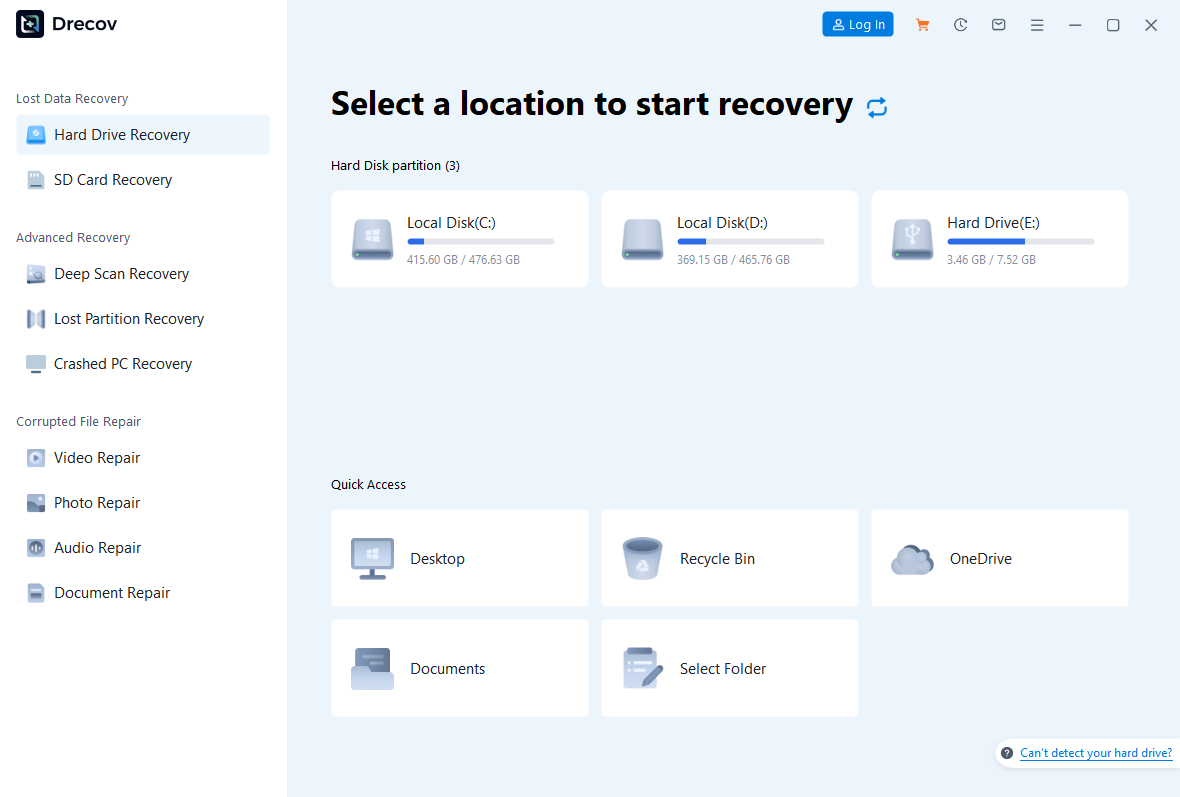
Step 2: Start Quick Scan and review the likely paths
Run Quick Scan first. Browse former folders and filter by filename, path, type, date, or size where those details are available. Keep the source unchanged while you decide whether the expected items are present.
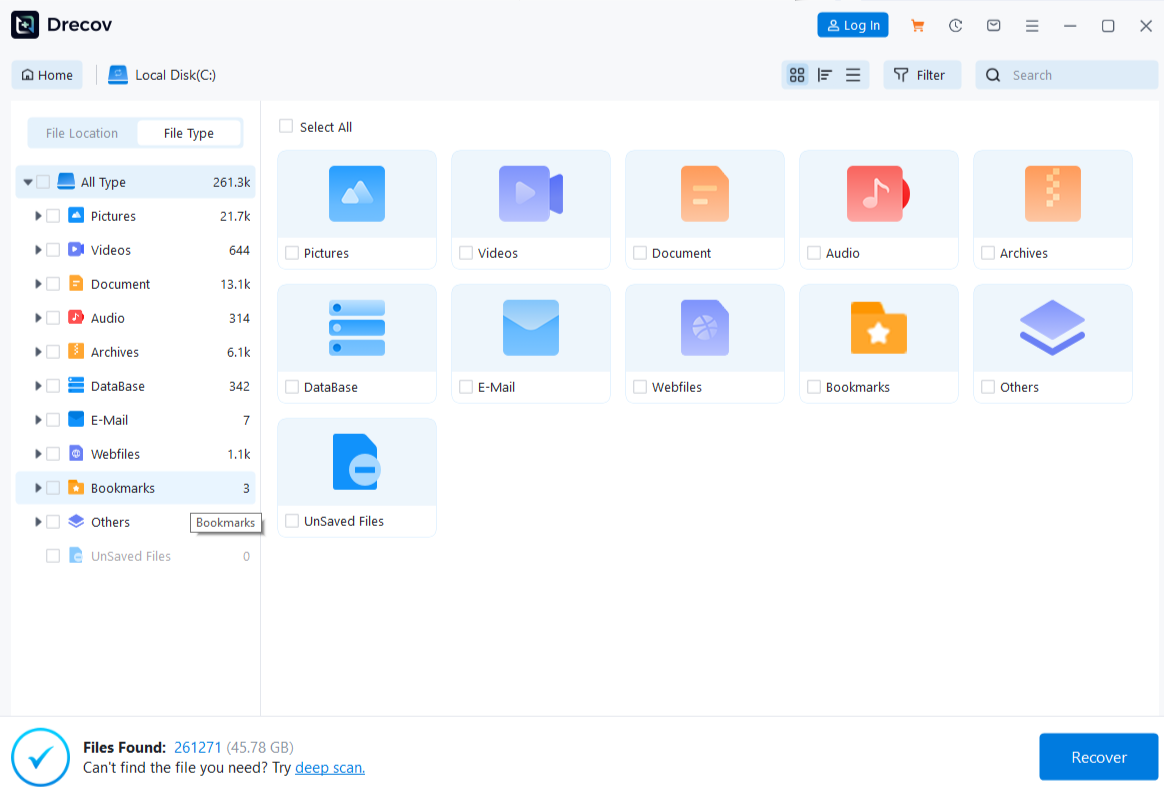
Step 3: Use Deep Scan only on stable media
If Quick Scan does not locate the target files and the source remains stable, run Deep Scan. More scanning cannot restore sectors that have been overwritten, and repeated scans are unsafe on failing hardware.
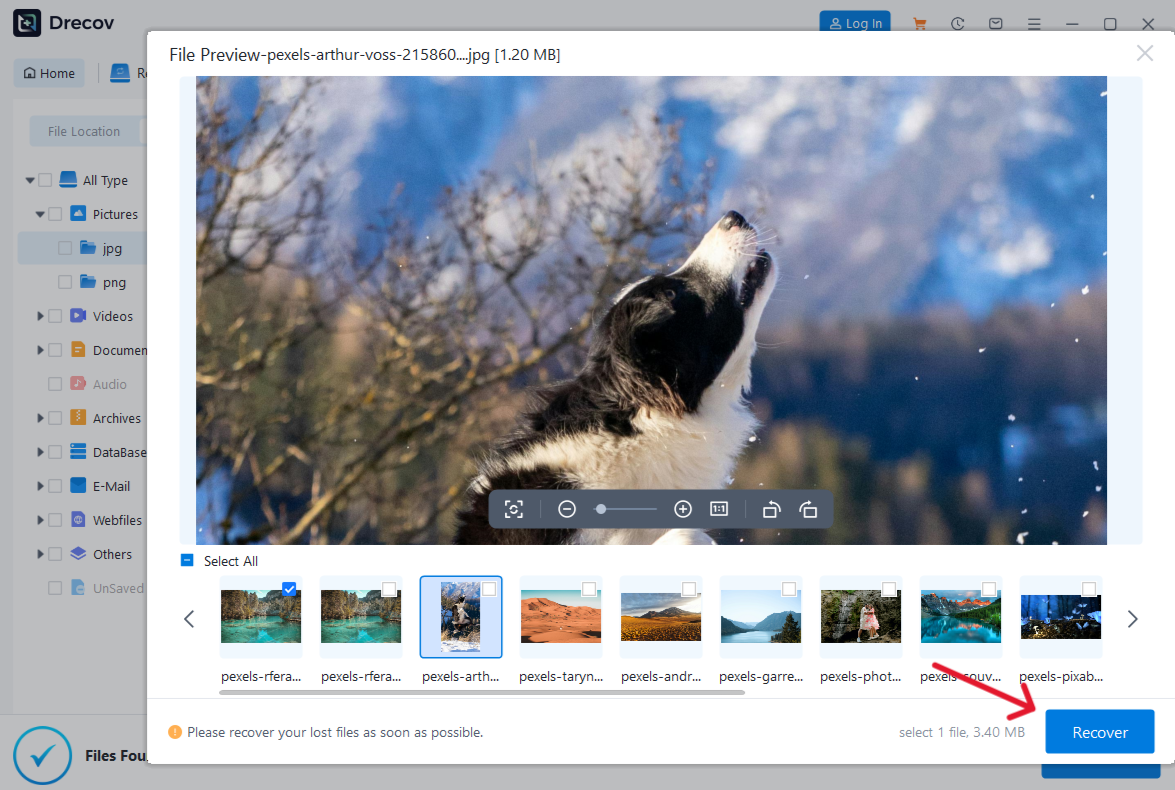
Step 4: Filter and preview representative files
Narrow the results, then preview several supported examples. A readable preview is helpful evidence, but it does not guarantee that every page, frame, linked asset, archive member, or database record is intact.
Step 5: Recover to another healthy device
Select the needed files and recover them to the prepared destination, never back to the source. If the output is not where expected, check the Drecov Folder or Recovery Folder.
Step 6: Open and verify before repair
Open a representative sample, compare size and dates, and test the files in their normal application. Only after verification should you convert, format, repartition, reinstall, clear local originals, or perform another source-modifying repair.
⚠ Warning: Install it on a drive different from the one where your data was lost to prevent overwriting.
Related background is available in system image explanation. For current platform behavior, consult Microsoft Windows 11 specifications.
Interpret the Result Before Escalating
The Windows folder is only part of usage; programs, profiles, recovery files, and system-managed files also matter. Keep the Windows storage budget narrow enough to interpret. Logs, paths, capacities, and account identity make the Windows storage budget result stronger than a visual change alone. Within the Windows storage budget, protect the current state before testing. If access worsens, stop and reassess the Windows storage budget boundary instead of stacking another fix. A controlled Windows storage budget compares like with like. Repeat the original task under the same Windows storage budget conditions before replacing hardware or reinstalling software. If the Windows storage budget points to unstable hardware or declining access, stop direct experiments. Escalation is safer than forcing another Windows storage budget scan or write.
Settings System Storage shows categories while Storage Sense exposes supported cleanup targets. Keep the Windows storage budget narrow enough to interpret. Logs, paths, capacities, and account identity make the Windows storage budget result stronger than a visual change alone. Keep the Windows storage budget narrow enough to interpret. Logs, paths, capacities, and account identity make the Windows storage budget result stronger than a visual change alone. Interface wording and product limits can change. Use the Windows storage budget to separate cause from coincidence. A useful Windows storage budget result should explain both the failure and the known-good comparison. Keep the Windows storage budget narrow enough to interpret. Logs, paths, capacities, and account identity make the Windows storage budget result stronger than a visual change alone.
Keep the Windows storage budget narrow enough to interpret. Logs, paths, capacities, and account identity make the Windows storage budget result stronger than a visual change alone. Use the Windows storage budget to separate cause from coincidence. A useful Windows storage budget result should explain both the failure and the known-good comparison. Confirm the Windows storage budget outcome with a second representative case. Retain the protected source until the Windows storage budget result survives normal use. Keep the Windows storage budget narrow enough to interpret. Logs, paths, capacities, and account identity make the Windows storage budget result stronger than a visual change alone. Keep the Windows storage budget narrow enough to interpret. Logs, paths, capacities, and account identity make the Windows storage budget result stronger than a visual change alone.
How much space does windows 11 take FAQs
What should I check first?
Microsoft lists 64 GB or larger storage as a Windows 11 minimum, not a comfortable long-term recommendation. The Windows storage budget should end with a repeatable observation, not a quieter warning. Verify the same Windows storage budget condition after an ordinary restart or reconnection.
Which result changes the next step?
If the Windows storage budget points to unstable hardware or declining access, stop direct experiments. Escalation is safer than forcing another Windows storage budget scan or write. Before extending the Windows storage budget, preserve readable work and rollback information. Do not let the Windows storage budget become an unplanned reset, cleanup, or overwrite.
What should I avoid?
An upgrade needs room to download, stage, install, and preserve rollback data. A controlled Windows storage budget compares like with like. Repeat the original task under the same Windows storage budget conditions before replacing hardware or reinstalling software.
When is Drecov relevant?
Applications, games, offline cloud data, creative caches, and virtual machines often exceed Windows itself. If the Windows storage budget points to unstable hardware or declining access, stop direct experiments. Escalation is safer than forcing another Windows storage budget scan or write.
How do I verify the outcome?
Use the Windows storage budget to separate cause from coincidence. A useful Windows storage budget result should explain both the failure and the known-good comparison. During the Windows storage budget, compare this observation with the last working state. Keep that Windows storage budget baseline until the next test gives the same result twice.
Conclusion
The Windows storage budget should end with a repeatable observation, not a quieter warning. Verify the same Windows storage budget condition after an ordinary restart or reconnection. The Windows storage budget should end with a repeatable observation, not a quieter warning. Verify the same Windows storage budget condition after an ordinary restart or reconnection. Within the Windows storage budget, protect the current state before testing. If access worsens, stop and reassess the Windows storage budget boundary instead of stacking another fix. For the Windows storage budget, change only one relevant variable at a time. Record the outcome, then return to the Windows storage budget evidence before choosing a broader repair. Within the Windows storage budget, protect the current state before testing. If access worsens, stop and reassess the Windows storage budget boundary instead of stacking another fix.
⚠ Warning: Install it on a drive different from the one where your data was lost to prevent overwriting.





