







For why is my c drive full, protect the original data first. The safest response to a full-system-drive diagnosis starts with evidence, not a destructive shortcut. File Explorer shows usable capacity, while Windows also reserves space for updates, paging, hibernation, restore data, and system operation. Settings, System, Storage groups usage into applications, temporary files, documents, pictures, system data, and other categories. Start with the largest measured category. Preserve documents or application data removed during cleanup, record the state of the Windows system partition, and change one variable at a time so the result remains understandable.
For current platform behavior and command details, consult the Microsoft Windows storage settings. Preserve the current state before applying any modifying instruction.
why is my c drive full: safe diagnosis
A drive that refills within hours points to an active process, not an old collection. Compare free space before and after Windows Update, cloud sync, downloads, editing, or backup jobs. Multiple Windows profiles can hold independent Downloads, Desktop, browser caches, and application data. Inspect the profile actually consuming space.
Take a Storage settings snapshot and note free space. Review applications, temporary files, user folders, system data, and other categories. Recheck after the next large change—an update, cloud sync, import, game installation, or editing session—to find which category actually grows.
Use Storage Categories as Evidence
Large application caches may be necessary for current projects. Use the application’s own cleanup controls rather than deleting unknown database or catalog files. Windows.old can support rollback for a limited period. Removing it through approved cleanup tools is irreversible.
Inspect every local user profile, not only the signed-in Desktop and Downloads folders. Browser profiles, email stores, editing caches, virtual machines, and package managers may live under AppData. Use the owning application’s cleanup controls when files form part of a database or active project.
Adjacent tasks require their own checks: temporary files explained covers the first neighboring issue, clear Photoshop scratch disk space addresses a different decision, and increase C drive space safely applies when the situation has already moved into data loss. For a full-system-drive diagnosis, use a linked procedure only when its symptoms match rather than combining several fixes at once.
Track Growth That Returns After Cleanup
Restore points and shadow copies can consume meaningful space but also provide recovery value. Adjust their allocation knowingly instead of disabling protection reflexively. Hibernation uses a protected system file. Change the feature through Windows power commands and settings rather than deleting the file manually.
Treat Windows.old, restore points, hibernation, page files, and update caches as managed system components. Use Windows cleanup, protection, and power settings instead of deleting protected files manually. Each component provides a function that should be understood before its space is reclaimed.
Inspect User Profiles, Downloads, and Application Data
OneDrive Files On-Demand can reduce local usage, but pinning folders downloads full copies. Confirm sync state before removing local-looking content. Run Windows Security when unexplained growth accompanies suspicious processes or network activity. Recovery software does not remove malware.
Check whether cloud folders are pinned for offline use and whether a sync loop is duplicating content. If unknown processes create files continuously, scan with Windows Security. Do not expect a data recovery program to diagnose or remove malware.
Handle Windows Updates, Restore Points, and Hibernation Carefully
Never download a random cleaner that promises impossible capacity gains. It may delete useful data or install unwanted software. After cleanup, set a practical free-space threshold and review storage monthly. Repeated emergency deletion is a symptom of an undersized disk or unmanaged workflow.
After cleanup, record a minimum free-space threshold and investigate before the disk reaches it. Move predictable growth to another disk and schedule monthly checks. If normal work genuinely exceeds the drive’s capacity, migrating to larger storage is safer than recurring emergency deletion and repeated last-minute cleanup.
Use a Controlled Checklist Before the Irreversible Step
- Preserve: confirm that documents or application data removed during cleanup exist on another healthy device and open representative copies.
- Identify: match the Windows system partition by capacity, location, label, or model instead of relying on a changing drive letter.
- Isolate: reproduce a full-system-drive diagnosis with one known-good comparison while keeping other variables unchanged.
- Decide: separate an accidental deletion while freeing space from physical instability and choose recovery before repair whenever files are missing.
- Verify: repeat the successful check for a full-system-drive diagnosis, restart or reconnect where appropriate, and confirm that ordinary work still succeeds.
This a full-system-drive diagnosis checklist is deliberately slower than applying several fixes at once. It preserves rollback options and makes the outcome understandable. If a step reduces access, stop and return to the verified copy rather than continuing toward running further cleanup, reset, or storage reconfiguration.
Keep the Windows system partition unchanged until the result has survived a real task, not only a status message. A reported success does not prove that every item among documents or application data removed during cleanup is readable or that the underlying storage is healthy.
Reduce the Chance of Another A Full-System-Drive Diagnosis
This check is especially useful for why is my c drive full. Keep one verified copy of documents or application data removed during cleanup outside the Windows system partition, and decide how often it must be updated from the amount of work you can afford to lose. Label storage used for a full-system-drive diagnosis clearly and remove it safely when applicable. Preserve encryption keys associated with the Windows system partition, note unusual errors, and retire it when disconnections or verification failures recur.
It helps diagnose why is my c drive full without changing the source data. Document the settings and test that resolved a full-system-drive diagnosis. After an update, migration, or hardware change, repeat that test before deleting the previous backup of documents or application data removed during cleanup. If an accidental deletion while freeing space occurs again, compare the new evidence with the saved baseline rather than immediately repeating running further cleanup, reset, or storage reconfiguration. The resulting a full-system-drive diagnosis record shortens diagnosis without turning every warning into an invasive repair project.
Recover Files Affected by a full-system-drive diagnosis
PandaOffice Drecov is Windows data recovery software for PCs, USB drives, SD cards, memory cards, hard drives, SSDs, and external drives. In a full-system-drive diagnosis, its read-only workflow is relevant after an accidental deletion while freeing space, provided the Windows system partition remains stable and recognizable. Quick Scan, Deep Scan, filtering, preview, and recovery to a selected healthy destination separate the search for documents or application data removed during cleanup from running further cleanup, reset, or storage reconfiguration. Drecov does not fix physical hardware or restore overwritten bytes.
⚠ Warning: Install it on a drive different from the one where your data was lost to prevent overwriting.
Step 1: Open Drecov and select the source involved in a full-system-drive diagnosis
Stop writing to the Windows system partition and prepare another healthy device with enough free space. Do not install Drecov on the partition that held documents or application data removed during cleanup. Open the program and identify the Windows system partition by capacity and context before selecting it. If the Windows system partition disconnects, clicks, changes capacity, or produces severe read errors, stop direct scanning and seek imaging or professional recovery.

Step 2: Start Quick Scan for the missing material
Run Quick Scan first and look specifically for documents or application data removed during cleanup. Browse the former paths and categories where documents or application data removed during cleanup belonged rather than selecting every result immediately. This initial pass can locate recently lost entries without changing the Windows system partition.

Step 3: Use Deep Scan only if this source remains stable
If Quick Scan does not locate the required material and the Windows system partition remains stable, continue with Deep Scan. The deeper search may find content whose original folder record is gone, but it cannot reconstruct areas overwritten after an accidental deletion while freeing space.
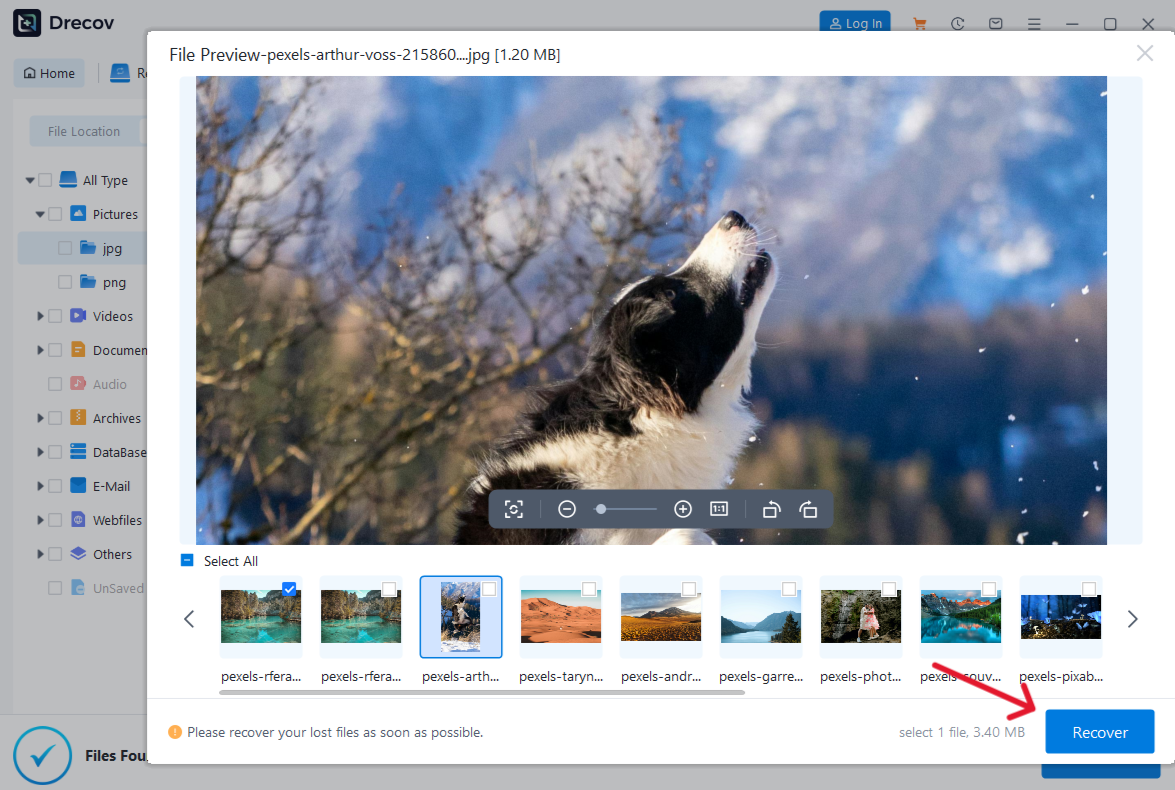
Step 4: Filter and preview files relevant to a full-system-drive diagnosis
Filter by file type, filename, former path, size, or date where those details are available. Preview several examples of documents or application data removed during cleanup. A successful preview of documents or application data removed during cleanup shows that a sample can be decoded; it does not certify every page, frame, linked item, or archive member.
Step 5: Recover to a healthy destination and verify the result
Recover selected items to the prepared healthy device, never to the Windows system partition. If documents or application data removed during cleanup are not where expected, check the Drecov folder or Recovery folder. Open samples, compare expected sizes and dates, and leave the Windows system partition unchanged until the important results are verified. Only then consider running further cleanup, reset, or storage reconfiguration.
⚠ Warning: Install it on a drive different from the one where your data was lost to prevent overwriting.
Questions About a Full System Drive
Why does space return after cleanup?
An update, sync job, cache, download, log, or application may still be generating data. Compare Storage categories over time.
Can I delete everything in AppData?
No. It contains application settings, databases, caches, and active project information. Use application controls.
Is Windows.old safe to remove?
It can be removed with Windows cleanup tools, but doing so removes the related rollback option.
Can cloud files occupy local space?
Yes. Files pinned for offline use keep full local copies even when they also exist online.
When should I upgrade the disk?
Upgrade when normal, managed workloads consistently exceed capacity rather than relying on emergency deletion.
Conclusion
Never download a random cleaner that promises impossible capacity gains. It may delete useful data or install unwanted software. After cleanup, set a practical free-space threshold and review storage monthly. Repeated emergency deletion is a symptom of an undersized disk or unmanaged workflow. For a full-system-drive diagnosis, the safest plan protects documents or application data removed during cleanup first, verifies each result, and changes only the layer identified by the evidence.
⚠ Warning: Install it on a drive different from the one where your data was lost to prevent overwriting.






