







In the fast-paced world of digital browsing, we often find ourselves juggling dozens of open tabs. Sometimes, the goal is to clear the clutter, leading you to ask: how do i delete recently closed tabs? Other times, a stray click or a sudden system crash wipes out hours of research, leaving you desperate to bring those pages back.
Managing your digital footprint involves a delicate balance between privacy and productivity. Whether you are trying to wipe your tracks for security reasons or attempting a complex data recovery mission after a browser mishap, understanding the mechanics of tab management is essential. In this comprehensive guide, we will explore everything from simple hotkeys to advanced recovery using PandaOffice Drecov data recovery software.
Understanding the Browser Cache: Why Tabs Persist
Before we dive into the “how-to,” we must understand the “why.” Browsers like Google Chrome, Mozilla Firefox, and Microsoft Edge are designed to be user-friendly. They store “session data” so that if your computer restarts unexpectedly, you can pick up where you left off.
However, this convenience can become a privacy risk. If you share a computer, anyone can see your recently closed pages through the history menu or simple keyboard shortcuts. This is why learning how do i delete recently closed tabs is the first step for many privacy-conscious users.
How Do I Delete Recently Closed Tabs for Better Privacy?
If your goal is to ensure that no one can reopen the tabs you just closed, you need to go beyond just clicking the “X” button. Browsers maintain a list of recently closed items in their memory.
Method 1: Clearing Browsing Data Manually
This is the most effective way to ensure those tabs stay gone.
- Step 1: Open your browser (Chrome, Edge, or Brave).
- Step 2: Press Ctrl + Shift + Delete on your keyboard. This is a universal shortcut for the “Clear browsing data” menu.
- Step 3: Select a time range (e.g., “Last hour” or “All time”).
- Step 4: Ensure “Browsing history” and “Cached images and files” are checked.
- Step 5: Click “Clear data.”
By doing this, you effectively answer the question of how do i delete recently closed tabs by wiping the record from the browser’s temporary storage.
Method 2: Using Incognito Mode
Prevention is better than a cure. If you use Incognito or Private mode, the browser does not save your history or the list of recently closed tabs once the window is closed.
The Flip Side: When You Need Those Tabs Back
Data recovery isn’t just about hard drives; it’s about retrieving lost information in whatever form it exists. Sometimes, users clear their history and then realize they forgot to bookmark a vital page. This brings us to a more difficult challenge: how to recover recently closed tabs after clearing history.
How to Recover Recently Closed Tabs After Clearing History
When you clear your history, the standard “Reopen closed tab” shortcut (Ctrl + Shift + T) usually stops working because the pointers to those URLs have been deleted from the browser’s active memory. However, all hope is not lost.
- Step 1: Check Other Synced Devices. If you are signed into a Google or Microsoft account, your history might still exist on your phone or tablet. Check the “Tabs from other devices” section in your account settings.
- Step 2: Use DNS Cache. Your computer stores a temporary record of the websites you’ve visited at the system level, independent of the browser.
- Open the Command Prompt as an Administrator.
- Type
ipconfig /displaydnsand press Enter. - You will see a list of recently accessed domains. While it won’t give you the exact sub-page, it can lead you back to the right website.
- Step 3: Google Activity Professional. If you were logged into your Google account, visit My Google Activity. Google often saves a cloud-based record of your searches and site visits even if you cleared the local browser history.
Retrieving Older Data: Find Recently Closed Tabs from Yesterday
Sometimes the loss isn’t immediate. You might realize on Tuesday that a tab you closed on Monday contained a crucial piece of data. If you need to find recently closed tabs from yesterday, follow these logical steps.
Step 1: Access the Full History Library
Instead of looking at the “Recently Closed” list (which usually only holds the last 10–25 tabs), open the full History library by pressing Ctrl + H.
Step 2: Use the Search Function
In the top right corner of the history page, there is a search bar. If you remember even one keyword from the page title or the URL, type it in. This is the fastest way to find recently closed tabs from yesterday without scrolling through thousands of entries.
Step 3: Windows Timeline (For PC Users)
Windows 10 and 11 sometimes track activity across apps. Press Windows Key + Tab. If you have “Activity History” enabled in your system settings, you might see snapshots of the browser windows you had open 24 hours ago.
Advanced Data Recovery: Using PandaOffice Drecov Data Recovery Software
What happens when the problem is more severe? Perhaps your browser crashed, and your entire profile folder became corrupted. Or maybe you accidentally uninstalled your browser, wiping out all local data. This is where professional tools like PandaOffice Drecov data recovery software come into play.
Browsers store history and tab sessions in specific database files (usually SQLite files) located deep within your AppData folder. When these are deleted, they aren’t immediately erased from the hard drive; they are simply marked as “available space.” PandaOffice Drecov data recovery software can scan these sectors to retrieve the deleted database files.
⚠ Warning: Install it on a drive different from the one where your data was lost to prevent overwriting.
Step-by-Step Guide: Using PandaOffice Drecov for Session Recovery
- Step 1: Select the Location. Launch the program and select the drive containing your User profile (usually the C: Drive).

- Step 2: Deep Scan. Choose the “Deep Scan” option. This will allow the software to look for fragmented SQLite and “Current Session” files that browsers use to track tabs.

- Step 3: Filter by File Type. Once the scan is complete, use the search bar within the software to look for “History” or “Session” files.
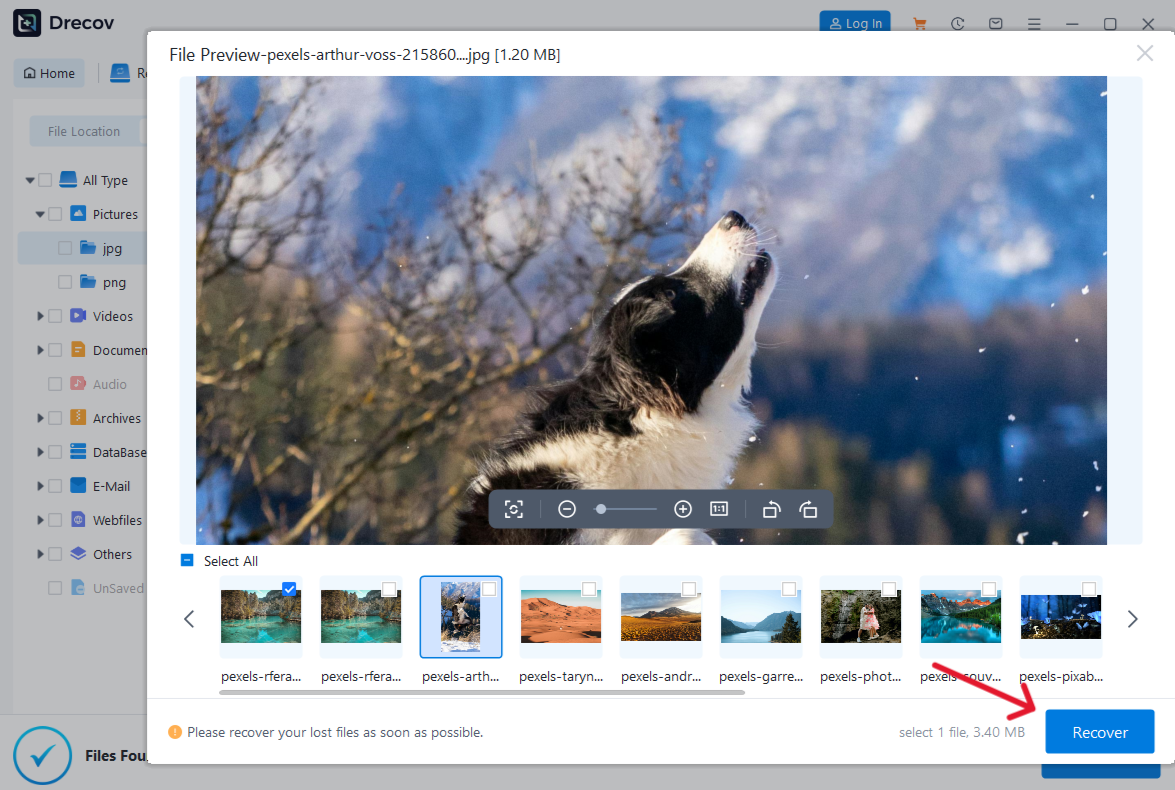
- Step 4: Recover and Restore. Select the relevant files and click “Recover.” Save them to an external drive.
Warning: Never recover files directly back to the source partition, as this can lead to permanent data corruption.
By using PandaOffice Drecov data recovery software, you are utilizing professional-grade algorithms to find data that the operating system no longer sees. If you ever find yourself in a situation where you need to move beyond browser tabs—perhaps you’ve lost a downloaded video or a corrupted USB drive—check out these specialized guides:
- Master the art of media recovery: How to download and save browser videos properly.
- Hardware failure? Learn how to repair a USB drive and recover your files step-by-step.
- Need a quick privacy refresh? See how to delete recently closed tabs in seconds.
Maximizing Your Browser Efficiency
Now that you know how do i delete recently closed tabs and how to recover them using tools like PandaOffice Drecov data recovery software, let’s look at how to prevent these headaches in the future.
Useful Browser Extensions
There are several extensions designed specifically for tab management. Tools like “OneTab” or “Session Buddy” allow you to save your entire current window as a list. If your browser crashes or if you mistakenly follow the steps for how do i delete recently closed tabs, these extensions provide an external backup of your session.
Mastering Keyboard Shortcuts
Efficiency is key. Memorizing these will save you time:
- Ctrl + T: Open a new tab.
- Ctrl + W: Close the current tab.
- Ctrl + Shift + T: Reopen the last closed tab (the opposite of wanting to know how do i delete recently closed tabs).
- Alt + Left Arrow: Go back one page.
Conclusion
Whether you came here wondering how do i delete recently closed tabs to protect your privacy, or you were searching for a way to find recently closed tabs from yesterday, the solutions range from simple settings to advanced software.
Managing your digital life requires both technical knowledge and the right tools. By mastering browser shortcuts, understanding the DNS cache, and keeping PandaOffice Drecov data recovery software in your digital toolkit, you can browse with confidence, knowing that your data—and your privacy—are under your control.






