







In the modern digital landscape, data management is a cornerstone of productivity. Whether you are a student downloading lecture notes, a developer handling large code repositories, or a professional receiving bulky project folders via email, you have likely encountered compressed archives. These archives act as digital containers, shrinking data to save space and streamline transfers. However, knowing how to uncompress files on windows is only the first step. To truly master your data, you must also understand how to manage, repair, and recover these archives when things go wrong.
This comprehensive guide serves as your roadmap. We will explore everything from the native tools built into Windows 11 and 10 to advanced data recovery techniques using professional software. By the end of this article, you will not only know how to uncompress files on windows but also how to safeguard your digital assets against corruption and accidental loss.
What Are Compressed Files and Why Use Them?
Before diving into the “how-to,” let’s briefly touch upon the “what.” Compressed files, often referred to as “zipped” files, use mathematical algorithms to reduce the overall footprint of data. This is particularly useful when sending multiple documents through platforms with attachment limits.
Common formats you will see include:
- ZIP (.zip): The universal standard, natively supported by Windows.
- RAR (.rar): A high-compression format often used for large software packages.
- 7Z (.7z): An open-source format known for extremely high compression ratios.
Understanding how to uncompress files on windows allows you to “unpack” these containers and return the files to their original, usable state.
Level 1: Basic Extraction for Standard ZIP Files
For most users, the built-in Windows features are more than sufficient. Microsoft has integrated a robust compression utility directly into File Explorer, meaning you don’t need to download anything to get started with basic ZIP archives.
Extract All Files from ZIP Folder Windows Native Utility
When you receive a standard ZIP archive, your first instinct should be to use the context menu. This is the most straightforward method for those learning how to uncompress files on windows.
Step-by-Step Guide:
- Step 1: Open File Explorer by pressing
Win + Eand navigate to the folder containing your ZIP file. - Step 2: Right-click the file and select the option labeled Extract All… from the menu.
- Step 3: A dialog box will appear. By default, Windows suggests a new folder named after the archive. You can click Browse to change the destination path.
- Step 4: Ensure the checkbox “Show extracted files when complete” is ticked if you want to view the data immediately.
- Step 5: Click Extract.
This method is incredibly efficient for how to uncompress files on windows because it handles the creation of the destination folder for you, keeping your desktop or downloads folder organized.
Level 2: Advanced Extraction for RAR, 7Z, and Other Formats
While Windows handles ZIP files natively, it often struggles with proprietary formats like RAR or high-efficiency formats like 7Z. If you try to open a RAR file without third-party help, you might see an error or a prompt asking you to choose an app from the Store. To truly master how to uncompress files on windows, you should familiarize yourself with tools like 7-Zip or WinRAR.
Using 7-Zip for Versatile Uncompressing
7-Zip is a favorite among IT professionals because it is free, open-source, and supports almost every compression format in existence.
Step-by-Step Guide:
- Step 1: Download and install 7-Zip from the official website.
- Step 2: Locate your compressed file (RAR, 7Z, etc.) and right-click it.
- Step 3: Hover over the 7-Zip submenu.
- Step 4: Choose Extract to “[Folder Name]”. This is usually safer than “Extract Here” because it prevents “file spills” where dozens of individual files clutter your current directory.
- Step 5: If the file is password-protected, a prompt will appear. Enter the credentials and hit OK.
Learning how to uncompress files on windows using these tools ensures that no matter what file type you encounter, you can access the data within seconds.
Level 3: Troubleshooting and Data Recovery
Sometimes, the process isn’t as simple as clicking a button. Data corruption can occur due to interrupted downloads, failing hard drives, or malware. In these instances, a standard extraction will fail, usually throwing a “CRC Error” or “Archive is Corrupted” message. This is where your skills must evolve from simple file management to data recovery.
Repair Broken ZIP Archive and Recover Data
If Windows tells you that a compressed folder is invalid, do not delete it immediately. There are ways to salvage the contents. Many third-party utilities have built-in “Repair” features.
Using WinRAR for Repair:
- Step 1: Open the WinRAR application.
- Step 2: Navigate to the location of the corrupted archive within the WinRAR file browser.
- Step 3: Select the file and click the Repair button on the top toolbar (it looks like a medical kit).
- Step 4: Choose a location for the “fixed” archive and select “Treat the corrupt archive as ZIP” (or RAR, depending on the file).
- Step 5: Once the process completes, try to uncompress the new file generated by WinRAR.
This is a vital skill for anyone learning how to uncompress files on windows in a professional environment where data integrity is paramount.
Level 4: Recovering Lost Archives with Professional Software
What happens if you deleted the ZIP file before you even had a chance to extract it? Or perhaps your USB drive failed, and all your compressed backups vanished? In these critical scenarios, you need a specialized solution like PandaOffice Drecov data recovery software.
How to Recover Deleted ZIP/RAR Files on Windows
When a file is deleted from Windows, it isn’t immediately erased from the disk. Instead, the space it occupied is marked as “available.” If you act quickly, you can restore these files using professional-grade tools.
PandaOffice Drecov is designed specifically for these high-pressure situations. It utilizes deep-scan algorithms to find traces of compressed archives that other tools might miss.
⚠ Warning: Install it on a drive different from the one where your data was lost to prevent overwriting.
Using PandaOffice Drecov Data Recovery Software
Follow these steps to retrieve your lost archives:
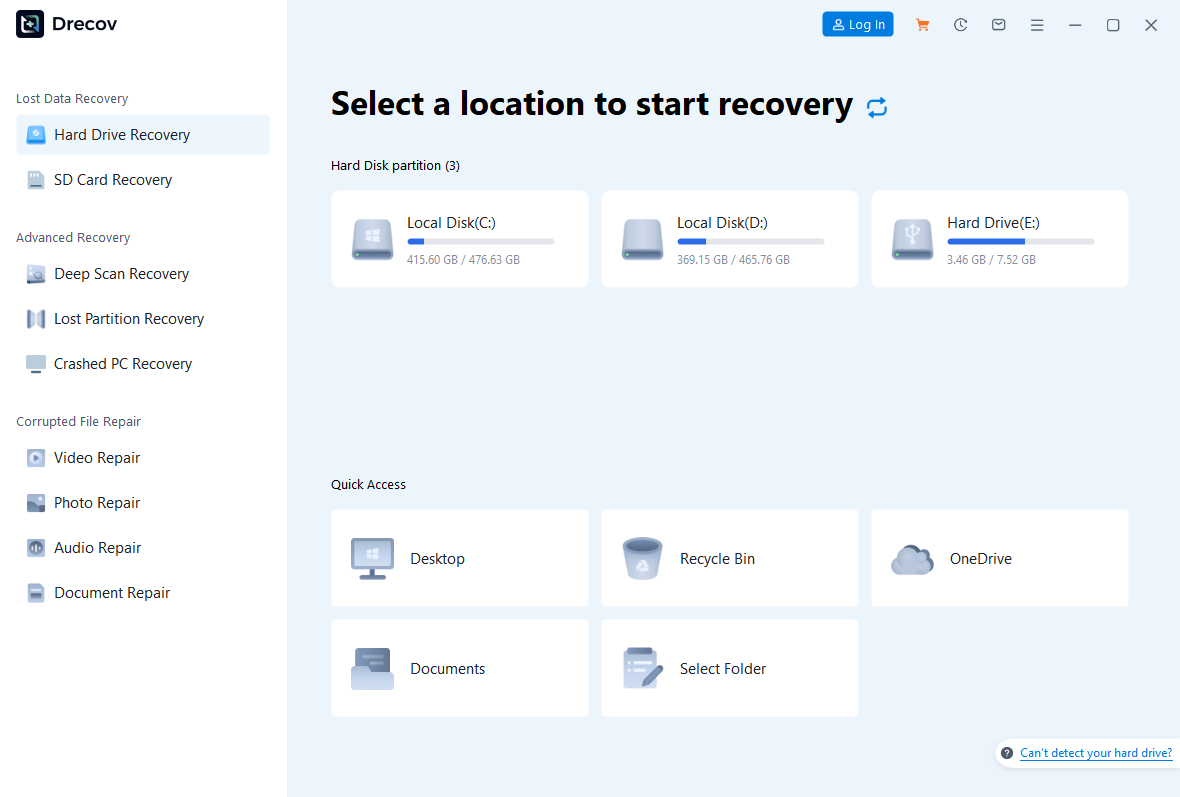
- Step 1: Select the Location. Launch the software. You will see a list of available drives and partitions. Select the drive (e.g., C: drive or an external USB) where the ZIP or RAR files were originally stored.
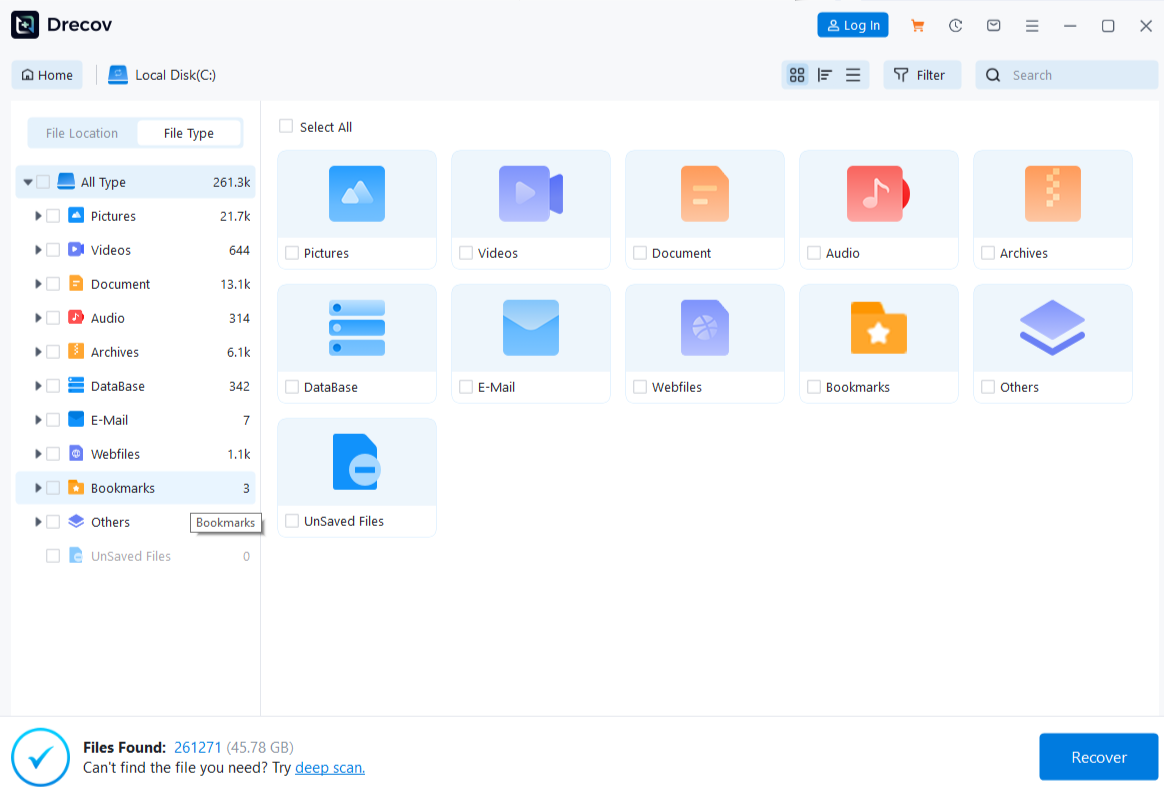
- Step 2: Deep Scan for Archives. Click the Scan button. PandaOffice Drecov will begin a quick scan followed by a Deep Scan. You can use the file type filter on the left sidebar to specifically look for “Archives” (.zip, .rar, .7z).
- Step 3: Preview and Filter. Once the scan is complete, browse through the found files. The software often allows you to see the file names and original paths, making it easier to identify the correct archive.
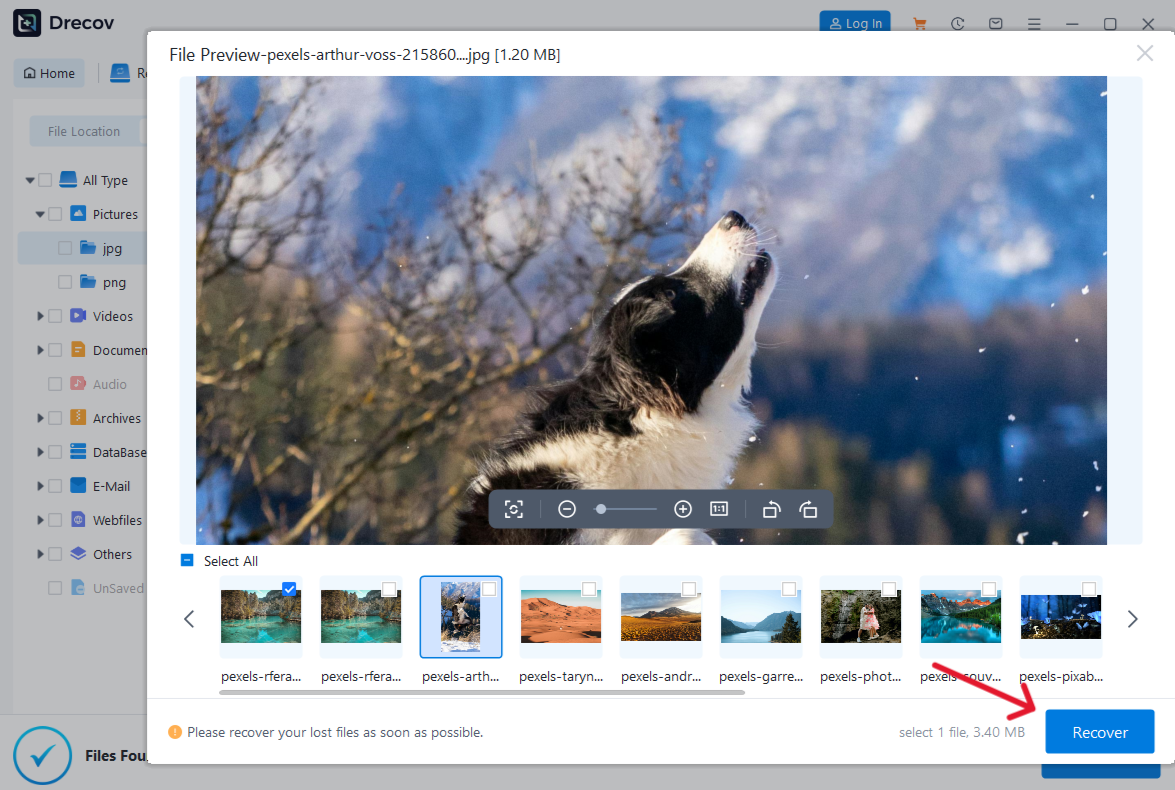
- Step 4: Recover and Save. Select the archives you wish to restore and click Recover. Choose a safe destination (like an external hard drive) to save the recovered data.
Once you have successfully restored the file, you can return to the earlier methods of how to uncompress files on windows to access your documents. For more specialized guides on data locations and hardware repairs, check out our related resources:
- Where to find Firefox bookmarks location for data safety
- Guide to where Firefox bookmarks are stored on your PC
- How to repair a corrupted USB drive without losing your archives
Advanced Method: Using PowerShell and Command Prompt
For users who prefer a hands-off approach or need to automate the process, Windows provides command-line tools. This is the fastest way to handle how to uncompress files on windows across hundreds of folders simultaneously.
Using the Expand-Archive Command in PowerShell
Step-by-Step Guide:
- Step 1: Press
Win + Xand select Windows PowerShell (Admin). - Step 2: Type the following command, replacing the paths with your actual file locations:
Expand-Archive -LiteralPath 'C:\Scripts\Archive.zip' -DestinationPath 'C:\Scripts\Unzipped' - Step 3: Press Enter.
This method is incredibly powerful because it bypasses the GUI, which can sometimes hang when dealing with massive archives containing thousands of small files.
Best Practices for File Uncompression and Safety
Mastering how to uncompress files on windows isn’t just about the clicks; it’s about the habits. To ensure your PC remains healthy and your data stays secure, follow these expert tips:
1. Scan Before You Extract
Compressed files are a common delivery method for malware. Because the contents are “hidden” inside the archive, some basic antivirus software might not scan them until they are opened. Always right-click an archive and select Scan with Microsoft Defender (or your preferred AV) before you uncompress it.
2. Check for “Zip Bombs”
A “Zip Bomb” (or Decompression Bomb) is a small file that, when uncompressed, expands into petabytes of data, crashing your system. If a tiny 10KB file claims to contain a 50GB database, proceed with extreme caution.
3. Maintain Folder Hierarchy
When learning how to uncompress files on windows, always check if the archive contains a “root folder.” If it doesn’t, and you select “Extract Here,” you might find 500 individual images suddenly scattered across your desktop. Always use the Extract to [Folder Name] option to stay safe.
4. Monitor Disk Space
Before starting a large extraction, ensure your destination drive has at least twice the space of the compressed file. Windows needs temporary space during the extraction process, and running out of disk space mid-way can lead to file corruption.
Comparison Table: Extraction Methods at a Glance
| Method | Complexity | Best For | Requirement |
| Windows Extract All | Very Low | Standard ZIP files | None (Built-in) |
| 7-Zip / WinRAR | Low | RAR, 7Z, ISO files | Third-party Install |
| Command Prompt (tar) | Medium | Automation / Devs | Technical Knowledge |
| PowerShell | Medium | Batch Processing | Technical Knowledge |
| PandaOffice Drecov | High (Recovery) | Deleted or Lost Archives | Specialized Software |
Understanding File Path Limits in Windows
A common issue when users learn how to uncompress files on windows is the “Path Too Long” error. Historically, Windows had a limit of 260 characters for a file path. If your ZIP file contains deep subfolders, the extraction might fail.
How to Fix This:
- Move the ZIP file to the root directory (e.g.,
C:\) before extracting. - Enable “Long Paths” in the Windows Registry (Advanced users only).
- Use a shorter name for the destination folder.
By keeping your directory structures shallow, you avoid the technical headaches associated with Windows’ legacy naming conventions.
The Role of Metadata in Compressed Archives
When you extract all files from zip folder windows, you might notice that file dates sometimes change. This is because some compression methods store “Modified Date” but not “Created Date.” If you are performing forensic work or need to maintain strict timelines, ensure you are using a tool like 7-Zip that preserves all file metadata during the uncompression process.
Frequently Asked Questions
1. Is there a limit to how many files I can uncompress at once?
Technically, no. However, uncompressing thousands of small files is much slower than uncompressing one large file of the same total size. This is due to the “overhead” Windows requires to create each new file entry in the file system.
2. Why is my ZIP file still the same size after compression?
If you are trying to compress files that are already compressed (like JPEG images or MP4 videos), you won’t see much reduction in size. Compression works best on text files, databases, and uncompressed raw data.
3. Can I uncompress files on Windows 10 the same way as Windows 11?
Yes! The core functionality for how to uncompress files on windows remains identical across both versions, though the right-click menu in Windows 11 may require you to click “Show more options” to see certain third-party tool entries.
4. What is the difference between “Extract” and “Open”?
“Opening” a ZIP file allows you to peek inside like a folder, but the files are still compressed. “Extracting” them actually writes the full, uncompressed data to your hard drive so programs can use them properly. Always extract before trying to run an application from a ZIP file.
Conclusion
Learning how to uncompress files on windows is a journey that starts with a simple right-click and ends with professional-level data recovery. By utilizing built-in tools for everyday tasks and keeping powerful software like PandaOffice Drecov in your toolkit for emergencies, you ensure that your digital life remains organized and resilient.
Whether you are trying to extract all files from zip folder windows, attempting to repair broken zip archive and recover data, or needing to recover deleted zip/rar files on windows, you now have the knowledge to handle any scenario. Remember to always prioritize security, keep your software updated, and back up your most important archives regularly.






