







In an era where data is more valuable than gold, protecting your portable information is no longer optional—it is a critical necessity. Whether you are a student carrying a thesis, a photographer storing high-resolution memories, or a professional handling sensitive corporate documents, usb flash encryption serves as your primary defense against data theft and loss. This guide explores everything from the mechanics of encryption to advanced data recovery techniques, ensuring your digital life remains private and secure.
What Is USB Flash Encryption?
How Encryption Works on USB Drives
Imagine locking your most important files inside a digital vault that only you can open. That is exactly what usb flash encryption does—it transforms readable data into a scrambled format, known as ciphertext, which can only be unlocked with a specific password, key, or authentication method. Without that key, the data is essentially meaningless gibberish, even if someone physically steals your USB drive.
At a technical level, encryption uses complex mathematical algorithms to encode your files. When you access them, the system decrypts the data in real time, allowing you to read and use it as normal. It feels seamless, but behind the scenes, your processor is doing heavy lifting. Most modern usb flash encryption solutions rely on the Advanced Encryption Standard (AES), which is widely considered unbreakable by current computing power when implemented correctly.
Here is the interesting part—encryption does not just protect against hackers. It also safeguards your data if you lose your USB drive in a café, taxi, or office. Think about how often that happens. USB drives are tiny, easy to misplace, and often contain sensitive information like business documents, personal photos, or login credentials. Without encryption, anyone who finds your drive can access everything instantly.
Why Encryption Matters Today
Data breaches are no longer rare events—they are happening daily. Reports in recent years show that millions of data records are exposed every day, and portable storage devices remain one of the weakest links in data security. Businesses, freelancers, and everyday users all face risks when storing unprotected data on USB drives.
Encryption has become less of a luxury and more of a necessity. Regulations like GDPR and other global data protection laws even require encryption in certain cases to ensure “Privacy by Design.” But beyond legal requirements, it is about peace of mind. Would you carry sensitive files in a transparent folder for everyone to see? Of course not. Using an unencrypted USB is essentially doing just that in digital form.
Types of USB Encryption
Hardware Encryption
Hardware-encrypted USB drives come with built-in security features. These devices include a dedicated physical encryption chip that handles data protection independently of your computer’s OS. That means even if you plug the USB into an infected or compromised system, your data remains secure because the encryption process happens within the device hardware itself.
One of the biggest advantages of hardware encryption is speed and reliability. Since encryption happens on the device, it does not slow down your system as much as software-based methods. Many hardware-encrypted USB drives also include physical features like PIN pads, fingerprint scanners, or automatic “self-destruct” lockout after multiple failed attempts.
Software Encryption
Software encryption relies on applications to protect your USB data. This method is more flexible and often free, making it accessible to everyday users. Tools like built-in OS features (BitLocker or FileVault) or third-party software can encrypt entire drives or specific folders.
The trade-off? Performance and dependency. Software encryption uses your computer’s CPU resources, which can slightly slow down file transfer speeds. It also requires compatible software or OS drivers to access encrypted files, which can be inconvenient when switching between different operating systems like Windows and Linux.
Benefits of Encrypting USB Flash Drives
Encrypting your USB drive offers more than just security—it gives you total control. You decide who gets access and who does not. This is especially important in a world where data is currency. Whether it is business contracts, client data, or personal memories, losing control over that information can have devastating consequences.
Another benefit is protection against unauthorized access. Even if someone physically steals your USB, usb flash encryption ensures they cannot open your files. It is like having a digital barrier—but without actually destroying the hardware. Furthermore, encryption helps maintain compliance with modern data laws. For businesses, this can mean avoiding hefty fines and reputational damage. For individuals, it is about protecting privacy in an increasingly connected world.
Risks of Not Encrypting Your USB Drive
Let’s flip the perspective. What happens if you do not encrypt your USB? The risks are significant—and often underestimated. A lost USB drive without encryption is essentially a data leak waiting to happen.
Cybercriminals actively look for unsecured storage devices because they are easy targets. There is no hacking required—just plug and play. Even worse, many people reuse USB drives across multiple systems, increasing the risk of malware infections. The consequences can range from minor inconvenience to serious identity theft, financial loss, and corporate data breaches. In some cases, companies have lost millions due to data exposure from unencrypted portable devices.
How USB Encryption Protects Your Data
Encryption acts as a sophisticated barrier between your data and unauthorized users. Even if someone gains physical access to your USB drive, they will not be able to read the data without the correct credentials.
It also protects against malware in certain scenarios. Many encrypted drives can prevent unauthorized programs from accessing or modifying your files silently. This adds an extra layer of defense, especially when using shared or public computers at libraries or print shops. Think of encryption as a digital lock. Without the key, everything inside remains secure, no matter who tries to break in.
Common Encryption Standards Explained
AES-128 vs AES-256
AES encryption comes in different strengths, with AES-128 and AES-256 being the industry standard. The numbers refer to the key length, which determines how difficult it is to crack the encryption through brute force.
| Feature | AES-128 | AES-256 |
|---|---|---|
| Key Length | 128-bit | 256-bit |
| Security Level | High | Extremely High |
| Speed | Faster | Slightly Slower |
| Use Case | Everyday personal use | Highly sensitive/Government data |
AES-256 is considered virtually unbreakable with current technology. For most users, AES-128 is already incredibly secure, but if you are handling critical financial or medical data, AES-256 is the gold standard.
How to Encrypt a USB Flash Drive on Windows
Windows offers built-in encryption through BitLocker Drive Encryption. It is integrated directly into the Pro and Enterprise versions of the OS.
- Step 1: Insert your USB drive and open File Explorer.
- Step 2: Right-click on the drive and select Turn on BitLocker.
- Step 3: Choose “Use a password to unlock the drive” and enter a strong password.
- Step 4: Save your recovery key to your Microsoft account or a safe file. This is critical!
- Step 5: Choose whether to encrypt used disk space only or the entire drive, then click Start Encrypting.
How to Encrypt a USB Flash Drive on Mac
Mac users can encrypt USB drives using Disk Utility, which is remarkably straightforward.
- Step 1: Open Disk Utility (Cmd + Space, type “Disk Utility”).
- Step 2: Select your USB drive from the left sidebar.
- Step 3: Click Erase. Under the “Format” dropdown, select APFS (Encrypted) or Mac OS Extended (Journaled, Encrypted).
- Step 4: Enter your desired password when prompted and click Erase.
Best USB Encryption Software in 2026
In 2026, the landscape of usb flash encryption software has evolved to include AI-driven threat detection. Some of the top-rated tools include:
- VeraCrypt: The spiritual successor to TrueCrypt, offering open-source, robust encryption.
- AxCrypt: Great for those who want simple, file-level encryption.
- BitLocker: Still the best integrated solution for Windows users.
- NordLocker: Offers a user-friendly interface with cloud sync capabilities.
Hardware-Encrypted USB Drives vs Software Solutions
While software solutions like VeraCrypt are cost-effective, hardware-encrypted drives from brands like Kingston (IronKey) or Apricorn offer a physical keypad. This prevents “keyloggers” from stealing your password while you type it on a computer. If your budget allows for it, hardware encryption is the ultimate choice for high-security environments.
How to Choose the Right Encryption Method
Choosing the right method depends on how you use your USB drive.
- Casual use: Built-in tools like BitLocker are sufficient.
- Cross-platform use: VeraCrypt is better as it works on Windows, Mac, and Linux.
- High-Security: Opt for a hardware-encrypted USB drive with a physical PIN pad.
Step-by-Step USB Encryption Process
Regardless of the tool you choose, the general workflow remains the same:
- Step 1: Back up your current files to a local drive.
- Step 2: Choose your encryption software or hardware.
- Step 3: Format the drive (if required by the software).
- Step 4: Set a complex password (at least 12 characters).
- Step 5: Generate and safely store a recovery key.
Fix “The Disk Is Write Protected” on Encrypted USB
One of the most frustrating hurdles when using an encrypted drive is encountering a write-protection error. This often happens due to a software glitch, a physical switch on the drive, or a registry setting that prevents the encryption software from writing metadata.
How to Fix “The Disk Is Write Protected” on Encrypted USB
- Step 1: Check the Physical Switch. Many high-end encrypted USBs have a physical “Hold” or “Lock” switch. Ensure it is toggled to the unlocked position.
- Step 2: Use Diskpart in Windows. Open the Command Prompt as an Administrator and type
diskpart. Then typelist diskto find your USB number. Typeselect disk X(replace X with your drive number), then typeattributes disk clear readonly. This command clears the hardware-level read-only attribute. - Step 3: Check Registry Settings. Sometimes Windows sets a global policy against writing to USBs. Navigate to:
HKEY_LOCAL_MACHINE\SYSTEM\CurrentControlSet\Control\StorageDevicePolicies
Look for a value named WriteProtect. If it exists and is set to 1, change it to 0. - Step 4: Format with Encryption Software. If the drive is still locked, you may need to use your original encryption software (like VeraCrypt) to “Force Format” the partition, though this will delete existing data.
PandaOffice Drecov Data Recovery Software
Even with the best usb flash encryption, data loss can still occur. Perhaps you accidentally deleted a partition, or the file system became RAW. In these scenarios, you need a professional-grade solution like PandaOffice Drecov data recovery software.
PandaOffice Drecov is specifically engineered to handle complex storage scenarios, including those involving encrypted partitions that have been damaged or lost.
⚠ Warning: Install it on a drive different from the one where your data was lost to prevent overwriting.
How to Use PandaOffice Drecov Data Recovery Software
Follow these steps to rescue your files:
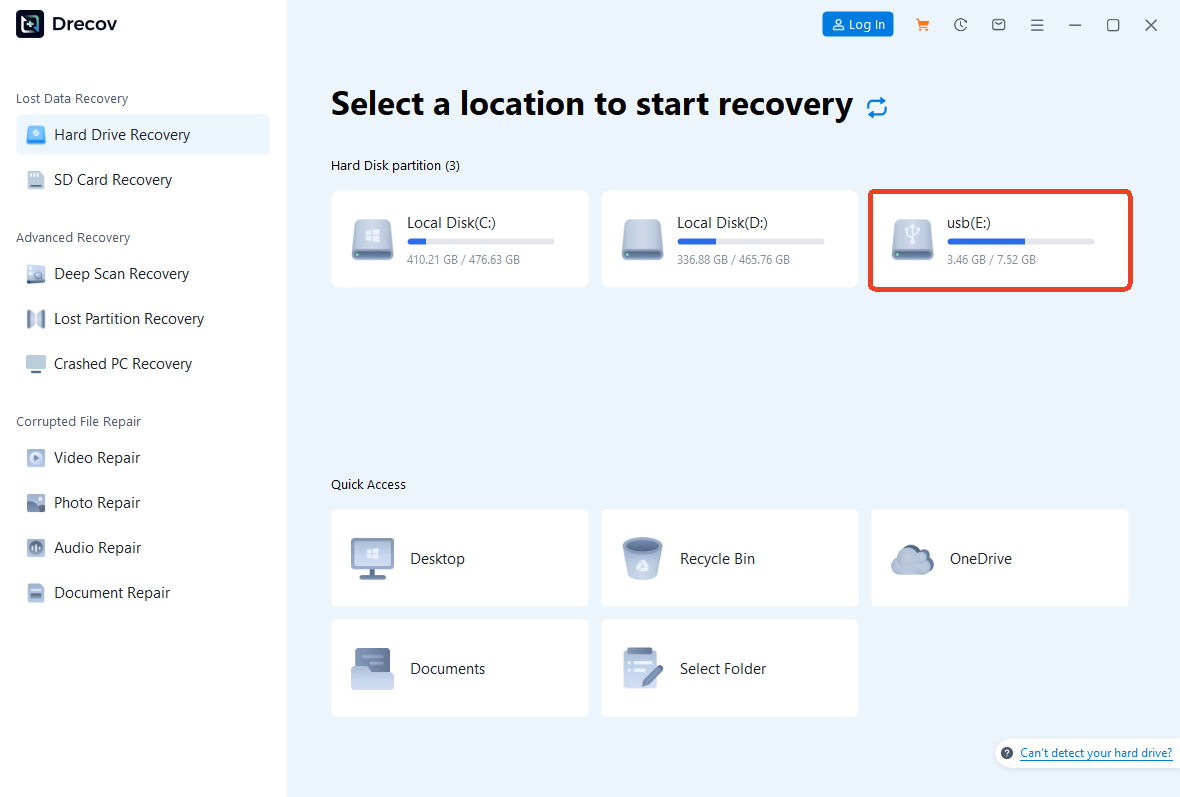
- Step 1: Select the Target USB. Locate your USB drive in the list. If you are dealing with a lost encrypted partition, select the “Lost Partition” or the raw drive entry.
- Step 2: Start the Scan. Click the Scan button. The software will perform a deep scan to identify file signatures.
> Warning: Do not save any new files to the USB drive during this process, as this could overwrite the data you are trying to recover.
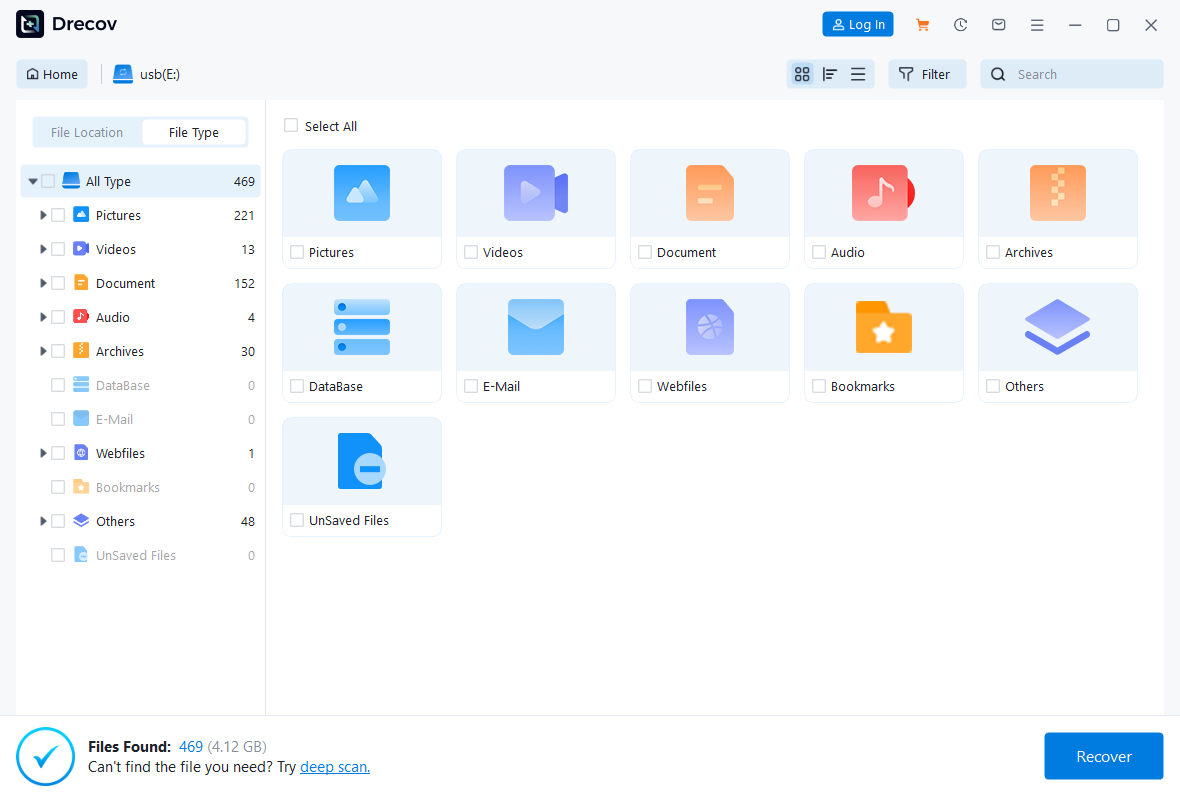
- Step 3: Preview and Recover. Once the scan is complete, browse the folders. PandaOffice Drecov allows you to preview images and documents before committing to the recovery. Select your files and click Recover to save them to a different local hard drive.
If the drive is logically damaged (showing as RAW), you should use a tool like PandaOffice Drecov to find the lost files within that encrypted space.
- How to recover deleted files from USB drive
- USB ports not working: Ultimate troubleshooting guide
- Recover deleted files from USB flash drive: A complete guide
Common Mistakes When Encrypting USB Drives
- Forgetting the Password: This is the #1 cause of data loss in encrypted drives. There is no “Forgot Password” link for local encryption.
- Losing the Recovery Key: Without the key, you cannot bypass the password if you forget it.
- Pulling the USB Out Early: Removing a drive while encryption is in progress can corrupt the entire file system.
- Ignoring Backups: Encryption is not a backup. If the hardware fails, the data is gone regardless of security.
Performance Impact of USB Encryption
Does usb flash encryption slow down your computer? Technically, yes, but rarely to a noticeable degree. Modern processors include AES-NI (Advanced Encryption Standard New Instructions), which allows the CPU to handle encryption tasks nearly instantaneously. You might see a 5-10% decrease in write speeds on older machines, but for most users in 2026, the impact is negligible.
Legal and Compliance Considerations
If you work in healthcare (HIPAA) or finance (SOX), usb flash encryption is often a legal requirement. Storing client data on an unencrypted drive can lead to massive fines. By using encrypted storage, you provide a “Safe Harbor” defense—if the drive is lost, you often do not have to report it as a data breach because the data was technically unreadable.
Best Practices for USB Data Security
- Use Multi-Factor Authentication: If your software supports it, use a keyfile in addition to a password.
- Regularly Update Software: Ensure your encryption tools are patched against new vulnerabilities.
- Label Your Drives: Knowing which drive contains which data helps prevent accidental formatting.
When You Should Avoid USB Encryption
Avoid encryption if the data is intended for public distribution (like a marketing presentation you’re giving to a client) or if you are using extremely old hardware that cannot support the processing load. In these cases, simple password protection on a ZIP file might be a better alternative.
Future Trends in USB Encryption
As we look toward the future, Quantum-Resistant Encryption is the next big frontier. Modern AES is strong, but quantum computers could theoretically break it. Researchers are already developing “lattice-based” encryption for USB drives to ensure data remains safe for decades to come.
USB Flash Encryption FAQs
1. Is USB encryption difficult to set up?
No, most operating systems like Windows and macOS offer simple built-in tools like BitLocker and Disk Utility that make the process very user-friendly.
2. Can encrypted USB drives be hacked?
While nothing is 100% hack-proof, AES-256 encryption would take millions of years to crack using current brute-force methods. Your password strength is usually the weakest link.
3. What happens if I forget my encryption password?
Unless you have a recovery key, the data is generally considered lost. This is why saving your recovery key in a safe, separate location is vital.
4. Does encryption slow down USB performance?
There is a minor overhead, but on modern computers, you likely won’t notice any difference during daily tasks.
5. Is hardware encryption better than software encryption?
Hardware encryption is generally more secure and faster because it is independent of the computer’s OS, but it is also more expensive.
Conclusion
USB flash encryption is the ultimate tool for anyone who values their digital privacy. While the technical side might seem daunting, modern tools have made it as easy as clicking a button. By combining strong encryption with a reliable recovery plan—using tools like PandaOffice Drecov—you can ensure your data is not only safe from prying eyes but also protected from accidental loss. Start securing your portable data today; the peace of mind is worth every second of the setup.





