







Understanding Basic Disks and Dynamic Disks
What Is a Basic Disk in Windows
When configuring storage in Windows, most users encounter a basic disk by default. A basic disk uses traditional partition tables and supports primary partitions, extended partitions, and logical drives. It remains the most common storage configuration across personal computers, laptops, and workstations.
Basic disks are compatible with nearly all modern versions of Windows and many other operating systems. Their simplicity makes them easy to manage, migrate, and troubleshoot. Users can create, delete, format, and resize partitions using built-in Windows tools.
Advantages of basic disks include:
- Broad operating system compatibility
- Simple partition management
- Easy migration between computers
- Lower administrative complexity
For most home and office users, basic disks provide all the storage functionality required for everyday computing tasks.
When discussing dynamic disk vs basic disk, it’s important to understand that basic disks focus on compatibility and ease of use rather than advanced volume management.
What Is a Dynamic Disk and How It Works
A dynamic disk provides additional storage capabilities beyond those available on a basic disk. Introduced in Windows to support advanced volume management, dynamic disks use a dedicated database to store configuration information rather than relying solely on standard partition tables.
Dynamic storage can create:
- Simple volumes
- Spanned volumes
- Striped volumes
- Mirrored volumes
- RAID-based volumes
These features allow administrators to combine storage from multiple physical drives and improve flexibility in certain environments.
Many users researching dynamic disk vs basic configurations are considering whether advanced volume features justify the additional complexity.
While dynamic storage offers powerful capabilities, it also introduces compatibility considerations and more complicated recovery procedures.
Key Differences Between Basic and Dynamic Storage
The main distinction between the two storage types lies in how volumes are managed.
| Feature | Basic Disk | Dynamic Disk |
|---|---|---|
| Traditional partitions | Yes | No |
| Multi-disk volumes | No | Yes |
| Software RAID support | Limited | Yes |
| Compatibility | Excellent | Moderate |
| Ease of management | High | Moderate |
A basic disk emphasizes simplicity, while dynamic storage prioritizes flexibility.
Understanding these differences helps users evaluate whether advanced features are actually necessary for their workloads.
The choice between dynamic vs basic disk often depends on storage requirements, hardware configuration, and long-term management goals.
Why Windows Offers Both Disk Types
Microsoft continues supporting both storage types because different users have different requirements.
Basic disks remain ideal for:
- Home computers
- Gaming systems
- Office workstations
- Single-drive setups
Dynamic disks may be useful for:
- Storage expansion
- Software RAID configurations
- Multi-disk environments
- Advanced administrative tasks
By offering both options, Windows accommodates a wider range of storage scenarios.
However, many users who convert disks without understanding the implications later encounter compatibility or recovery challenges.
⚠️ Warning: Always back up important files before converting any disk structure or modifying volume configurations.
Comparing Dynamic Disk and Basic Disk Features
Dynamic Disk vs Basic Disk: Storage Structure Comparison
The debate surrounding dynamic disk vs basic disk often begins with storage architecture.
Basic disks organize data using partitions. Each partition operates independently and occupies a defined section of physical storage.
Dynamic disks use volumes instead of traditional partitions. These volumes can span multiple physical disks and may be expanded more flexibly.
Storage structure comparison:
Basic Disk
- Fixed partitions
- Traditional MBR/GPT layouts
- Straightforward management
Dynamic Disk
- Dynamic volumes
- Multi-disk support
- Advanced storage configurations
For most users, partition-based storage remains easier to understand and maintain.
Organizations managing larger storage environments may benefit from the flexibility of dynamic volumes.
Dynamic vs Basic Disk Performance Considerations
Performance differences between the two storage types depend largely on the volume configuration rather than the disk type itself.
Basic disks generally deliver predictable performance because they use conventional partition structures.
Dynamic disks can potentially improve performance through:
- Striped volumes
- Multi-disk data distribution
- Software RAID implementations
However, performance gains are not guaranteed.
Factors affecting performance include:
- Disk speed
- Storage controller quality
- Workload characteristics
- System resources
Many users comparing dynamic vs basic disk options discover that performance differences are minimal for everyday computing tasks.
In business environments with specialized storage requirements, dynamic configurations may offer advantages.
Dynamic Disk vs GPT Disk: Understanding the Difference
One common source of confusion involves dynamic disk vs GPT disk comparisons.
These technologies serve completely different purposes.
GPT (GUID Partition Table) defines how partition information is stored.
Dynamic disks define how Windows manages storage volumes.
A disk can be:
- Basic + GPT
- Basic + MBR
- Dynamic + GPT
- Dynamic + MBR
Because these technologies address different aspects of storage, they are not direct competitors.
Users researching dynamic disk vs GPT disk often assume they must choose one or the other, when in reality both can coexist on the same drive.
Understanding this distinction helps avoid configuration mistakes.
Dynamic Disc vs MBR and GPT Partition Styles
Similarly, comparisons such as dynamic disc vs MBR can be misleading.
MBR and GPT are partition styles.
Dynamic storage is a disk management model.
Key MBR characteristics:
- Supports disks up to 2TB
- Limited partition count
- Legacy compatibility
Key GPT characteristics:
- Supports larger drives
- More partition entries
- Improved reliability
Whether a disk uses MBR or GPT is separate from whether it is configured as basic or dynamic.
When evaluating storage options, users should consider both the partition style and the storage management model.
Dynamic vs Simple Disk Configurations Explained
Some users search for dynamic vs simple disk comparisons when trying to understand Windows storage terminology.
In reality, a simple volume is a type of volume that exists on a dynamic disk.
A simple volume:
- Uses space from a single disk
- Functions similarly to a partition
- Supports expansion in some scenarios
The comparison is not entirely equivalent because one term describes a storage model while the other describes a volume type.
Nevertheless, understanding simple volumes helps users grasp how dynamic storage operates.
How to Choose Between Dynamic and Basic Disks
Method 1. Recover Important Data with PandaOffice Drecov Before Making Disk Changes
Test Environment
- Windows 11 Pro
- 2TB Storage Drive
- Dynamic or Basic Disk Conversion Planned
- External Backup Drive Available
Before converting storage configurations, recovering and backing up important files is highly recommended.
PandaOffice Drecov can recover documents, photos, videos, archives, and other important files from disks experiencing accessibility issues.
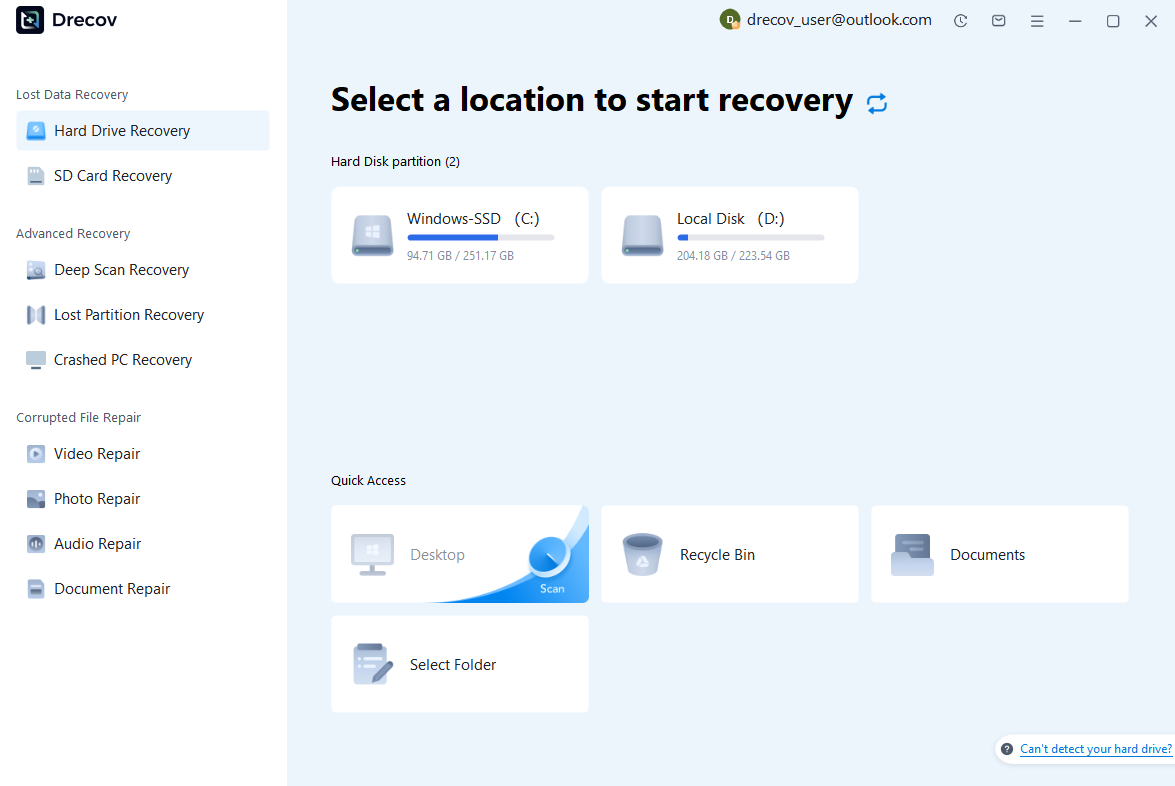
Step 1: Scan the Storage Device (SD Card / Hard Drive / USB)
Connect your device (SD card, HDD/SSD, or USB drive) to your computer and launch PandaOffice Drecov. Select the target device and start the scan. The software will perform a quick scan and deep scan to detect lost or deleted data.
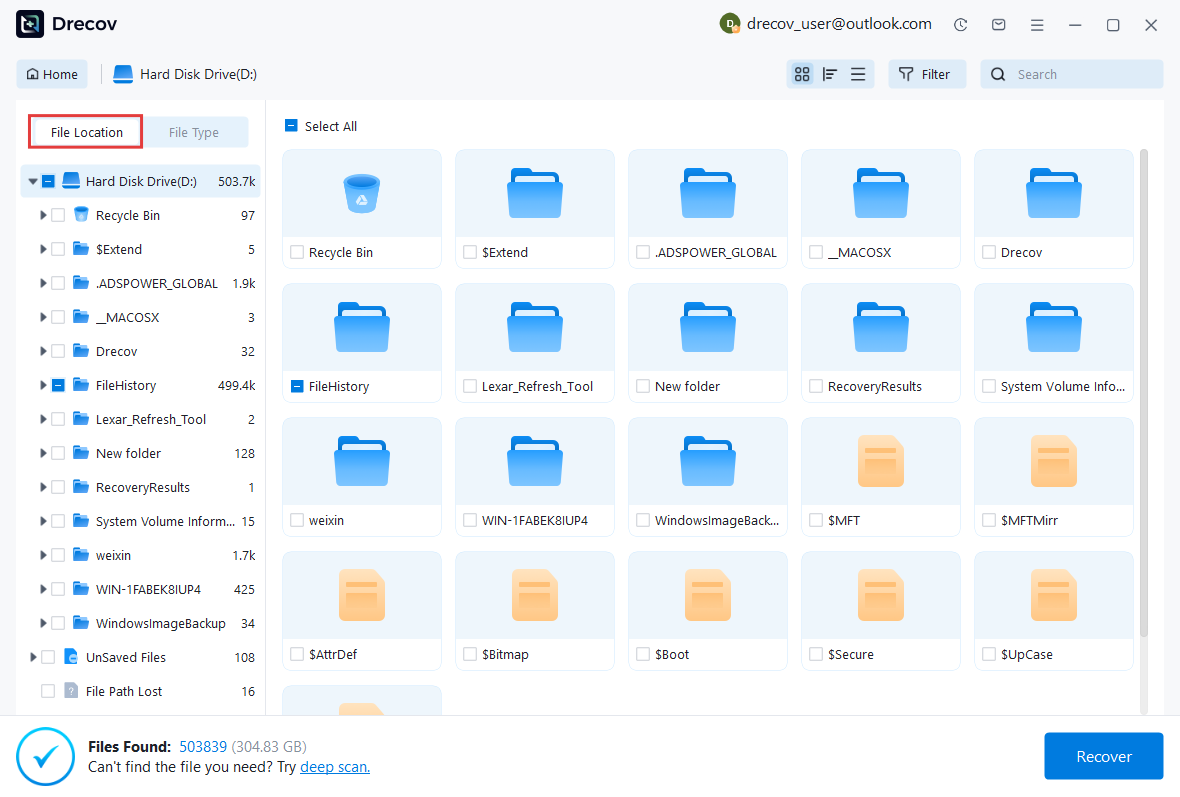
Step 2: Locate and Preview Lost Files
After scanning, browse the detected files and use the preview feature to check recoverable data. You can preview documents (Word, Excel, PDF), photos, and videos to ensure file integrity before recovery.
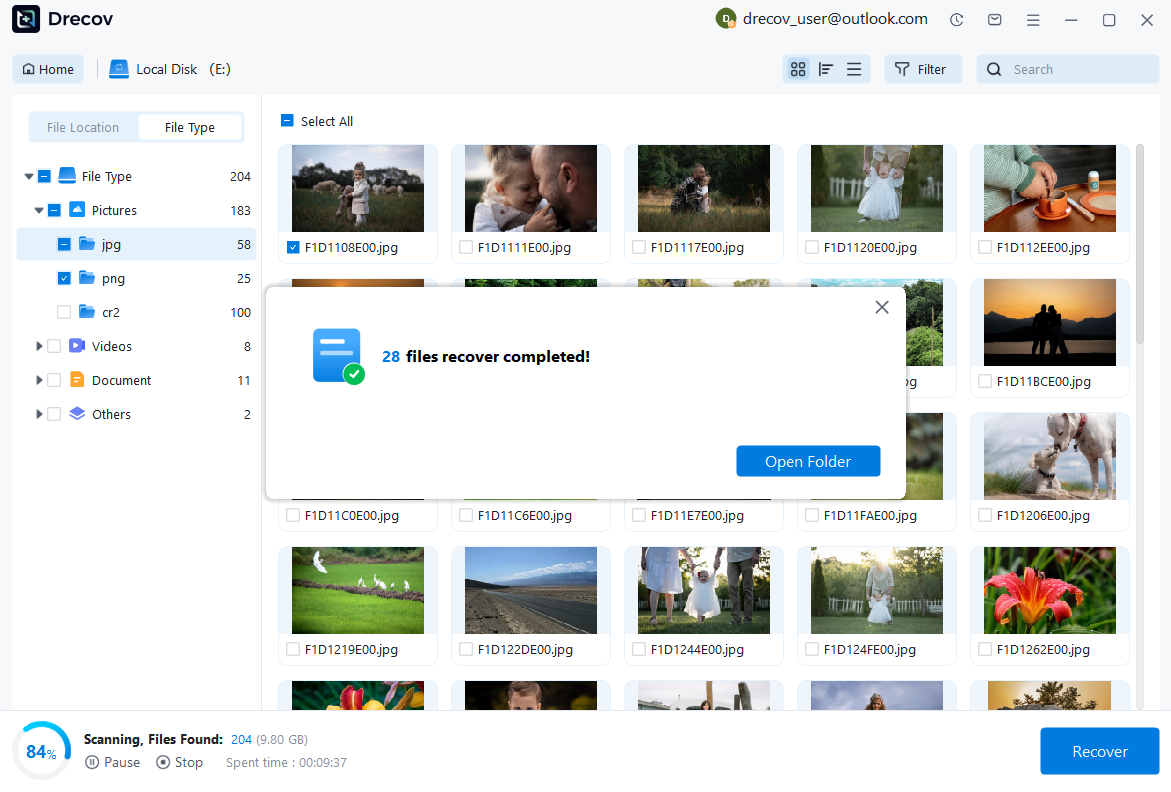
Step 3: Recover and Save to a New Location
Select the files you want to restore and click recover. Save all recovered data to a different drive or location (not the original device) to avoid overwriting lost data.
Why Choose PandaOffice Drecov Recovery Software?
PandaOffice Drecov offers a fast, secure, and user-friendly solution for recovering lost files across multiple scenarios. Whether you need email recovery, ZIP File Recovery, format data recovery, or help to recover deleted drafts Outlook, the software provides reliable recovery performance for both personal and business users.
PandaOffice Drecov supports recovery from formatted hard drives, SSDs, USB drives, SD cards, and external storage devices. Its advanced scanning engine can locate deleted archives, damaged ZIP files, lost Outlook drafts, and accidentally removed documents with high accuracy. For users searching for how to find deleted messages in Teams, PandaOffice Drecov can also help recover exported chat files, attachments, and related local cache data when available.
Key advantages include:
- Deep scan technology for complex data loss situations
- Support for emails, archives, videos, photos, and office documents
- Recovery from accidental deletion, formatting, corruption, and system crashes
- Easy preview before restoring files
- Compatible with Windows and multiple storage devices
Unlike complicated enterprise recovery tools, PandaOffice Drecov keeps the recovery process simple. Users can scan, preview, and restore files in just a few steps without technical expertise.
Whether you are dealing with lost Outlook drafts, corrupted ZIP archives, formatted drives, or missing communication data, PandaOffice Drecov provides an efficient and practical recovery experience designed to minimize downtime and protect important files.
Disk imaging ensures that even partially corrupted drives can be preserved. This is often the safest approach before attempting any aggressive repair operations for fix bad sectors on hard drive situations.
⚠️ Warning: Never save recovered files to the same disk being repaired or converted.
Method 2. Evaluate Your Storage Requirements
Test Environment
- Windows Desktop or Laptop
- Existing Storage Configuration
- Administrative Access
Before deciding between storage types, identify your actual requirements.
Questions to consider:
- Do you use multiple physical drives?
- Is software RAID necessary?
- Will storage expansion be required?
- Is compatibility a priority?
Most users discover that basic disks meet all practical needs.
However, specialized environments may benefit from advanced dynamic storage capabilities.
Choosing storage based on real requirements reduces unnecessary complexity.
Method 3. Identify Whether Advanced Volume Features Are Needed
Test Environment
- Multi-Drive Windows System
- Storage Management Access
- Administrative Permissions
Dynamic storage becomes valuable when advanced features are required.
Examples include:
- Disk spanning
- Software RAID
- Volume expansion across drives
- Fault tolerance
If these features are unnecessary, maintaining a basic disk often simplifies management and troubleshooting.
Method 4. Determine Compatibility Requirements
Test Environment
- Multi-Boot Environment
- External Storage Usage
- Multiple Operating Systems
Compatibility should be evaluated before any conversion.
Basic disks generally offer broader compatibility with:
- Windows versions
- Linux distributions
- Recovery environments
- Imaging software
Dynamic storage may not be recognized by all systems.
Users planning migrations, dual-boot setups, or hardware transfers should carefully assess compatibility before making storage changes.
Method 5. Compare Performance and Management Complexity
Test Environment
- Windows 10/11
- Single-Drive and Multi-Drive Configurations
- Disk Management Access
- Administrative Privileges
Many users evaluating dynamic disk vs basic disk focus primarily on performance. While performance can be an important factor, management complexity should also be considered.
Basic disks are generally easier to manage because:
- Most technicians are familiar with them.
- Recovery procedures are straightforward.
- Compatibility issues are rare.
- Disk migration is simpler.
Dynamic storage can introduce additional administrative requirements.
Examples include:
- Monitoring volume health
- Managing multi-disk configurations
- Troubleshooting foreign disk issues
- Recovering damaged volume databases
Performance benefits may appear in certain striped or RAID-based environments, but many home users will notice little difference during daily activities.
When comparing dynamic disk vs basic, simplicity often outweighs advanced features unless a specific business or technical need exists.
Organizations with dedicated IT support may be more comfortable managing complex storage structures than individual users.
Method 6. Convert Dynamic to Basic Disk Safely
Test Environment
- Dynamic Disk Accessible
- Full Backup Available
- Windows Disk Management
- Administrator Account
Some users eventually decide to perform a dynamic to basic disk conversion to improve compatibility or simplify storage management.
Before converting:
- Back up all important files.
- Verify storage health.
- Confirm volume accessibility.
- Review conversion requirements.
General process:
Step 1. Create a complete backup.
Step 2. Open Disk Management.
Step 3. Review existing dynamic volumes.
Step 4. Follow the approved conversion method.
Step 5. Verify data accessibility after completion.
The exact conversion process may vary depending on the Windows version and volume configuration.
Because storage structures are being modified, preparation is essential.
⚠️ Warning: Always verify backup integrity before beginning a disk conversion procedure.
Method 7. Verify Disk Configuration After Conversion
Test Environment
- Recently Converted Disk
- Windows 10/11
- Administrative Permissions
- Disk Management Available
After converting storage configurations, validation is critical.
Verification steps include:
Step 1. Open Disk Management.
Step 2. Confirm disk status.
Step 3. Check partition structure.
Step 4. Verify drive letters.
Step 5. Test file access.
Step 6. Review system logs for errors.
Successful verification ensures that storage remains functional and that no unexpected configuration problems were introduced during the process.
Many users focus heavily on conversion but neglect post-conversion validation.
A few minutes spent checking the configuration can prevent future troubleshooting efforts.
Best Practices for Managing Windows Storage
When to Use Basic Disks
Basic disks remain the preferred option for most users.
Situations where basic disks are typically recommended include:
- Home computers
- Office desktops
- Gaming systems
- Portable storage devices
- Single-drive configurations
Advantages include:
- Broad compatibility
- Simpler recovery
- Easier migration
- Lower maintenance requirements
For users comparing dynamic disc vs basic, the basic disk often provides everything necessary for everyday computing.
Unless advanced volume features are required, simplicity generally offers long-term benefits.
Basic disks also tend to be easier for third-party recovery tools and imaging applications to recognize.
When Dynamic Disks Make Sense
Although basic storage suits most users, dynamic storage remains valuable in specific scenarios.
Dynamic disks may be appropriate when:
- Multiple physical drives are available.
- Software RAID is required.
- Flexible storage allocation is needed.
- Volume expansion across disks is planned.
Business environments sometimes benefit from the additional flexibility dynamic storage provides.
However, the added capabilities come with increased administrative responsibilities.
Users should ensure they fully understand dynamic storage behavior before implementing complex volume structures.
Choosing dynamic storage simply because it appears more advanced can create unnecessary complications.
Avoid Common Configuration Mistakes
Storage problems often result from avoidable mistakes.
Common examples include:
- Converting disks without backups
- Disconnecting drives unexpectedly
- Ignoring warning messages
- Misunderstanding volume types
- Performing unsupported migrations
These mistakes frequently lead users to search for recovery solutions after data becomes inaccessible.
Good planning significantly reduces the likelihood of storage-related issues.
Documentation is especially important when managing multiple disks or advanced volume configurations.
Understanding the difference between partition styles and storage models helps prevent configuration errors.
Back Up Data Before Disk Modifications
Backups remain the most effective defense against storage failures.
Recommended practices include:
- Maintain multiple backup copies.
- Store backups on separate devices.
- Verify backup integrity regularly.
- Test restoration procedures periodically.
Disk conversions, volume expansions, and hardware migrations all carry some level of risk.
Having reliable backups transforms potentially catastrophic failures into manageable inconveniences.
⚠️ Warning: Never assume a disk conversion process is completely risk-free, regardless of the tools being used.
Frequently Asked Questions About Dynamic and Basic Disks
Dynamic Disk vs Basic Disk: Which Is Better?
The answer depends on the intended use case.
When comparing dynamic disk vs basic disk, most home users benefit more from basic storage because it is easier to manage and widely compatible.
Dynamic storage may be advantageous when advanced volume features are required.
Neither option is universally better; the best choice depends on your specific requirements.
What Is the Difference Between Dynamic Disk vs GPT Disk?
Many users mistakenly compare dynamic disk vs GPT disk as though they are competing technologies.
In reality:
- GPT is a partition style.
- Dynamic storage is a volume management model.
A disk can use GPT while remaining either basic or dynamic.
Understanding this distinction helps avoid confusion during storage configuration.
What Is Dynamic Disc vs GPT?
The comparison dynamic disc vs GPT is another common misunderstanding.
GPT determines how partition information is organized.
Dynamic storage determines how Windows manages volumes.
These technologies serve different purposes and can coexist on the same drive.
A GPT disk may also be configured as a dynamic disk.
How Does Dynamic Disc vs MBR Compare?
The phrase dynamic disc vs MBR compares two different storage concepts.
MBR:
- Defines partition structure.
- Supports up to 2TB disks.
- Uses legacy partitioning methods.
Dynamic storage:
- Defines volume management behavior.
- Supports advanced storage configurations.
- Can exist independently of partition style.
Understanding the difference is essential when planning storage deployments.
Can Dynamic Disks Be Converted Without Data Loss?
Some conversion approaches can preserve data, but results vary depending on:
- Disk configuration
- Windows version
- Volume types
- Conversion methods
Because no process is entirely risk-free, maintaining backups remains essential.
Data protection should always take priority over convenience.
Dynamic Disc vs Basic: Which Is Easier to Manage?
For most users, dynamic disc vs basic comparisons favor basic disks in terms of management simplicity.
Basic disks are generally:
- Easier to configure
- Easier to migrate
- Easier to recover
- Easier to troubleshoot
Dynamic storage may require additional expertise and planning.
What Is Dynamic vs Simple Disk?
The phrase dynamic vs simple disk can be confusing because a simple volume is actually a volume type within dynamic storage.
A simple volume uses space from a single physical disk while remaining part of a dynamic storage environment.
The terms describe different concepts rather than directly competing technologies.
Final Thoughts on Dynamic Disk and Basic Disk Selection
Choosing the Right Storage Configuration
Selecting the appropriate storage model begins with understanding your needs.
Consider:
- Number of physical drives
- Compatibility requirements
- Recovery priorities
- Administrative expertise
- Future expansion plans
Most users benefit from a straightforward configuration that minimizes complexity while maintaining reliability.
When to Convert Dynamic to Basic Disk
A dynamic to basic disk conversion may be appropriate when:
- Advanced features are no longer required.
- Hardware migrations are planned.
- Compatibility concerns arise.
- Simplified management becomes desirable.
Before proceeding, always secure important files through backups or recovery procedures.
Proper preparation significantly reduces potential risks.
Key Recommendations for Long-Term Storage Reliability
Whether you choose basic or dynamic storage, several best practices remain universal:
- Maintain regular backups.
- Monitor disk health.
- Document storage configurations.
- Verify recovery plans.
- Replace failing hardware promptly.
- Avoid unnecessary disk modifications.
The debate surrounding dynamic disk vs basic disk ultimately comes down to balancing flexibility and simplicity.
For most home and office users, basic disks provide excellent reliability and compatibility. Dynamic storage remains a powerful option for advanced environments that require specialized volume management capabilities.
By understanding both technologies and applying proper maintenance practices, users can build storage systems that remain dependable, efficient, and easier to recover when problems occur.





