







Running out of storage on your PC can feel like hitting a wall. Apps slow down, updates fail, and suddenly your system starts behaving like it’s stuck in slow motion. If you’ve ever wondered what’s eating up your storage, learning how to find large files on Windows 11 is the fastest way to regain control.
In this complete guide, you’ll discover simple, effective, and advanced methods to locate large files, clean up your system, and keep your storage organized like a pro. We will also delve into the critical world of data recovery, ensuring that if you accidentally delete something important during your cleanup, you have the tools to get it back.
Why Finding Large Files Matters
Before jumping into the steps, let’s talk about why this matters. Large files are often the biggest culprits behind low disk space. These could be forgotten videos, duplicate backups, installer files, or even hidden system data. Think of your storage like a closet. Small files are like socks and shirts—they don’t take much space. Large files? They’re like bulky winter coats. Just a few of them can fill everything up.
Finding and managing these files helps you:
- Free up significant disk space quickly.
- Improve system performance and boot times.
- Organize your files more efficiently.
- Avoid unnecessary and expensive storage upgrades.
Search for Files by Size in Windows 11 File Explorer
The most intuitive way to begin your journey is to search for files by size in Windows 11 File Explorer. Microsoft has integrated powerful filtering syntax that allows you to bypass manual folder clicking and jump straight to the “space hogs.”
Step-by-Step Guide
- Step 1: Press
Win + Eto open File Explorer. - Step 2: Navigate to This PC or a specific drive like Local Disk (C:).
- Step 3: Click into the Search box in the top-right corner.
- Step 4: To find specific sizes, type the command
size:followed by a descriptor. For example, typingsize:giganticwill filter for files larger than 4GB. - Step 5: For more precision, use mathematical operators. If you want to see everything over 500MB, type
size:>500MB.
Windows classifies sizes into these categories:
- Large: 1 MB – 128 MB
- Huge: 128 MB – 1 GB
- Gigantic: Over 1 GB
By utilizing these built-in filters, you can quickly identify outdated video projects or massive ISO files that are no longer needed.
Find Large Hidden Files Windows 11
Sometimes, the space-takers aren’t visible to the naked eye. System logs, application caches, and temporary update files can grow to massive sizes while remaining tucked away. To truly master how to find large files on Windows 11, you must learn how to find large hidden files Windows 11 uses to store background data.
Step-by-Step Guide
- Step 1: Open File Explorer and click on the View tab in the top menu.
- Step 2: Hover over Show and ensure that Hidden items is checked.
- Step 3: Navigate to
C:\Users\[YourUsername]\AppData. This is where many large hidden “Local” and “Roaming” cache files reside. - Step 4: Use the search method mentioned previously (
size:>1GB) while within these hidden folders.
Warning: Be extremely cautious in these directories. Deleting the wrong folder in AppData can cause software to crash or lose settings.
Furthermore, you can use the official Microsoft Support site to understand which system files are safe to remove during a disk cleanup.
Undo Shift Delete Large Folder Windows 11
In the heat of a “cleaning frenzy,” it is incredibly common to make a mistake. You might select a massive folder of old work, hit Shift + Delete to bypass the Recycle Bin, and realize a second too late that your current project was inside. If you need to undo shift delete large folder Windows 11, you cannot rely on standard “Undo” commands or the Recycle Bin. You need a professional recovery solution.
When a file is “permanently” deleted, Windows simply marks the space as “available.” The data is still there until new data overwrites it. This is why immediate action is required. To recover these lost assets, we recommend using a specialized tool designed for high-success deep scans.
PandaOffice Drecov Data Recovery Software
When standard methods fail, PandaOffice Drecov data recovery software acts as your safety net. It is designed to handle complex recovery scenarios, including formatted drives, emptied recycle bins, and shift-deleted folders.
⚠ Warning: Install the software on a different drive than the one you are recovering data from to avoid overwriting the deleted files.
How to Use PandaOffice Drecov for Recovery
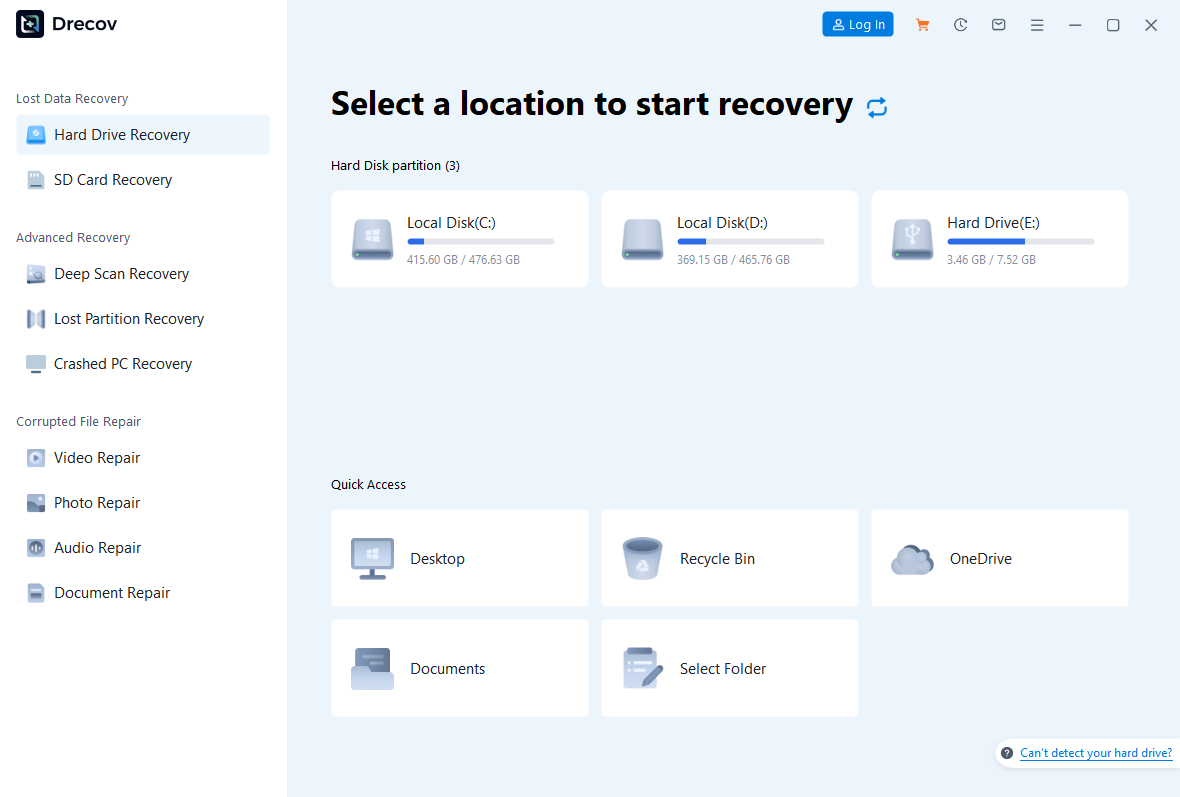
- Step 1: Select Location. Launch the program. On the main dashboard, select the drive or specific folder where the large folder was located before deletion.
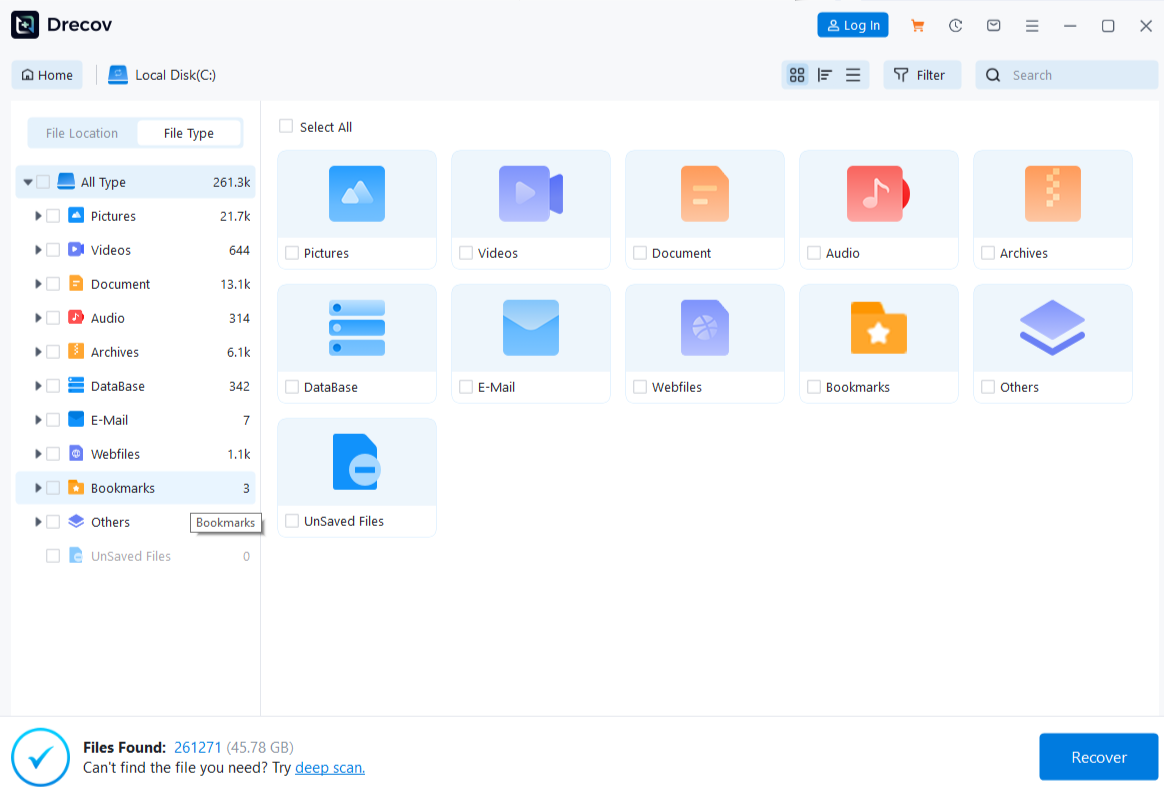
- Step 2: Scan. Click the Scan button. PandaOffice Drecov will perform a Quick Scan followed by a Deep Scan to piece together the raw data of your large files.
- Step 3: Filter and Preview. Once the scan completes, use the “File Type” or “Size” filter within the software to find your large deleted folder. You can preview many file types (like images or documents) before recovery.
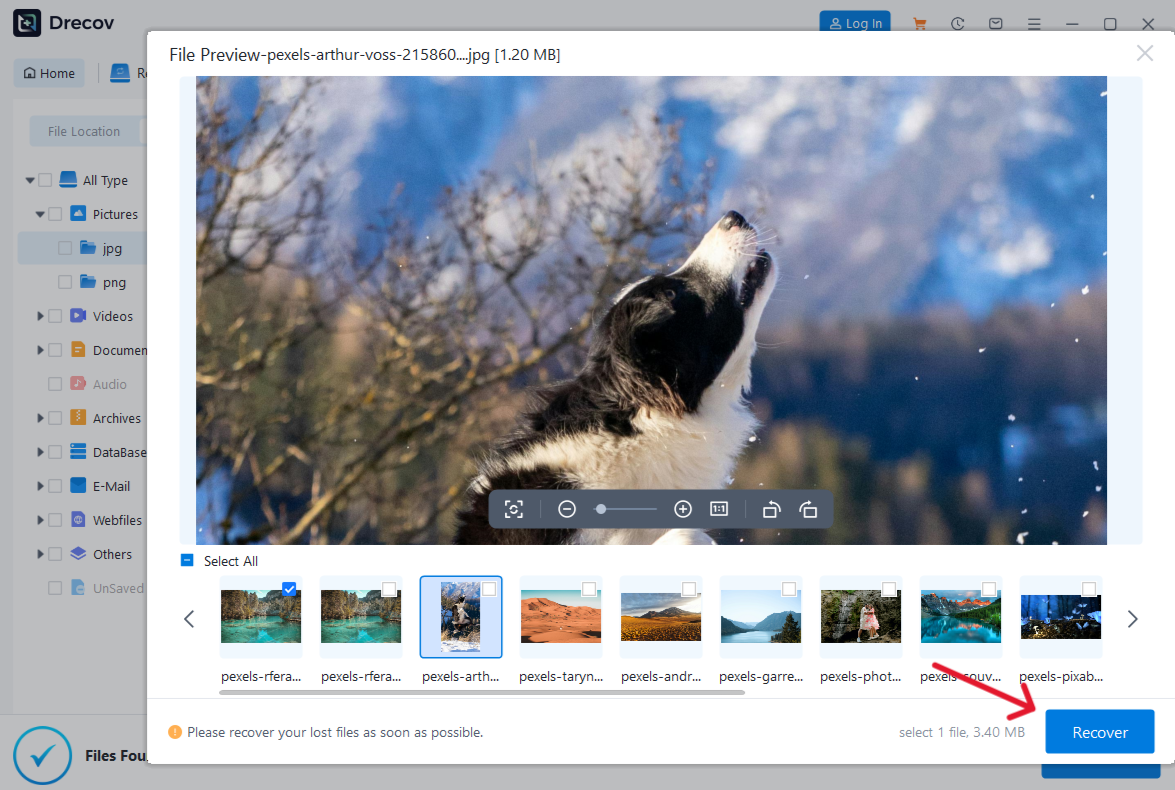
- Step 4: Recover. Select the files you need and click Recover. Choose a destination on an external drive or a different partition to save the recovered data.
Expert Tip: Never save recovered files back to the same disk they were lost from. This is the golden rule of data recovery to prevent permanent corruption.
After you have successfully managed your data, you might want to learn how to remove the Recycle Bin from desktop to keep your workspace clean, or perhaps you need to know how to format hard drive Windows 11 for a fresh start. Additionally, for those looking to optimize their cloud integration, here is a guide on how to remove OneDrive from Windows 11.
Advanced Methods to Find Large Files
Method 4: Use Windows Settings Storage Tool
Windows 11 includes a built-in storage analyzer that is much more visual than the classic File Explorer.
- Step 1: Press
Win + Ito open Settings. - Step 2: Go to System > Storage.
- Step 3: Wait for the system to calculate usage. Click on Large Folders or Installed Apps.
- Step 4: This view gives you a bird’s-eye perspective of what is actually consuming your gigabytes.
Method 5: Use PowerShell for Precision
For those who prefer a command-line interface, PowerShell is incredibly efficient at finding large files across the entire system.
- Step 1: Right-click the Start button and select Terminal (Admin).
- Step 2: Copy and paste the following command to find the top 20 largest files on your C: drive:
Get-ChildItem -Path C:\ -Recurse -ErrorAction SilentlyContinue | Sort-Object Length -Descending | Select-Object -First 20 | Name, @{Name="Size(GB)";Expression={$_.Length / 1GB}} - Step 3: This will generate a clean list of the biggest space-takers including their size in GB.
Comparison of Methods
| Method | Difficulty | Effectiveness | Best For |
| File Explorer Search | Easy | High | Specific size filtering |
| Storage Settings | Very Easy | Medium | General overview |
| PandaOffice Drecov | Medium | Extreme | Recovering large deleted files |
| PowerShell | Advanced | Very High | Automation and deep scans |
Find Large Files On Windows 11 FAQs
1. What is the fastest way to find files over 1GB?
The fastest way is using the File Explorer search bar and typing size:>1GB.
2. Can I recover a large folder if I emptied the Recycle Bin?
Yes, using professional software like PandaOffice Drecov, you can scan the hard drive’s sectors to locate and reconstruct the deleted data.
3. Is it safe to delete large files in the Windows folder?
Generally, no. You should avoid deleting anything in the C:\Windows or C:\Program Files folders unless you are using the “Uninstall” feature or “Disk Cleanup.”
4. Why is my “System and Reserved” storage so large?
This often includes the page file, hibernation file, and system restore points. While these are “large files,” they are necessary for Windows to function correctly.
Conclusion
Mastering how to find large files on Windows 11 is an essential skill for any PC user in 2026. By combining the built-in search filters of File Explorer with the visual breakdown of Storage Settings, you can keep your disk healthy and fast. However, cleaning always carries the risk of accidental loss. Whether you are dealing with a “Shift + Delete” error or a formatted partition, having PandaOffice Drecov data recovery software in your toolkit ensures that your “gigantic” files are never truly gone.
Regularly auditing your storage—at least once a month—will prevent the dreaded “Disk Full” notification and keep your Windows 11 experience smooth and responsive.






