







What an Unallocated Partition Means
An unallocated partition refers to disk space that is not currently assigned to any file system or drive letter. In simple terms, your operating system cannot recognize or use this space to store files. When users encounter this issue, the space appears as “unallocated” in disk management tools, making it inaccessible.
This situation often causes panic because it looks like all stored data has disappeared. However, in many cases, the data is still physically present on the disk. The system simply lost the reference to where the files are stored. That’s why performing a proper recover unallocated partition process can often restore both the partition structure and the data.
Unlike formatted drives, unallocated space usually results from partition-level issues rather than file-level deletion. This distinction is important because recovery methods focus more on rebuilding partition metadata instead of scanning individual files.
Another key point is that unallocated space can exist on internal hard drives, external drives, SSDs, or even USB devices. Regardless of the device type, the recovery principles remain largely the same.
⚠️ Warning: Avoid creating a new volume on the unallocated space before recovery. Doing so may overwrite critical metadata and reduce recovery success.
How Partition Loss Happens on a Disk
Partition loss doesn’t occur randomly—it usually stems from specific system or user actions. Understanding these scenarios helps improve your chances of a successful restore unallocated partition process.
One common cause is accidental deletion. When users manage partitions manually, it’s easy to remove the wrong volume. Once deleted, the system marks the space as unallocated, even though the data still exists underneath.
Another major factor is partition table corruption. The partition table acts like a map that tells the operating system how the disk is structured. If this map becomes damaged due to malware, sudden shutdowns, or software errors, the system may fail to recognize existing partitions.
Disk conversion errors can also play a role. For example, switching between MBR and GPT formats without proper handling can lead to lost partitions. Similarly, interrupted resizing operations often result in an unallocated disk partition recovery scenario.
Hardware issues should not be overlooked either. Bad sectors, aging drives, or loose connections can disrupt disk integrity and lead to partitions becoming inaccessible.
Understanding these causes allows users to choose the most suitable recovery method instead of applying random fixes that might worsen the situation.
Why an Unallocated Partition Appears on Your Drive
Accidental Deletion or Formatting Errors
One of the most frequent reasons behind an unallocated partition is human error. During disk management tasks, users may unintentionally delete a partition while attempting to clean up storage or reorganize disk space. This action instantly converts the partition into unallocated space.
Formatting mistakes can also trigger similar outcomes. For instance, selecting the wrong drive during formatting can wipe the partition structure, leaving the system unable to detect it properly. In such cases, users often believe the data is permanently lost, but in reality, it may still be recoverable.
Another overlooked scenario is improper use of third-party disk tools. While these tools offer advanced features, incorrect configurations or interruptions during operations can lead to partition loss.
The good news is that in most deletion or formatting cases, the underlying data remains intact until overwritten. This makes it possible to recover unallocated partition data using the right approach.
⚠️ Warning: Do not write new data to the affected disk after accidental deletion. Continued usage may overwrite recoverable information.
Partition Table Damage or Corruption
The partition table is a critical component that defines how disk space is organized. If this structure becomes corrupted, your system may fail to locate existing partitions, resulting in an unallocated disk partition recovery situation.
Corruption can happen due to malware infections, improper shutdowns, or software conflicts. Even something as simple as a sudden power outage during disk operations can damage partition records.
When the partition table is compromised, the disk itself remains functional, but its structure becomes unreadable. This is why the system shows the space as unallocated instead of displaying the original partition.
Repairing or rebuilding the partition table is often necessary to restore unallocated partition access. However, this process must be handled carefully, as incorrect reconstruction can lead to further complications.
System Crashes and Disk Issues
Unexpected system failures are another major contributor to partition problems. Operating system crashes, blue screen errors, or forced shutdowns can interrupt disk operations and leave partitions in an inconsistent state.
Additionally, physical disk issues such as bad sectors or firmware malfunctions can disrupt how data is stored and accessed. Over time, these issues may cause partitions to disappear entirely from the system interface.
External drives are particularly vulnerable to this problem. Disconnecting a USB drive without safely ejecting it can damage its structure, leading to an unallocated partition scenario.
Environmental factors like overheating or power surges may also play a role. These conditions can degrade disk performance and increase the likelihood of partition loss.
⚠️ Warning: If you suspect hardware failure, avoid repeated recovery attempts. This may worsen disk damage and reduce recovery success rates.
Proven Methods to Recover Unallocated Partition Safely
Method 1: Use Professional Recovery Software (Pandaoffice Drecov)
Using dedicated recovery software is one of the safest and most efficient ways to handle unallocated disk partition recovery. Tools like Pandaoffice Drecov are designed to scan lost partitions and rebuild them without requiring deep technical knowledge.
Test Environment:
- Windows 11 system
- 1TB HDD with deleted partition
- Unallocated space visible in Disk Management
The process typically starts with scanning the affected disk. The software analyzes sector-level data to identify traces of lost partitions. Once detected, it reconstructs the partition structure and allows users to preview recoverable files.
Steps generally include:
- Install and launch the recovery tool
- Select the disk showing unallocated space
- Run a full scan
- Locate the lost partition
- Restore the partition and save data
This method is especially useful when the partition table is damaged or completely missing. It minimizes risk and improves recovery success compared to manual techniques.

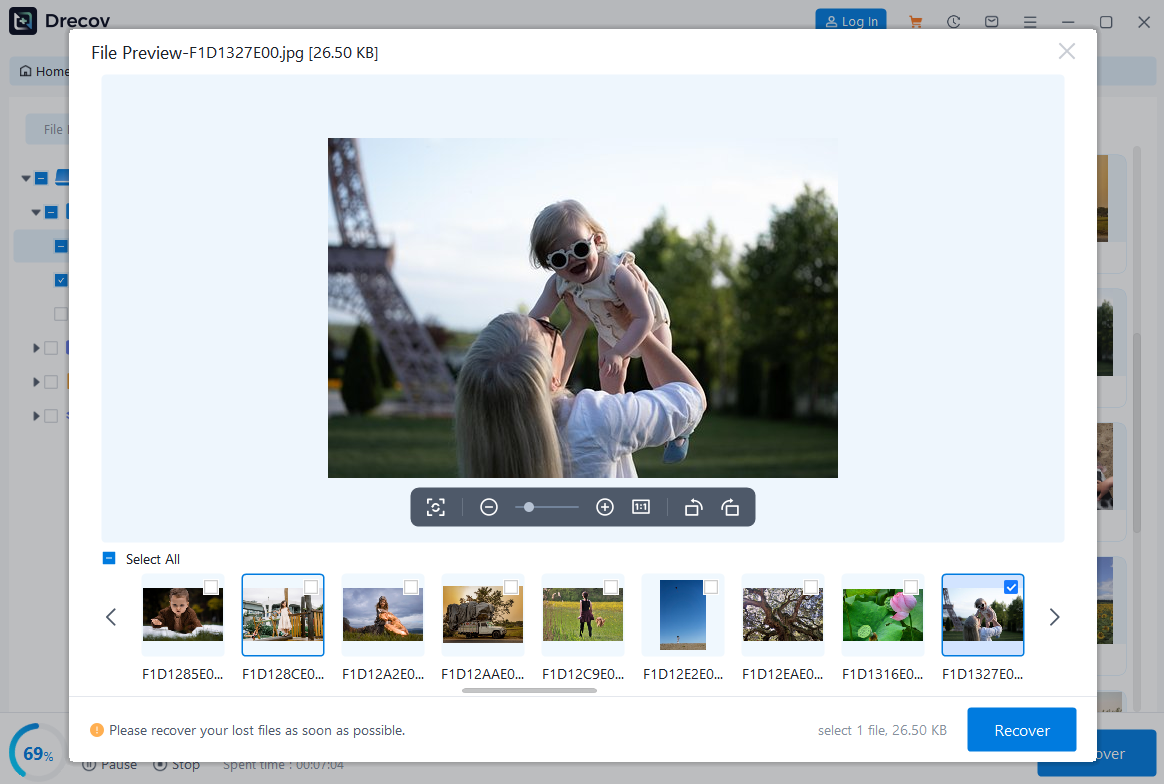
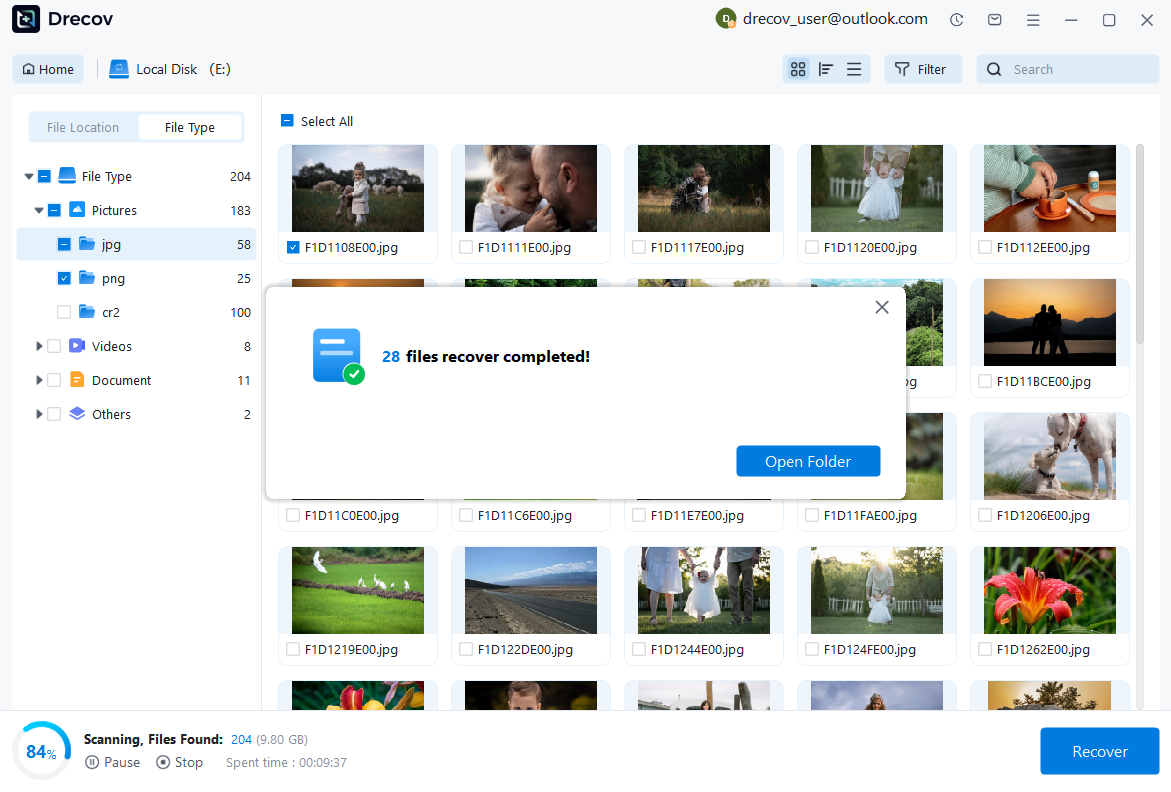
Why Choose PandaOffice Drecov Data Recovery Software?
When it comes to reliable data recovery, PandaOffice Drecov stands out as a powerful, all-in-one solution designed to handle a wide range of data loss scenarios. Whether you’re trying to perform TikTok deleted video recovery, restore files after formatting, or recover important documents, Drecov delivers fast and dependable results.
One of its biggest advantages is versatility. From format data recovery to lost partition recovery, the software can scan deeply and accurately locate files that other tools often miss. Even if your drive has been accidentally formatted or a partition has disappeared, Drecov uses advanced algorithms to reconstruct and retrieve your data with high success rates.
Drecov also supports specialized recovery needs. If you’ve lost important documents, its PDF recovery tool ensures that files retain their original structure and quality. For media users, the audio recovery feature helps restore music, recordings, and other sound files without corruption, making it ideal for both personal and professional use.
Ease of use is another key benefit. The intuitive interface allows beginners to recover files in just a few clicks, while still offering advanced options for more experienced users. Plus, it supports a wide range of storage devices, including HDDs, SSDs, USB drives, and memory cards.
In short, PandaOffice Drecov combines powerful recovery capabilities with user-friendly design, making it a trusted choice for anyone facing data loss.
Method 2: Recover Using Disk Management (Manual Fix)
Windows Disk Management provides a built-in way to handle unallocated space. While it doesn’t directly recover lost data, it can help restore usability in certain cases.
Test Environment:
- Windows 10 PC
- External hard drive showing unallocated space
Users can create a new volume from the unallocated partition. This assigns a file system and drive letter, making the space usable again. However, this method does not recover previous data—it only prepares the disk for new usage.
Steps include:
- Open Disk Management
- Locate the unallocated partition
- Right-click and select “New Simple Volume”
- Follow the wizard to format and assign a drive letter
This approach is best suited when data recovery is not required, or when the partition was intentionally removed.
⚠️ Warning: This method will overwrite existing data structures. Avoid it if you need to recover files.
Method 3: Restore Partition via Command Prompt (DiskPart)
For users comfortable with command-line tools, DiskPart offers a more advanced way to handle unallocated partition issues. While it doesn’t directly recover lost data, it can help rebuild or reassign disk structures when the problem is minor.
Test Environment:
- Windows 11 system
- 500GB SSD showing unallocated space after improper shutdown
DiskPart works by allowing users to interact directly with disk volumes and partitions. In some cases, partitions are not deleted but simply hidden or inactive. Using DiskPart, you can attempt to bring them back online.
Steps to follow:
- Press
Win + R, typecmd, and run as administrator - Enter
diskpartand press Enter - Type
list diskto identify your disk - Select the disk using
select disk X - Enter
list volumeorlist partition - If a partition exists but is inactive, use
select partition X - Run
assignoractiveif applicable
This method is helpful when the partition still exists but isn’t accessible through normal interfaces. It’s a lightweight approach that doesn’t require additional software.
⚠️ Warning: DiskPart commands are powerful and irreversible. Entering incorrect commands may lead to permanent data loss.
Method 4: Rebuild Partition Table with Specialized Tools
When partition table corruption is the root cause, rebuilding it becomes essential for proper unallocated disk partition recovery. Specialized tools are designed to reconstruct lost partition structures by analyzing disk sectors.
Test Environment:
- Windows 10 desktop
- 2TB HDD with corrupted partition table due to power outage
These tools scan the disk to locate previous partition boundaries. Once identified, they allow users to restore the original structure without formatting the drive.
Typical workflow includes:
- Launch a partition recovery tool
- Select the affected disk
- Initiate a deep scan for lost partitions
- Preview detected partitions
- Rebuild and apply the partition structure
This method is particularly effective when partitions disappear due to logical errors rather than physical damage. It bridges the gap between simple fixes and full data recovery solutions.
Compared to manual methods, rebuilding the partition table provides a higher success rate, especially in complex scenarios where the system cannot recognize any existing structure.
⚠️ Warning: Always preview detected partitions before applying changes to ensure accuracy.
Frequently Asked Questions About Unallocated Disk Partition Recovery
Can data be recovered from an unallocated partition?
Yes, in most cases, data can still be recovered from an unallocated partition. When a partition becomes unallocated, the files are not immediately erased. Instead, the system loses the reference that points to their location.
Recovery success largely depends on whether new data has overwritten the original content. If the disk hasn’t been heavily used after the issue occurred, chances of successful recovery remain high.
Using professional tools or partition recovery techniques, users can scan the disk and retrieve both the partition structure and individual files. This is why it’s critical to stop using the affected drive as soon as the problem is detected.
Is it safe to restore an unallocated partition manually?
Manual restoration methods can be safe, but they come with certain risks. Tools like Disk Management or DiskPart can help in simple scenarios, but they do not guarantee data recovery.
For example, creating a new volume through Disk Management will make the disk usable again, but it won’t recover previous files. Similarly, incorrect DiskPart commands can worsen the situation.
If the data is important, it’s generally safer to use a dedicated solution for restore unallocated partition tasks rather than relying solely on manual fixes.
What is the difference between unallocated and free space?
Unallocated space and free space are often confused, but they are fundamentally different. Free space exists within a formatted partition and is ready to store new files. Unallocated space, on the other hand, is not part of any partition at all.
This means the system cannot use unallocated space until it is assigned and formatted. In terms of recovery, unallocated space often indicates a lost partition, making recover unallocated partition methods necessary.
Understanding this distinction helps users choose the correct approach when dealing with storage issues.
Can I recover an unallocated partition without software?
It is possible, but only in limited situations. If the partition still exists but is hidden or inactive, tools like DiskPart may help restore access. However, if the partition table is damaged or deleted, manual methods are usually insufficient.
Without software, users cannot perform deep scans or reconstruct lost partition metadata effectively. That’s why most successful unallocated disk partition recovery cases involve specialized tools.
Final Thoughts on Restoring Unallocated Partition
Dealing with an unallocated partition can be stressful, especially when important data seems to disappear. However, understanding the root cause and choosing the right recovery method can make a significant difference.
Simple cases, such as inactive partitions, can often be resolved using built-in tools like Disk Management or DiskPart. More complex situations, such as partition table corruption, require advanced recovery techniques or specialized software.
The key is to act quickly and avoid writing new data to the affected disk. This preserves the original structure and increases the likelihood of successful recovery.
In summary, whether you choose to recover unallocated partition, rebuild the structure, or fully restore unallocated partition access, the right approach depends on the specific scenario. By following the methods outlined above and taking proper precautions, you can safely regain access to your lost storage space and minimize data loss risks.






