







Understanding Microsoft Exchange and Microsoft Outlook in Modern Email Systems
Basic definitions and roles of Exchange and Outlook
When comparing microsoft exchange vs outlook, many users assume they are the same thing. In reality, they serve completely different purposes in the email ecosystem.
Microsoft Exchange Server is a backend email server system responsible for storing, sending, and managing emails across organizations. It handles data synchronization, security policies, and centralized mailbox storage.
On the other hand, Microsoft Outlook is an email client application used to access and manage emails stored on Exchange or other email servers. It is the interface users interact with daily.
This is why the question what is microsoft exchange vs outlook often arises—because one is infrastructure, while the other is a tool.
How email infrastructure and client software work together
To understand microsoft exchange server vs outlook, think of Exchange as the “engine” and Outlook as the “dashboard.”
Exchange manages:
- Email delivery
- Calendar syncing
- Contact storage
- Security rules
Outlook manages:
- Email reading and writing
- Calendar viewing
- User interface interaction
- Local caching of data
Without Exchange, Outlook can still work using IMAP or POP accounts, but without full enterprise features. Without Outlook, Exchange still runs in the background but requires another client to access it.
⚠️ Warning: Confusing server roles with client software can lead to incorrect email setup and sync failures.
Core Differences Between Microsoft Exchange and Outlook in Practical Use
Server-side vs client-side functionality explained
The biggest difference between Outlook and Exchange is where they operate.
- Exchange = Server-side system
- Outlook = Client-side application
Exchange stores all organizational data centrally, while Outlook simply displays and interacts with that data.
This distinction explains why microsoft exchange vs microsoft outlook is not a competition but a collaboration.
Data storage, synchronization, and accessibility differences
Exchange stores emails directly on a centralized server, meaning users can access the same mailbox from multiple devices in real time.
Outlook, however, often stores a local copy of emails (cached mode), which allows offline access but may lead to sync delays.
This is why users sometimes misunderstand what is microsoft exchange vs outlook, especially when emails appear different across devices.
Test Environment:
- Windows 11
- Outlook 365
- Microsoft Exchange Online account
- Multi-device sync enabled
Real-World Usage Scenarios and Functional Comparison
Business communication and enterprise environments
In enterprise environments, microsoft exchange server vs outlook plays a critical role in communication workflows.
Exchange is used by IT departments to:
- Manage employee mailboxes
- Enforce security policies
- Control data retention
Outlook is used by employees to:
- Send and receive emails
- Manage meetings and calendars
- Access shared company resources
Large organizations rely heavily on Exchange because it supports scalability and centralized control.
Test Environment:
- Enterprise Office 365 setup
- 500+ user Exchange organization
- Windows 10/11 mixed environment
Personal productivity and desktop usage scenarios
For individual users, Outlook often operates without Exchange, using Gmail, Yahoo, or POP/IMAP accounts.
In this case:
- Outlook = standalone email tool
- Exchange = not involved
This highlights the difference between Outlook and Exchange in everyday usage.
Users who switch between personal and work accounts often confuse these systems, leading to setup errors.
Test Environment:
- Windows 10
- Outlook 2019
- IMAP Gmail account
Common Problems and Misunderstandings Between Exchange and Outlook
Sync issues and mailbox visibility confusion
One of the most common issues arises when users think Outlook is broken, but the real issue is Exchange synchronization.
This leads to confusion such as:
- Emails not showing up
- Calendar mismatches
- Missing folders
These issues often reflect misunderstanding of microsoft exchange vs outlook, not actual software failure.
Licensing and account configuration misunderstandings
Another frequent issue is incorrect licensing or account setup.
Users often assume Outlook includes Exchange, but Exchange is a separate service (especially in enterprise environments).
Misconfigured accounts can lead to mailbox errors, login issues, or missing features.
Solutions for Exchange and Outlook Related Issues
Method 1 – Check account type and server configuration
Many problems come from incorrect account setup.
Steps:
- Open Outlook account settings
- Check whether account is Exchange, IMAP, or POP
- Verify server details
- Reconfigure if necessary
Understanding what is microsoft exchange vs outlook helps avoid setup mistakes.
Test Environment:
- Windows 11
- Outlook 365
- Exchange Online account
Method 2 – Repair Outlook profile and sync settings
A corrupted profile can break synchronization between Exchange and Outlook.
Steps:
- Open Control Panel
- Go to Mail settings
- Create a new profile
- Re-add Exchange account
- Restart Outlook
This restores proper syncing between client and server.
Test Environment:
- Windows 10
- Outlook 2019
- Exchange corporate account
Method 3 – Clear cache and rebuild local data files
Outlook cache can become outdated or corrupted, causing mismatched data.
Steps:
- Close Outlook
- Locate OST cache file
- Delete or rename it
- Restart Outlook to rebuild data
This helps fix issues related to difference between Outlook and Exchange visibility problems.
Test Environment:
- Windows 11
- Outlook 365
- Cached Exchange mode enabled
Method 4 – Use PandaOffice Drecov for Corrupted Outlook Data Recovery
In some severe cases, issues related to microsoft exchange vs outlook confusion are actually caused by corrupted local Outlook data files rather than server problems. When OST or PST files become damaged, Outlook may fail to properly sync with Exchange, leading to missing emails, folders not loading, or account errors.
PandaOffice Drecov can help recover lost or corrupted Outlook data by scanning damaged files and rebuilding accessible email content.
Steps:
- Install and launch PandaOffice Drecov
- Select the storage drive containing Outlook data
- Start a deep scan for PST/OST recovery
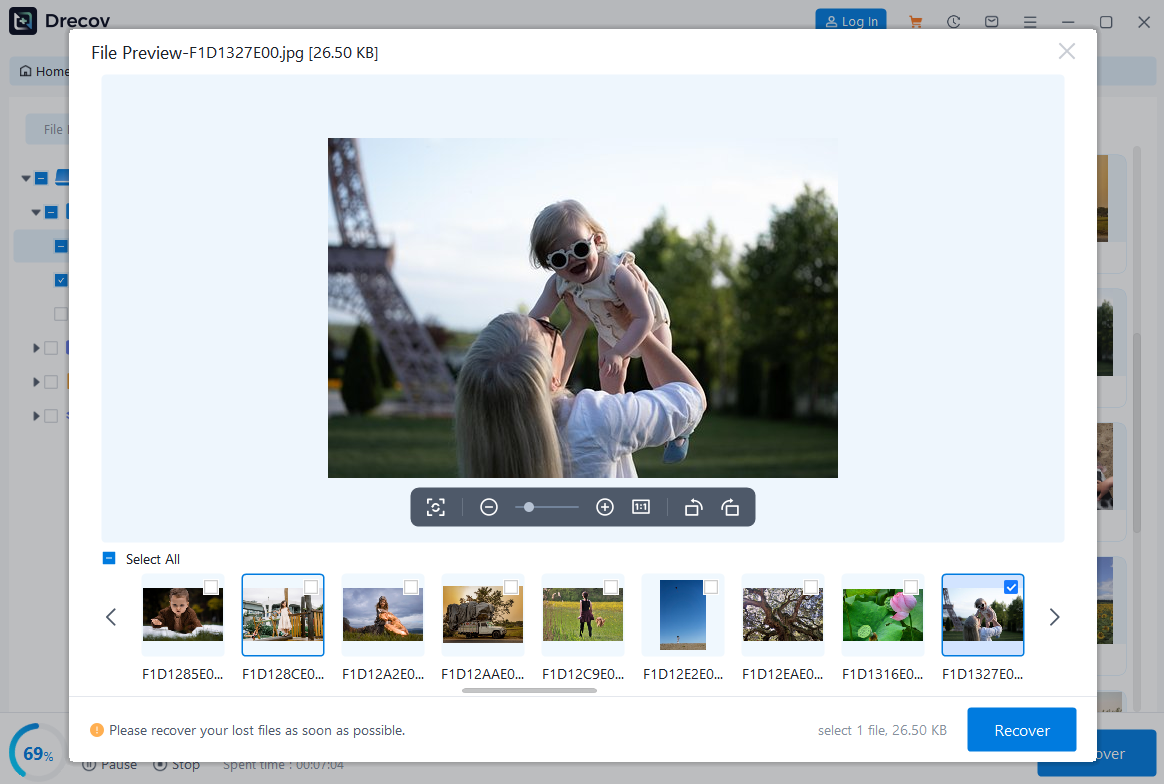
- Preview recoverable emails and attachments
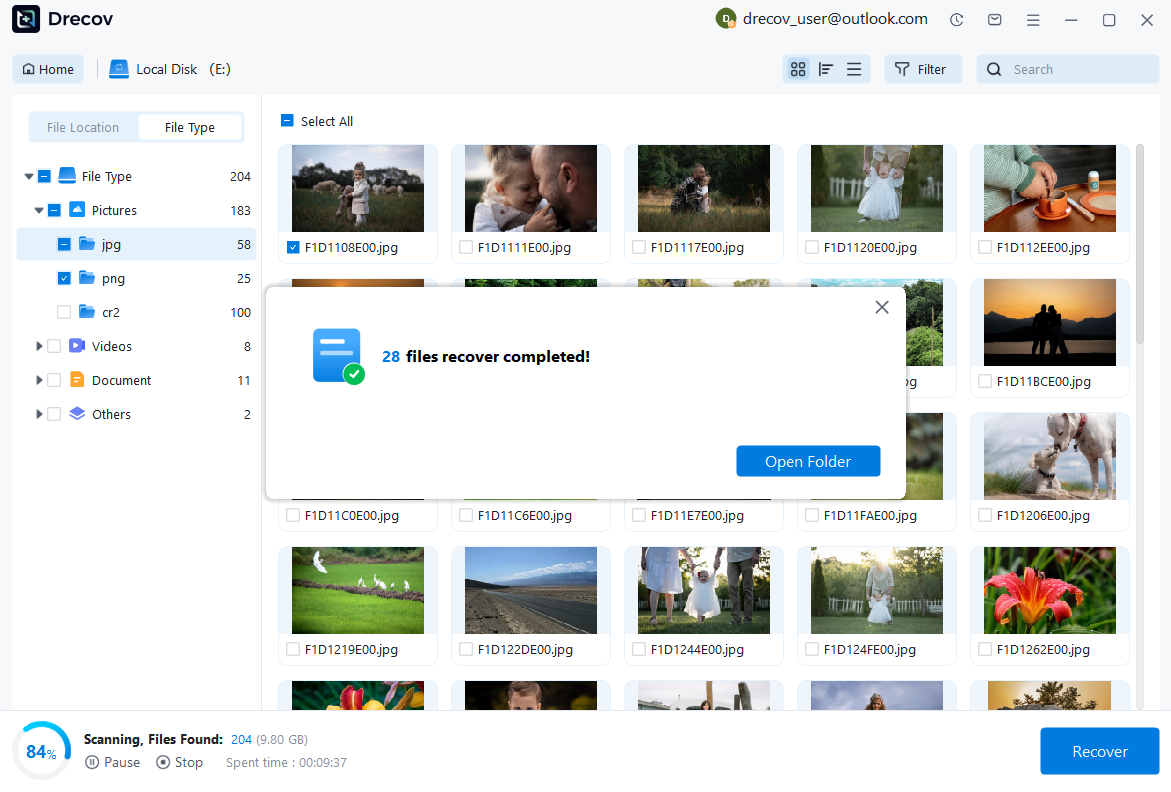
- Restore data to a safe location
This method is especially useful when microsoft exchange server vs outlook synchronization fails due to local corruption instead of server issues.
Test Environment:
- Windows 11
- Outlook 2021
- Corrupted OST file (Exchange cached mode)
- Large mailbox simulation (10GB data set)

Why Choose PandaOffice Drecov Data Recovery Software?
When it comes to reliable data recovery, PandaOffice Drecov stands out as a powerful, all-in-one solution designed to handle a wide range of data loss scenarios. Whether you’re trying to perform TikTok deleted video recovery, restore files after formatting, or recover important documents, Drecov delivers fast and dependable results.
One of its biggest advantages is versatility. From format data recovery to lost partition recovery, the software can scan deeply and accurately locate files that other tools often miss. Even if your drive has been accidentally formatted or a partition has disappeared, Drecov uses advanced algorithms to reconstruct and retrieve your data with high success rates.
Drecov also supports specialized recovery needs. If you’ve lost important documents, its PDF recovery tool ensures that files retain their original structure and quality. For media users, the audio recovery feature helps restore music, recordings, and other sound files without corruption, making it ideal for both personal and professional use.
Ease of use is another key benefit. The intuitive interface allows beginners to recover files in just a few clicks, while still offering advanced options for more experienced users. Plus, it supports a wide range of storage devices, including HDDs, SSDs, USB drives, and memory cards.
In short, PandaOffice Drecov combines powerful recovery capabilities with user-friendly design, making it a trusted choice for anyone facing data loss.
⚠️ Warning: Avoid writing new data to the affected drive before recovery to prevent overwriting lost mailbox data.
Frequently Asked Questions About Microsoft Exchange vs Outlook
What is the main difference between Outlook and Exchange?
The difference between Outlook and Exchange is that Exchange is a server system that stores and manages emails, while Outlook is the application used to access them.
Exchange handles backend tasks like email routing, security, and synchronization. Outlook acts as the user interface that displays this data. This is why microsoft exchange vs outlook is often misunderstood—one is infrastructure, the other is software.
Test Environment:
- Windows 10
- Outlook 365
- Exchange Online account
Can Outlook work without Microsoft Exchange?
Yes, Outlook can function without Exchange. It can connect to IMAP or POP email services such as Gmail or Yahoo.
However, without Exchange, some advanced features are unavailable, such as:
- Centralized calendar syncing
- Shared mailboxes
- Advanced enterprise security policies
This highlights the practical distinction in microsoft exchange server vs outlook usage scenarios.
Test Environment:
- Windows 11
- Outlook 2019
- Gmail IMAP account
Why do Exchange emails sometimes not show in Outlook?
When users experience mismatches, it is often due to synchronization delays or cached data issues.
In cached mode, Outlook stores a local copy of Exchange data. If synchronization fails, users may incorrectly assume a problem with microsoft exchange vs microsoft outlook, when the issue is actually local.
Rebuilding the cache or profile usually resolves this.
Is Outlook part of Microsoft Exchange?
No. Outlook is not part of Exchange. They are separate products that work together.
Exchange is the email server platform, while Outlook is the client software. Understanding this distinction helps clarify what is microsoft exchange vs outlook and prevents configuration errors.
Key Takeaways and Final Comparison Summary
Understanding the relationship between microsoft exchange vs outlook is essential for both personal and business email management. While they are often used together, they serve completely different roles in the email ecosystem.
Exchange is responsible for:
- Server-side email storage
- Organization-wide synchronization
- Security and policy enforcement
- Central mailbox management
Outlook is responsible for:
- Email reading and sending
- User interface interaction
- Local caching and offline access
- Calendar and contact management
The difference between Outlook and Exchange becomes clearer when viewed as a system vs tool relationship rather than competing technologies.
Most issues users face—such as sync errors, missing emails, or login problems—are not caused by misunderstanding microsoft exchange server vs outlook, but by configuration, caching, or corrupted local files.
By correctly identifying whether the issue lies in Exchange (server) or Outlook (client), users can troubleshoot more efficiently and avoid unnecessary system changes.
⚠️ Warning: Treating Outlook and Exchange as interchangeable systems can lead to incorrect setup and data synchronization failures.
Ultimately, microsoft exchange vs microsoft outlook is not a competition but a collaboration. Exchange provides the backbone, while Outlook provides the experience.





