







In our digital-first world, the humble thumb drive remains an essential tool for transferring files, backing up photos, and carrying critical work documents. However, technology isn’t always seamless. You might plug your device in, only to find yourself wondering exactly how to open usb flash drive folders when they don’t immediately appear. Whether you are dealing with a simple connection issue or a more complex data loss scenario, understanding the mechanics of your storage device is the first step toward digital peace of mind.
This comprehensive guide will walk you through every stage of accessing your drive across various platforms—from desktop PCs to mobile devices—and provide expert-level solutions for when things go wrong.
Understanding the Basics: How to Open USB Flash Drive on Windows and Mac
Before we dive into complex mobile connections or data recovery, we must master the fundamentals. Most users expect a “Plug and Play” experience, but system settings or drive letter conflicts can sometimes get in the way.
Accessing Your Drive on Windows 10/11
Windows remains the most common environment for USB usage. If the AutoPlay window doesn’t pop up, follow these steps:
- Step 1: Insert the USB drive into a functional USB port. Avoid using USB hubs if the drive isn’t appearing, as they sometimes provide insufficient power.
- Step 2: Press the Windows Key + E to open File Explorer.
- Step 3: Look at the sidebar on the left. Click on “This PC”.
- Step 4: Under the “Devices and drives” section, locate your USB drive. It will usually be named “Removable Disk” or the brand name (e.g., SanDisk, Kingston).
- Step 5: Double-click the icon to view your files.
Accessing Your Drive on macOS
Macs handle external storage slightly differently, focusing on the Desktop and Finder.
- Step 1: Plug your USB-C or USB-A drive into your Mac.
- Step 2: Look at your Desktop. By default, macOS places a drive icon there.
- Step 3: If it’s not on the desktop, open Finder (the smiley face icon in your dock).
- Step 4: Look under the “Locations” tab in the sidebar. Click your drive’s name to open it.
How to Open USB Flash Drive on Android Phone
Modern Android smartphones have evolved into powerful workstations. Thanks to USB On-The-Go (OTG) technology, you no longer need a computer to move files. Knowing how to open usb flash drive on Android phone is incredibly useful for travelers or students who need to access documents on the fly.
Step 1: Check OTG Compatibility
Most Android phones produced in the last five years support OTG. However, you should verify this by checking your phone’s specifications or downloading a “USB OTG Checker” app from the Play Store.
Step 2: Get the Right Adapter
Since most flash drives use a USB-A connector and phones use USB-C, you will likely need a USB-C to USB-A OTG adapter. Ensure the adapter is high-quality to prevent data corruption.
Step 3: Connect and Configure
Plug the flash drive into the adapter, and then plug the adapter into your phone. You may receive a notification saying “USB drive connected.”
Warning: Some brands (like OPPO, Vivo, or OnePlus) require you to manually enable “OTG Connection” in the System Settings. Simply search for “OTG” in your settings search bar and toggle it on.
Once connected, open your “Files” or “My Files” app (Samsung users) or the official Google Files app. Scroll down to “Storage Devices,” and you will see your USB drive listed. Tap it to browse, copy, or move your data.
How to Connect and Open USB Stick on iPhone/iPad
For a long time, the iOS ecosystem was a walled garden. However, since the introduction of iPadOS and recent iOS updates, learning how to connect and open USB stick on iPhone/iPad has become a straightforward process.
Step 1: Identify Your Port
If you have an iPhone 15 or a newer iPad Pro/Air, you have a USB-C port. Older models use the Lightning port. You must use an official Apple “Lightning to USB Camera Adapter” or a compatible USB-C hub.
Step 2: Plug in the Device
Connect your USB stick to the adapter and then to your iPhone or iPad. Unlike Android, there is usually no “pop-up” notification.
Step 3: Open the Files App
The magic happens in the native Files app.
- Step 1: Open the Files app.
- Step 2: Tap the “Browse” tab at the bottom right.
- Step 3: Under the “Locations” list, you will see the name of your USB stick.
- Step 4: Tap it to access your folders.
Key Tip: Ensure your USB drive is formatted as ExFAT or FAT32. iPhones and iPads cannot natively write to NTFS-formatted drives (the standard Windows format).
Troubleshooting: Why Can’t I Open My USB Drive?
Sometimes, even after following the steps for how to open usb flash drive, the device remains invisible. This usually stems from one of three issues: driver conflicts, file system errors, or physical damage.
Checking Disk Management (Windows)
If your drive doesn’t show up in File Explorer, it might be “unallocated” or missing a drive letter.
- Right-click the Start button and select Disk Management.
- Look for a disk labeled “Removable.”
- If it has no letter, right-click the partition and select “Change Drive Letter and Paths…” to assign it a letter like ‘G:’ or ‘H:’.
Updating Drivers
- Press Windows Key + X and select Device Manager.
- Expand Universal Serial Bus controllers.
- Right-click your USB Mass Storage Device and select Update driver.
When Files Vanish: Data Recovery via PandaOffice Drecov
There is nothing more heart-wrenching than successfully learning how to open usb flash drive only to find the folder empty or getting a “Drive must be formatted” error. This is where professional recovery tools become mandatory. Among the sea of options, PandaOffice Drecov data recovery software stands out for its balance of deep-scanning power and user-friendly design.
PandaOffice Drecov is engineered to handle various logical errors, including accidental deletion, partition loss, and virus-induced data corruption. Here is how to use it effectively.
⚠ Warning: Never install the recovery software directly onto the USB drive you are trying to rescue. Always install it on your primary hard drive (C: drive) to avoid overwriting the lost data.
Step 1: Select the USB Drive
Launch the program. On the main dashboard, you will see a list of available drives. Under the “External Devices” section, select your USB flash drive.

Step 2: Initiate the Scan
Click the “Scan” button. PandaOffice Drecov will perform two types of scans:
- Quick Scan: Best for recently deleted files.
- Deep Scan: This triggers automatically if the quick scan isn’t enough. It searches the raw data structures to reconstruct fragmented files.

Step 3: Preview and Filter
One of the best features of this tool is the preview capability. You don’t have to guess which “File001.jpg” is the right one.
- Use the sidebar to filter by file type (Photos, Video, Documents).
- Double-click a file to see a preview. If the preview looks clear, the file is healthy and recoverable.
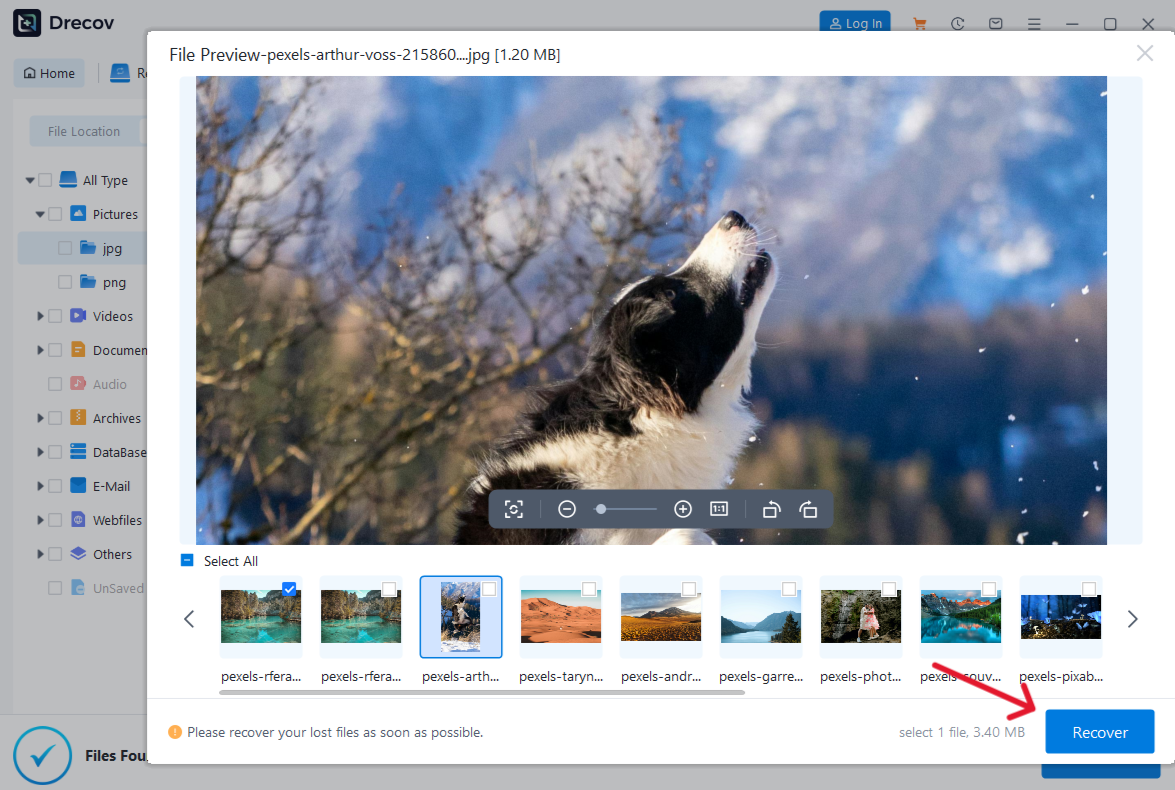
Step 4: Execute the Recovery
- Check the boxes next to the files you wish to save and lick the “Recover” button.
- Choose a destination folder on your computer (not the USB drive).
- Wait for the process to complete.
Related Resources for System Optimization
After you have successfully recovered your data and managed your external storage, you might want to streamline your internal storage by managing cloud sync services. Check out these helpful guides:
- Learn how to uninstall OneDrive on Windows and Mac to free up system resources.
- If you want to keep the app but stop the clutter, here is how to disable OneDrive and stop the sync in just three steps.
- For a cleaner interface, follow this guide to remove OneDrive from File Explorer and regain control of your sidebar.
Advanced Manual Fixes: Command Prompt and Registry
If software alone doesn’t solve the problem of how to open usb flash drive, you might need to use the Windows command-line tools.
The CHKDSK Command
This utility checks the file system and file system metadata of a volume for logical and physical errors.
- Type
cmdin the Windows search bar, right-click, and Run as Administrator. - Type the following command:
chkdsk G: /f(Replace ‘G’ with your USB’s actual drive letter). - This will fix directory errors without deleting your data.
The Registry Fix (For “Access Denied” Errors)
Sometimes, Windows registry keys prevent USB access due to security policies.
- Press Win + R, type
regedit, and hit Enter. - Navigate to:
HKEY_LOCAL_MACHINE\SYSTEM\CurrentControlSet\Control\StorageDevicePolicies - Look for a value named WriteProtect. If it exists, double-click it and change the “Value Data” to 0.
Maintaining Your USB Flash Drive Health
Prevention is always better than recovery. To ensure you never struggle with how to open usb flash drive issues again, follow these industry-standard best practices:
- Always Eject Safely: Windows and macOS use “write caching.” If you pull the drive out while it’s still writing background data, the file system can become corrupted.
- Avoid Direct Editing: Don’t work on a Word document or edit a video directly from the USB. Copy it to your desktop, edit it, and move it back. This reduces the number of read/write cycles on the flash memory.
- Keep it Dry and Cool: Flash memory is sensitive to heat and moisture. A simple cap or a protective case can extend the life of your drive by years.
- Use Quality Brands: Generic, unbranded USB drives often use “B-grade” flash chips that are prone to failure. Stick to reputable manufacturers like Samsung, SanDisk, or PNY.
Conclusion
Mastering how to open usb flash drive is a multi-layered skill. It starts with simple navigation in File Explorer, extends to mobile connectivity for Android and iPhone, and culminates in the technical ability to recover lost data when hardware fails. By using tools like PandaOffice Drecov data recovery software, you can turn a potential digital disaster into a minor inconvenience.
Remember, technology is a tool designed to serve you. With the right knowledge and a proactive approach to maintenance, your data will remain accessible, portable, and—most importantly—safe.





