







In our fast-paced digital era, communication happens at lightning speed. We send and receive hundreds of texts daily across various platforms. However, have you ever experienced that sinking feeling when a crucial notification pops up, only to see “This message was deleted” before you could read it? Whether it is a misunderstood instruction from a boss, a sentimental note from a loved one, or a critical piece of data like an OTP, losing access to information can be incredibly stressful.
Learning how to view recently deleted messages is not just a trick for the curious; it is a vital digital skill for maintaining records and ensuring peace of mind. This comprehensive guide will walk you through every possible method—from simple system settings to professional-grade tools like PandaOffice Drecov data recovery software—to help you reclaim your lost conversations.
Why People Want to See Deleted Messages
Common Scenarios and Curiosity
Let’s be honest—few things spark curiosity faster than seeing “This message was deleted.” It’s like someone whispering a secret and then snatching it away before you can hear it. Naturally, you want to know what was said. Whether it’s a casual chat, a business message, or something personal, recently deleted messages often feel more important than regular ones because of the mystery surrounding their removal.
People often look for ways to view recently deleted messages because of curiosity, misunderstandings, or even suspicion. Imagine you’re chatting with a friend, and suddenly a message disappears. Was it a typo? Something sensitive? Or something meant for someone else? That little mystery can be surprisingly frustrating.
Important Situations Where Messages Matter
There are real-life situations where recently deleted messages aren’t just about curiosity—they’re critical. For example, in workplace communication, deleted instructions can disrupt workflow. In personal situations, they might lead to misunderstandings or conflicts. If a contractor sends a quote and then deletes it, or a colleague sends a deadline and retracts it, you need a way to verify the original terms.
Parents also look for ways to see recently deleted messages to monitor their children’s online activity and ensure they aren’t being bullied or exposed to inappropriate content. In such cases, it’s less about curiosity and more about safety. Similarly, in legal or business disputes, these messages can serve as vital evidence or clarification.
How Message Deletion Works
What Happens When Messages Are Deleted
When a message is deleted, it’s not always completely gone from the universe. In most apps, deletion simply removes the message from the visible chat interface. The actual data may still exist temporarily in backups, notifications, or system logs. This is because modern operating systems treat data deletion as a “pointer removal” rather than an instant shredding of the file.
For example, messaging apps like WhatsApp allow users to delete messages using a “Delete for Everyone” feature. While this removes the entry from the UI, the notification might have already been indexed by your phone’s processor. Think of it like erasing pencil writing. You may rub it off the page, but faint marks can still remain underneath. Similarly, recently deleted messages can sometimes be retrieved through indirect methods because the data occupies a space on the storage disk until it is overwritten by new information.
Platform Differences (Android vs iPhone)
The ability to view recently deleted messages varies significantly between Android and iPhone. This is primarily due to how each operating system handles user privacy and background processes.
- Android: These devices often keep a detailed log of notifications. Since Android is an open-source-based ecosystem, users have more granular control over system logs.
- iPhone (iOS): Apple is much stricter with privacy. iOS does not store a user-accessible notification history in the same way, making recovery more reliant on cloud backups or external tools.
View Deleted Messages on Android
Using Notification History
If you are an Android user, you are in luck. One of the easiest ways to view recently deleted messages is through the Notification History feature. This feature logs incoming notifications—including message previews—before they are hidden by the app.
- Step 1: Open your device Settings.
- Step 2: Scroll down and tap on Notifications.
- Step 3: Select Notification History.
- Step 4: Toggle the switch to On (if it was already on, you can see your history immediately).
- Step 5: Browse through the list to find the app (like WhatsApp or Telegram) and see the text of the deleted message.
Warning: This method only works if the feature was enabled before the message was sent. If you turn it on now, you will only see messages deleted from this point forward.
Using Third-Party Apps
If your version of Android is older or you want a more organized interface, third-party “Notification Saver” apps can help. These apps act as a secondary log for everything that hits your notification bar. However, always check the permissions of these apps, as they will have access to all your incoming texts.
View Deleted Messages on iPhone
Using Backup Restore
iPhone users face more of a challenge because Apple does not provide a notification log. To see recently deleted messages, you must often perform a full system restore.
- Step 1: Check your last backup date by going to Settings > [Your Name] > iCloud > iCloud Backup.
- Step 2: If the backup date is before the message was deleted but after it was received, proceed to reset your phone.
- Step 3: Go to Settings > General > Transfer or Reset iPhone > Erase All Content and Settings.
- Step 4: During the setup process, choose Restore from iCloud Backup.
Limitations of iOS
This method is invasive. You will lose any data created between the backup time and the present moment. Furthermore, if you haven’t backed up your phone recently, this method is useless. This highlights the importance of using specialized recovery tools when standard methods fail.
The Professional Solution: PandaOffice Drecov Data Recovery Software
When system settings and standard backups fail, you need a professional-grade tool. PandaOffice Drecov data recovery software is a powerful utility designed to deep-scan device storage to find fragments of data that haven’t been overwritten yet. This is often the most reliable way to handle recently deleted messages that were never backed up.
How to use PandaOffice Drecov for Message Recovery
If you have lost messages on a device that can be interfaced with a computer (such as an SD card from an Android phone or a local backup database), PandaOffice Drecov data recovery software can perform a forensic-level scan.
⚠ Warning: Install it on a drive different from the one where your data was lost to prevent overwriting.
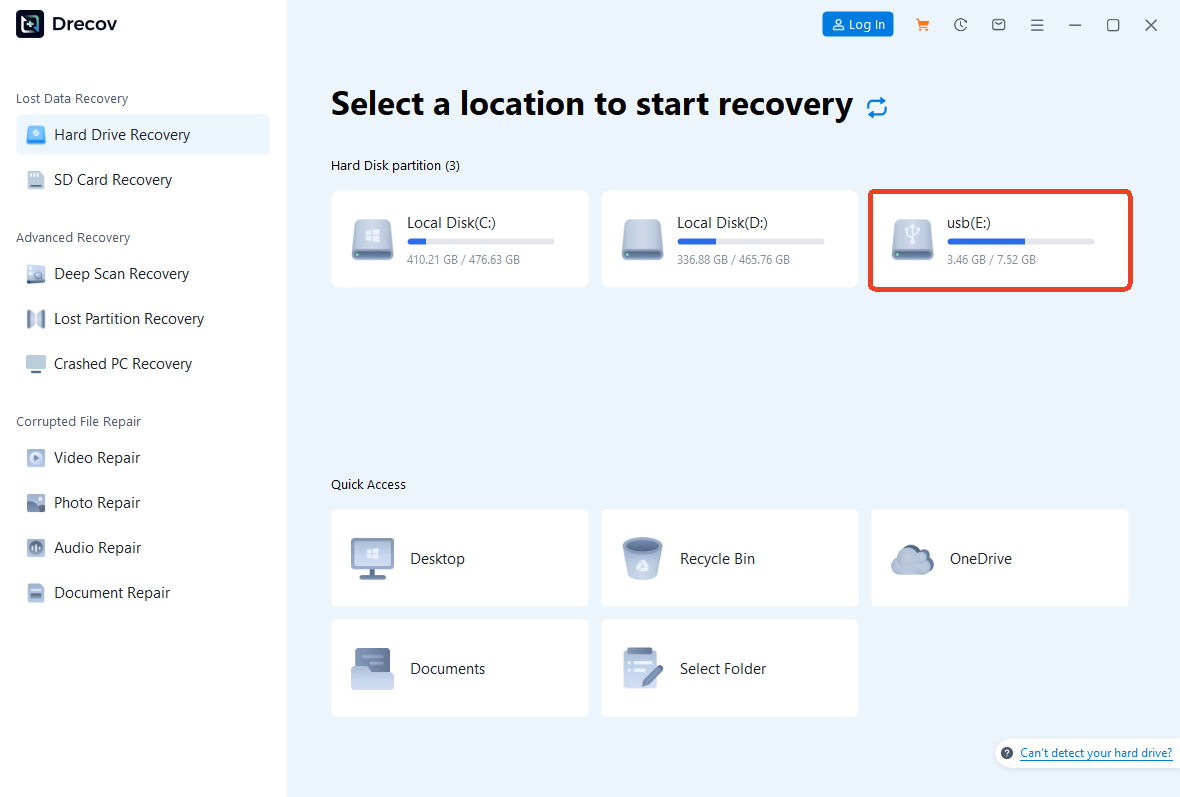
Step 1: Select the Location for Scanning
In the main interface, you will see a list of available drives. Select the drive or partition associated with your messaging app data. For most mobile users, this will be the external storage or the specific drive letter assigned to the connected device.
Step 2: Initiate the Deep Scan
Click the “Scan” button. The software will begin a “Quick Scan” followed by a “Deep Scan.” During this phase, PandaOffice Drecov data recovery software searches for “orphaned” data packets—these are the actual pieces of your recently deleted messages that the system hasn’t cleared from the physical memory yet.
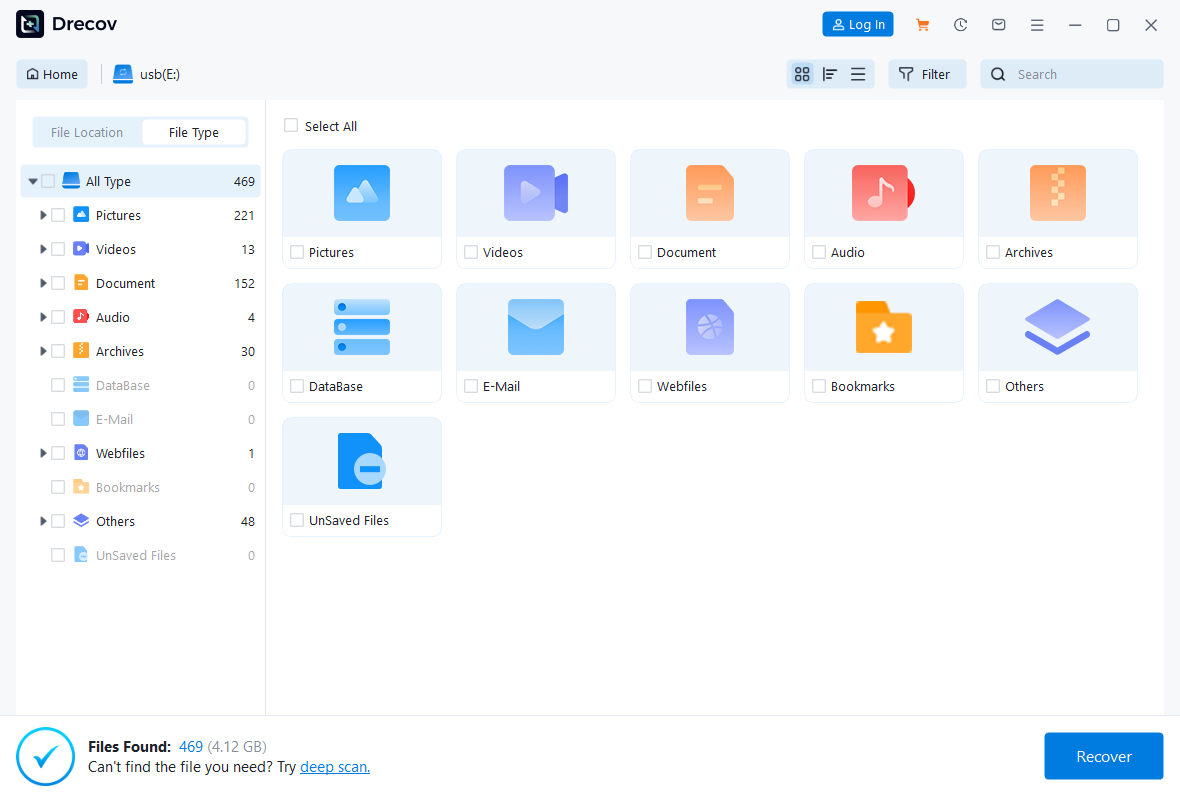
Step 3: Filter and Preview
Once the scan completes, use the search bar or the file type filter on the left sidebar. Look for file extensions like .db, .sqlite, or .txt which often contain chat logs. You can preview the content within the software to ensure it is the conversation you need.
Step 4: Recover and Save
Select the relevant items and click “Recover.”
Critical Warning: Never save the recovered messages back onto the same drive you are scanning. This could overwrite the very data you are trying to save. Always choose a different folder on your PC or an external hard drive.
For more specific guides on different file types, you might find these resources helpful:
- How to get recently deleted photos back – A 5-minute fix
- How to restore deleted files from Recycle Bin
- How to recover deleted messages from Microsoft Teams
How to Recover Deleted Messages on WhatsApp
WhatsApp is the most common platform where users want to see deleted content. Because it uses end-to-end encryption, the messages are stored on your device, not on WhatsApp’s servers.
Restore from Google Drive Backup (Android)
- Step 1: Uninstall WhatsApp from your Android phone.
- Step 2: Reinstall it from the Google Play Store.
- Step 3: Open the app and verify your phone number.
- Step 4: When prompted, tap Restore to retrieve your chats from Google Drive.
Restore from iCloud Backup (iPhone)
- Step 1: Ensure an iCloud backup exists by checking WhatsApp Settings > Chats > Chat Backup.
- Step 2: Delete the app and reinstall it from the App Store.
- Step 3: Follow the on-screen prompts to restore your chat history.
Other Messaging Apps (SMS, Messenger, Instagram)
SMS Recovery Methods
SMS (Short Message Service) is handled by your carrier and your phone’s local database.
- Check the Trash Folder: Many modern Android SMS apps (like Google Messages) have a “Trash” or “Archived” folder where messages sit for 30 days.
- Contact your Carrier: In some legal instances, carriers can provide logs, though they rarely provide the actual content of the text without a court order.
Social Media Message Recovery
For apps like Facebook Messenger or Instagram, messages are stored on the cloud.
- Download Your Information: Both platforms have a “Download Your Information” tool in the settings. Requesting a full data export can sometimes reveal recently deleted messages that haven’t been purged from the server’s cache yet.
- Check Email Notifications: If you have email alerts enabled for social media, the full text of the message might be sitting in your email inbox.
Comparison of All Recovery Methods
| Method | Device | Ease of Use | Success Rate | Risk Level |
| Notification History | Android | Very Easy | High (if enabled) | Low |
| PandaOffice Drecov | PC/Android | Medium | High | Very Low |
| iCloud/Google Backup | Both | Medium | High | Data Overwrite Risk |
| Third-Party Apps | Both | Easy | Medium | Privacy Risk |
| Server Data Export | Social Apps | Hard | Low | Low |
Risks and Limitations
Data Loss Risks
The biggest risk when trying to view recently deleted messages is overwriting. Every second you use your phone after a deletion, the system writes new data (cache, temporary files, etc.). If that new data lands on the physical sector where the deleted message lived, that message is gone forever. This is why using a tool like PandaOffice Drecov data recovery software as soon as possible is recommended.
Privacy and Legal Concerns
It is important to address the ethics of message recovery. Accessing recently deleted messages on a device that isn’t yours can violate privacy laws or terms of service. Always ensure you have the legal right or permission to recover data, especially in a professional or shared environment.
Best Practices for Message Backup
To avoid the stress of recovery in the future, follow these “Golden Rules” of data management:
- Enable Daily Cloud Backups: Set WhatsApp, Telegram, and your OS to backup at 3:00 AM daily.
- Use “Starring” or “Pinning”: If a message contains vital info, “star” it. Many apps handle starred messages differently in their deletion protocols.
- Screenshot Critical Info: If a client sends a price or a password, take a screenshot immediately. Photos are often easier to recover than database entries.
- Keep PandaOffice Drecov Handy: Having recovery software installed on your PC before an emergency happens saves precious time.
How to View Recently Deleted Messages FAQs
1. Can I see deleted messages without a backup?
Yes, on Android you can use the Notification History. For Windows, professional software like PandaOffice Drecov can scan the internal storage for non-overwritten data fragments.
2. How long do deleted messages stay in the system memory?
There is no set time. It depends on how much you use your phone. On a busy phone, they might be overwritten in minutes. On an idle phone, they could last for days.
3. Is it safe to use third-party apps from the Play Store?
Generally, yes, but they require permission to read all notifications. If you are handling sensitive financial data, a local recovery tool on your PC is safer than a background app on your phone.
4. Does “Delete for Everyone” mean it’s gone from my notifications?
No. While the message disappears from the chat, the notification log usually retains the original text that was pushed to your screen.
5. Can I recover messages from a broken phone?
If the phone can still be recognized by a computer via USB, PandaOffice Drecov data recovery software may still be able to extract the data.
Conclusion
Mastering how to view recently deleted messages is a powerful way to protect your digital life. Whether you rely on the built-in Notification History of Android, the cloud-based restores of iPhone, or the deep-scanning capabilities of PandaOffice Drecov data recovery software, you have options.
Remember, the key to successful data recovery is speed. The moment you realize a message is gone, stop using the device to prevent data overwriting and begin the recovery process immediately. With the right tools and a bit of patience, those “deleted” secrets don’t have to stay hidden.






