







In the modern digital landscape, cloud storage has become the backbone of both personal and professional productivity. Microsoft OneDrive, integrated deeply into the Windows ecosystem, offers seamless synchronization that keeps your files accessible across multiple devices. However, there are many scenarios where you might need to know how to unlink OneDrive from your computer. Perhaps you are selling your device, switching to a different cloud provider, or simply trying to resolve a pesky sync error that refuses to go away.
Understanding the mechanics of unlinking is crucial because it directly impacts where your data lives and how you can retrieve it if something goes wrong. While unlinking sounds like a simple disconnection, it often leads to confusion regarding file locations and data safety. In this comprehensive guide, we will explore everything from basic account management to advanced data recovery using PandaOffice Drecov data recovery software.
Understanding the Basics of OneDrive Synchronization
Before we dive into the “how-to,” we must understand what unlinking actually does. When you unlink an account, you are effectively telling the OneDrive application to stop communicating with the cloud servers. This means that any changes you make to files on your local hard drive will no longer upload to the cloud, and any changes made online will not download to your PC.
It is important to note that unlinking is not the same as uninstalling. The application remains on your system, but it stays in a “signed-out” state. This distinction is vital for maintaining a clean digital workspace and ensuring that you don’t accidentally lose access to important documents during a transition.
How to Backup Files Before Unlinking OneDrive Account
Data safety should always be your primary concern. Before you even touch the settings menu to learn how to unlink OneDrive, you must ensure your local files are up to date and backed up. One of the most common mistakes users make is unlinking while files are still in the “online-only” state, which can lead to temporary data invisibility.
Step 1: Verify Sync Status
Check the OneDrive icon in your system tray (bottom right corner). Ensure it says “OneDrive is up to date.” If you see a syncing icon (blue circular arrows), wait for it to finish. Unlinking during an active sync can cause file corruption or partial data transfers.
Step 2: Change Files from Online-Only to Local
If you use the “Files On-Demand” feature, many of your files might not actually be on your hard drive; they are just placeholders. To back them up:
- Open your OneDrive folder in File Explorer.
- Right-click the folders you need.
- Select “Always keep on this device.”
- Wait for the green solid checkmark to appear next to every file.
Step 3: Copy to External Media
To be 100% safe, copy your most important directories to an external USB drive or a secondary internal hard drive. This ensures that even if the unlinking process behaves unexpectedly, your “cold storage” backup remains untouched. You can find more official guidance on managing your storage at the Microsoft OneDrive Support Center.
How to Unlink OneDrive: The Standard Method
Now that your data is safe, we can proceed with the actual process. This method is the standard way to disconnect your account without removing the software itself. It is the most common solution for users who want to switch accounts or stop using the service on a specific machine.
Step 1: Access OneDrive Settings
Locate the OneDrive cloud icon in your Windows taskbar. If you don’t see it, click the “up” arrow to show hidden icons. Right-click the icon and select the gear icon (Settings).
In the settings window that pops up, look at the sidebar or top menu (depending on your Windows version) and click on “Account.” This section displays the current user profile linked to the device and the storage usage.
Step 3: Execute the Unlink Command
Under your account name, you will see a blue link that says “Unlink this PC.” Click it. A confirmation dialog will appear, warning you that your files will stop syncing. Confirm the action by clicking “Unlink account.”
Step 4: Verify the Disconnection
Once completed, the OneDrive setup screen will appear, asking you to sign in. This confirms that the link is broken. Your files that were already downloaded will remain in your local OneDrive folder, but they will no longer carry the sync status icons.
Where Do Files Go After Unlinking OneDrive?
This is the question that haunts most users. When you follow the steps on how to unlink OneDrive, your files don’t just vanish into a void. However, their accessibility changes depending on how you configured your settings previously.
The Local Copy (The OneDrive Folder)
In most cases, your files stay exactly where they were: C:\Users\[YourUsername]\OneDrive. These are now standard local files. Since the “tether” to the cloud is cut, they behave like any other folder on your desktop. You can move, edit, or delete them without affecting the versions stored in the cloud.
The Cloud Copy (OneDrive.com)
Your files also remain perfectly safe in the cloud. If you log in to OneDrive on the web, you will see all your data exactly as it was at the moment of the final sync. This is the beauty of the cloud; unlinking a device does not delete the master data stored on Microsoft’s servers.
The “Missing” Online-Only Files
If you did not follow the backup steps mentioned earlier and had “Files On-Demand” enabled, any file with a blue cloud icon next to it will seem to disappear from your local folder. This is because those files were never actually on your computer—they were just “ghosts” that downloaded when you clicked them. To get these back, you must sign back in or download them manually from the web portal.
Advanced Data Recovery with PandaOffice Drecov Data Recovery Software
Sometimes, unlinking doesn’t go as planned. Perhaps you accidentally deleted a local folder thinking it was just a shortcut, or maybe a system crash during the unlinking process led to a “disappeared” directory. This is where PandaOffice Drecov data recovery software becomes an essential tool in your kit.
PandaOffice Drecov is designed to handle complex data loss scenarios, including those involving cloud-synced folders that have been disconnected or corrupted. It uses advanced deep-scanning algorithms to find file remnants on your sectors that the Windows File Explorer can no longer see.
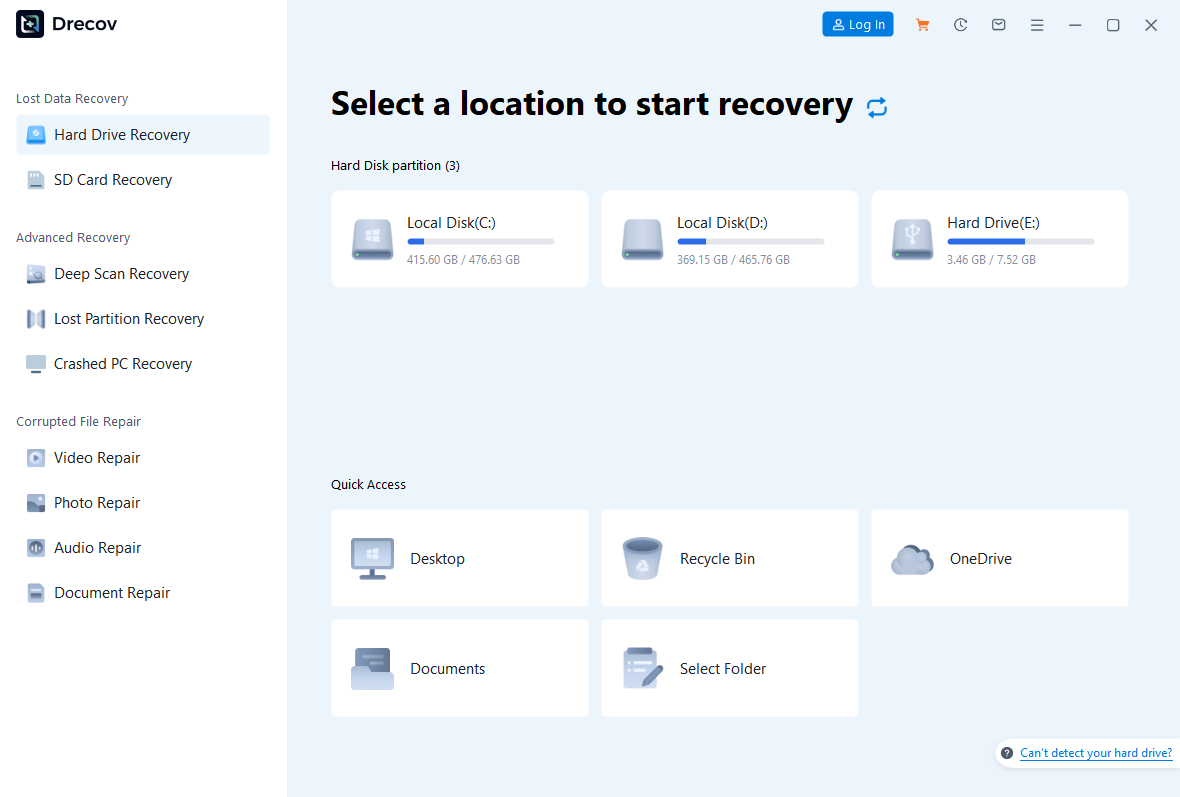
Step 1: Select the Location for Scanning
Once you open PandaOffice Drecov data recovery software, you will see a list of drives and specific locations. You can select the entire “C:” drive, or for a faster result, click “Select Folder” and navigate to your old OneDrive path: C:\Users\[Username]\OneDrive.
Step 2: Run the Deep Scan
Click the “Scan” button. The software will first perform a Quick Scan to find recently deleted items, followed automatically by a Deep Scan. The Deep Scan is thorough; it looks for file signatures across the raw disk data.
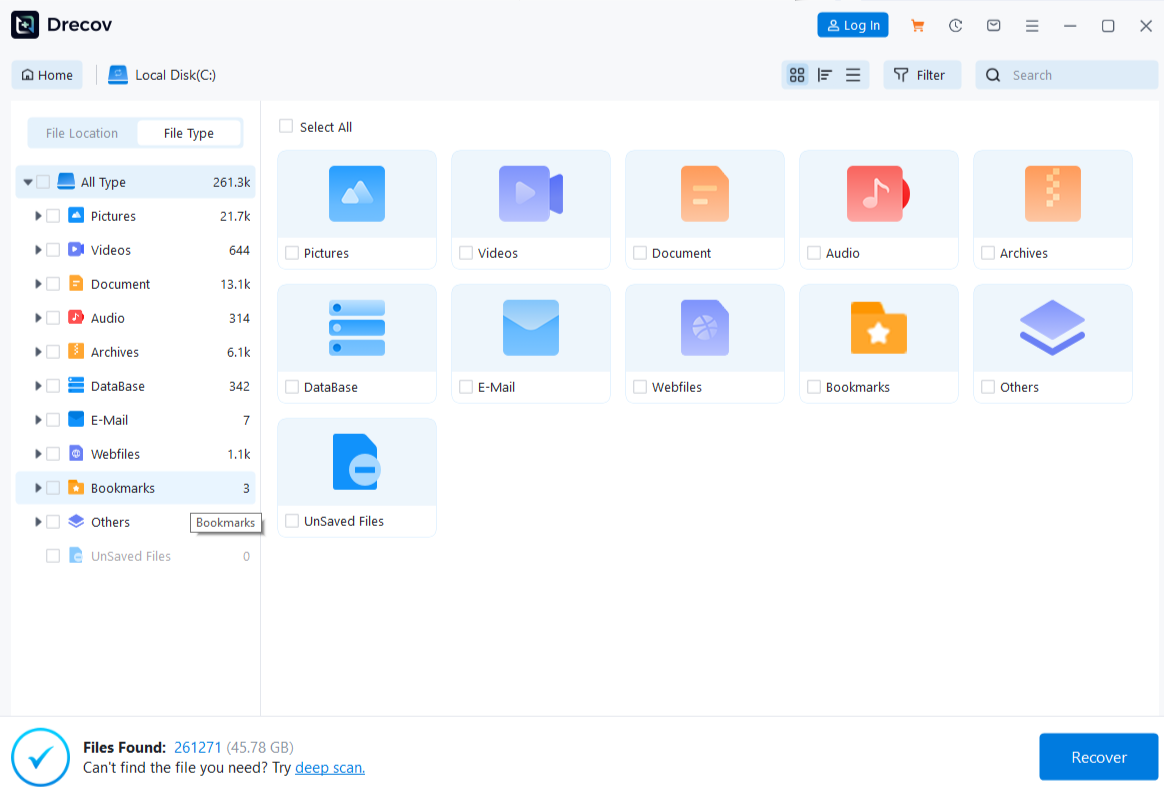
Warning: Do not stop the scan halfway. Even if you see some files appearing, the most complete versions are often found toward the end of the process.
Step 3: Filter and Preview Results
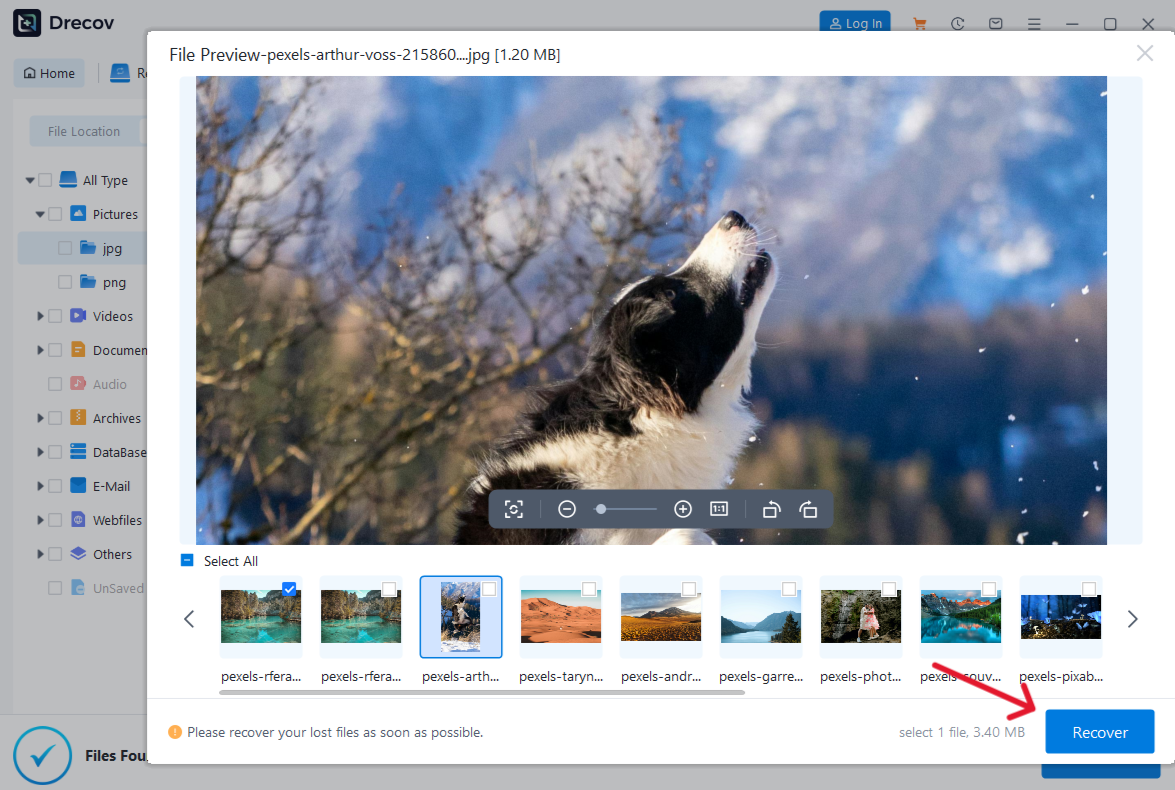
PandaOffice Drecov provides a user-friendly interface to filter results by file type (e.g., .docx, .jpg, .pdf). You can use the search bar to look for specific filenames that were in your OneDrive. Use the “Preview” feature to ensure the file is intact before proceeding.
Step 4: Recover to a Secure Location
Select the checkboxes for the files you wish to retrieve and click “Recover.”
Key Operation Point: Always save the recovered files to an external drive or a different partition. Saving them back to the original location can overwrite other deleted data that you might still need to recover.
If you are looking to refine your OneDrive management further, check out these detailed guides:
- Learn how to disable a folder from OneDrive and recover lost files for more granular control over your storage.
- Follow our how to remove OneDrive from File Explorer step-by-step guide if you want to clean up your sidebars.
- For those wanting a total clean slate, see how do I completely remove OneDrive personal from my computer.
Manual Recovery via the OneDrive Recycle Bin
Before resorting to software, it is always wise to check the “first line of defense.” If you find that files are missing after you learn how to unlink OneDrive, they might have been moved to the cloud recycle bin during a sync conflict.
- Go to the OneDrive website and sign in.
- On the left-hand navigation pane, click on “Recycle bin.”
- Look for your missing files. If you find them, select them and click “Restore.”
- These files will reappear in your cloud storage. Since your PC is unlinked, you will need to download them manually to your computer.
Troubleshooting Common Unlinking Issues
Sometimes the “Unlink this PC” button is greyed out, or the application freezes. In these instances, you may need to take a more aggressive technical approach.
Resetting OneDrive via Command Prompt
If the interface is unresponsive, you can reset the app. This often fixes the link without needing to manually hunt through settings.
- Press
Win + Rto open the Run dialog. - Type the following path:
%localappdata%\Microsoft\OneDrive\onedrive.exe /resetand hit Enter. - If Windows says it can’t find the path, try:
C:\Program Files\Microsoft OneDrive\onedrive.exe /reset. - After a few moments, the OneDrive icon will reappear, and the account should be unlinked/reset.
Using the Registry Editor
If you are comfortable with the Windows Registry, you can remove the account link manually.
Warning: Incorrectly editing the registry can cause system instability. Always create a restore point first.
- Navigate to:
HKEY_CURRENT_USER\Software\Microsoft\OneDrive. - Look for the “Accounts” key.
- Deleting the sub-key associated with your personal or business email will force the application to unlink.
Why Choose PandaOffice Drecov for Your Recovery Needs?
When dealing with cloud-synced data, the file structure can sometimes become fragmented. PandaOffice Drecov data recovery software stands out because it recognizes these specific file structures. Whether your files were lost due to an accidental “online-only” deletion or a botched unlinking process, the tool provides a high success rate.
Its ability to reconstruct files from formatted partitions or corrupted sectors makes it a favorite among SEO experts and data recovery professionals alike. It bridges the gap between simple “undelete” tools and professional laboratory services.
Conclusion
Mastering how to unlink OneDrive is more than just clicking a button; it’s about understanding the relationship between your local machine and the cloud. By ensuring you have a solid backup strategy and knowing where your files go after unlinking, you can manage your digital footprint with confidence.
Remember, if the worst happens and files disappear during the process, tools like PandaOffice Drecov data recovery software are there to catch you. Digital storage is meant to serve you, not cause stress. With the right knowledge and the right recovery tools, you are always in the driver’s seat of your data’s destiny.
Stay proactive, back up frequently, and never hesitate to use professional recovery solutions when your important memories or business documents are on the line. Unlinking is a tool for organization—don’t let it become a source of data loss.






