







Navigating the digital world requires a browser that is fast, secure, and reliable. However, over time, even the most robust browsers like Mozilla Firefox can become sluggish, plagued by intrusive toolbars, or prone to frequent crashes. When your browsing experience degrades, knowing how to reset firefox is the most effective way to restore peak performance without losing your vital information.
In this comprehensive guide, we will explore the nuances of refreshing your browser environment. From simple setting adjustments to advanced data restoration using PandaOffice Drecov data recovery software, we will cover everything you need to ensure your digital life remains intact. Whether you are dealing with a hijacked homepage or a corrupted profile, these steps will lead you back to a seamless internet experience.
Understanding Why You Need to Reset Firefox
Before we dive into the technical steps, it is essential to understand what happens during a reset. Mozilla calls this feature a “Refresh.” It essentially creates a new profile for you while migrating your most important data—like bookmarks and passwords—to the new setup.
Common reasons to learn how to reset firefox include:
- Persistent Sluggishness: If the browser takes ages to load simple pages.
- Adware and Malware: Unwanted toolbars or pop-ups that won’t go away.
- Crashing: The browser closes unexpectedly during routine tasks.
- Configuration Errors: You’ve tweaked internal settings (about:config) and can’t revert them.
Basic Troubleshooting: How to Reset Homepage in Firefox
Often, users feel the need for a full reset because their start page has been changed by a third-party application or a malicious extension. If your only issue is a stubborn search engine or a cluttered start screen, a full reset might be overkill. You should first learn how to reset homepage in firefox to see if that resolves the annoyance.
Step 1: Open the Settings Menu
Launch your Firefox browser. Click on the “hamburger” menu (three horizontal lines) in the top right corner and select Settings. Alternatively, you can type about:preferences in the address bar and press Enter.
On the left-hand sidebar, click on Home. This section controls what you see when you launch the browser or click the Home icon.
Step 3: Restore Defaults
Look for the section labeled “New Windows and Tabs.” If a custom URL is present that you didn’t set, simply click the Restore Defaults button. This action instantly reverts your homepage to the standard Firefox Home (Default).
Step 4: Check for Extensions
If the homepage changes back to the unwanted site after a restart, an extension is likely controlling it. Navigate to Add-ons and Themes (Ctrl+Shift+A) and disable any suspicious extensions.
The Standard Refresh: How to Reset Firefox Browser
If changing the homepage didn’t fix your performance issues, it is time for a more thorough approach. Learning how to reset firefox browser via the built-in Refresh feature is the gold standard for most users. This process removes add-ons and customizations but keeps your essential personal data.
Step 1: Access the Troubleshooting Information
You do not need to uninstall the browser. Open Firefox and type about:support in the address bar. This opens the Troubleshooting Information page, which contains technical details about your installation.
Step 2: Trigger the Refresh
In the upper-right corner of the page, you will see a box titled “Give Firefox a tune up.” Click the button labeled Refresh Firefox….
Step 3: Confirm the Action
A confirmation dialog will appear. It warns you that your extensions and themes will be removed and browser settings will be restored to their defaults. Click Refresh Firefox again to proceed.
Warning: While Firefox saves your bookmarks, passwords, and open tabs, it will remove all extensions. Ensure you have a list of your must-have add-ons before proceeding.
Step 4: Completion
Firefox will close and undergo a quick cleanup. Once finished, a window will list the data that was imported. Click Finish, and the browser will reopen, looking brand new but with your history and bookmarks intact.
For more official details on this process, visit the Mozilla Support Page.
Advanced Recovery: When the Reset Goes Wrong
Sometimes, a browser reset or an accidental uninstallation leads to data loss. Perhaps the “Old Firefox Data” folder on your desktop was accidentally deleted, or a system crash occurred during the refresh process. This is where professional tools become indispensable.
Using PandaOffice Drecov Data Recovery Software
When standard methods fail to protect your browsing history, saved forms, or precious bookmarks, PandaOffice Drecov data recovery software provides a powerful safety net. This tool is designed to scan deep into your storage sectors to retrieve files that the operating system no longer sees.
Critical Tip: Always install data recovery software on a different drive than the one where the lost data was located. If your Firefox data was on the C: drive, install the recovery tool on a D: drive or an external USB.
Step 1: Select the Scan Location
Launch the program. In the main interface, select the drive or specific folder where Firefox stored its profile. On Windows, this is typically located at:
C:\Users\[YourUsername]\AppData\Roaming\Mozilla\Firefox\Profiles\

Step 2: Initiate the Deep Scan
Click the Scan button. PandaOffice Drecov data recovery software will employ its advanced algorithms to identify file signatures related to SQLite databases (where Firefox stores history and bookmarks) and JSON files.

Step 3: Preview and Filter
Once the scan completes, use the filter sidebar to look for specific file extensions like .sqlite or .json. You can preview the files to ensure they contain the data you need before proceeding to the final step.
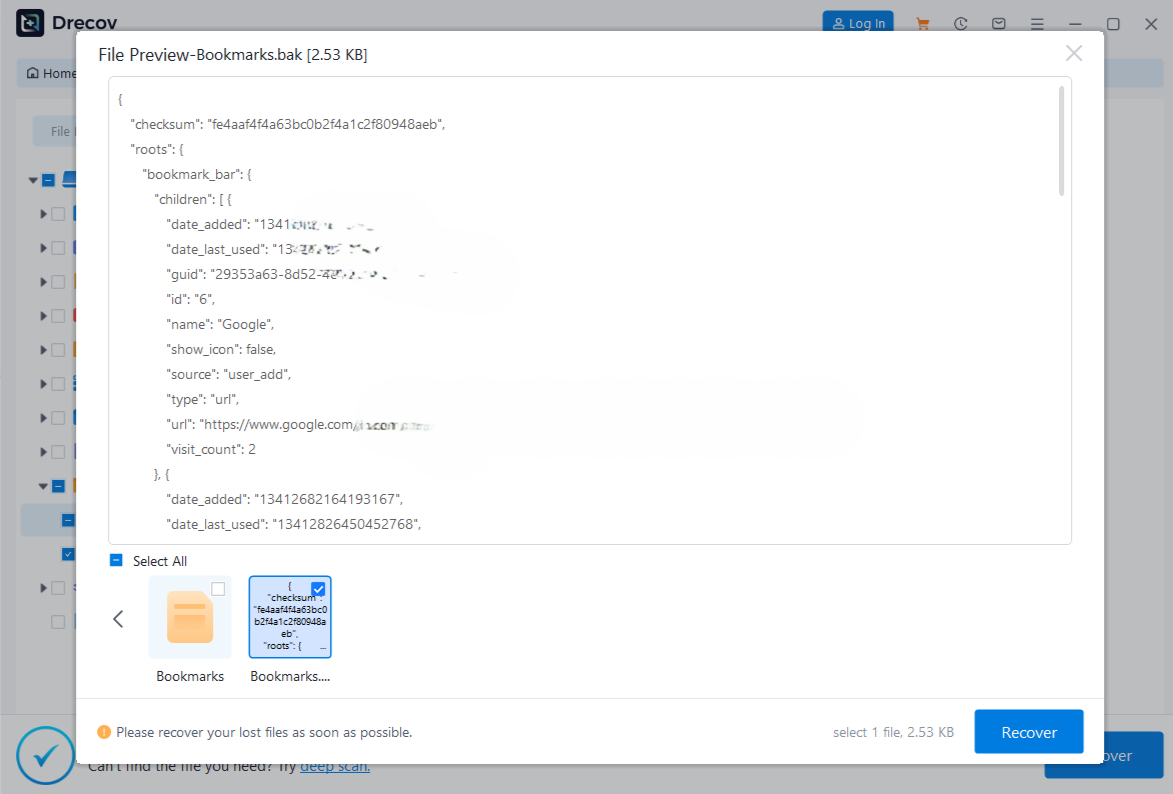
Step 4: Recover the Data
Select the relevant files and click Recover. Save these files to a secure location (like an external drive). You can then manually move these files back into your new Firefox profile folder to restore your lost information.
If you are looking to expand your Firefox skills further, you might find these guides helpful:
- How to download video from browser Firefox 2026 guide
- Where is the Firefox bookmarks location: find your data instantly
- Where are Firefox bookmarks stored on your PC?
Manual Profile Management and Registry Cleanups
For the power users who find that a standard refresh isn’t enough, managing the Firefox profile manually or cleaning the Windows Registry might be necessary. This level of how to reset firefox is complex but ensures that no residual “junk” remains.
Manually Deleting the Profile
- Press Windows Key + R, type
%appdata%\Mozilla\Firefox\Profiles\, and hit Enter. - Close Firefox completely.
- Delete the folders within this directory.
Warning: This will delete everything. Only do this if you have a backup or are prepared to start from scratch.
Cleaning the Registry (Advanced)
Sometimes, deep-seated errors reside in the Windows Registry.
- Type
regeditin the Windows search bar and run as Administrator. - Navigate to
HKEY_CURRENT_USER\Software\Mozilla\Firefox. - Right-click and delete the key if you are performing a complete “scorched earth” reset.
Warning: Editing the Registry can be dangerous. Always export a backup of the Registry before making changes.
Post-Recovery Checklist
After you have mastered how to reset firefox and successfully recovered your data using PandaOffice Drecov data recovery software, you should take steps to prevent future issues.
- Export Bookmarks Regularly: Use the Library window (Ctrl+Shift+O) to export your bookmarks to an HTML file.
- Sync Your Account: Use a Firefox Account to sync your data to the cloud. This provides an immediate backup if your local machine fails.
- Limit Extensions: Only install trusted add-ons. The more extensions you have, the more likely you are to face performance issues that require another reset.
Frequently Asked Questions
1. Will following the steps on how to reset Firefox delete my saved passwords?
Fortunately, when you use the official Refresh Firefox feature, Mozilla is designed to prioritize your sensitive data. Your saved passwords, usernames, and even your auto-fill form history are migrated to the new profile automatically. However, if you perform a manual reset by deleting the profile folder or editing the registry, these will be lost. If you find your passwords missing after a refresh, PandaOffice Drecov data recovery software can be used to scan for the key4.db and logins.json files in your old profile directory to restore them.
2. I tried to reset my homepage, but it keeps changing back. Is my browser hijacked?
If you have mastered how to reset homepage in Firefox but the settings revert every time you restart, you likely have a persistent “browser hijacker.” This is often a malicious extension or a background process.
- Step 1: Go to
about:addonsand remove anything you don’t recognize. - Step 2: Check your Windows “Startup” apps in Task Manager (Ctrl+Shift+Esc) for suspicious software.
- Step 3: Use a dedicated cleaner to ensure no registry keys are forcing the redirect.
3. Can I undo a Firefox reset if I realize I lost something important?
Yes, usually. When you learn how to reset Firefox browser using the Refresh tool, Firefox creates a folder on your desktop named “Old Firefox Data.” This is a complete backup of your previous profile. If you find that a specific setting or a rare extension’s data is missing, you can manually copy files from that desktop folder back into your new profile. If that folder is accidentally deleted, that is the exact moment you should deploy PandaOffice Drecov data recovery software to retrieve it before it is overwritten.
4. How often should I perform a full Firefox reset for optimal speed?
There is no set schedule, but SEO and tech experts generally recommend a refresh every 6 to 12 months, or whenever you notice a significant lag that clearing the cache (Ctrl+Shift+Del) doesn’t fix. Think of it as a “digital spring cleaning.” Over time, the SQLite databases that store your history can become fragmented; a reset rebuilds these databases from scratch, significantly improving query speeds within the UI.
5. Is there a difference between “Safe Mode” and “Resetting” Firefox?
Yes, they serve different purposes. Safe Mode (now called Troubleshoot Mode) is temporary. It disables hardware acceleration and extensions to help you diagnose if an add-on is causing a crash. How to reset Firefox, on the other hand, is a permanent change that creates a clean slate. Always try Troubleshoot Mode first by holding the Shift key while launching Firefox; if the problem persists there, a full reset or a deeper dive with recovery tools is usually required.
Conclusion
Learning how to reset firefox is a vital skill for any modern internet user. While the browser is designed to be self-sustaining, the accumulation of cache, extensions, and occasional malware makes a “Refresh” necessary from time to time. By following the tiered approach—starting with a homepage reset, moving to a browser refresh, and finally utilizing PandaOffice Drecov data recovery software—you can tackle any technical hurdle with confidence.
Remember that your data is your most valuable digital asset. Always prioritize backups, but know that if the worst happens, professional tools are ready to help you recover what was lost. Keep your browser clean, your software updated, and your recovery tools at the ready for a faster, safer web experience.






