







To understand how to recover a file deleted from a shared drive, identify the platform and owner before touching local folders. For Google Workspace Shared Drives, check the shared drive’s Trash and activity log, then contact a Manager or administrator if your role cannot restore it. For a Windows network share, ask about server snapshots and backups. Do not recreate a same-name file yet; it can confuse the audit trail and overwrite a synchronized local remnant.
The phrase can describe a Google Workspace Shared Drive, a folder shared from someone’s personal Google Drive, a Microsoft or Dropbox team folder, a mapped Windows network drive, or a local folder synchronized to the cloud. These systems assign ownership and deletion rights differently. A useful recovery plan begins with the service name, organization account, file path, filename, deletion time, and the person who last saw the item.
Confirm that the file was deleted rather than moved, renamed, hidden by permissions, or excluded by a changed view. Search for a distinctive phrase or filename fragment. Check recent activity and ask collaborators not to upload replacements until the original is located. A missing shortcut or revoked membership can make intact data appear deleted.
Record evidence before team activity continues
Capture the URL, parent folder, last known owner, approximate size, and expected modification date. Ask who deleted or moved it, but do not rely on memory alone. Activity logs, audit records, and sync-client events can show the account and action. This evidence becomes especially important when several files share similar names.
Open Google Drive in the correct Workspace account and select Trash. Use the “Deleted from” filter to choose the relevant shared drive, then locate the file and select Restore. Google’s official instructions for restoring a file to a Shared Drive state a period of up to 30 days and require at least Contributor access. A Manager controls permanent deletion from that Trash.
If you cannot see the shared drive or its Trash, your access may have been removed. Contact the person who granted access or the Workspace administrator. Do not create a personal copy and assume it restores the team’s file; it may lack comments, permissions, version history, links, or the authoritative folder location.
For a folder shared from an individual’s My Drive, ownership changes the result. A non-owner may lose the folder link while the owner still has the item. Search My Drive, Trash, “Shared with me,” and activity under the account that owns the file. Google also provides an is:unorganized search for owned files that lost their original folder.
Escalate to the administrator with a precise request
When Trash no longer contains the item, give the administrator the shared drive name, exact path, filename, owner or creating account, deletion window, and business impact. Administrators may have Workspace recovery, Vault retention, third-party backup, or audit tools, depending on the organization’s configuration and policy. Their capabilities and time limits are not identical, so prompt escalation matters.
Ask for recovery to a temporary review folder when possible. Restoring directly over a newer replacement can remove evidence or trigger another sync conflict. Once the recovered item is available, compare version history, permissions, comments, links, and modification times before moving it back to the production folder.
A mapped drive such as S: may point to a Windows file server or NAS. The local Recycle Bin often does not receive files deleted from a network share. Ask the storage administrator about Previous Versions, Volume Shadow Copy, NAS snapshots, replication, and backup. Provide the UNC path, not just the mapped letter, because drive letters differ between users.
Do not run recovery software against a live shared server volume unless the administrator approves a controlled recovery plan. Continued writes from many users can overwrite deleted data, while an uncoordinated scan can add load and complicate evidence. Restoring from a server snapshot is usually safer when a suitable snapshot exists.
Check synchronized and exported copies without causing a conflict
Identify whether the desktop client uses streaming or mirroring. A streamed placeholder may contain no complete local file, whereas a mirrored or offline-available folder may hold usable content. Disconnecting an account or resetting the sync client can remove local-only evidence, so copy relevant cache, conflict, and offline folders to another healthy drive before changing client settings.
Check the Windows Recycle Bin, Downloads, recent attachments, exported PDFs, temporary working folders, and collaborator devices. Open copies read-only or duplicate them first. Verify whether a recovered local file is complete and current; an older export may help rebuild content but should not silently replace the authoritative cloud object.
If the shared platform is OneDrive, follow the separate steps to recover deleted OneDrive files. For an ordinary local directory, use the guide to recover a deleted folder. A file removed beyond normal recycle locations belongs to the narrower permanently deleted file workflow.
Use Drecov only for a real local-storage loss
PandaOffice Drecov can help when a complete local synced file, offline copy, exported file, or backup was deleted from stable Windows storage. It cannot restore Google Workspace permissions, cloud comments, server snapshots, audit records, or a streamed placeholder that never held the file’s data locally. Its job is Windows file recovery from PCs, HDDs, SSDs, external drives, USB devices, SD cards, and memory cards.
Drecov uses read-only recovery mode, Quick Scan, Deep Scan, filters, preview, and recovery to a healthy destination. Lost Partition Recovery covers a disappeared local partition. Stop writing to the affected local volume, install Drecov elsewhere, and prepare another healthy device for output. If the source disconnects, clicks, changes capacity, or produces severe read errors, stop direct scans and use imaging or professional recovery.
⚠ Warning: Install it on a drive different from the one where your data was lost to prevent overwriting.
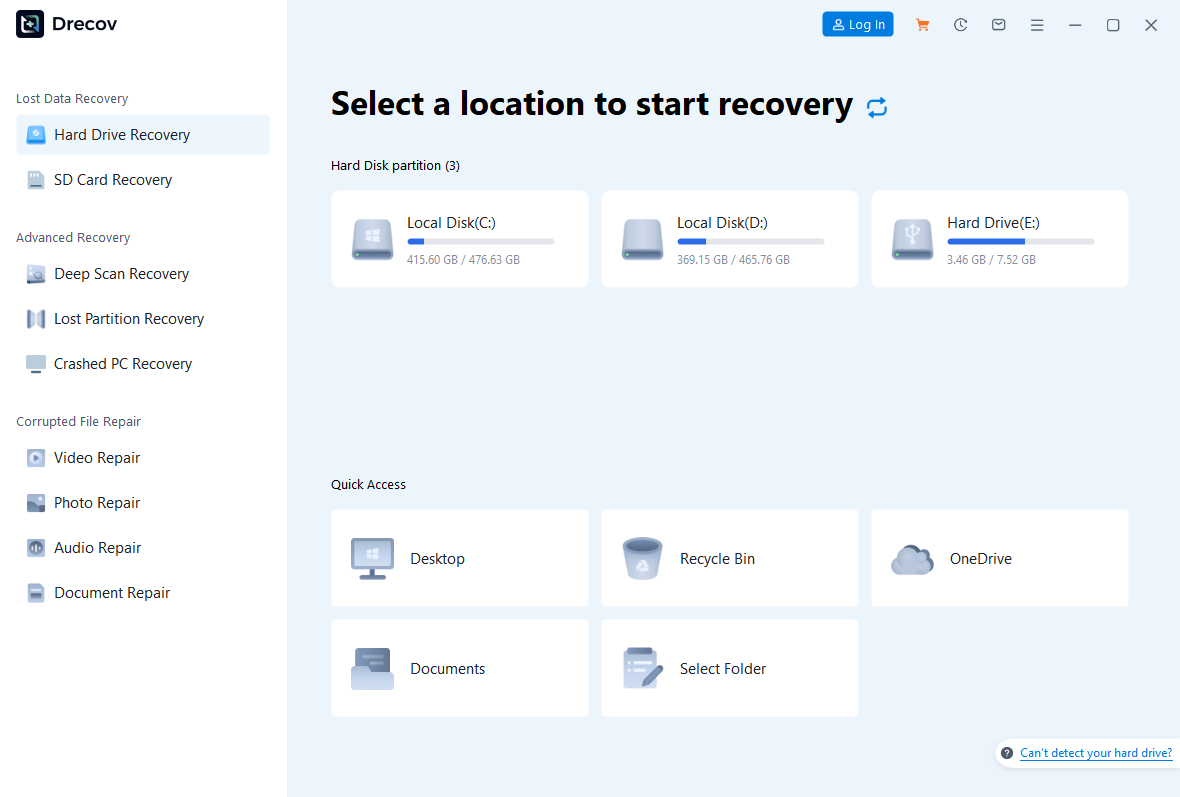
Step 1: Open Drecov and select the former local sync location
It helps diagnose how to recover a file deleted from a shared drive without changing the source data. Choose the stable disk or partition that held the offline or mirrored copy. Confirm the former folder, account profile, device model, and capacity. Do not scan a cloud-only placeholder folder as if it contained the original bytes.
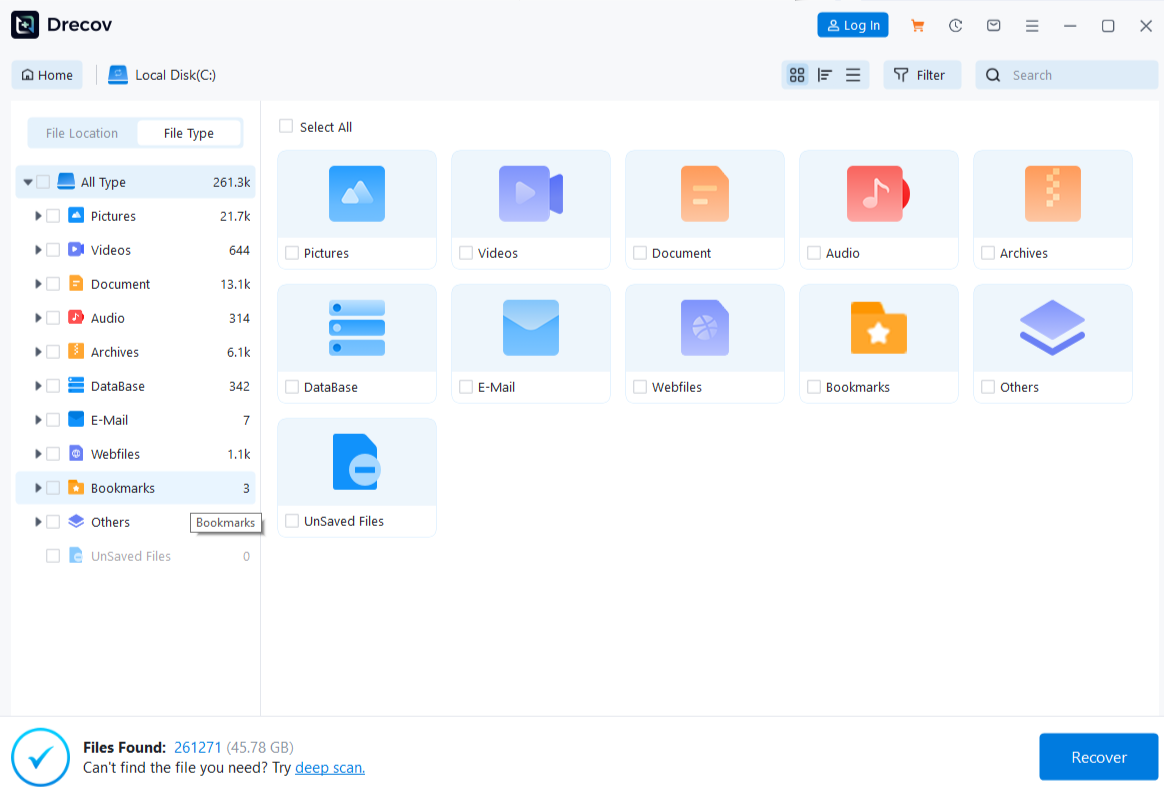
Step 2: Run Quick Scan and check the original account path
This check is especially useful for how to recover a file deleted from a shared drive. Start Quick Scan. Browse the former synchronized folder and Recycle Bin results. Filter by filename, type, size, path, and modification date based on the evidence collected from the shared drive.
Step 3: Use Deep Scan only if local storage remains stable
Run Deep Scan when Quick Scan misses the file and the device stays consistently readable. Results may lose their original folder names. Stop the scan if new read errors or disconnects appear.
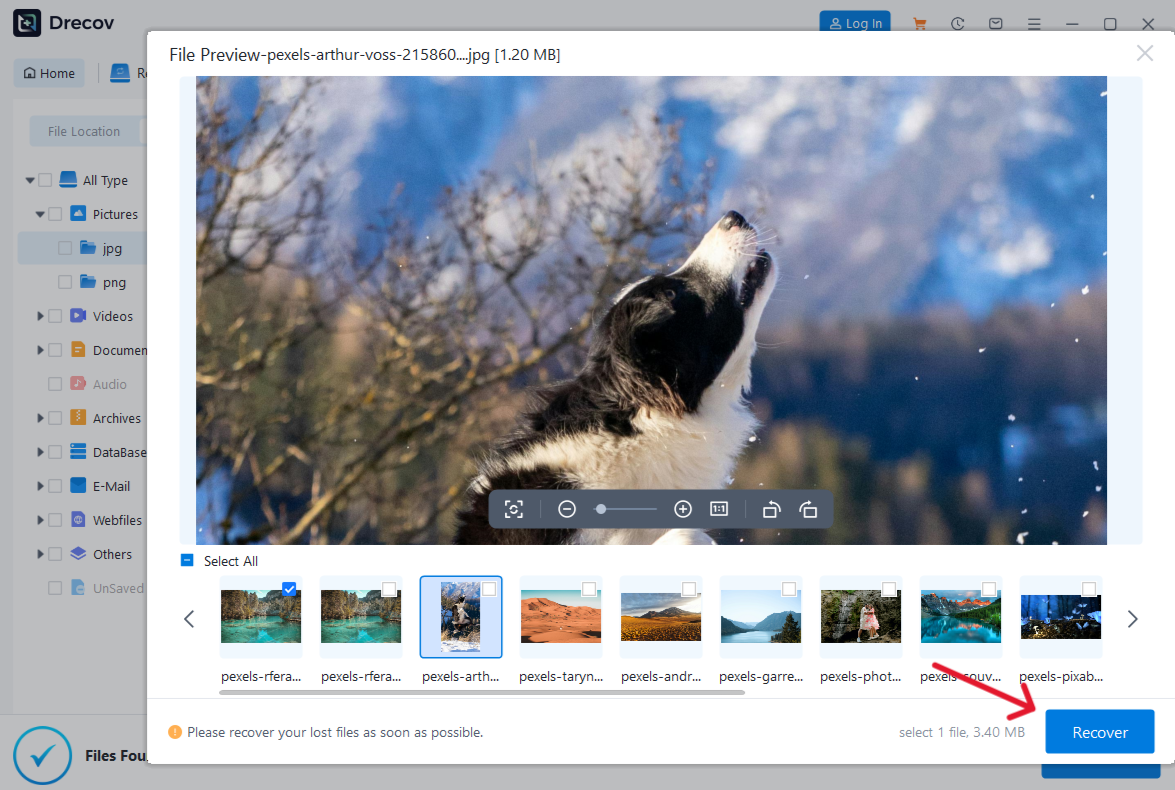
Step 4: Filter and preview the most likely versions
Combine the former path, filename, type, date, and expected size. Preview several supported candidates. A preview confirms only that sample; it cannot validate cloud metadata, comments, permissions, every document page, or every media frame.
Step 5: Recover candidates to another healthy device
Recover promising files to the prepared destination, never to the source or active sync folder. Check Drecov Folder or Recovery Folder if output is not where expected. Keep more than one plausible version.
Step 6: Verify before uploading anything to the team drive
Open recovered files locally, inspect their contents, scan them under organizational security policy, and compare dates and hashes when available. Upload only after the owner confirms the correct version and destination.
⚠ Warning: Install it on a drive different from the one where your data was lost to prevent overwriting.
Return the file without creating another loss event
Restore the verified file to a temporary review folder first. Confirm ownership, access groups, link-sharing rules, retention labels, and version history. Notify active collaborators so that no one overwrites it with a stale offline copy. When the file returns to its production location, test access using the roles that actually need it.
Document the incident: deletion time, recovery source, selected version, administrator action, and validation performed. If the deletion was accidental, improve role assignments and backup coverage instead of removing useful collaboration rights broadly. A recovery is complete only when the correct content is accessible to the correct team at the intended path.
FAQ
Google documents a 30-day Trash period for Shared Drive items. Organization retention and administrator tools may add other options, so escalate promptly.
Why can’t I see the deleted file in Trash?
You may be using the wrong account, lack access to the Shared Drive Trash, have lost membership, or be dealing with a moved rather than deleted file.
Google states that restoring from Shared Drive Trash requires at least Contributor access. Ask a Manager or administrator when your role is insufficient.
Can Drecov recover a cloud-only Google Drive file?
No. It can search a stable Windows disk for a complete local copy that previously existed there. It does not access cloud retention systems.
Should I upload the first recovered copy immediately?
No. Verify content, version, ownership, permissions, and destination first. Uploading an old or damaged copy can create a second conflict.
Conclusion
Recover a deleted shared-drive file through the system that owned it: Trash and activity first, then the Manager, administrator, snapshots, or backup. Preserve local sync evidence before resetting a client. Drecov belongs only in the branch where a complete local copy was genuinely deleted from stable storage. Recover it elsewhere, verify it carefully, and return it to the team only after the owner confirms the correct version and permissions.
⚠ Warning: Install it on a drive different from the one where your data was lost to prevent overwriting.





