







Understanding What It Means to Convert to a Dynamic Disk
What Does Convert to Dynamic Disk Mean in Windows
Many Windows users encounter a prompt asking whether they want to convert to dynamic disk when modifying partitions or extending volumes. At that moment, it is common to wonder: what does convert to dynamic disk mean and should you proceed?
A dynamic disk is a storage configuration that allows Windows to manage volumes more flexibly than traditional basic disks. Instead of relying solely on standard partitions, dynamic disks use a database to track storage information and support advanced volume types.
When Windows offers the option to change to dynamic disk, it is usually because the requested operation requires features that basic disks cannot provide. For example, extending a volume into unallocated space located on another drive may require dynamic storage.
Key capabilities of dynamic disks include:
- Spanned volumes
- Striped volumes
- Mirrored volumes
- Software RAID support
- Flexible volume expansion
While these features can be useful, they are not necessary for every computer. Understanding the implications before making changes helps prevent compatibility issues and unnecessary complexity.
For many users, the first step is learning the true convert to dynamic disk meaning and determining whether the benefits justify the change.
Convert to Dynamic Disk Meaning Explained Simply
The phrase convert to dynamic disk means changing a storage device from the standard partition-based model to a more advanced volume management system.
On a basic disk, storage is divided into partitions. These partitions operate independently and are defined by traditional partition tables such as MBR or GPT.
When converting to a dynamic disk, Windows replaces traditional partition management with dynamic volume management.
This conversion enables:
- Volume expansion across disks
- Software-based redundancy
- More flexible storage allocation
- Advanced multi-disk configurations
However, it may also introduce limitations, including reduced compatibility with some operating systems, recovery tools, and disk imaging software.
Many users who ask what is convert to dynamic disk mean are surprised to learn that the conversion is not primarily about performance. Instead, it is designed to provide additional storage management options.
Understanding this distinction is essential before proceeding with any conversion process.
How Dynamic Storage Differs from Basic Disks
Before deciding whether to convert to dynamic disks, it is important to understand how dynamic storage differs from basic storage.
Basic disks use:
- Primary partitions
- Extended partitions
- Logical drives
Dynamic disks use:
- Simple volumes
- Spanned volumes
- Striped volumes
- Mirrored volumes
Basic disks are generally easier to manage and offer excellent compatibility across operating systems.
Dynamic storage provides greater flexibility but requires more planning and administration.
For most home users:
- Basic disks are sufficient.
- Recovery procedures are simpler.
- Migration between computers is easier.
Dynamic storage becomes more attractive in environments that require advanced storage configurations.
Why Users Consider Converting to Dynamic Storage
Several situations may lead users to consider a conversion.
Common reasons include:
- Running out of partition space
- Expanding existing volumes
- Creating software RAID configurations
- Combining storage across multiple disks
- Improving storage flexibility
Business environments sometimes benefit from these capabilities because they manage larger amounts of data and multiple physical drives.
However, users should avoid converting simply because Windows offers the option.
⚠️ Warning: Converting a disk without understanding the consequences may create future compatibility or recovery challenges.
Reasons People Convert to Dynamic Disks
Benefits of Converting to a Dynamic Disk
The primary advantage of dynamic storage is flexibility.
After a successful convert to dynamic drive operation, users gain access to advanced storage features that are unavailable on basic disks.
Benefits may include:
- Flexible volume expansion
- Multi-disk volume creation
- Improved storage utilization
- Software-based redundancy options
- Advanced disk management capabilities
Organizations that manage multiple drives often appreciate these features because they can simplify certain storage tasks.
For example, administrators can create a single large volume using space from multiple physical drives.
These capabilities make dynamic storage attractive in specialized environments.
When Dynamic Storage Makes Sense
Dynamic storage is not necessary for every system.
It tends to be most useful when:
- Multiple drives are installed.
- Volume expansion is expected.
- Software RAID is required.
- Storage pools are needed.
Examples include:
- File servers
- Workstations
- Small business storage systems
- Media production environments
In these situations, converting to a dynamic disk may provide meaningful advantages.
However, personal computers that use a single drive often gain little benefit from the conversion.
Evaluating actual requirements before making changes helps avoid unnecessary complications.
Potential Drawbacks Before You Change to Dynamic Disk
While dynamic storage offers advantages, it also introduces certain risks.
Potential drawbacks include:
- Reduced compatibility
- More complex recovery procedures
- Migration challenges
- Additional management requirements
Some third-party tools may not fully support dynamic storage.
Likewise, moving disks between systems can occasionally result in foreign disk or offline disk status.
These issues do not necessarily make dynamic storage problematic, but they should be understood beforehand.
Users considering a change to dynamic disk should weigh both the benefits and the potential limitations.
Compatibility Considerations for Dynamic Drives
Compatibility remains one of the most important factors.
Before deciding to convert to dynamic disc, consider whether the storage device will be used with:
- Multiple operating systems
- Recovery environments
- Imaging software
- External enclosures
- Hardware upgrades
Basic disks generally provide broader compatibility across these scenarios.
Dynamic storage is best suited for environments where advanced features are genuinely required.
⚠️ Warning: Always verify software and hardware compatibility before converting production storage devices.
How to Convert to a Dynamic Disk Safely
Method 1. Recover Important Files with PandaOffice Drecov Before Conversion
Test Environment
- Windows 11 Pro
- 1TB Basic Disk
- Planned Dynamic Disk Conversion
- External Backup Storage Available
Before performing any disk conversion, protecting important data should be the first priority.
Although Windows conversion procedures are generally reliable, unexpected interruptions, hardware failures, or user errors can still result in data loss.
PandaOffice Drecov can help recover and secure important files before storage modifications begin.
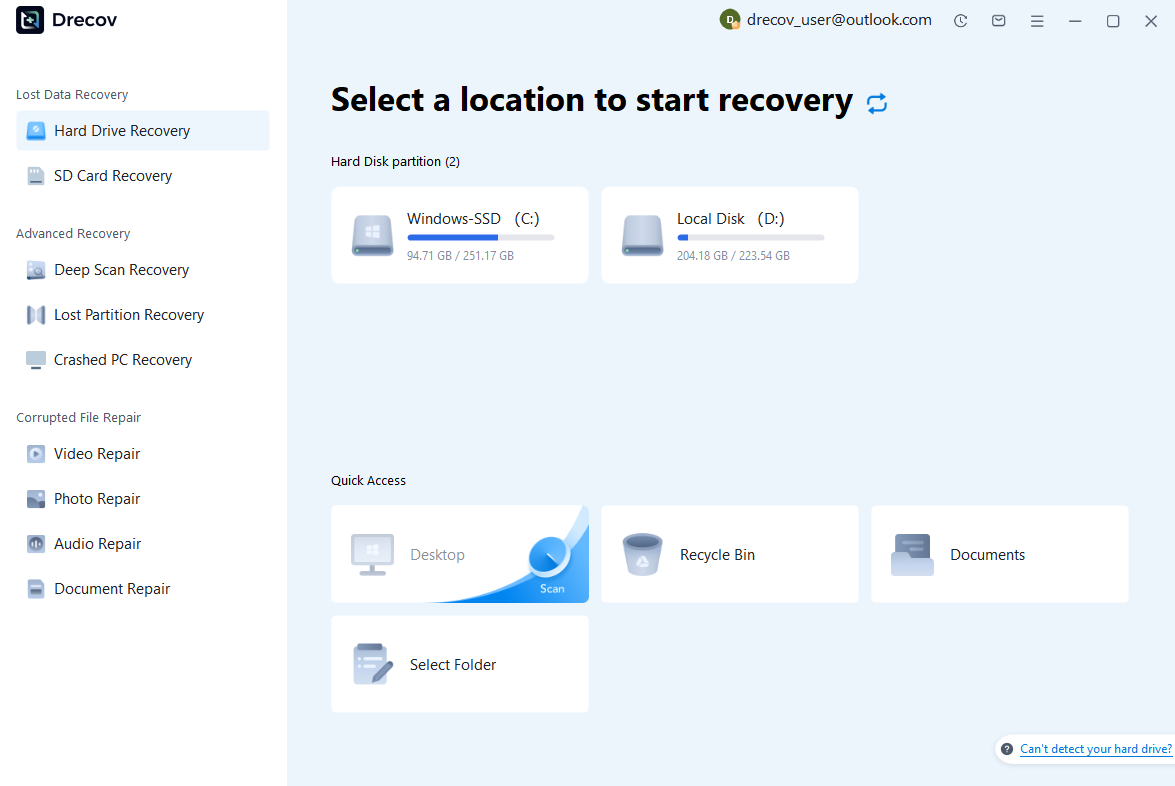
Step 1: Scan the Storage Device (SD Card / Hard Drive / USB)
Connect your device (SD card, HDD/SSD, or USB drive) to your computer and launch PandaOffice Drecov. Select the target device and start the scan. The software will perform a quick scan and deep scan to detect lost or deleted data.
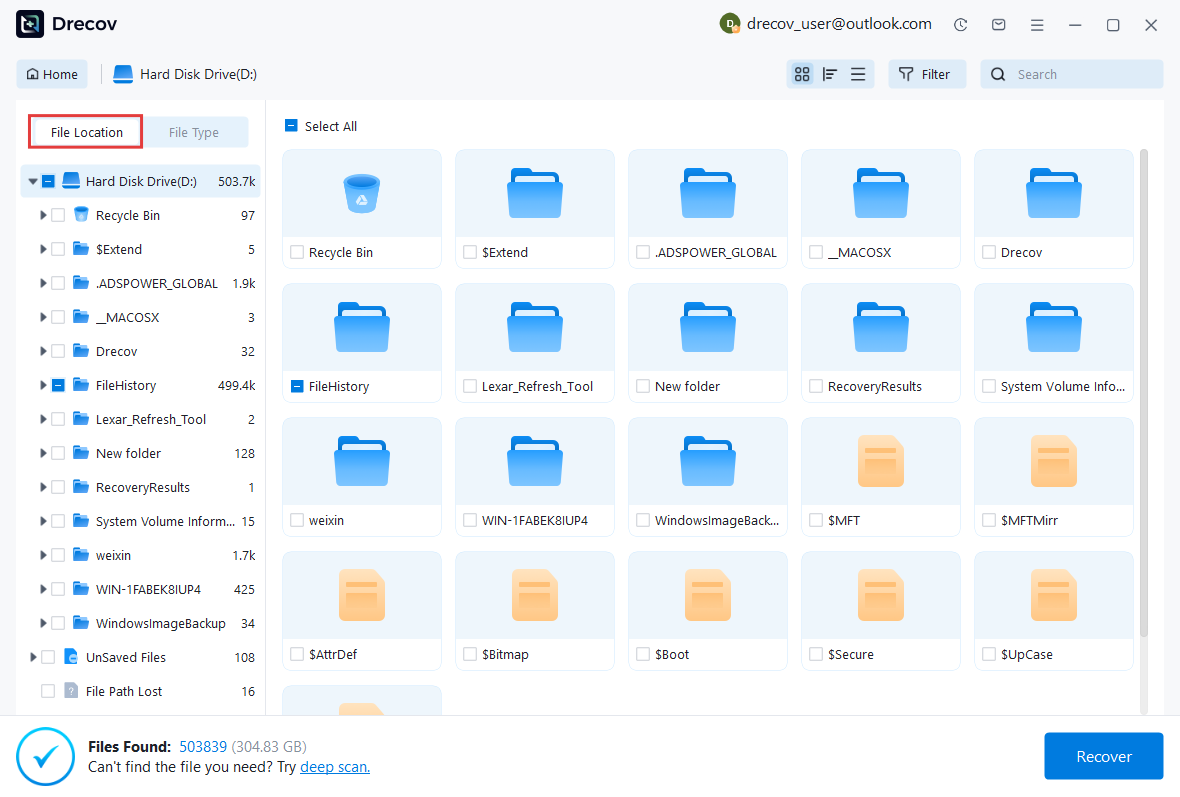
Step 2: Locate and Preview Lost Files
After scanning, browse the detected files and use the preview feature to check recoverable data. You can preview documents (Word, Excel, PDF), photos, and videos to ensure file integrity before recovery.
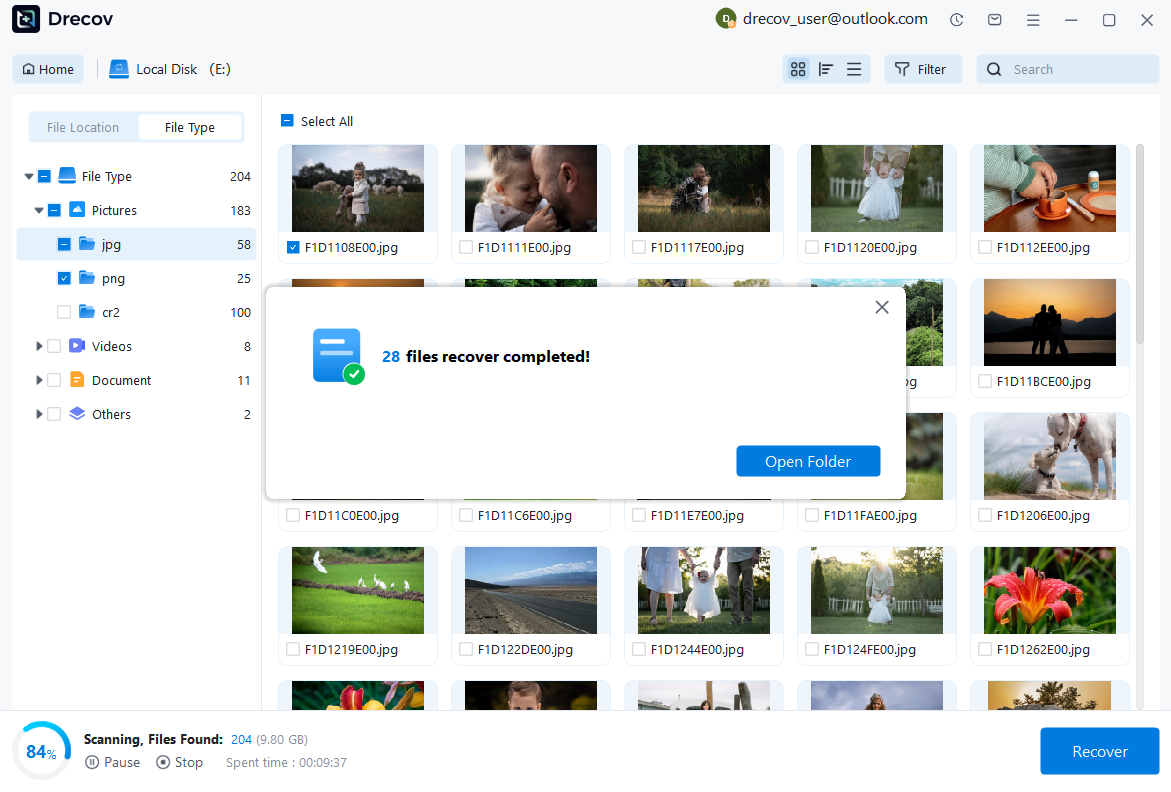
Step 3: Recover and Save to a New Location
Select the files you want to restore and click recover. Save all recovered data to a different drive or location (not the original device) to avoid overwriting lost data.
Why Choose PandaOffice Drecov Recovery Software?
PandaOffice Drecov offers a fast, secure, and user-friendly solution for recovering lost files across multiple scenarios. Whether you need email recovery, ZIP File Recovery, format data recovery, or help to recover deleted drafts Outlook, the software provides reliable recovery performance for both personal and business users.
PandaOffice Drecov supports recovery from formatted hard drives, SSDs, USB drives, SD cards, and external storage devices. Its advanced scanning engine can locate deleted archives, damaged ZIP files, lost Outlook drafts, and accidentally removed documents with high accuracy. For users searching for how to find deleted messages in Teams, PandaOffice Drecov can also help recover exported chat files, attachments, and related local cache data when available.
Key advantages include:
- Deep scan technology for complex data loss situations
- Support for emails, archives, videos, photos, and office documents
- Recovery from accidental deletion, formatting, corruption, and system crashes
- Easy preview before restoring files
- Compatible with Windows and multiple storage devices
Unlike complicated enterprise recovery tools, PandaOffice Drecov keeps the recovery process simple. Users can scan, preview, and restore files in just a few steps without technical expertise.
Whether you are dealing with lost Outlook drafts, corrupted ZIP archives, formatted drives, or missing communication data, PandaOffice Drecov provides an efficient and practical recovery experience designed to minimize downtime and protect important files.
Disk imaging ensures that even partially corrupted drives can be preserved. This is often the safest approach before attempting any aggressive repair operations for fix bad sectors on hard drive situations.
⚠️ Warning: Never save recovered files back to the disk that will be converted.
Method 2. Verify Disk Health Before Converting
Test Environment
- Windows 10/11
- Administrative Access
- SMART Monitoring Available
Before attempting to convert to dynamic disk, verify that the storage device is healthy.
Checks should include:
- SMART status
- File system integrity
- Available storage space
- Event Viewer warnings
A disk already experiencing hardware problems should not be converted until those issues are resolved.
Healthy storage significantly reduces the likelihood of conversion-related complications.
Method 3. Convert to Dynamic Disk Using Disk Management
Test Environment
- Windows Disk Management
- Basic Disk Configuration
- Administrator Account
Windows provides a built-in utility for disk conversion.
General procedure:
Step 1. Open Disk Management.
Step 2. Locate the target disk.
Step 3. Right-click the disk label.
Step 4. Select the conversion option.
Step 5. Review the warning message.
Step 6. Confirm the operation.
Windows will update the storage configuration and create the necessary dynamic disk database.
Method 4. Convert to Dynamic Drive with DiskPart Commands
Test Environment
- Command Prompt
- Administrative Privileges
- Windows 10/11
Advanced users may prefer command-line tools.
General DiskPart workflow:
Step 1. Open Command Prompt as Administrator.
Step 2. Launch DiskPart.
diskpart
Step 3. Display available disks.
list disk
Step 4. Select the target disk.
select disk X
Step 5. Execute the appropriate conversion command.
This method provides greater administrative control and is commonly used in enterprise environments.
Method 5. Confirm the Conversion Was Successful
Test Environment
- Windows 10/11
- Recently Converted Dynamic Disk
- Disk Management Access
- Administrative Permissions
After completing the conversion process, verifying the result is essential. Many users assume the operation succeeded simply because no error message appeared. However, proper validation helps identify potential issues before they affect daily operations.
To verify the conversion:
Step 1. Open Disk Management.
Step 2. Locate the converted storage device.
Step 3. Confirm the disk is labeled as Dynamic.
Step 4. Verify all volumes appear correctly.
Step 5. Check drive letters and volume names.
Step 6. Open several files to ensure data remains accessible.
Users often search what does converting to dynamic disk do after the conversion is complete. The easiest way to understand the result is by reviewing the new volume configuration within Disk Management.
A successful conversion should leave files intact while enabling dynamic volume functionality.
Method 6. Troubleshoot Common Dynamic Disk Conversion Problems
Test Environment
- Windows 11
- Dynamic Disk Present
- Event Viewer Available
- Administrative Access
Although conversions typically complete without difficulty, occasional issues may arise.
Common problems include:
- Disk appears offline
- Foreign disk status
- Missing drive letters
- Inaccessible volumes
- Volume mounting failures
Troubleshooting steps:
Step 1. Restart the computer.
Step 2. Open Disk Management.
Step 3. Verify disk status.
Step 4. Reactivate the disk if necessary.
Step 5. Assign missing drive letters.
Step 6. Review Event Viewer logs.
In many cases, simple configuration adjustments restore normal operation.
Users who convert to dynamic drive configurations involving multiple disks should pay particular attention to hardware connections and volume health after conversion.
Method 7. How to Change Dynamic to Basic Disk If Needed
Test Environment
- Dynamic Disk Accessible
- Backup Completed
- Windows Disk Management
- Administrator Account
After working with dynamic storage, some users decide they prefer traditional partition management and begin researching how to change dynamic to basic disk.
Reasons may include:
- Compatibility concerns
- Simpler administration
- Operating system migration
- Storage reconfiguration
Before proceeding:
- Back up important files.
- Verify data integrity.
- Document volume structures.
General process:
Step 1. Create a full backup.
Step 2. Review dynamic volume layout.
Step 3. Remove dynamic volumes if required.
Step 4. Convert the disk to basic storage.
Step 5. Recreate partitions.
Step 6. Restore data.
Because conversion procedures differ depending on the disk configuration, preparation is critical.
⚠️ Warning: Converting a dynamic disk back to a basic disk without proper planning may result in data loss.
Managing Dynamic Disks After Conversion
Monitor Dynamic Disk Status and Volume Health
Once a system begins using dynamic storage, regular monitoring becomes more important.
Key indicators to watch include:
- Disk status changes
- Offline volume warnings
- SMART alerts
- Event Viewer errors
- Unexpected performance degradation
Periodic reviews help identify problems before they become serious.
Dynamic storage environments that span multiple drives benefit particularly from proactive monitoring because issues affecting one drive can impact the entire volume configuration.
Maintaining awareness of storage health improves reliability and reduces recovery risks.
Understand Dynamic Volume Types
Many users perform a convert to dynamic disk operation without fully understanding the available volume types.
Dynamic storage supports:
Simple Volumes
Use space from a single disk.
Spanned Volumes
Combine storage from multiple disks.
Striped Volumes
Distribute data across disks to improve performance.
Mirrored Volumes
Maintain duplicate copies of data for redundancy.
Each volume type offers different advantages and limitations.
Selecting the appropriate configuration depends on performance requirements, redundancy goals, and available hardware resources.
Understanding these options helps users maximize the value of dynamic storage.
Avoid Common Dynamic Disk Configuration Mistakes
Several mistakes repeatedly contribute to storage problems.
Common examples include:
- Converting without backups
- Ignoring disk health warnings
- Disconnecting member disks unexpectedly
- Misunderstanding volume dependencies
- Performing unsupported migrations
Avoiding these errors greatly improves storage stability.
Users researching convert to dynamic disk meaning often focus only on the conversion itself while overlooking long-term management considerations.
A successful dynamic storage deployment requires both proper configuration and ongoing maintenance.
Create Regular Backups for Dynamic Storage
Regardless of storage type, backups remain essential.
Recommended practices include:
- Weekly full backups
- Daily incremental backups
- Multiple backup locations
- Periodic restoration testing
Dynamic storage does not eliminate the possibility of hardware failures, user errors, or accidental deletion.
Reliable backups ensure that important information remains recoverable regardless of the storage configuration.
⚠️ Warning: Never rely solely on a dynamic volume as the only copy of important data.
Frequently Asked Questions About Dynamic Disk Conversion
What Does Converting to Dynamic Disk Do?
A common question is: what does converting to dynamic disk do?
The conversion changes how Windows manages storage.
Instead of relying only on traditional partitions, Windows begins using dynamic volume structures that support advanced storage features such as:
- Spanning
- Striping
- Mirroring
- Flexible volume management
The conversion does not automatically improve performance or increase storage capacity.
Its primary purpose is to enable additional volume management capabilities.
What Is Convert to Dynamic Disc Used For?
Users asking what is convert to dynamic disc generally want to understand the practical purpose of dynamic storage.
Dynamic disks are used when organizations or advanced users require:
- Multi-disk storage pools
- Software RAID
- Flexible volume expansion
- Improved storage management options
For standard desktop systems, these capabilities may not be necessary.
The decision should be based on actual storage requirements rather than curiosity alone.
Should I Convert to Dynamic Disk on a Home Computer?
In most situations, home users do not need dynamic storage.
Basic disks typically provide:
- Better compatibility
- Simpler recovery
- Easier management
- Fewer migration challenges
However, users operating multiple drives or specialized storage configurations may find dynamic storage beneficial.
Evaluating current and future requirements is the best approach.
Can I Revert a Dynamic Disk Back to a Basic Disk?
Yes, it is possible to return to basic storage.
Many users eventually search how to change dynamic to basic disk when their storage requirements evolve.
Before attempting any conversion:
- Back up data.
- Verify storage health.
- Understand the conversion procedure.
Proper preparation reduces risk and simplifies the transition.
What Does Convert to Dynamic Disk Mean for Existing Files?
A frequent concern involves existing data.
In most cases, a successful conversion preserves files already stored on the disk.
However, unexpected interruptions or hardware issues can create complications.
This is why backups and recovery planning should always precede storage modifications.
Understanding what does convert to dynamic disk mean includes recognizing both the benefits and the responsibilities associated with advanced storage management.
Final Thoughts on Dynamic Disk Conversion
When Converting to a Dynamic Disk Is a Good Idea
Dynamic storage can be valuable when:
- Multiple physical drives are available.
- Volume expansion flexibility is required.
- Software RAID features are needed.
- Advanced storage management is beneficial.
In these scenarios, a convert to dynamic disk operation may provide meaningful advantages.
Organizations and power users often benefit most from these capabilities.
When You Should Keep a Basic Disk Instead
Basic storage remains the preferred choice for many systems.
Reasons to keep a basic disk include:
- Maximum compatibility
- Easier maintenance
- Simpler migration
- Reduced administrative complexity
For most home and office computers, basic disks remain entirely sufficient.
Choosing simplicity often improves long-term reliability.
Best Practices for Long-Term Storage Reliability
Whether you decide to convert to dynamic disks or continue using basic storage, several best practices remain essential:
- Maintain regular backups.
- Monitor storage health.
- Document disk configurations.
- Test recovery procedures.
- Replace failing hardware promptly.
- Avoid unnecessary conversions.
The answer to whether you should convert to dynamic disk depends on your specific storage needs. Dynamic storage offers powerful capabilities, but those capabilities come with additional management responsibilities.
By understanding the advantages, limitations, and long-term implications of dynamic storage, users can make informed decisions that support reliable and efficient data management for years to come.





