







Understanding Bad Sectors Hard Drive Issues and Their Impact
Hard drives remain one of the most widely used storage devices, but they are also vulnerable to physical wear and logical errors. One of the most common issues users encounter is bad sectors hard drive failure, which can lead to data loss, slow performance, and system instability. A bad sector refers to a portion of the disk that becomes unreadable or unreliable for storing data. Once these sectors begin to appear, users may notice corrupted files, missing data, or frequent system errors.
A bad sectors on hard drive condition does not always mean immediate disk failure, but it is often a warning sign that the drive is deteriorating. Some bad sectors are logical, caused by software issues, while others are physical, resulting from hardware damage. Understanding this distinction is critical when deciding how to proceed with recovery or repair.
What Are Bad Sectors on a Hard Drive and Why They Occur
Bad sectors occur when a portion of the hard drive surface becomes damaged or inaccessible. In traditional HDDs, data is stored magnetically on spinning platters. Over time, these platters can degrade due to wear, heat, vibration, or manufacturing defects. When this happens, the system can no longer reliably read or write data in those regions.
Logical bad sectors may appear due to improper shutdowns, corrupted file systems, or malware attacks. These are sometimes reversible using software tools. Physical bad sectors, however, are permanent and indicate hardware deterioration. Users often searching how fix bad sectors on hard drive are actually dealing with a mix of both types, which requires different approaches.
⚠️ Warning: Continuing to use a drive with rapidly increasing bad sectors may lead to total data loss. Always back up critical files immediately.
How Bad Sectors on Hard Drive Affect Data Performance and Stability
When bad sectors begin to develop, system performance often declines noticeably. Files stored in affected areas may become inaccessible, and programs may freeze when attempting to read damaged regions. Users may also experience slow boot times and frequent system crashes.
In severe cases of bad sectors on a hard drive, the operating system repeatedly attempts to read corrupted areas, causing high disk usage and unresponsive behavior. This is especially problematic for system drives where Windows or macOS is installed.
From a performance perspective, even a small number of bad sectors can significantly degrade user experience. As the drive reallocates damaged areas, available storage space decreases, and fragmentation increases. Users searching for fix bad sectors on hard drive often notice these symptoms before realizing the root cause is physical disk deterioration.
Early Signs of Bad Sectors on a Hard Drive You Should Not Ignore
Detecting early symptoms can prevent serious data loss. One of the most common indicators is frequent file corruption or inability to open certain documents. Another sign is unusual clicking or grinding sounds from the drive, especially in older HDD models.
Other early warnings include:
- Slow file transfer speeds
- Frequent system freezes
- Missing or corrupted files
- Disk read/write errors
- Unexpected system crashes
Users who notice these issues often begin searching for how to fix bad sectors on hard drive, especially when problems worsen over time.
Causes, Risks, and System Behavior of Bad Sectors on a Hard Drive
Physical Damage, Aging, and Manufacturing Defects in Hard Drives
Hard drives are mechanical devices, meaning they naturally degrade over time. The most common cause of bad sectors hard drive failure is physical wear. As platters spin thousands of times per minute, microscopic wear gradually accumulates, eventually leading to unreadable areas.
Manufacturing defects can also contribute to early bad sector formation. Even brand-new drives may develop weak sectors that later turn into permanent damage. External factors such as drops, shocks, or overheating significantly increase the risk of sector failure.
Aging drives are particularly vulnerable. After several years of use, even under normal conditions, the probability of encountering bad sectors on hard drive increases significantly.
File System Corruption and Software-Related Disk Errors
Not all bad sectors are caused by physical damage. Logical errors are equally common and often easier to repair. File system corruption may occur due to improper shutdowns, interrupted updates, or software crashes.
In such cases, users searching how do you fix bad sectors on hard drive may be dealing with recoverable logical issues rather than hardware failure. These errors typically affect how data is indexed rather than the physical disk surface.
Operating systems may mislabel these areas as bad sectors even though the hardware is still intact. Repair tools can often restore functionality by rewriting file structures or marking problematic areas as unused.
Power Failures and Improper Shutdowns Leading to Damaged Sectors
Sudden power loss is another major cause of disk errors. When a system shuts down unexpectedly, active read/write operations may be interrupted mid-process. This can corrupt data blocks and lead to logical bad sectors.
Frequent improper shutdowns significantly increase the risk of bad sectors on a hard drive, especially on older systems without modern power protection. Over time, repeated interruptions can degrade file system integrity.
Users experiencing repeated power issues often report needing to fix bad sectors on hard drive more frequently than those with stable power environments.
How Operating Systems React to Bad Sectors Hard Drive Conditions
When an operating system detects unreadable sectors, it typically attempts to isolate them. Windows uses built-in scanning tools that mark damaged areas so they are no longer used for storage.
However, this process does not eliminate the root cause. Instead, it only prevents further data from being written to those locations. As a result, users may still experience performance issues even after partial repair.
In severe cases, system instability may increase as the number of affected sectors grows. This is why early detection is essential for preventing full disk failure.
How to Fix Bad Sectors on Hard Drive Using Practical Methods
Method 1: Check and Repair Bad Sectors on Hard Drive Using CHKDSK Tool
One of the most widely used solutions for how to fix bad sectors on hard drive is the Windows CHKDSK utility. This built-in tool scans the disk for logical and physical errors and attempts to repair them automatically.
CHKDSK works by analyzing file system structures and identifying inconsistent or unreadable sectors. It then marks damaged areas as unusable to prevent future data writes.
Test Environment:
- Windows 11 Pro
- 1TB SATA HDD
- NTFS File System
- System Drive + Data Partition
Steps:
- Open Command Prompt as Administrator
- Type
chkdsk /f /r - Press Enter and restart the system
- Allow full disk scan to complete
- Review repair report
This method is effective for minor bad sectors on hard drive conditions, especially those caused by logical errors. However, it cannot physically repair damaged hardware.
Method 2: Scan and Fix Bad Sectors on Hard Drive with Disk Utility Tools
Disk management tools provide another way to identify and isolate bad sectors. These tools perform surface scans and highlight problematic areas of the disk.
Test Environment:
- Windows 10 Laptop
- External USB HDD
- Mixed Media File Storage
Steps:
- Open Disk Management or third-party disk utility
- Select target drive
- Run surface scan
- Identify unreadable sectors
- Mark or isolate damaged regions
This approach helps users understand the extent of bad sectors on a hard drive before deciding whether repair or replacement is necessary.
Method 3: Isolate and Mark Bad Sectors on a Hard Drive to Prevent Usage
In some cases, full repair is not possible. Instead, the system can be configured to avoid writing data to damaged sectors. This helps extend the usable life of the drive temporarily.
Test Environment:
- Internal HDD with OS installed
- Windows 11 System Partition
- Moderate disk degradation
Steps:
- Run diagnostic scan
- Identify bad sector map
- Allocate unused sectors
- Prevent write access to damaged regions
This method does not eliminate bad sectors hard drive issues but reduces their impact on system performance.
How to Fix Damaged Sectors on Hard Drive Using Surface Scanning
When basic repair tools are not enough, a deeper surface scan is often required. A surface scan reads every sector of the drive sequentially to identify unreadable or slow-response areas. This helps determine the full extent of bad sectors on a hard drive and whether the issue is expanding.
Unlike quick checks, surface scanning provides a more accurate map of disk health. It is commonly used before attempting major repairs or data migration because it reveals whether the drive is still stable enough for continued use.
Test Environment:
- Windows 11 Pro Workstation
- 2TB SATA HDD (aging drive)
- Mixed file storage (documents + media)
- Third-party disk diagnostic tool
Steps:
- Launch disk diagnostic utility
- Select full surface scan mode
- Run sequential read test
- Record slow or unreadable blocks
- Generate health report
Surface scanning is particularly useful when users are trying to understand how to fix bad sectors on hard drive situations where performance degradation is gradual rather than sudden. However, it does not physically repair the disk—it only identifies problem areas.
Can a Hard Drive with 100 Bad Sectors Be Repaired or Reused Safely
A common question among users is whether a drive with bad sectors hard drive damage—especially around 100 bad sectors—can still be used. The answer depends on whether the sectors are logical or physical and whether the number is increasing over time.
If the bad sectors remain stable and are mostly logical, the drive may still function temporarily after repair. However, if the count continues to grow, it usually indicates ongoing physical deterioration. In such cases, even if you attempt to fix bad sectors on hard drive, the improvement is often temporary.
Drives with around 100 bad sectors are considered at high risk. While they may still be usable for non-critical storage, they should never be trusted for important system or business data.
⚠️ Warning: A hard drive with increasing bad sectors can fail suddenly without warning. Always maintain backups if you continue using it.
Using Disk Cloning and Imaging to Protect Data from Bad Sectors on Hard Drive
When a drive begins showing instability, one of the safest strategies is to clone it before failure worsens. Disk imaging creates a sector-by-sector copy of the drive, including readable portions of damaged disks.
This method is especially useful when dealing with bad sectors on hard drive scenarios where standard file copying fails due to unreadable areas.
Test Environment:
- Windows 11 System
- Failing 1TB HDD
- External SSD target drive
- Disk imaging software
Steps:
- Connect a healthy backup drive
- Launch disk cloning tool
- Select source (damaged HDD)
- Select destination (healthy drive)
- Start sector-by-sector imaging
- Verify cloned image integrity
When traditional disk repair methods fail to access or recover data from severely affected drives, specialized recovery tools can provide an additional layer of support. In cases involving extensive bad sectors on a hard drive, files may become partially unreadable or completely inaccessible due to physical or logical damage. In such scenarios, a data recovery solution like PandaOffice Drecov can help scan the affected storage device, identify recoverable file fragments, and restore important data that standard repair utilities cannot access. It is particularly useful when dealing with system crashes, corrupted partitions, or drives that still contain valuable information but cannot be properly read through conventional methods. While it does not repair physical damage, it plays an important role in ensuring critical files are not permanently lost during recovery attempts.
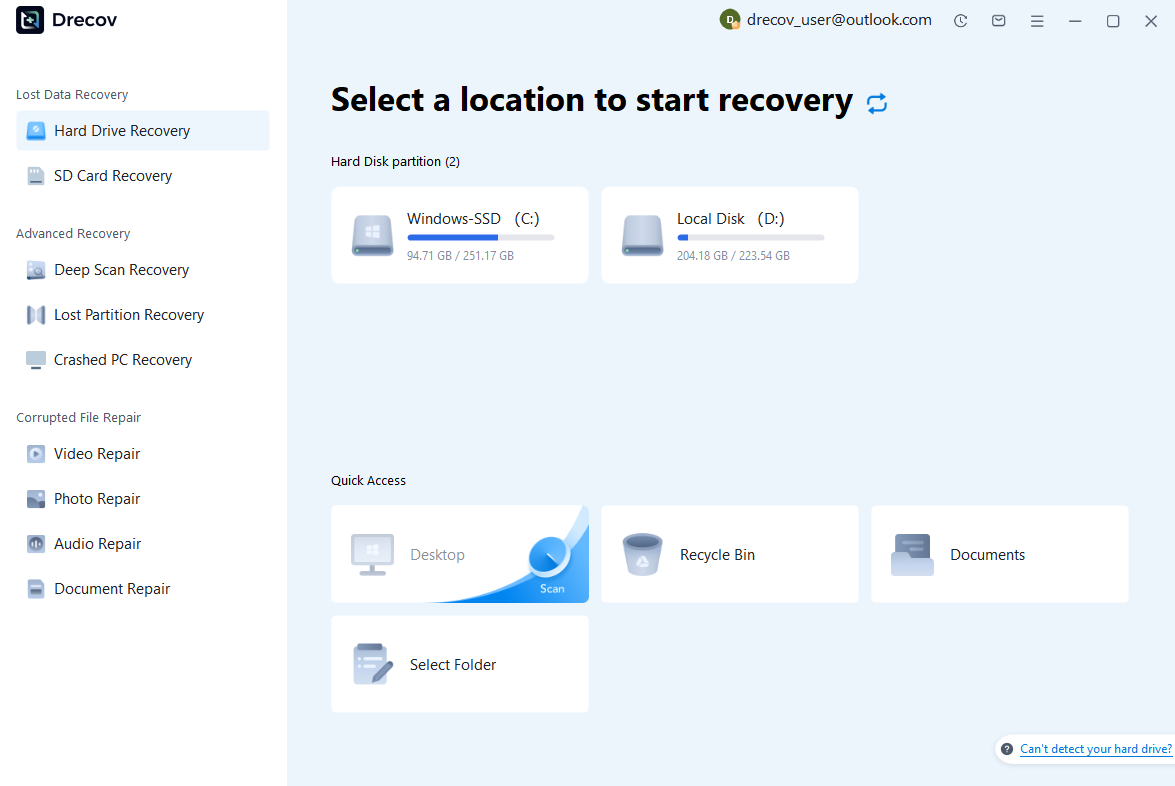
Step 1: Scan the Storage Device (SD Card / Hard Drive / USB)
Connect your device (SD card, HDD/SSD, or USB drive) to your computer and launch PandaOffice Drecov. Select the target device and start the scan. The software will perform a quick scan and deep scan to detect lost or deleted data.
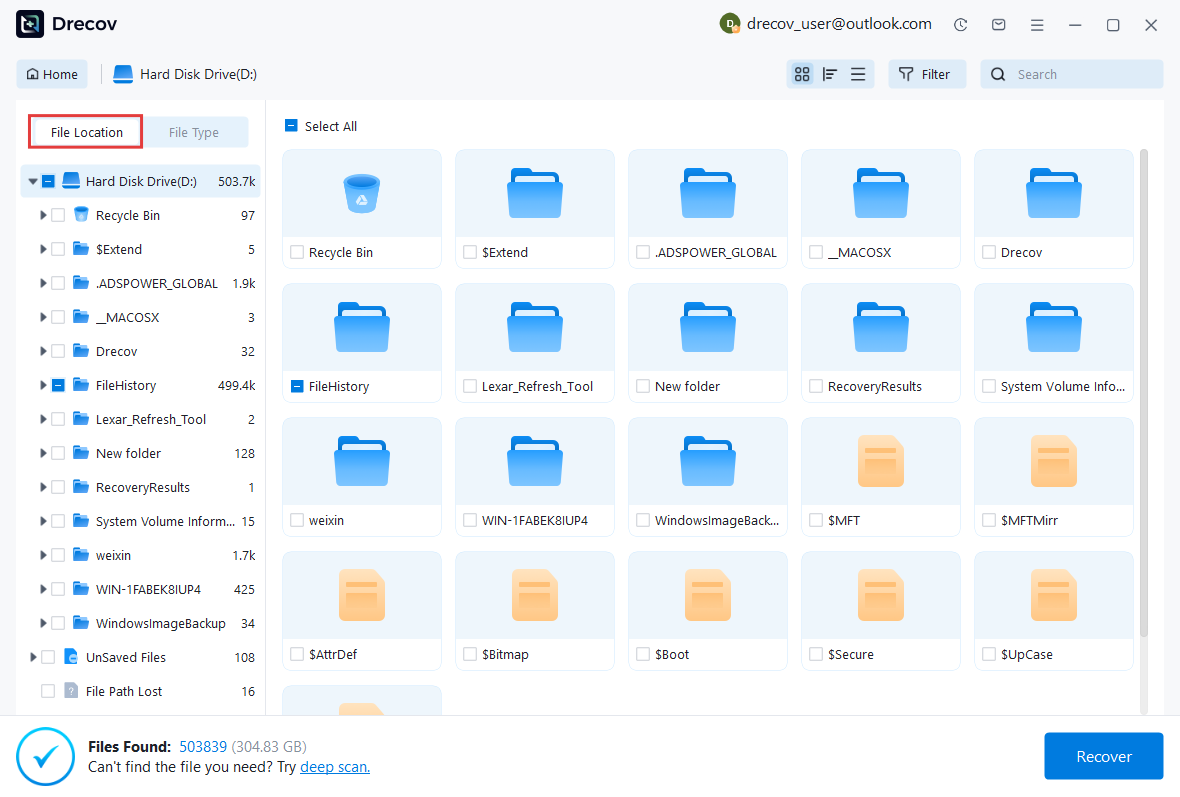
Step 2: Locate and Preview Lost Files
After scanning, browse the detected files and use the preview feature to check recoverable data. You can preview documents (Word, Excel, PDF), photos, and videos to ensure file integrity before recovery.
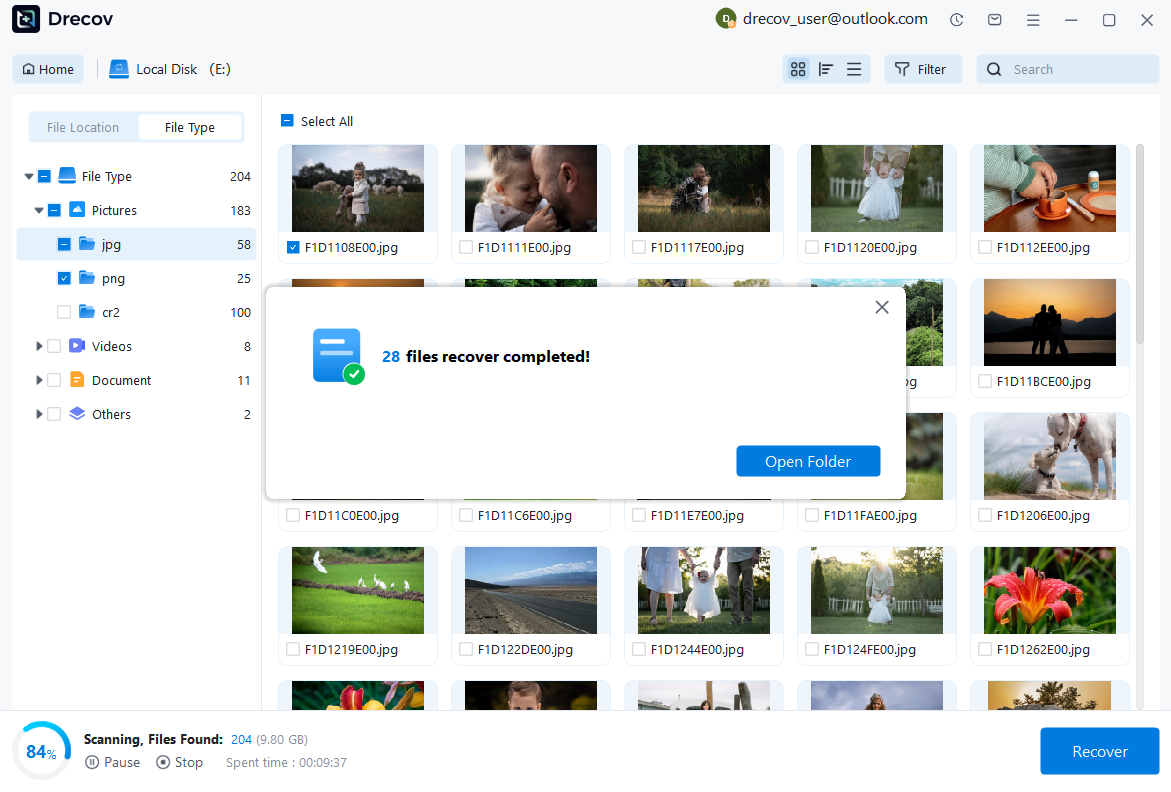
Step 3: Recover and Save to a New Location
Select the files you want to restore and click recover. Save all recovered data to a different drive or location (not the original device) to avoid overwriting lost data.
Why Choose PandaOffice Drecov Recovery Software?
PandaOffice Drecov offers a fast, secure, and user-friendly solution for recovering lost files across multiple scenarios. Whether you need email recovery, ZIP File Recovery, format data recovery, or help to recover deleted drafts Outlook, the software provides reliable recovery performance for both personal and business users.
PandaOffice Drecov supports recovery from formatted hard drives, SSDs, USB drives, SD cards, and external storage devices. Its advanced scanning engine can locate deleted archives, damaged ZIP files, lost Outlook drafts, and accidentally removed documents with high accuracy. For users searching for how to find deleted messages in Teams, PandaOffice Drecov can also help recover exported chat files, attachments, and related local cache data when available.
Key advantages include:
- Deep scan technology for complex data loss situations
- Support for emails, archives, videos, photos, and office documents
- Recovery from accidental deletion, formatting, corruption, and system crashes
- Easy preview before restoring files
- Compatible with Windows and multiple storage devices
Unlike complicated enterprise recovery tools, PandaOffice Drecov keeps the recovery process simple. Users can scan, preview, and restore files in just a few steps without technical expertise.
Whether you are dealing with lost Outlook drafts, corrupted ZIP archives, formatted drives, or missing communication data, PandaOffice Drecov provides an efficient and practical recovery experience designed to minimize downtime and protect important files.
Disk imaging ensures that even partially corrupted drives can be preserved. This is often the safest approach before attempting any aggressive repair operations for fix bad sectors on hard drive situations.
When Repair Is Not Enough and Replacement Becomes Necessary
Not all drives can be repaired. Once physical damage spreads across multiple regions of the disk, continued use becomes risky. In such cases, no software solution can fully resolve bad sectors hard drive failure.
Signs that replacement is required include:
- Rapidly increasing bad sector count
- Frequent system crashes
- Loud clicking noises
- Failed surface scans
- Inability to complete CHKDSK
At this stage, even advanced repair attempts only temporarily mask the issue. The safest decision is to migrate data to a new storage device immediately.
Frequently Asked Questions About Bad Sectors on a Hard Drive
How Do You Fix Bad Sectors on Hard Drive Without Losing Data
The safest approach is to first back up all accessible data, then run repair tools like CHKDSK or surface scan utilities. Logical bad sectors may be recoverable, but physical ones cannot be restored.
How to Fix Bad Sectors on Hard Drive in Windows Step by Step
In most cases, Windows users rely on CHKDSK, disk utilities, and system scans. These tools detect and isolate damaged sectors, helping stabilize the drive temporarily.
How Fix Bad Sectors on Hard Drive Compared to Full Disk Replacement
Repair methods only extend the life of a failing drive, while replacement provides a permanent solution. If bad sectors continue increasing, replacement is the only reliable option.
Conclusion: Managing and Preventing Bad Sectors Hard Drive Failures
Dealing with bad sectors on hard drive issues requires a combination of early detection, proper diagnosis, and timely action. While tools like CHKDSK and surface scans can help users understand how to fix bad sectors on hard drive, they cannot reverse physical damage.
For minor logical errors, repair methods may restore functionality. However, once physical deterioration begins, the safest solution is data migration and drive replacement. In critical situations, recovery tools such as PandaOffice Drecov can help preserve important files before failure becomes complete.
Ultimately, the best strategy is prevention—regular backups, stable power supply, and monitoring disk health can significantly reduce the risk of encountering severe bad sectors hard drive problems in the future.





