







What does resetting BIOS do? It restores BIOS or UEFI configuration values to the computer manufacturer’s defaults. It normally does not erase Windows, documents, photos, or files stored on a drive. However, it can change boot order, storage-controller mode, Secure Boot, TPM-related options, virtualization, fan profiles, and other firmware choices. A changed setting can make an intact Windows installation appear missing or trigger a BitLocker recovery prompt. Record the current configuration before loading defaults.
what does resetting BIOS do: safe diagnosis
BIOS and UEFI firmware initialize hardware before Windows starts. Their settings tell the motherboard which device to boot, how a storage controller should present drives, whether Secure Boot is active, and which processor or peripheral features are enabled. Loading optimized defaults, restoring setup defaults, or clearing CMOS returns many of these values to a baseline chosen by the manufacturer.
The reset does not perform a Windows factory reset. It does not format partitions or deliberately delete user files. It also does not roll back applications, remove malware, repair a damaged SSD, reinstall drivers, or replace a forgotten Windows password. These are separate operations that may be offered elsewhere in a recovery menu, so read the exact screen instead of treating every option containing “reset” as equivalent.
| Item | What a BIOS reset may do | What it normally does not do |
|---|---|---|
| Boot sequence | Return the first boot device to a default entry | Delete the Windows partition |
| Storage mode | Switch among AHCI, RAID, Intel RST, or vendor defaults | Convert the file system by itself |
| Secure Boot and CSM | Restore the manufacturer’s UEFI policy | Rewrite personal documents |
| TPM or platform security | Change availability or measurements, depending on firmware | Automatically supply a BitLocker recovery key |
| Performance settings | Remove overclocks, undervolts, and custom memory profiles | Repair defective memory or cooling hardware |
| Date and time | Revert to a default if CMOS power was removed | Change file contents already stored on disk |
The Reset Method Determines How Broad the Change Is
Load Setup Defaults inside UEFI
The firmware menu may call the command Load Defaults, Load Optimized Defaults, Restore Settings, or Reset to Default. This is the most controlled approach because you can photograph existing pages first and review the changed values before saving. The exact key and menu vary by motherboard or computer model. Use the manufacturer’s manual rather than a universal key sequence.
Clearing CMOS is a hardware-level way to remove stored setup values. It can help when a bad overclock prevents the firmware screen from loading. Power must be disconnected, and laptop procedures can be considerably more complex than desktop procedures. Do not short arbitrary pins or remove a battery without model-specific instructions. A firmware reset does not justify opening a device that is under warranty or difficult to service.
Use a vendor recovery feature only when you know its scope
Some computers provide firmware recovery, BIOS rollback, or factory recovery alongside ordinary setup defaults. Firmware recovery may rewrite firmware code; factory recovery may reinstall the operating system. Those actions are not the same as resetting BIOS settings. Confirm the wording and preserve data before accepting an option that mentions drive recovery, OS recovery, secure erase, or factory image restoration.
Record Five Settings Before You Load Defaults
Take clear photographs of each relevant firmware page. Do not rely on memory, especially when the PC uses multiple drives or a customized business configuration. Record the exact Windows Boot Manager entry and the drive model attached to it. Note whether the firmware is in UEFI mode or uses Compatibility Support Module or Legacy mode. Capture the storage-controller value, Secure Boot state, TPM or security-device state, and any virtualization setting needed by Hyper-V, WSL, virtual machines, or security software.
- Boot: Windows Boot Manager position, USB priority, and alternate operating systems.
- Storage: AHCI, RAID, Intel RST, VMD, and whether each expected drive is detected.
- Security: Secure Boot, TPM or PTT/fTPM, and possession of the BitLocker recovery key.
- Performance: XMP/EXPO, CPU tuning, fan curves, and GPU-related firmware options.
- Devices: enabled network adapters, audio, ports, virtualization, and wake features.
If BitLocker or device encryption is active, obtain the recovery key before making firmware security changes. Do not disable or clear a TPM casually. A change in measured boot state can make Windows request the key even though the encrypted data remains intact. Without the correct credential, data-recovery software cannot decrypt a protected volume.
Why Windows Can Look Missing After a BIOS Reset
The most common post-reset surprise is a “no boot device” message. Start by returning to firmware setup and asking two separate questions: is the physical drive detected, and is Windows Boot Manager listed? A detected drive with a missing or deprioritized boot entry points toward boot configuration. A drive absent from the storage list requires checks of its connection, controller setting, or hardware condition.
If the boot order changed, place Windows Boot Manager for the correct disk first. Disconnect temporary USB devices that may be selected ahead of the internal drive. Do not initialize or format a disk simply because Windows Setup calls it unavailable. The guides to a missing Windows Boot Manager and a failed Startup Repair explain those distinct paths.
A storage-mode change can produce an inaccessible-boot-device error. For example, Windows installed while the controller used AHCI may not start when firmware returns to a RAID or RST default, and the reverse can also occur. Restore the photographed original value rather than cycling through modes at random. If the computer belongs to an organization, involve its administrator because storage and security settings may be managed.
UEFI versus Legacy or CSM mode also matters. A modern GPT installation usually expects a UEFI boot path. Switching to Legacy mode may hide the appropriate boot entry, while disabling CSM can affect an older MBR installation or option ROM. These symptoms do not prove that partitions were deleted. Avoid partition conversion until the existing layout and backup status are known.
When a BIOS Reset Is Useful—and When It Is Not
Loading defaults is a reasonable diagnostic step after an unstable overclock, an incorrect memory profile, a misconfigured boot order, or a firmware option that prevents a device from working. It can also establish a clean baseline after documenting custom settings. Change one setting after the reset and test it before changing the next; otherwise, you will not know which value solved or reintroduced the problem.
This check is especially useful for what does resetting BIOS do. A BIOS reset is not a general cure for a clicking disk, corrupted document, deleted partition, ransomware infection, or failing graphics card. It cannot update old firmware unless a separate update is performed. It will not necessarily remove a firmware supervisor password, and attempts to bypass organizational security controls are inappropriate. If the machine shows no power, burns, smells unusual, or repeatedly loses drives, stop and arrange hardware diagnosis.
Use Drecov Only If Files Became Locally Inaccessible
If restoring the original boot and storage settings makes Windows available again, no recovery scan is needed. Copy important files and confirm normal operation. If a stable drive is correctly detected but a partition or local file remains missing, Drecov can address logical data loss. It supports Windows PCs, HDDs, SSDs, external drives, USB drives, SD cards, and memory cards. Its verified tools include Quick Scan, Deep Scan, filters, preview, recovery to a different healthy location, and Lost Partition Recovery. It does not repair firmware, bypass BitLocker, or fix physical disk damage.
⚠ Warning: Install it on a drive different from the one where your data was lost to prevent overwriting.
Before scanning, stop writing to the affected disk and prepare another healthy destination. Do not install Drecov on the partition that held the missing data. An unstable, disconnecting, clicking, or severely erroring disk should be imaged or examined professionally rather than repeatedly scanned. A Windows USB recovery path can provide a separate route into recovery tools when the internal Windows installation will not start.
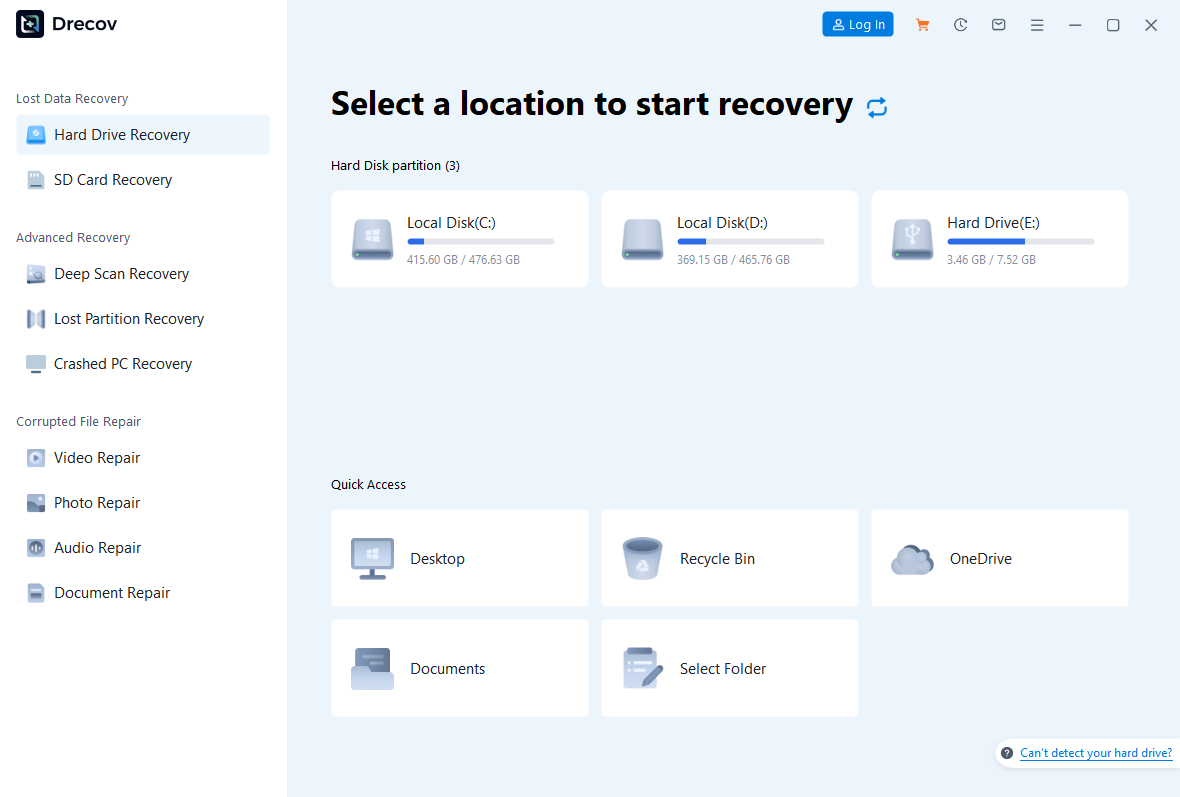
Step 1: Open Drecov and select the original location
Choose the disk, partition, or Lost Partition Recovery area where the files existed before the firmware change. Identify it by model and capacity rather than relying only on its drive letter.
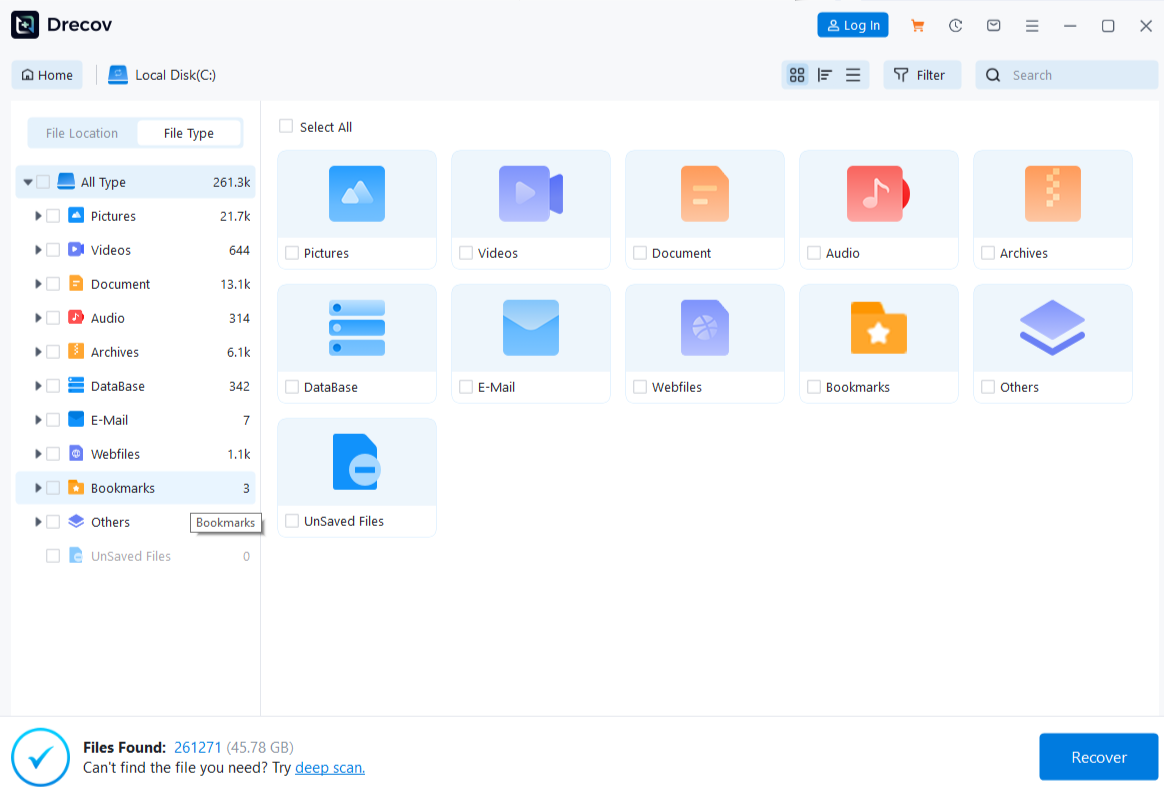
Step 2: Run Quick Scan and inspect familiar paths
Start with Quick Scan. Look for the previous user profile, Desktop, Documents, project folders, and expected filenames. Filter by type, name, date, or original path to reduce noise.
Step 3: Use Deep Scan only when the drive remains stable
If Quick Scan misses the required files and the source stays consistently detected, continue with Deep Scan. Stop if the device disconnects, overheats, clicks, or develops serious read errors.
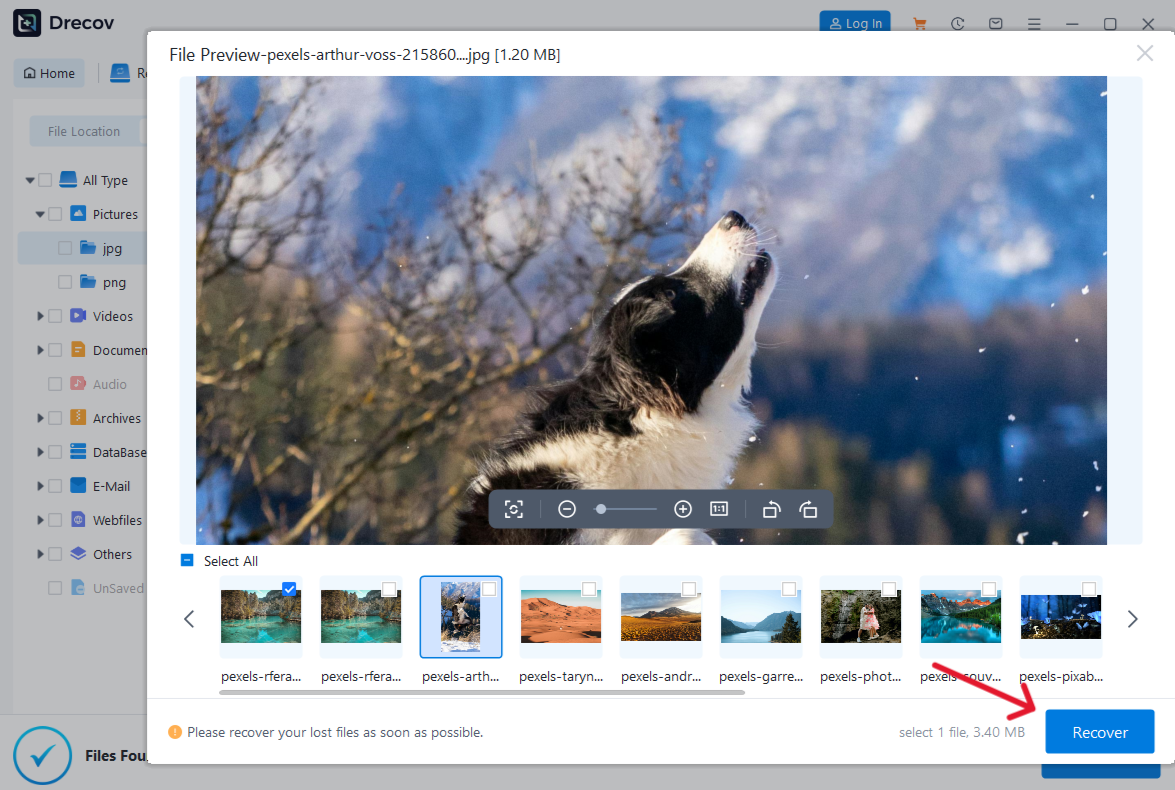
Step 4: Preview, recover elsewhere, and verify
Preview representative supported files, understanding that a preview cannot certify every page, frame, or archive member. Recover selected items to the prepared healthy drive, never to the source. Check Drecov Folder or Recovery Folder if the output is not where expected. Open and sample the recovered data before repairing boot files, converting partitions, resetting Windows, formatting, or reusing the source disk.
⚠ Warning: Install it on a drive different from the one where your data was lost to prevent overwriting.
Verify the Result Before Restoring Custom Settings
After Windows starts, open Disk Management without changing anything and confirm that expected disks, partitions, and capacities are present. Restart twice to ensure the boot selection persists. Test any feature you depend on, such as virtualization, sleep, external displays, or RAID management. Then restore custom firmware settings one at a time.
Microsoft describes Windows Recovery Environment as the built-in location for Startup Repair, Startup Settings, Command Prompt, System Restore, and UEFI Firmware Settings. Use recovery tools for a Windows startup problem; use firmware setup for boot order and hardware-level configuration. Keeping those roles separate prevents an intact disk from being reformatted to solve a configuration mismatch.
FAQ
Does resetting BIOS delete Windows or personal files?
Normally no. It resets firmware settings. Windows may fail to boot if boot mode, storage mode, or security settings change, even while the files remain intact.
Is clearing CMOS the same as loading BIOS defaults?
Both aim to restore setup values, but clearing CMOS uses a hardware procedure. Loading defaults inside UEFI is usually easier to document and review before saving.
Why does BitLocker ask for a recovery key afterward?
Firmware security changes can alter the measured boot state. BitLocker then requests proof that an authorized person is starting the encrypted Windows installation.
Can resetting BIOS fix a PC that will not boot?
It can correct a bad firmware setting, but it can also change a previously correct storage or boot option. Record the old values and interpret the drive-detection state first.
Should I update BIOS immediately after resetting it?
No automatic connection exists between the two actions. Update firmware only for a documented reason, with stable power, the correct package, and the manufacturer’s instructions.
Conclusion
What does resetting BIOS do? It restores firmware configuration, not the contents of your personal folders. The practical risk lies in changed boot order, storage mode, UEFI or Legacy selection, Secure Boot, and TPM behavior, which can make intact Windows data appear unavailable. Photograph the original settings and secure the BitLocker key before resetting. If restoring the correct configuration does not reveal files on a stable detected drive, Drecov can scan the original location and recover verified candidates to another healthy device. Confirm the data before any partition repair, format, or Windows reset.
⚠ Warning: Install it on a drive different from the one where your data was lost to prevent overwriting.





