







Linux provides multiple commands for managing files and folders, but many users encounter an error when attempting to remove a directory. Instead of deleting the folder, the terminal returns a message stating that the directory is not empty. This situation is common among Linux beginners and even experienced administrators.
The error often appears when using the rmdir command because this utility is designed to remove only empty directories. If a folder contains files, hidden items, or nested subdirectories, Linux will prevent the deletion operation.
This guide explains why the error occurs, how to identify the underlying cause, and several proven methods to resolve it safely. Whether you need to remove non empty directory structures or learn how to delete non empty directory in linux, the solutions below will help you complete the task without risking important data.
Understanding the “Rmdir Directory Not Empty” Error in Linux
What Does “Directory Not Empty” Mean in Linux?
A directory in Linux acts as a container for files and subfolders. When you execute the rmdir command, Linux first checks whether the target folder contains any objects.
If even one file remains inside the directory, the operating system refuses to remove it and displays an error similar to:
rmdir: failed to remove 'foldername': Directory not empty
This behavior exists to prevent accidental data loss. Unlike some graphical file managers that automatically delete nested content, rmdir follows a strict rule: the directory must contain absolutely nothing.
For example:
mkdir testfolder
rmdir testfolder
The command succeeds because the folder is empty.
However:
mkdir testfolder
touch testfolder/file1.txt
rmdir testfolder
The deletion fails because a file exists inside the directory.
This is one of the most common causes behind the rmdir directory not empty error message.
Why the rmdir Command Fails When a Folder Contains Files
The purpose of rmdir is simplicity and safety. Linux developers designed it to remove only empty folders.
When you run:
rmdir myfolder
Linux performs several checks:
- Verify the folder exists.
- Confirm the user has permission.
- Ensure no files are stored inside.
- Confirm no subdirectories remain.
If any content is detected, the command stops immediately.
This approach reduces the chance of accidentally deleting important information. For this reason, many system administrators prefer using rmdir whenever they know a folder should already be empty.
Difference Between rmdir and rm Commands
Many users confuse rmdir with rm.
The two commands have very different purposes:
| Command | Purpose |
|---|---|
| rmdir | Remove empty directories only |
| rm | Remove files |
| rm -r | Remove folders and contents recursively |
| rm -rf | Force deletion of folders and contents |
For example:
rm -r myfolder
removes the folder and everything inside it.
By contrast:
rmdir myfolder
works only when the folder contains no files or subfolders.
Understanding this distinction helps avoid confusion when dealing with directory not empty rmdir errors.
Common Scenarios That Trigger the Error
Several situations can cause Linux to report that a directory is not empty.
Common examples include:
- Remaining log files
- Hidden configuration files
- Nested folders
- Temporary application files
- Mounted storage directories
- Incomplete software uninstallations
A directory may appear empty when viewed through a graphical file manager, but hidden files can still exist.
For example:
ls -la
might reveal:
.hiddenfile
.cache
.config
Because these files remain, Linux treats the directory as non-empty.
Why You Cannot Remove a Non-Empty Directory
Subdirectories Still Exist Inside the Target Folder
One of the most frequent causes is the presence of additional folders.
Consider the following structure:
project/
├── docs/
├── images/
└── backup/
Even if all files inside those folders have been removed, the subdirectories themselves still exist.
Attempting:
rmdir project
produces an error because Linux detects the child directories.
To identify nested folders, run:
find project -type d
This command lists every directory beneath the target folder.
After removing those directories, the parent folder can be deleted successfully.
Hidden Files Prevent Directory Removal
Linux stores many files with names beginning with a period.
Examples include:
.bash_history
.gitignore
.env
.config
These files remain invisible in normal directory listings.
Many users mistakenly believe a folder is empty because they use:
ls
instead of:
ls -la
The second command displays all hidden items.
Before attempting to delete directory not empty issues, always inspect hidden content first.
Permission Restrictions and Ownership Issues
Linux security settings may prevent deletion even when the folder appears empty.
For example:
drwx------ root root
indicates that only the root account can modify the directory.
Attempting removal as a standard user may generate permission-related errors.
To inspect ownership:
ls -ld foldername
To view your current account:
whoami
If permissions are insufficient, administrators may need:
sudo rmdir foldername
or
sudo rm -r foldername
depending on the situation.
File System Errors That Cause Deletion Problems
Occasionally, storage corruption prevents normal folder operations.
Symptoms include:
- Directories that cannot be opened
- Missing file information
- Inconsistent folder sizes
- Persistent deletion failures
File system damage may occur after:
- Unexpected power loss
- Disk failures
- Forced shutdowns
- Hardware problems
In such situations, repairing the file system often resolves the issue.
Processes Currently Using Files in the Directory
Applications can lock files while they remain active.
Examples include:
- Web servers
- Databases
- Backup software
- File synchronization tools
If a process is using files within a directory, deletion attempts may fail.
Administrators can identify active processes with:
lsof +D foldername
or
fuser -v foldername
Once the process stops, directory removal becomes possible.
⚠️Warning: Never terminate critical system processes without confirming their purpose.
How to Delete a Non-Empty Directory in Linux
Method 1: Repeat the rmdir Command Until the Directory Becomes Empty
Test Environment
- Ubuntu 24.04 LTS
- GNOME Terminal
- Bash 5.2
In some situations, only empty subdirectories remain.
For example:
project/
└── oldlogs/
If oldlogs contains no files, remove it first:
rmdir project/oldlogs
Then remove the parent directory:
rmdir project
For deeply nested structures:
folder1/
└── folder2/
    └── folder3/
Delete from the bottom upward:
rmdir folder1/folder2/folder3
rmdir folder1/folder2
rmdir folder1
This method works well when only empty folders remain and no files are present.
Because it avoids recursive deletion, it provides an additional layer of safety.
Method 2: Manually Delete Files Before Removing the Directory
Test Environment
- Ubuntu 24.04 Desktop
- GNOME Files Manager
Graphical tools can simplify folder cleanup.
Steps:
- Open Files Manager.
- Navigate to the target folder.
- Enable hidden file display using:
Ctrl + H - Delete visible content.
- Empty the Trash.
- Remove the folder.
This approach is particularly useful for users who prefer not to work entirely from the command line.
Checking hidden files is important because they often cause remove directory linux not empty situations.
For command-line users:
rm file1.txt
rm file2.txt
After all files are removed:
rmdir foldername
The folder should now delete successfully.
Method 3: Use rm -r to Remove Directories and Their Contents
Test Environment
- Debian 12
- Bash Terminal
When a directory contains files and subdirectories, recursive deletion is usually the most efficient solution.
Command:
rm -r foldername
The -r option means recursive.
Linux will:
- Enter the folder.
- Remove files.
- Remove subdirectories.
- Delete the parent folder.
Example:
rm -r project
Directory structure before deletion:
project/
├── report.docx
├── images/
└── backup/
After execution, the entire structure disappears.
This method is commonly used when deleting a non empty directory in linux because it removes all nested content automatically.
Unlike rmdir, recursive deletion does not require manual cleanup beforehand.
⚠️Warning: Double-check the folder path before executing recursive deletion commands.
Method 4: Force Delete a Directory Using rm -rf
Test Environment
- Ubuntu Server 24.04
- Root User Access
Sometimes write-protected files prevent normal recursive deletion.
In those situations:
rm -rf foldername
The options mean:
- -r = recursive
- -f = force
Linux removes content without asking for confirmation.
Example:
rm -rf backup_old
This command immediately deletes the folder and everything inside it.
System administrators often use this approach when dealing with stubborn folders that refuse standard deletion methods.
However, caution is essential because force deletion bypasses many safeguards.
⚠️Warning: A single typing mistake with rm -rf can permanently erase important system data.
Method 5: Repair File System Issues with FSCK
Test Environment
- Ubuntu 24.04 LTS
- Ext4 File System
- Administrator Privileges
If directory deletion continues to fail even after confirming permissions and removing files, the underlying issue may be related to file system corruption.
Storage devices occasionally develop inconsistencies due to:
- Unexpected power outages
- Hardware failures
- Forced shutdowns
- Interrupted disk operations
These issues can leave orphaned directory entries or corrupted metadata, causing Linux to incorrectly report that a folder still contains data.
First, identify the partition associated with the directory:
df -h
Example output:
/dev/sda2
Unmount the partition:
sudo umount /dev/sda2
Run a file system check:
sudo fsck -f /dev/sda2
Linux scans the partition and repairs detected inconsistencies.
After the repair process finishes, remount the partition and attempt the deletion again.
sudo mount /dev/sda2 /mnt
Then retry:
rm -r foldername
In many cases, repairing the file system resolves persistent linux remove directory not empty issues that standard deletion commands cannot handle.
⚠️Warning: Always back up critical data before running file system repair operations.
Method 6: Recover Important Files Before Force Deletion with PandaOffice Drecov
Test Environment
- Ubuntu 24.04
- External HDD
- SSD Storage Device
Many users rush to execute force-deletion commands without realizing valuable files may still exist inside the target folder.
Before removing a problematic directory, it is wise to verify whether important documents, images, videos, or project files remain inside.
PandaOffice Drecov can help identify recoverable or overlooked files before permanent deletion occurs.
A typical workflow includes:
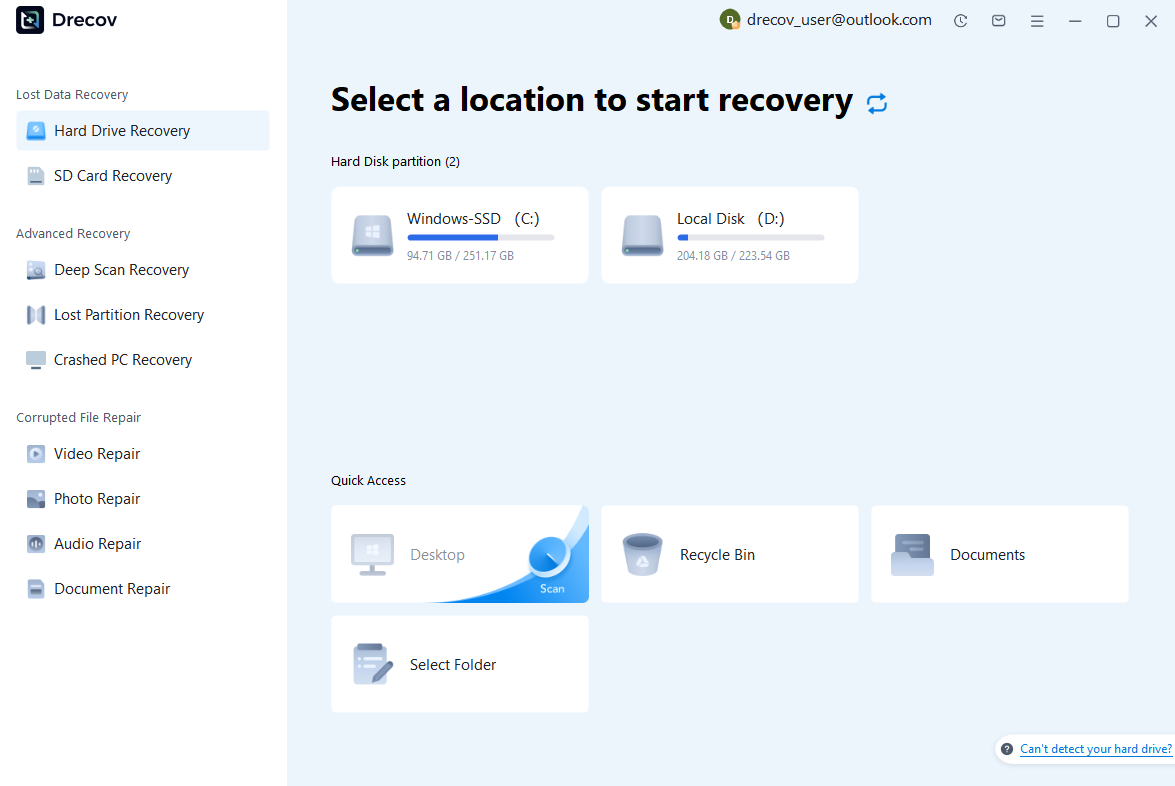
Step 1: Scan the Storage Device (SD Card / Hard Drive / USB)
Connect your device (SD card, HDD/SSD, or USB drive) to your computer and launch PandaOffice Drecov. Select the target device and start the scan. The software will perform a quick scan and deep scan to detect lost or deleted data.
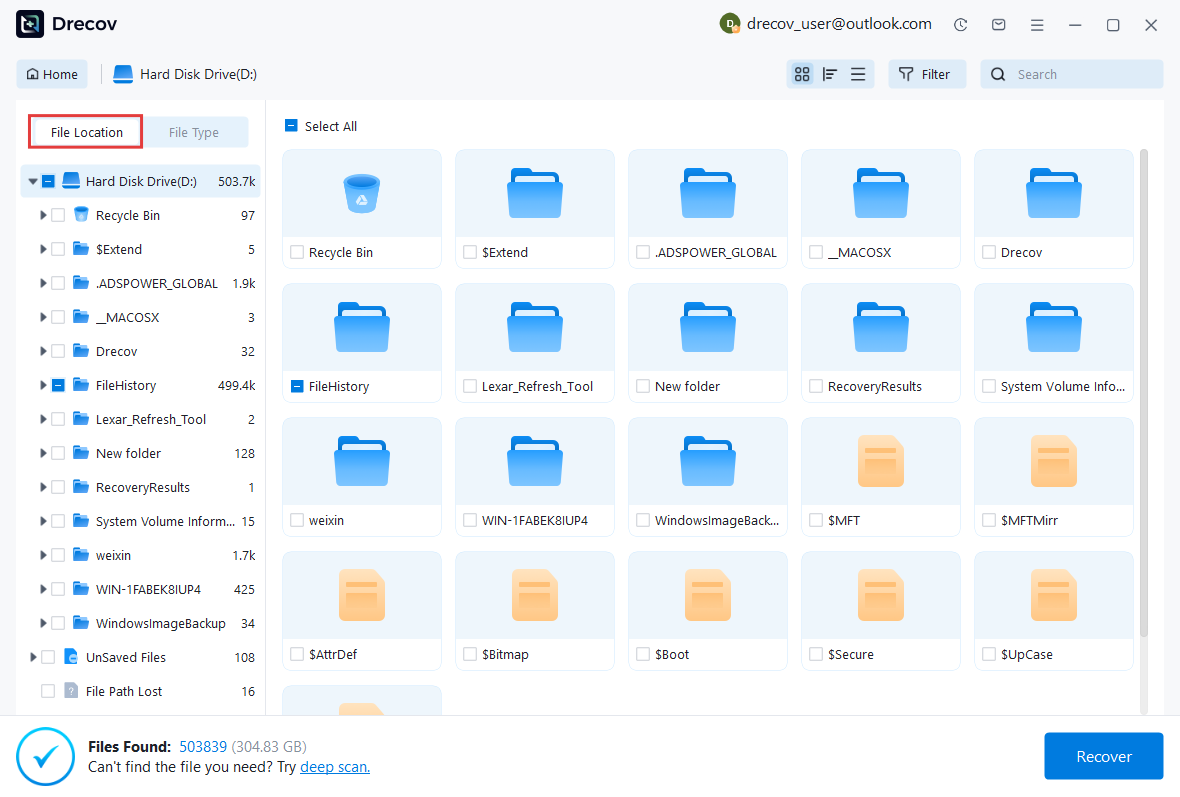
Step 2: Locate and Preview Lost Files
After scanning, browse the detected files and use the preview feature to check recoverable data. You can preview documents (Word, Excel, PDF), photos, and videos to ensure file integrity before recovery.
Step 3: Recover and Save to a New Location
Select the files you want to restore and click recover. Save all recovered data to a different drive or location (not the original device) to avoid overwriting lost data.

Why Choose PandaOffice Drecov Recovery Software?
PandaOffice Drecov offers a fast, secure, and user-friendly solution for recovering lost files across multiple scenarios. Whether you need email recovery, ZIP File Recovery, format data recovery, or help to recover deleted drafts Outlook, the software provides reliable recovery performance for both personal and business users.
PandaOffice Drecov supports recovery from formatted hard drives, SSDs, USB drives, SD cards, and external storage devices. Its advanced scanning engine can locate deleted archives, damaged ZIP files, lost Outlook drafts, and accidentally removed documents with high accuracy. For users searching for how to find deleted messages in Teams, PandaOffice Drecov can also help recover exported chat files, attachments, and related local cache data when available.
Key advantages include:
- Deep scan technology for complex data loss situations
- Support for emails, archives, videos, photos, and office documents
- Recovery from accidental deletion, formatting, corruption, and system crashes
- Easy preview before restoring files
- Compatible with Windows and multiple storage devices
Unlike complicated enterprise recovery tools, PandaOffice Drecov keeps the recovery process simple. Users can scan, preview, and restore files in just a few steps without technical expertise.
Whether you are dealing with lost Outlook drafts, corrupted ZIP archives, formatted drives, or missing communication data, PandaOffice Drecov provides an efficient and practical recovery experience designed to minimize downtime and protect important files.
Disk imaging ensures that even partially corrupted drives can be preserved. This is often the safest approach before attempting any aggressive repair operations for fix bad sectors on hard drive situations.
⚠️Warning: Recovery success rates are generally higher before new data overwrites the storage device.
Advanced Troubleshooting for Stubborn Directory Deletion Errors
Find Hidden Files Using ls -la
One of the most overlooked causes of deletion failures is hidden content.
Many Linux files begin with a dot (.), making them invisible during standard directory listings.
A user may see an apparently empty folder and still encounter a deletion error.
To display all files:
ls -la foldername
Example output:
.
..
.git
.env
.cache
These hidden files prevent rmdir non empty directory operations from succeeding.
Delete the hidden items:
rm -rf foldername/.git
rm -rf foldername/.cache
Then attempt removal again.
This simple check resolves a surprising number of directory deletion problems.
Identify Active Processes with lsof
Sometimes applications are still accessing files within the directory.
Examples include:
- Apache
- Nginx
- MySQL
- Docker containers
- Backup services
To identify open files:
lsof +D foldername
Example:
nginx 1234 root file.log
The output reveals which process is using the directory.
After identifying the process, stop it appropriately:
sudo systemctl stop nginx
Then retry the deletion operation.
This method is particularly effective when deletion errors appear unexpectedly on server environments.
Locate File Locks with fuser
Another useful diagnostic tool is fuser.
Run:
fuser -v foldername
Example output:
foldername: 2543c
The process ID identifies the application currently using files in the folder.
Terminate the process if appropriate:
sudo kill 2543
Afterward, remove the directory.
Unlike general file searches, fuser focuses specifically on resource usage and can quickly reveal why a folder remains inaccessible.
Fix Ownership Problems with chown
Ownership mismatches frequently occur when files are created by root or transferred between systems.
Check ownership:
ls -ld foldername
Example:
drwx------ root root
If your account lacks ownership, modify it:
sudo chown -R username:username foldername
Verify changes:
ls -ld foldername
After obtaining ownership, retry the deletion command.
Correct ownership settings often resolve stubborn permission-related directory issues.
Adjust Permissions with chmod
A directory may also be protected by restrictive permission settings.
Check current permissions:
ls -l
Example:
dr-------- foldername
Grant write permissions:
chmod -R u+w foldername
Or provide broader permissions when appropriate:
chmod -R 755 foldername
Once write access is available, the directory can usually be removed normally.
Be cautious when modifying permissions on production systems to avoid introducing security vulnerabilities.
Handle Mounted Directories Correctly
Directories used as mount points require special attention.
For example:
/mnt/backup
may represent an active storage device.
Attempting to remove such a directory can trigger errors.
Check mounted file systems:
mount | grep foldername
If the directory is mounted:
sudo umount /mnt/backup
After unmounting, deletion should proceed normally.
Mounted directories are a common cause of confusion in server and virtualization environments.
Verify Symbolic Links Before Removal
Symbolic links can sometimes create misleading directory structures.
List links:
ls -l
Example:
backup -> /mnt/storage/backup
Instead of deleting the linked destination, remove the symbolic link itself:
rm backup
Understanding symbolic links helps prevent accidental removal of the wrong directory.
Frequently Asked Questions About Linux Directory Removal
How Do I Remove a Non Empty Directory in Linux?
The most common method is:
rm -r directory_name
This recursively removes all files and subdirectories.
What Causes the “Directory Not Empty” Error?
Common causes include:
- Existing files
- Hidden files
- Nested directories
- Permission restrictions
- Active processes
- File system corruption
What Is the Difference Between rm -r and rm -rf?
rm -r performs recursive deletion.
rm -rf performs recursive deletion and suppresses confirmation prompts while forcing removal of protected files.
Can Hidden Files Prevent Folder Deletion?
Yes.
Files beginning with a period (.) are hidden by default and frequently trigger deletion failures.
Use:
ls -la
to reveal them.
Why Does rmdir Fail Even When the Folder Looks Empty?
Graphical file managers often hide configuration files and metadata.
The directory may contain hidden files or subdirectories that are not immediately visible.
Can I Recover Files After Using rm -rf?
Recovery may be possible if data has not been overwritten.
Success rates depend on:
- Storage activity after deletion
- File system type
- Drive condition
Using a recovery tool as soon as possible generally improves results.
When Should I Use rmdir Instead of rm?
Use rmdir when:
- The directory is already empty.
- You want an additional safety check.
- You wish to avoid accidental deletion of files.
Use rm -r when the folder contains files or subdirectories.
Final Thoughts on Fixing Linux Directory Deletion Errors
Key Takeaways for Safe Directory Removal
The directory not empty error is usually straightforward to resolve once the underlying cause is identified.
In most cases, the problem stems from:
- Remaining files
- Hidden content
- Nested directories
- Permission issues
- Active processes
Linux intentionally prevents accidental deletion when using rmdir, which is why the command often fails when content remains inside a folder.
For simple situations, manually removing files may be sufficient. For larger directory structures, recursive deletion provides a faster solution. Advanced troubleshooting tools such as ls, lsof, fuser, chmod, chown, and fsck can help diagnose more complex scenarios.
Choosing the Right Deletion Method
Different situations call for different approaches:
| Situation | Recommended Method |
|---|---|
| Empty directory | rmdir |
| Small folder with a few files | Manual deletion |
| Directory with subfolders | rm -r |
| Protected files | rm -rf |
| Permission issues | chown / chmod |
| Corrupted file system | fsck |
| Important files may exist | PandaOffice Drecov |
Selecting the appropriate method reduces risk and improves efficiency.
Preventing Future Directory Removal Problems
Good file management practices can help avoid deletion errors in the future.
Recommended habits include:
- Regularly organizing files
- Removing temporary folders
- Monitoring storage health
- Maintaining proper permissions
- Performing periodic backups
- Checking hidden files before deletion
By understanding how Linux handles directory structures, you can confidently manage storage and resolve issues related to deleting non empty directory in linux without unnecessary frustration.






