







Understanding SD Card Lock and Unlock Mechanisms
What SD Card Lock and Unlock Actually Means
Many users become confused when they receive a write-protection message while trying to save photos, videos, or documents to an SD card. In most cases, this issue relates to the sd card lock and unlock mechanism. Traditional SD cards include a small sliding switch on the side that signals devices whether writing should be allowed.
When the card is in the locked position, devices may prevent users from modifying, deleting, or adding files. If the card is unlocked, normal read-and-write operations can continue. However, modern storage issues are not always caused by the physical switch. Software settings, file system errors, and hardware faults can produce the same symptoms.
Understanding the difference between a physical lock and digital write protection is essential when troubleshooting. Some users believe the switch directly controls the card’s memory, but it actually serves as an indicator that compatible devices recognize.
Whether you’re dealing with a missing switch, a damaged adapter, or a software restriction, understanding sd card lock unlock behavior helps identify the correct solution and avoid unnecessary formatting or data loss.
Why an SD Card May Appear Locked
An SD card can appear locked even when the switch is not engaged. Several conditions may trigger write protection warnings.
Common causes include:
- File system corruption
- Registry restrictions in Windows
- Damaged SD card adapters
- Hardware defects
- Read-only storage attributes
- Malware-related permission changes
In these situations, the card may behave as if it is physically locked even though the switch position is correct.
Users often search for how to unlock the SD card because they assume the lock switch is responsible. In reality, many lock-related issues originate within the operating system rather than the card itself.
Diagnosing the true source of the restriction can save time and prevent accidental data loss.
Differences Between Physical and Software-Based Protection
Physical lock mechanisms and software write protection achieve similar results but operate differently.
Physical protection:
- Controlled by the card switch
- Recognized by compatible card readers
- Prevents modifications
Software protection:
- Controlled by the operating system
- Uses file permissions or attributes
- May affect specific devices only
Understanding these differences is important when unlocking an SD card because the solution depends on the underlying cause.
A physically locked card often requires hardware adjustments, while software restrictions can typically be removed through system tools or storage management utilities.
⚠️ Warning: Do not format an SD card before verifying whether important files remain accessible.
Common Reasons an SD Card Becomes Locked
Missing or Damaged Lock Switch on the SD Card
One of the most common complaints involves a missing or broken lock switch. Full-size SD cards use a small plastic slider that can become damaged after years of use.
Signs of switch damage include:
- Loose movement
- Missing slider
- Inconsistent lock behavior
- Frequent write-protection errors
When the switch is damaged, some card readers permanently interpret the card as locked. This issue frequently affects older storage cards used in cameras and media devices.
Users searching for how do I unlock a SD card without a switch often encounter this exact situation.
In some cases, replacing the adapter or using a different card reader resolves the issue immediately.
Write Protection Settings in Windows
Windows includes storage management settings that can mark devices as read-only.
These restrictions may result from:
- Administrative policies
- Registry modifications
- Disk attributes
- Third-party software
When this occurs, the SD card appears locked despite being physically unlocked.
Symptoms include:
- Files cannot be deleted
- New files cannot be copied
- Formatting attempts fail
Fortunately, built-in tools such as DiskPart can remove many software-based restrictions.
Users researching how do you unlock SD card problems on Windows often discover that the operating system itself is enforcing the write protection.
File System Errors and Corrupted Storage
Storage corruption can cause an SD card to enter a protective read-only state.
Possible triggers include:
- Improper removal
- Power interruptions
- Device crashes
- Damaged sectors
When corruption occurs, the operating system may block write operations to prevent additional damage.
This behavior can make users believe they need an SD card unlock procedure when the real issue is file system instability.
Repairing the file system often restores normal operation without requiring replacement hardware.
Device Compatibility Problems
Not all devices interpret SD card lock indicators in the same way.
Problems can arise from:
- Faulty card readers
- Outdated drivers
- Incompatible adapters
- Older hardware
A card that appears locked in one device may function normally in another.
Testing the card across multiple devices is a simple but effective diagnostic step.
Users asking how do you unlock an SD card should always verify whether the problem follows the card or remains limited to a particular device.
When an SD Card Shows Locked Even After Being Unlocked
Occasionally, users move the switch to the unlocked position but continue receiving write-protection errors.
Possible causes include:
- Switch misalignment
- Internal card damage
- Reader detection errors
- Software restrictions
These situations often require additional troubleshooting beyond simply adjusting the switch.
Understanding the distinction helps determine whether hardware repair, software correction, or data recovery should be prioritized.
How to Unlock an SD Card Without a Switch
Method 1. Recover Important Files with PandaOffice Drecov Before Removing Write Protection
Test Environment
- Windows 11 Pro
- 64GB SD Card
- USB Card Reader
- Write-Protected Storage Device
Before attempting repairs, formatting, or advanced troubleshooting, securing important data is strongly recommended.
PandaOffice Drecov helps recover photos, videos, documents, and other files from SD cards that are inaccessible, corrupted, or accidentally formatted.
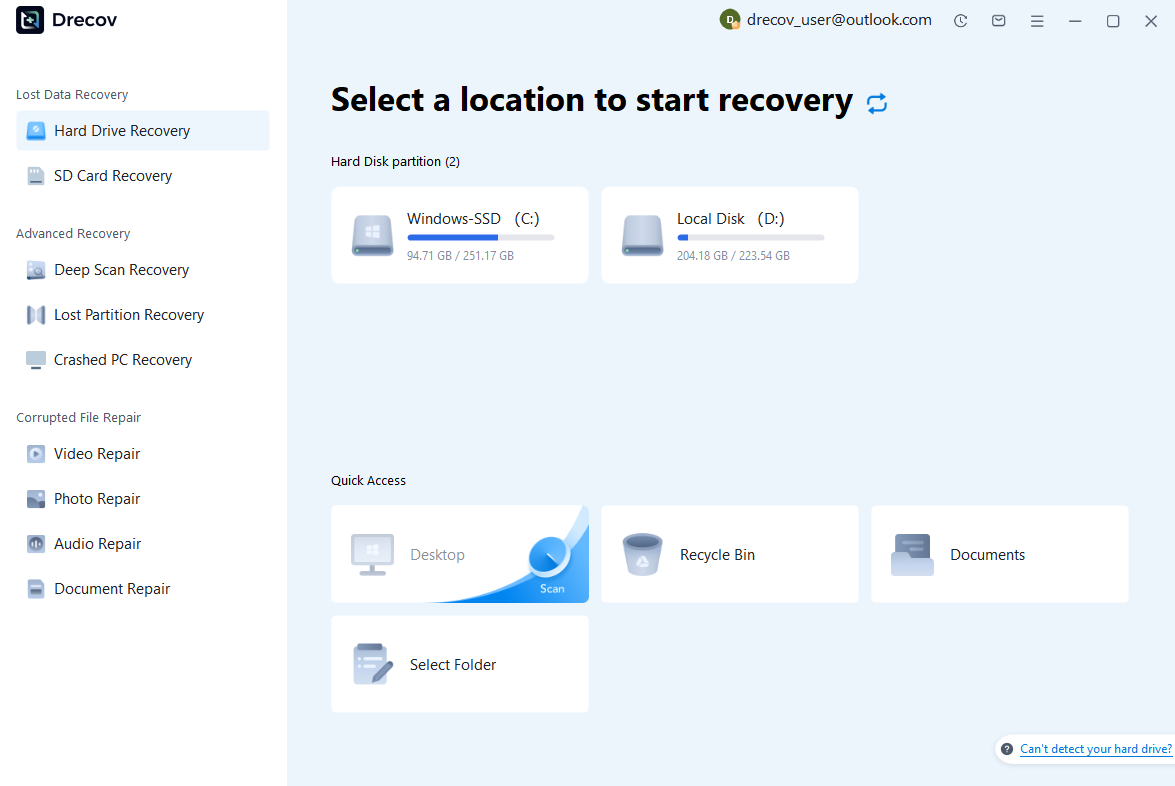
Step 1: Scan the Storage Device (SD Card / Hard Drive / USB)
Connect your device (SD card, HDD/SSD, or USB drive) to your computer and launch PandaOffice Drecov. Select the target device and start the scan. The software will perform a quick scan and deep scan to detect lost or deleted data.
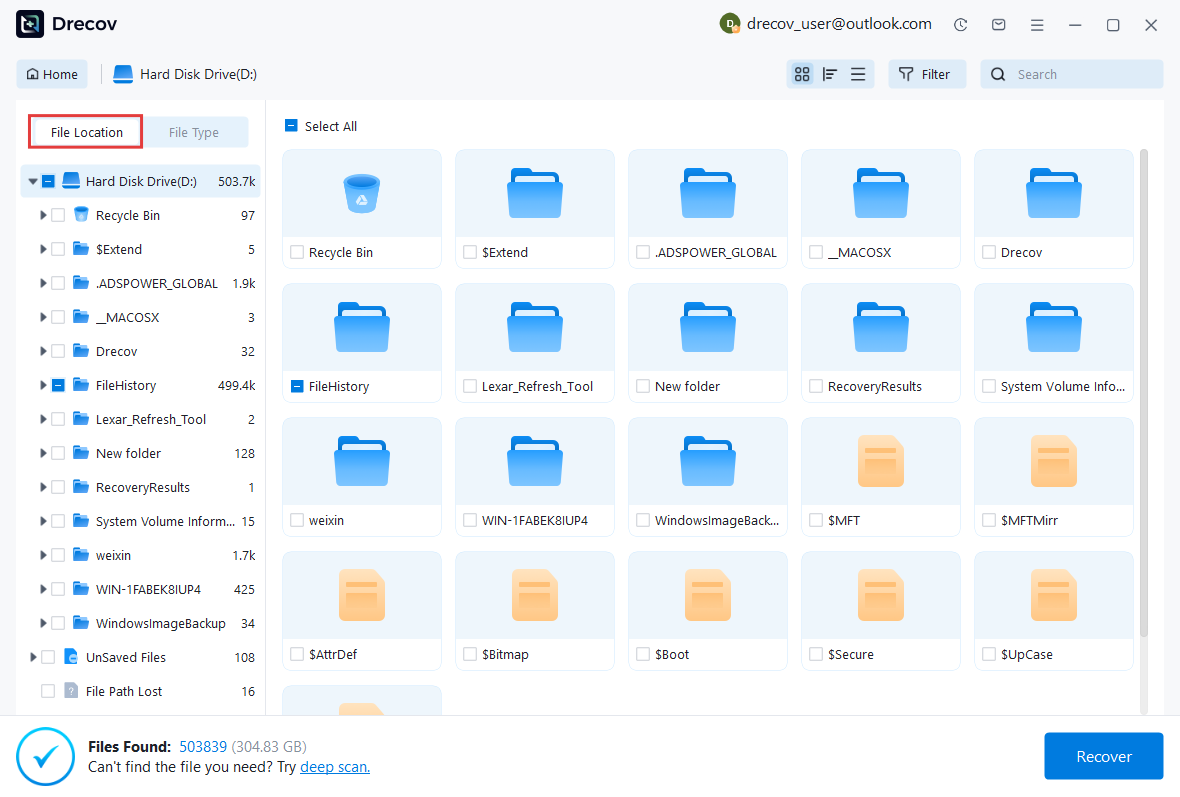
Step 2: Locate and Preview Lost Files
After scanning, browse the detected files and use the preview feature to check recoverable data. You can preview documents (Word, Excel, PDF), photos, and videos to ensure file integrity before recovery.
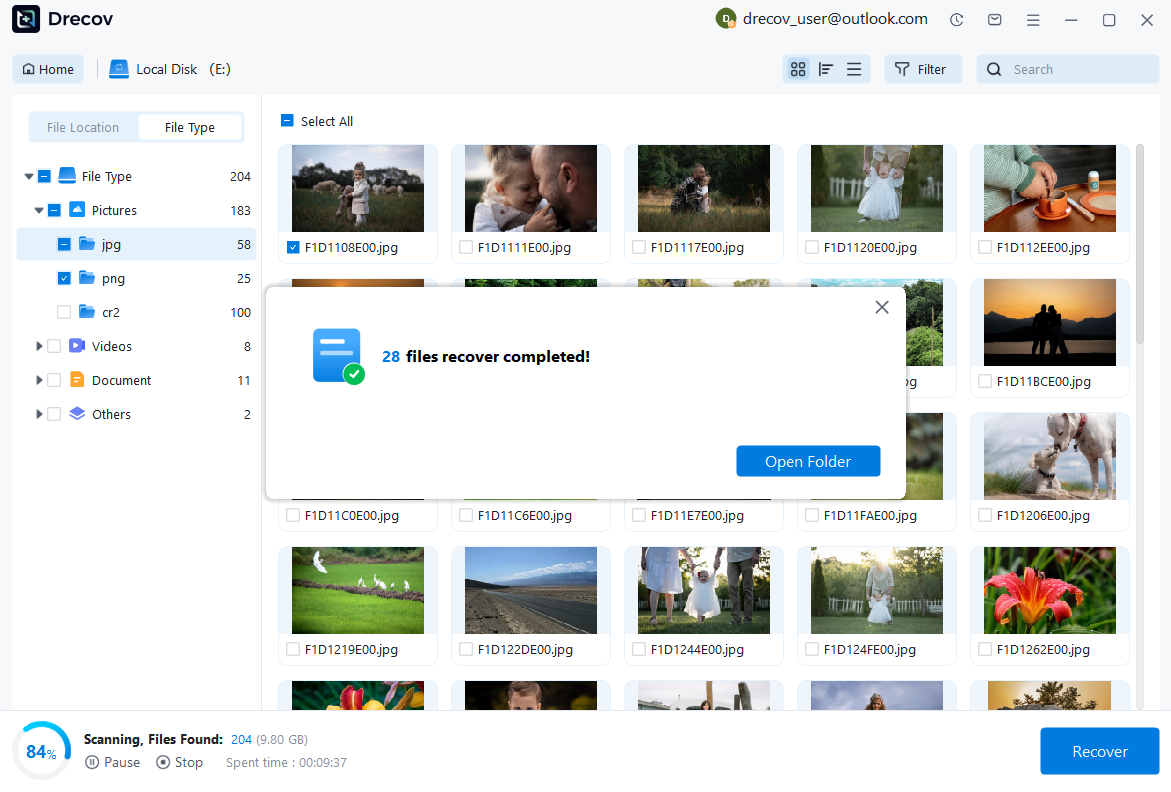
Step 3: Recover and Save to a New Location
Select the files you want to restore and click recover. Save all recovered data to a different drive or location (not the original device) to avoid overwriting lost data.
Why Choose PandaOffice Drecov Recovery Software?
PandaOffice Drecov offers a fast, secure, and user-friendly solution for recovering lost files across multiple scenarios. Whether you need email recovery, ZIP File Recovery, format data recovery, or help to recover deleted drafts Outlook, the software provides reliable recovery performance for both personal and business users.
PandaOffice Drecov supports recovery from formatted hard drives, SSDs, USB drives, SD cards, and external storage devices. Its advanced scanning engine can locate deleted archives, damaged ZIP files, lost Outlook drafts, and accidentally removed documents with high accuracy. For users searching for how to find deleted messages in Teams, PandaOffice Drecov can also help recover exported chat files, attachments, and related local cache data when available.
Key advantages include:
- Deep scan technology for complex data loss situations
- Support for emails, archives, videos, photos, and office documents
- Recovery from accidental deletion, formatting, corruption, and system crashes
- Easy preview before restoring files
- Compatible with Windows and multiple storage devices
Unlike complicated enterprise recovery tools, PandaOffice Drecov keeps the recovery process simple. Users can scan, preview, and restore files in just a few steps without technical expertise.
Whether you are dealing with lost Outlook drafts, corrupted ZIP archives, formatted drives, or missing communication data, PandaOffice Drecov provides an efficient and practical recovery experience designed to minimize downtime and protect important files.
Disk imaging ensures that even partially corrupted drives can be preserved. This is often the safest approach before attempting any aggressive repair operations for fix bad sectors on hard drive situations.
⚠️ Warning: Save recovered files to another drive rather than the affected SD card.
Method 2. Unlock an SD Card Using DiskPart Commands
Test Environment
- Windows 10/11
- Administrator Account
- SD Card Recognized by System
DiskPart can remove read-only attributes that cause write-protection errors.
Step 1. Open Command Prompt as Administrator.
Step 2. Type:
diskpart
Step 3. Enter:
list disk
Step 4. Select the SD card:
select disk X
Step 5. Remove read-only protection:
attributes disk clear readonly
After completion, reconnect the card and test write access again.
This method is particularly effective when users need how unlock SD card solutions caused by software restrictions.
Method 3. Remove Write Protection Through Windows Registry Editor
Test Environment
- Windows 11
- Administrative Privileges
- SD Card Connected
Registry settings occasionally enforce write protection on removable storage devices.
Step 1. Press Win + R.
Step 2. Type:
regedit
Step 3. Navigate to the StorageDevicePolicies key.
Step 4. Locate the WriteProtect entry.
Step 5. Set its value to 0.
Restart the computer and reconnect the SD card.
Many users looking for how to unlock SD card solutions discover that registry modifications resolve persistent write-protection errors.
Method 4. Repair File System Errors with CHKDSK
Test Environment
- Windows 10/11
- SD Card Accessible by Drive Letter
- Administrator Permissions
Corrupted file systems frequently trigger write-protection behavior.
Step 1. Open Command Prompt as Administrator.
Step 2. Enter:
chkdsk X: /f
Replace X with the SD card drive letter.
Step 3. Wait for the scan to complete.
Step 4. Review detected errors.
Step 5. Restart the system if prompted.
This process repairs logical file system issues and may restore full read/write access.
Users researching how to unlock an SD card often find that file system repair resolves the problem without requiring hardware replacement.
Method 5. Format the SD Card to Remove Lock Restrictions
Test Environment
- Windows 10/11 or macOS
- SD Card Detected by the Operating System
- Important Files Already Backed Up or Recovered
- Card Reader Functioning Properly
If software-based write protection cannot be removed through DiskPart or registry modifications, formatting may be the final solution. Formatting rebuilds the file system and removes many logical errors that cause storage devices to behave as locked.
To format the SD card:
Step 1. Connect the SD card to your computer.
Step 2. Open File Explorer and locate the card.
Step 3. Right-click the SD card and select Format.
Step 4. Choose a compatible file system such as FAT32 or exFAT.
Step 5. Start the formatting process and wait for completion.
After formatting, reconnect the card and test whether writing is possible.
Many users searching for how to unlock sd memory card solutions ultimately discover that severe file system corruption was preventing normal operation.
⚠️ Warning: Formatting erases existing data. Ensure important files have been recovered or backed up before proceeding.
Method 6. Unlock a Micro SD Card Using Android Device Settings
Test Environment
- Android Smartphone or Tablet
- microSD Card Installed
- Device Storage Permissions Enabled
When users ask how to unlock micro SD cards, the issue is often related to Android storage settings rather than a physical lock mechanism.
To check Android settings:
Step 1. Open Settings on the Android device.
Step 2. Navigate to Storage.
Step 3. Select the microSD card.
Step 4. Review permissions and storage status.
Step 5. Remount or reconnect the card if necessary.
Some Android devices place cards in a restricted state when corruption is detected. Restarting the device and re-mounting the card may restore write access.
If write protection continues, testing the card on a computer can help determine whether the problem originates from the device or the card itself.
For users wondering how do you unlock a SD memory card on a phone, reviewing device-level storage controls should always be one of the first troubleshooting steps.
Method 7. Use a Different Card Reader or Adapter
Test Environment
- Multiple Card Readers Available
- SD Card Adapter Available
- Windows or macOS Computer
Card readers can occasionally misinterpret lock-switch positions or fail to communicate properly with storage devices.
To test this possibility:
Step 1. Remove the SD card from the current reader.
Step 2. Insert it into another reader or adapter.
Step 3. Connect the device to a different USB port.
Step 4. Check whether write access is restored.
Step 5. Attempt to create or modify a test file.
This simple procedure often resolves cases where the card appears locked despite being physically unlocked.
Users searching for how do I unlock SD card problems are frequently surprised to discover that the reader—not the SD card—is responsible.
Testing multiple readers helps isolate hardware compatibility issues and reduces unnecessary troubleshooting.
Method 8. Repair a Physically Damaged SD Card Lock Slot
Test Environment
- Full-Size SD Card
- Visual Access to Lock Slot
- Replacement Adapter Available
Physical damage can interfere with lock detection. If the slider is missing or damaged, some card readers permanently interpret the card as locked.
Signs of physical damage include:
- Missing lock tab
- Cracked housing
- Loose slider mechanism
- Visible wear around the switch area
Possible solutions include:
Step 1. Inspect the card carefully.
Step 2. Test the card in another reader.
Step 3. Use a replacement adapter if available.
Step 4. Ensure the switch area aligns correctly.
Step 5. Replace the card if damage is severe.
In some cases, users looking for how to unlock an SD memory card discover that physical wear has made reliable unlocking impossible.
If important files remain on the card, prioritize data recovery before attempting repairs.
How to Prevent SD Card Lock Problems in the Future
Handle SD Cards Carefully to Avoid Switch Damage
The small lock switch found on many SD cards is one of the most fragile components of the device.
To reduce the risk of damage:
- Avoid excessive force during insertion.
- Store cards in protective cases.
- Keep cards away from extreme temperatures.
- Prevent bending or impact damage.
Physical damage often leads to situations where users repeatedly search for sd card unlocked solutions despite the card being mechanically compromised.
Proper handling significantly extends card lifespan and reduces troubleshooting requirements.
Safely Eject Storage Devices Before Removal
Removing an SD card while files are being written can lead to corruption and unexpected write-protection behavior.
Best practices include:
- Close active applications first.
- Use the operating system’s eject function.
- Wait for file transfers to finish.
- Avoid disconnecting devices abruptly.
These simple habits help maintain file system integrity and reduce the likelihood of future lock-related errors.
Many write-protection issues stem from corruption caused by improper removal rather than actual locking mechanisms.
Monitor SD Card Health Regularly
Storage devices degrade over time. Monitoring card health can help identify problems before they become severe.
Warning signs include:
- Slow transfer speeds
- Frequent errors
- Missing files
- Random disconnections
- Repeated write-protection messages
Users concerned about sd card lock and unlock issues should periodically test cards using trusted diagnostic tools.
Replacing aging cards before failure occurs helps prevent data loss and reliability problems.
Create Backups Before Making System Changes
Backups provide protection against unexpected failures during troubleshooting.
Recommended backup practices include:
- Copy important files regularly.
- Maintain multiple backup locations.
- Store photos and videos in cloud services.
- Verify backup integrity periodically.
A reliable backup strategy minimizes risk regardless of whether the issue involves locking, corruption, or hardware failure.
⚠️ Warning: Never rely on a single SD card as the only storage location for important data.
Frequently Asked Questions About SD Card Unlocking
How Do I Unlock a SD Card Without a Lock Switch?
If the switch is missing, begin by determining whether the issue is software-related.
Possible solutions include:
- Using DiskPart
- Editing Windows Registry settings
- Running CHKDSK
- Testing another card reader
- Formatting the card
Users searching how do I unlock a SD card without a switch often find that write protection originates from software rather than physical hardware.
How Do You Unlock an SD Memory Card That Stays Write-Protected?
Persistent write protection may indicate:
- File system corruption
- Registry restrictions
- Hardware damage
- Card reader incompatibility
To resolve the issue:
- Remove read-only attributes.
- Repair file system errors.
- Test alternate readers.
- Format the card if necessary.
These steps frequently solve problems involving how do you unlock an SD card that remains inaccessible.
How to Unlock Micro SD Cards on Android Phones?
Users asking how to unlock micro SD storage on Android should:
- Check storage settings.
- Re-mount the card.
- Restart the device.
- Test the card on a computer.
If the card functions normally elsewhere, the problem may involve device-specific software settings rather than the card itself.
Why Is My SD Card Unlocked but Still Cannot Be Written To?
An SD card unlocked physically may still remain write-protected due to:
- Read-only disk attributes
- Corrupted file systems
- Hardware failure
- Registry restrictions
In these situations, software troubleshooting is typically required.
Testing the card on another system can help determine whether the issue follows the card or remains device-specific.
How Do You Unlock SD Card Access on Windows?
Windows provides several methods:
- DiskPart commands
- Registry modifications
- CHKDSK repairs
- Formatting tools
Users researching how unlock SD card issues on Windows often resolve the problem through DiskPart’s “clear readonly” command.
The appropriate solution depends on the source of the write protection.
Final Thoughts on Unlocking an SD Card Successfully
Best Methods for Removing SD Card Write Protection
Successfully restoring write access requires identifying whether the restriction originates from hardware or software.
Effective solutions include:
- Clearing read-only attributes
- Repairing file system errors
- Adjusting registry settings
- Testing alternate card readers
- Reformatting storage when necessary
Each approach addresses a different potential cause, making systematic troubleshooting important.
When Formatting Becomes Necessary
Formatting should generally be considered after less destructive methods have been attempted.
It is most effective when:
- File systems are severely corrupted
- Write-protection settings cannot be removed
- Compatibility issues persist
Although formatting often restores functionality, users should ensure important files are secured beforehand.
How to Keep an SD Card Unlocked and Working Properly
Long-term reliability depends on proper maintenance and storage habits.
To avoid future problems:
- Handle cards carefully.
- Use quality card readers.
- Maintain regular backups.
- Monitor storage health.
- Safely eject devices.
Understanding unlocking an SD card involves more than simply moving a switch. By addressing both hardware and software causes, users can restore write access, protect valuable files, and keep storage devices functioning reliably for years to come.





