







Have you ever tried copying a large movie or database backup to a flash drive? An annoying Windows error message often stops this process. It is incredibly frustrating when Windows claims the file is too big for the destination file system. This happens even when your drive shows gigabytes of free space. The issue is not a lack of physical storage capacity. Instead, older storage formatting standards cause this strict architectural limitation.
When confronting data transfer disruptions or storage reformatting errors, you risk losing access to your vital assets. In such critical moments, utilizing a dedicated recovery solution like PandaOffice Drecov data recovery software ensures that your important files remain safe and retrievable throughout any file system optimization process.
Understanding the Basics of the File Is Too Big for the Destination File System Error
To resolve this issue permanently, you must understand why a file is too large for destination file system parameters. The root cause of this error message is almost always the FAT32 file system format. Developed back in the Windows 95 era, FAT32 remains highly compatible. It works across various devices like televisions, game consoles, and multiple operating systems. However, FAT32 has a strict, hard-coded architectural limit. It cannot handle or store any individual file exceeding 4 gigabytes in size.
Consequently, suppose you move a single 4.5 GB video file onto a 64 GB FAT32 drive. Windows will block the transfer immediately. It then states that the file is too big for the destination file system. This happens despite having over 59 GB of empty space remaining on the drive. Common problem scenarios include exporting large video edits, downloading massive modern software installers, or backing up system images.
Why You Need Data Recovery Preparedness
Modifying your storage architecture to fix this issue can sometimes lead to accidental data loss if a format command is executed incorrectly. That is why having PandaOffice Drecov data recovery software ready on your computer is highly recommended.
Furthermore, users searching for answers to this issue often run into broader data storage complications. If you frequently work with browser data or external storage devices, you might also find it helpful to learn how to get your Google Chrome bookmarks back or review a comprehensive tutorial on how to recover deleted files from USB flash drive architectures safely.
Solutions to the File Is Too Big for the Destination File System Issues
Resolving this error requires changing how your storage device organizes data. Below are the primary methods to overcome this limitation, featuring both manual conversion techniques and professional data protection strategies.
Method 1: Convert FAT32 to NTFS via Command Prompt Without Data Loss
Windows provides a built-in command-line utility that converts a storage drive file system from FAT32 to NTFS without erasing the existing files. This is a very efficient way to bypass the error where a file is too large for destination file system boundaries.
- Step 1: Plug your target storage device into the computer and note its assigned letter in File Explorer, such as drive E:.
- Step 2: Open the Windows Start menu, type
cmdinto the search bar, right-click on Command Prompt, and choose Run as administrator. - Step 3: In the elevated command window, type the following command precisely, substituting
Ewith your specific drive letter:convert E: /fs:ntfs - Step 4: Press the Enter key to execute the command. The system will scan the drive, analyze the file structure, and convert it to NTFS. This file system supports individual files up to 16 terabytes, ensuring that the file is too large for destination file system warning will never appear again on this drive.
Method 2: Safe Recovery and Formatting with PandaOffice Drecov Data Recovery Software
While the Command Prompt tool is generally safe, file system modifications can fail. Sudden power interruptions, bad sectors, or software conflicts can cause a corrupted RAW partition. To guarantee absolute data safety, you should secure your files first. The most reliable approach is to export your existing data using PandaOffice Drecov data recovery software. Afterward, format the drive cleanly to a modern file system and restore your files.
PandaOffice Drecov utilizes powerful deep scanning algorithms. These algorithms parse storage sectors easily. Consequently, the software recovers data even when the underlying file system configuration is unstable, corrupted, or unreadable. It supports all major structures, including NTFS, FAT32, exFAT, and RAW storage formats.
⚠ Warning: Install it on a drive different from the one where your data was lost to prevent overwriting.
Step-by-Step Instructions to Secure Your Data:
- Step 1: Connect your problematic USB drive or external hard drive to a functional USB port. Launch the data recovery application. On the main dashboard, locate the target storage device under the external drives section, select it, and click the Scan button.
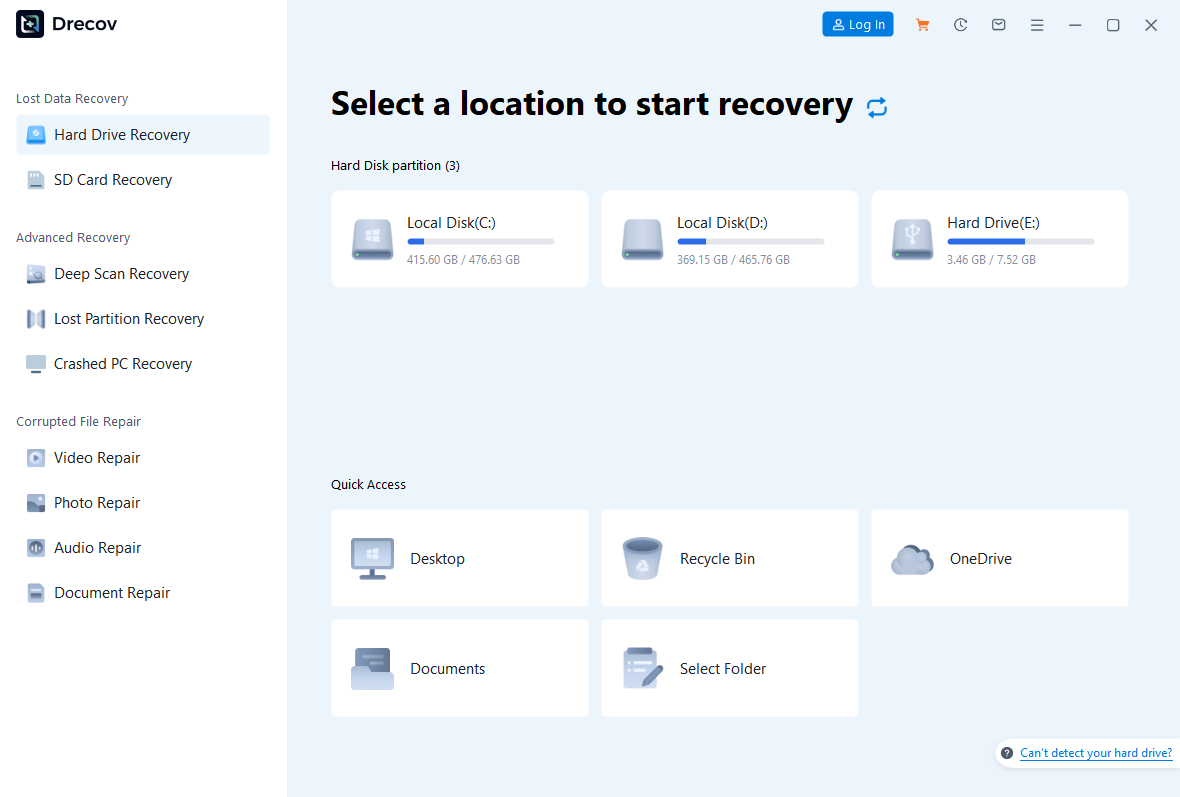
- Step 2: Allow the software to complete its Deep Scan process. You can monitor the real-time file tree view to see files organizing by extension or original path.
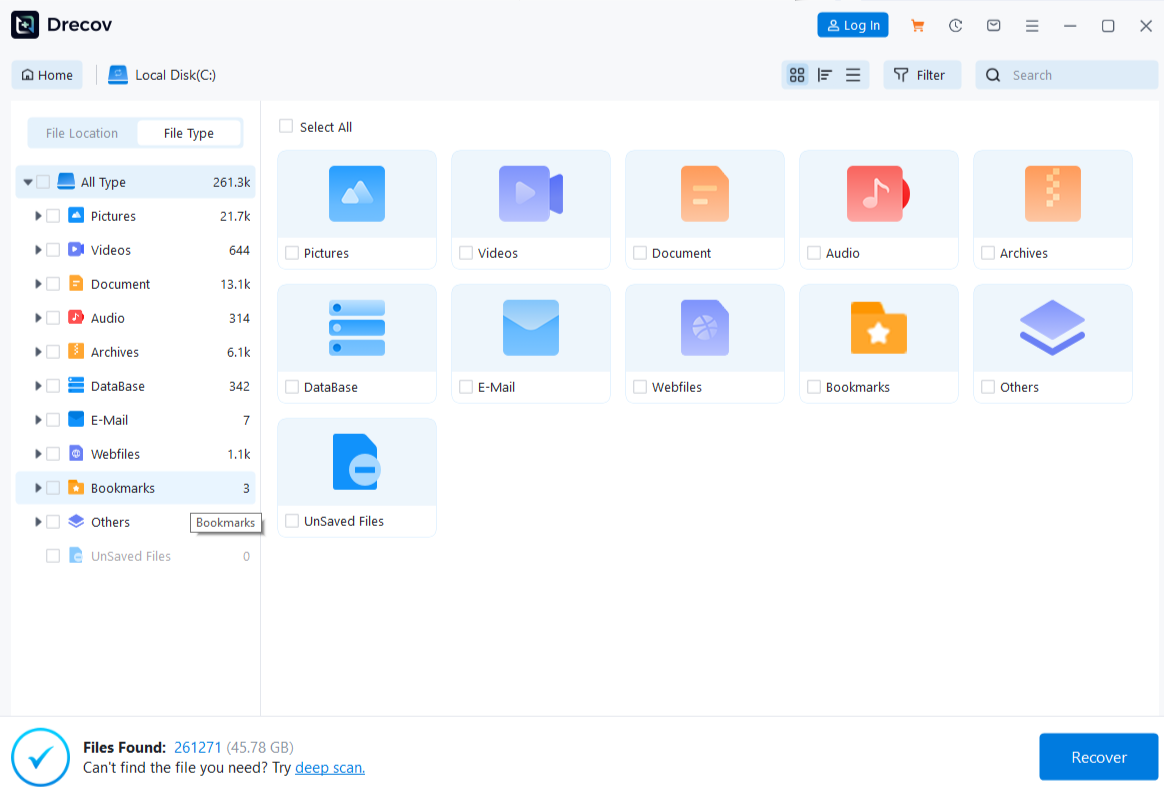
- Step 3: Browse through the discovered data. Mark the checkboxes next to the folders or specific files you want to secure, and click Recover. Choose a storage path on your local internal hard drive as the destination. Never save the files back to the same source drive during this step.
- Step 4: Once your files are safely duplicated on your main computer, open File Explorer by pressing the hotkey combination Windows + E.
- Step 5: Right-click your external storage device and select Format from the contextual menu.
- Step 6: In the File System dropdown menu, select NTFS for fixed internal or external drives, or select exFAT if you intend to use the drive across both Windows and macOS systems.
- Step 7: Keep the allocation unit size at its default setting, ensure the Quick Format checkbox is marked, and click Start.
- Step 8: Click OK on the warning prompt. The formatting routine will finish in seconds. Now, you can easily transfer your massive files onto the newly formatted drive, as the limitation causing the file is too large for destination file system error has been completely removed. You can then copy your recovered data back to the device.
Alternative or Complementary Methods
If you want alternative solutions, use built-in Windows formatting tools. Alternatively, you can use file compression utilities. These methods easily fix the problem when the file is too big for the destination file system.
Native Windows Formatting via Disk Management
When File Explorer fails to format a device, Disk Management serves as an excellent system utility to reconfigure storage file systems.
To use this tool, press Windows + X simultaneously to open the Power User menu, and select Disk Management. Locate your target storage volume in the visual grid layout at the bottom of the interface. Right-click the graphical partition box, select Format, change the target file system parameter to either NTFS or exFAT, and confirm the action. This format process completely deletes everything on the target partition, meaning you must ensure your data is backed up first.
File Splitting and Compression Utilities
If you are forced to keep a drive formatted in FAT32 because of strict hardware compatibility demands, such as an old car stereo or specific legacy media players, you cannot change the file system. In this situation, your alternative option is to modify the file itself so it fits within the 4 GB boundary.
You can use archive tools like WinRAR or 7-Zip to split a massive archive into smaller chunks. Right-click the file, choose your compression tool, and look for the option labeled split to volumes. Set the maximum split size to 3900 megabytes. The utility will break your large file into multiple smaller sequentially numbered files. You can then copy these individual pieces to your FAT32 drive without triggering the error stating that too large for destination file system parameters have been exceeded. To use the file later, you must copy all pieces back to an NTFS or exFAT drive and extract them together.
Tips & Best Practices
Managing file systems and avoiding data transfer issues requires adhering to solid storage habits. Keep these professional guidelines in mind to maintain optimal data integrity:
- Analyze Before Purchasing: When buying new high-capacity flash drives, check their default file system immediately. Many manufacturers still ship drives pre-formatted to FAT32. Reformat them to exFAT or NTFS immediately before putting any data on them.
- Always Use Safely Remove Hardware: Unplugging an external drive while a file system conversion or transfer process is running will corrupt the partition table. This turns the drive into a RAW file system, forcing you to use data recovery software to salvage your work. Always click the system tray icon and choose eject before disconnecting a drive.
- Keep Your System Tidy: Unnecessary background integration tools can sometimes interfere with smooth data operations. If you want to optimize your default Windows workspace interface for better clarity, you can follow a helpful guide on how to remove OneDrive from File Explorer step by step.
- Monitor Drive Health: Use diagnostic utilities to read the storage drive S.M.A.R.T. attributes regularly. If a drive has underlying physical sector deterioration, file transfer errors might occur even if you use the correct file system format.
Frequently Asked Questions
Why does Windows say the file is too big for the destination file system when I have 100 GB of free space?
This error does not mean your drive is full. It indicates that the individual file you are trying to copy exceeds the maximum file size limit of the drive’s file system. FAT32 storage drives cannot accept any single file that is larger than 4 GB, regardless of how much total empty space is available.
Will converting FAT32 to NTFS using the cmd convert command delete my files?
No, the native Windows command convert [drive_letter]: /fs:ntfs is designed to alter the file layout structure in place without erasing your files. However, if the process is interrupted by a power failure or system crash, the drive can become corrupted. Therefore, it is always smart to copy important data elsewhere or scan the drive with recovery utilities first.
What is the difference between NTFS and exFAT when fixing file system size limits?
NTFS is optimized for Windows computers and supports system journaling, which helps prevent data corruption. However, it is usually read-only on macOS. On the other hand, exFAT lacks advanced journaling features but is completely compatible with both Windows and Mac operating systems, making exFAT the ideal choice for portable USB flash drives.
Can I change an NTFS drive back to FAT32 without losing my data?
No, Windows does not provide a built-in reverse conversion tool to go from NTFS back to FAT32 without data loss. To convert a drive back to FAT32, you must format the drive completely, which erases all data. If you need to make this switch, copy your files to another drive first, or use recovery tools to extract them before formatting.
How does PandaOffice Drecov data recovery software help if my file conversion fails?
NTFS is optimized for Windows computers. It supports system journaling to help prevent data corruption. However, it is usually read-only on macOS. On the other hand, exFAT lacks advanced journaling features. Yet, it remains completely compatible with both Windows and Mac operating systems. This compatibility makes exFAT the ideal choice for portable USB flash drives.
Conclusion
Encountering a message stating that the file is too big for the destination file system can be annoying, but it is a simple technical limitation with a direct fix. By converting or formatting your legacy FAT32 storage drives to modern file systems like NTFS or exFAT, you eliminate the 4 GB file size limit entirely, allowing you to move files of any size smoothly.
Throughout any disk management or file system conversion process, safeguarding your digital files should always be your top priority. Using professional tools like PandaOffice Drecov data recovery software provides a dependable safety net, ensuring you can optimize your storage drives and manage your files without the risk of accidental data loss. Keep your storage drives updated to modern formatting standards, back up your data regularly, and utilize dependable recovery tools to maintain a highly efficient, error-free computing environment.





