







In the modern digital age, our smartphones have become extensions of our personal and professional lives. We capture thousands of photos, download countless documents, and exchange endless media files. However, a common frustration for many users is the “Storage Full” notification. Even after deleting large files, the space doesn’t seem to return. This is because most people don’t know how to empty recycling bin Android devices effectively.
Unlike a desktop computer, Android doesn’t have a single “Trash” icon on the home screen. Instead, it uses a decentralized system that can be confusing. In this comprehensive guide, we will explore the hidden corners of your device to help you master how to empty recycle bin on android and, more importantly, how to recover data if you accidentally delete something too soon.
Understanding the Android Recycle Bin Concept
Does Android Have a Recycle Bin?
If you’ve ever switched from a computer to a smartphone, you’ve probably asked yourself: “Where is the recycle bin on Android?” The answer is a bit surprising. Unlike Windows or macOS, Android does not have a single, universal recycling bin where all deleted files go.
Instead, Android works more like a collection of mini trash cans scattered across different apps. Each app—whether it’s your gallery, file manager, or email—handles deleted files independently. That means when you delete a photo, it doesn’t go to one central place; it goes into that specific app’s “Trash” or “Recently Deleted” folder.
This design might feel confusing at first, but it actually gives you more control. You can recover files within each app without affecting others. Still, it also means that learning how to empty recycling bin Android requires a bit more effort than just clicking one button.
Why Android Handles Trash Differently
Think of Android like a city without a central landfill. Instead, every neighborhood manages its own waste. That’s essentially how Android handles deleted files. This decentralized system exists because Android is built around apps, not a single file system interface. Because of this structure, there’s no one-click “Empty Recycle Bin” option. You must clear trash inside each app manually.
According to official Android Help documentation, most system apps store deleted files for about 30 to 60 days before permanent removal. This gives you a safety net—but also means those files still take up storage space until you delete them permanently.
Where Deleted Files Go on Android
App-Based Trash System Explained
When you delete something on Android, it usually doesn’t disappear immediately. Instead, it gets moved to a temporary storage area inside the app you used. For example:
- Photos → Google Photos Trash
- Downloads → File Manager Trash
- Emails → Gmail Trash
This system ensures you can recover files if you make a mistake. However, it also means your storage might still be full even after deleting files. Many users struggle with storage issues because they think files are gone, but they’re actually sitting in hidden trash folders. To truly optimize your device, you must understand the specific recycle bin android locations for each major application.
Storage Duration of Deleted Files
Deleted files can linger longer than you expect. Depending on the app:
- Google Photos: up to 60 days (if backed up).
- File Managers: typically 30 days.
- Gmail/Drive: 30 days.
This delayed deletion acts like a “grace period,” but it can also clog your phone. Imagine throwing garbage into a bin that never gets emptied—it’s only a matter of time before things overflow.
Why You Should Empty the Recycling Bin
Free Up Storage Space
Nothing is more frustrating than seeing the “Storage Almost Full” warning. You delete files, but somehow your storage still looks packed. That’s because those files are still sitting in the trash. Clearing the recycling bin frees up hidden storage space, improves phone performance, and prevents lag.
Protect Privacy
There’s another important reason: privacy. Deleted files in trash folders are still accessible. If you are selling your phone or lending it to someone, you must know how to empty recycling bin Android to ensure personal data is secure. Permanent deletion is the only way to prevent accidental recovery by others.
How to Empty Recycling Bin Android (Step-by-Step)
Managing your storage requires a methodical approach. Below, we break down the process for the most common apps.
Using Files by Google
Files by Google is the standard file manager for many modern Android devices. It provides a centralized view of your storage.
- Step 1: Open the Files by Google app on your device.
- Step 2: Tap the Menu icon (three horizontal lines) in the top-left corner.
- Step 3: Select the Trash option from the sidebar.
- Step 4: You will see a list of all files currently in the bin. Tap All items if you want to clear everything.
- Step 5: Tap the Delete button at the bottom and confirm the permanent deletion.
Using Google Photos
Since photos and videos usually occupy the most space, knowing how to empty recycle bin on android for the Gallery is essential.
- Step 1: Open the Google Photos app.
- Step 2: Tap on the Library tab located at the bottom right.
- Step 3: Look for the Trash (or Bin) icon at the top of the screen and tap it.
- Step 4: To clear everything, tap the three dots in the top-right corner and select Empty Trash.
- Step 5: Confirm the prompt. Remember, once you do this, the items are gone from Google’s servers as well.
Using Samsung Gallery / My Files
Samsung users have a slightly different interface. Samsung’s One UI has a very robust recycle bin android feature.
- Step 1: Open the Samsung Gallery app.
- Step 2: Tap the three-line menu (hamburger icon) at the bottom right.
- Step 3: Tap on Trash.
- Step 4: Tap Empty in the top-right corner.
- Step 5: For system files, open the My Files app, scroll to the bottom, find Trash, and repeat the process to clear non-media files.
Advanced Data Recovery: When You Delete Too Much
What happens if you empty the bin only to realize that an essential file was stored on your Android’s SD card or a USB drive you were using with your phone? Standard Android tools cannot help you once the bin is purged. This is where professional recovery hardware and software combinations become vital.
Introducing PandaOffice Drecov
PandaOffice Drecov is a powerful data recovery tool specifically engineered for Windows PCs to recover lost data from external storage media. If you use an SD card in your Android device or connect USB flash drives via OTG (On-The-Go), Drecov is the premier solution for retrieving files that have been “permanently” deleted.
⚠ Warning: Install it on a drive different from the one where your data was lost to prevent overwriting.
How to Recover Deleted Data with PandaOffice Drecov
If you have already performed the steps on how to empty recycling bin Android and realized a file on your external storage is missing, follow these steps:
- Step 1: Connect the Storage Media. Remove the SD card from your Android phone or disconnect the USB drive. Insert the SD card into a card reader or plug the USB drive directly into your Windows computer.
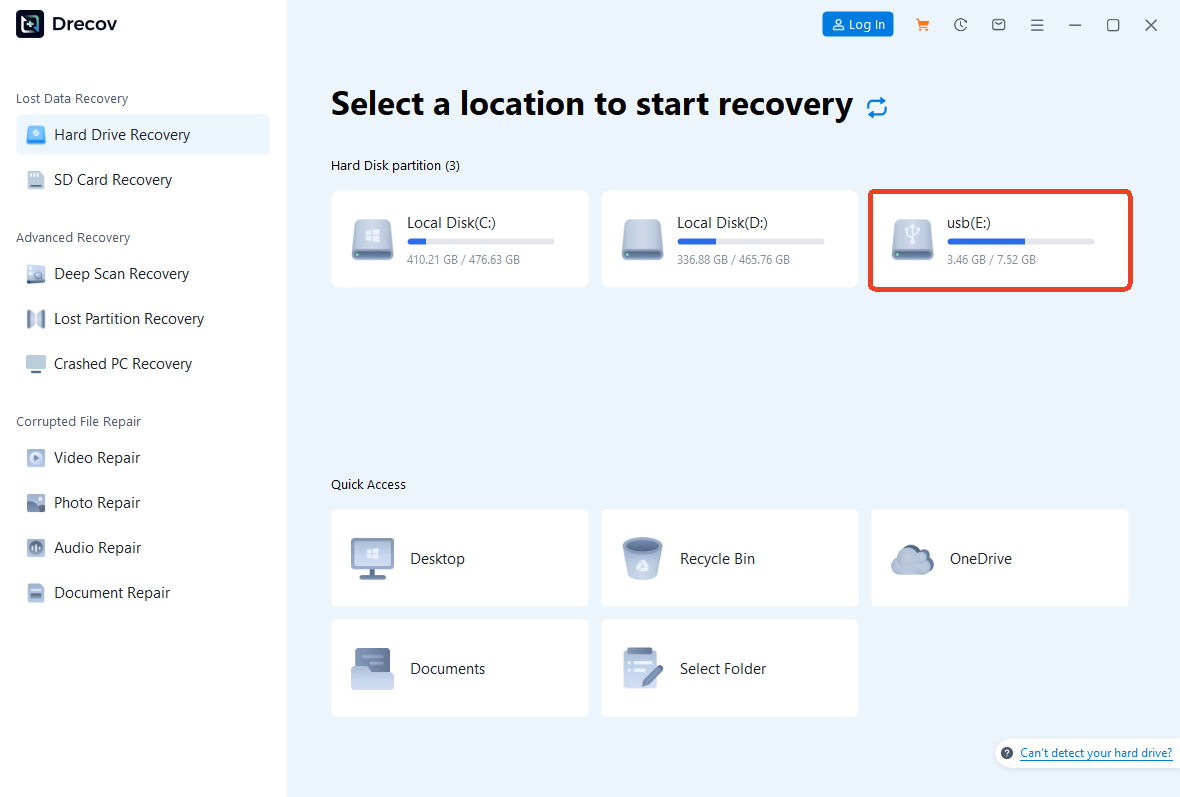
- Step 2: Select the Target Drive. Locate your SD card or USB drive in the list. Highlight it to designate it as the scan target.
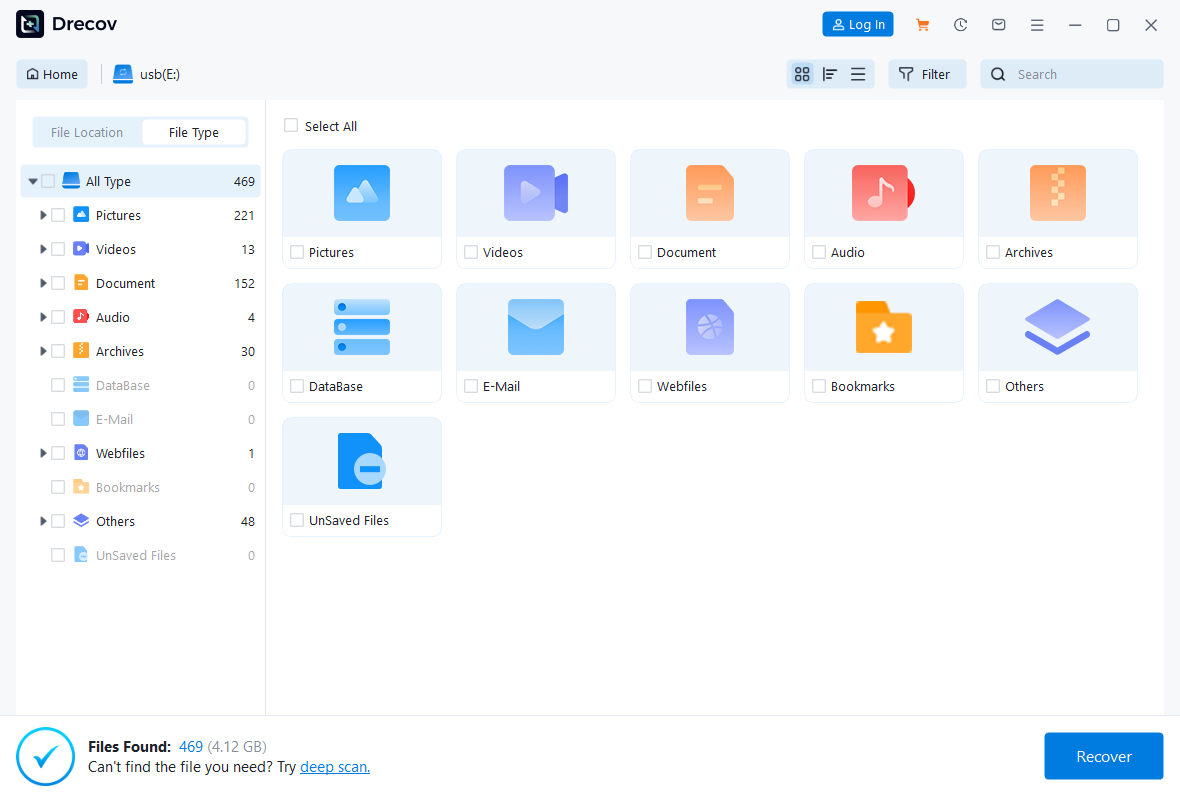
- Step 3: Initiate the Scan. Click the Scan button. Drecov will perform a deep analysis of the storage sectors to identify file signatures of deleted photos, videos, and documents.
- Note: For the best results, do not write any new data to the SD card or USB drive before starting this process, as it may overwrite the deleted files.
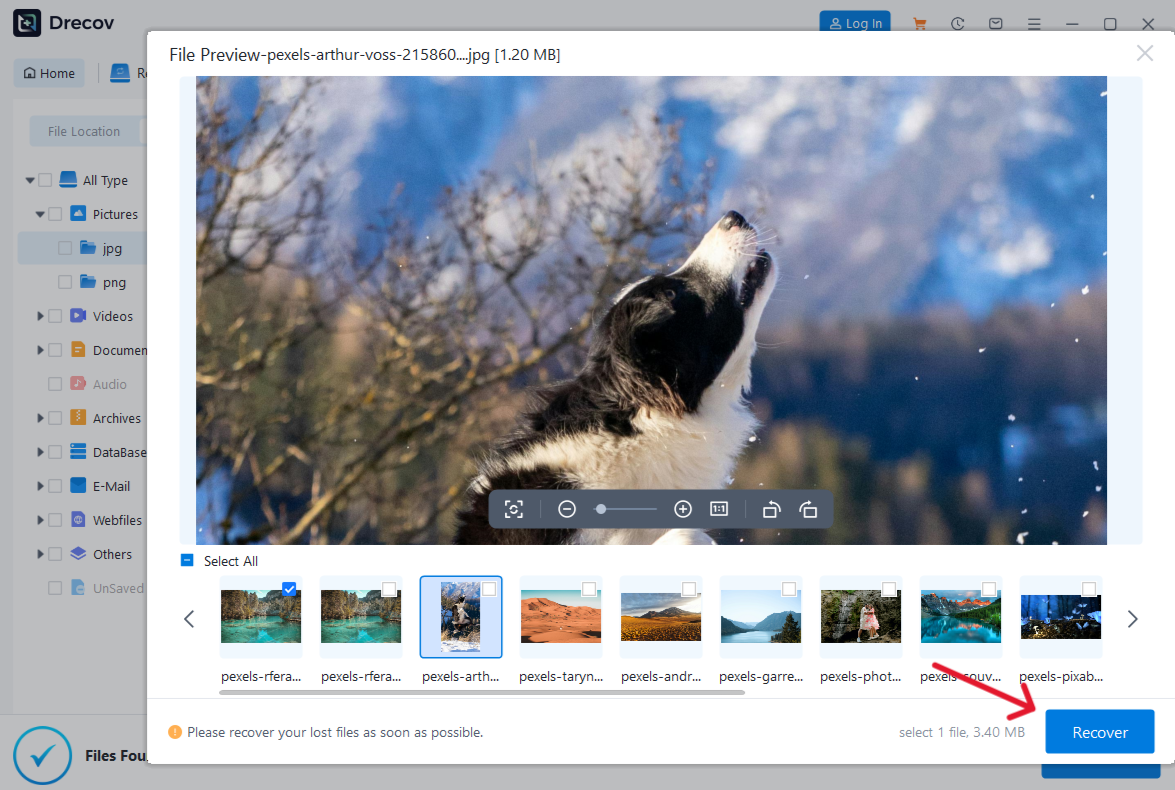
- Step 4: Preview and Recover. Once the scan finishes, browse the results. Drecov allows you to preview images and files to ensure they are intact. Select your desired files and click Recover to save them safely to your computer’s hard drive.
After managing your data recovery, you might also find these resources helpful:
- Where do I find Recycle Bin in Windows 10?
- How to recover files deleted from the Recycle Bin
- How to restore Recycle Bin after empty
Clearing Trash in Other Third-Party Apps
Beyond the system apps, many third-party applications maintain their own independent storage. To truly master how to empty recycling bin Android, you must check these as well.
Email Clients (Gmail & Outlook)
Every email you delete is stored in a “Trash” or “Bin” folder for 30 days. If you receive many attachments, this can add up to several hundred megabytes.
- Step 1: Open Gmail.
- Step 2: Tap the menu and go to Trash.
- Step 3: Tap Empty trash now.
Cloud Storage (Google Drive & OneDrive)
Google Drive has a separate bin that is not cleared when you clear your phone’s local files.
- Step 1: Open the Google Drive app.
- Step 2: Tap the menu and select Bin.
- Step 3: Select the files and delete them permanently.
WhatsApp Media Cleanup
WhatsApp is often the biggest storage hog. While it doesn’t have a “Recycle Bin” in the traditional sense, it stores “Sent” media that you might not need.
- Step 1: Open a File Manager app.
- Step 2: Navigate to
Internal Storage > Android > media > com.whatsapp > WhatsApp > Media. - Step 3: Look through folders like WhatsApp Images or WhatsApp Video. Inside these, you will find a folder named Sent. Deleting the contents of the “Sent” folder is a great way to clear hidden junk without losing the photos people sent to you.
How to Clear Hidden Junk Files: Cache vs Trash
Understanding the difference between cache and trash is vital for anyone learning how to empty recycling bin Android.
- Trash: Files you intentionally deleted that are waiting for permanent removal.
- Cache: Temporary data (like thumbnails or website layouts) that apps store to load faster.
Clearing Cache Safely
If your storage is still full after emptying all bins, clearing the cache is the next logical step.
- Step 1: Go to Settings.
- Step 2: Tap on Apps (or App Management).
- Step 3: Select a high-usage app like TikTok, Instagram, or Chrome.
- Step 4: Tap on Storage.
- Step 5: Tap Clear Cache.Note: Do not tap “Clear Data” unless you want to reset the app and log out of your account.
Common Problems and Fixes
Trash Not Emptying
Sometimes, even after you follow the steps on how to empty recycle bin on android, the files persist. This is often due to a synchronization error. If you delete a file in Google Photos, but it stays on the device, ensure your “Sync” is turned on. Occasionally, a simple restart of the device will refresh the file system and show the updated storage capacity.
Storage Still Full After Deleting
If you have emptied every bin and cleared your cache, but the storage bar hasn’t moved, you likely have “System Data” or “Other” taking up space. This often includes system updates, offline maps, or large app expansion files (common in high-end mobile games). Using an app like DiskUsage can provide a visual map of where your storage is going.
Best Practices for Storage Management
To avoid the constant headache of a full phone, adopt these digital hygiene habits:
- Enable Auto-Delete: Many apps like Google Photos have a “Free up space” feature that automatically deletes local copies of photos once they are backed up to the cloud.
- Monthly Audits: Once a month, go through your “Downloads” folder. This is usually the primary source of useless files like PDF menus or old installation packages.
- Use External Storage: If your phone supports a microSD card, set your camera to save photos directly to the card. This keeps your internal storage free for apps and system processes.
- Backup Before You Clean: Before you perform a deep clean and learn how to empty recycling bin Android, perform a full backup. Whether it’s to a PC or a cloud service, having a “safety copy” allows you to be more aggressive with your cleaning.
The Technical Side: Why Files Don’t Disappear Immediately
From a technical standpoint, when you “delete” a file from a recycle bin android folder, the operating system doesn’t actually erase the data bit by bit. That would be too slow and wear out the flash memory. Instead, it simply removes the “pointer” to that file and tells the system that the space is now available to be written over.
This is exactly why tools like PandaOffice Drecov are so effective. As long as you haven’t saved new data onto that specific physical sector of the phone’s memory, the old data is still there, invisible but recoverable. This is why experts recommend putting your phone in Airplane Mode immediately if you realize you’ve accidentally emptied the trash on a file you need—it prevents the phone from downloading new data that might overwrite your lost file.
Empty Recycling Bin Android FAQs
1. Is there a single recycle bin on Android?
No, Android does not have a centralized recycle bin. Each app (Photos, Files, Gmail) manages its own trash folder independently.
2. How often should I empty the trash on Android?
Ideally, you should check your trash folders once every two weeks to prevent storage buildup, though most apps will auto-purge after 30 days.
3. Can I recover files after emptying the trash?
Standard Android settings do not allow for recovery once the trash is emptied. However, professional software like PandaOffice Drecov can often retrieve these files if they haven’t been overwritten.
4. Why is my storage still full after deleting files?
Files stay in the “Trash” folder and continue to occupy space until they are either manually emptied or the 30-day grace period expires.
5. Does clearing cache delete my photos?
No, clearing the cache only removes temporary files used for app speed. Your personal photos, videos, and documents will remain untouched.
Conclusion
Mastering how to empty recycling bin Android is about more than just hitting a delete button; it’s about understanding the ecosystem of your device. By navigating the individual trash folders in Google Photos, Files by Google, and Samsung’s My Files, you can reclaim gigabytes of space and keep your device running at peak performance.
Remember that digital maintenance is a two-way street. While emptying the trash is necessary for performance and privacy, having a recovery plan with tools like PandaOffice Drecov ensures that a moment of accidental cleaning doesn’t turn into a permanent loss of memories. Keep your phone clean, keep your data backed up, and you’ll never have to fear the “Storage Full” notification again.






