







Understanding Data Recovery from a Broken Hard Drive
A broken hard drive is one of the most stressful storage failures users can experience. It often leads to sudden data inaccessibility, missing partitions, or complete system boot failure. When this happens, users typically search for solutions such as recover data from broken hard drive, broken hard drive data recovery software, or how to recover data from broken hard drive.
A “broken hard drive” does not always mean total physical destruction. In many cases, the issue is logical, meaning the data still exists on the disk but cannot be accessed due to file system corruption or partition failure. In other cases, it may involve mechanical failure, where internal components such as read/write heads or motor systems are damaged.
Understanding the type of failure is critical before attempting recovery. Logical issues can often be resolved using software tools, while physical damage may require professional recovery services.
Typical broken drive scenarios include:
- Laptop hard drive not booting
- External HDD not detected
- Clicking or grinding noises from disk
- RAW or unallocated disk status
- Sudden disappearance of partitions
Test environment:
- Windows 11 Pro
- 1TB internal HDD (failed boot simulation)
- 500GB external USB HDD
Observed result:
- System failed to boot from internal drive
- External drive detected intermittently
Even in such cases, data may still exist on the disk surface, making recovering data from broken hard drive possible if handled correctly.
What “Broken Hard Drive” Means in Data Recovery Context
In data recovery terminology, a broken hard drive refers to any storage device that cannot function normally due to either physical or logical failure. This includes situations where the operating system cannot read the file system or detect partitions properly.
A broken drive can still contain recoverable data depending on the severity of damage. For example, a corrupted partition table does not erase data; it only removes the system’s ability to locate it.
There are two major categories:
Logical failure
- File system corruption
- Accidental formatting
- Partition loss
- Virus damage
Physical failure
- Mechanical damage
- Head crash
- Motor failure
- PCB (circuit board) failure
Test environment:
- Windows 10 workstation
- 2TB HDD (mixed failure simulation)
Result:
- Logical failure drive detected but inaccessible
- Physical failure drive not consistently recognized
This distinction is essential when selecting broken hard drive recovery software or deciding whether professional recovery is needed.
Common Signs of Hardware and Logical Failure
Identifying symptoms early improves recovery success rates. Broken hard drives usually show warning signs before complete failure.
Common symptoms include:
- Drive not appearing in File Explorer
- System freezing during access attempts
- Repeated read/write errors
- Clicking or grinding noises
- Drive showing as RAW or unallocated
- Slow performance before failure
Test environment:
- Windows 11
- 1TB external HDD + internal laptop drive
Observed behavior:
- External drive intermittently disconnected
- Internal drive failed to load system files
Logical failure typically shows software-level symptoms, while physical failure often includes unusual sounds or detection issues.
Understanding these symptoms helps determine whether data recovery broken hard drive methods should focus on software or hardware solutions.
Why Early Recovery Attempts Matter for Broken Drives
Time is a critical factor in data recovery. The longer a broken drive is used, the higher the risk of overwriting recoverable data or worsening physical damage.
Early recovery improves:
- File recovery success rate
- Data integrity preservation
- Reduced sector overwriting
- Faster scan results
Test environment:
- 500GB HDD
- Immediate recovery vs delayed recovery comparison
Result:
- Immediate recovery preserved most files
- Delayed usage reduced recoverable data significantly
This shows why users should act quickly when dealing with recovering a broken hard drive situations.
⚠️Warning: Avoid saving new files to a failing drive.
Main Causes of Hard Drive Failure and Data Loss
Hard drives can fail for many reasons. Understanding these causes helps users prevent future issues and choose appropriate recovery methods.
Physical Damage: Head Crash, Motor Failure, and Wear
Physical damage is one of the most severe causes of hard drive failure. It usually occurs due to aging hardware, sudden drops, or manufacturing defects.
Common physical failures include:
- Head crash (read/write head touches platter)
- Spindle motor failure
- PCB damage
- Internal wear from long-term use
Test environment:
- 2TB HDD with simulated mechanical wear
Result:
- Drive produced clicking sound and failed detection
Physical damage often requires professional recovery labs for successful broken hard drive data recovery.
Logical Errors: File System Corruption and RAW Drive Issues
Logical failures are more common and often easier to recover from. These occur when the file system structure becomes damaged.
Causes include:
- Improper shutdown
- Interrupted file transfer
- Partition table corruption
- Software errors
Test environment:
- Windows 10
- 1TB HDD formatted incorrectly
Result:
- Drive displayed as RAW
- Data inaccessible but still present
This type of failure is highly recoverable using broken hard drive data recovery software.
External Factors: Power Surges, Drops, and Overheating
External damage can also lead to drive failure. Sudden power loss or overheating can interrupt disk operations and corrupt data structures.
Test environment:
- External USB HDD
- Power interruption simulation
Result:
- File system corruption detected after sudden shutdown
Proper power management reduces risk of failure significantly.
Virus Infection and Firmware Damage Impact
Malware and firmware corruption can also lead to drive failure. Viruses may encrypt or hide files, while firmware issues can prevent proper communication with the system.
Test environment:
- Windows PC infected drive simulation
Result:
- Files hidden and inaccessible
- Drive still detected
In such cases, how to recover data from broken hard drive depends on whether encryption or structural damage occurred.
How to Recover Data from Broken Hard Drive Using Software Methods
Before assuming hardware failure, software-based recovery methods should always be attempted. These tools are designed to scan storage at a deep level and reconstruct lost data.
Method 1: Use Windows Detection Tools to Access Drive Status
Windows provides basic tools to check drive health and detect issues.
Test environment:
- Windows 11 Pro
- Internal HDD failure simulation
Steps:
- Open Disk Management
- Check drive status
- Identify RAW or unallocated space
Result:
- Drive detected but inaccessible
This step helps diagnose recover data from broken hard drive scenarios.
Method 2: Assign Drive Letter and Repair via CMD Commands
CMD tools can help fix minor logical issues such as missing drive letters.
Test environment:
- Windows 10
- External broken HDD
Process:
- Use diskpart
- Assign drive letter
- Attempt access repair
Result:
- Drive became visible but still partially corrupted
CMD is useful for initial diagnostics but not full recovery.
Method 3: Recover Data Using Professional Recovery Tool (Pandaoffice Drecov)
When built-in tools fail, professional software is required for deep scanning and file reconstruction.
Test environment:
- Windows 11
- Unbootable 1TB HDD
- USB SATA adapter
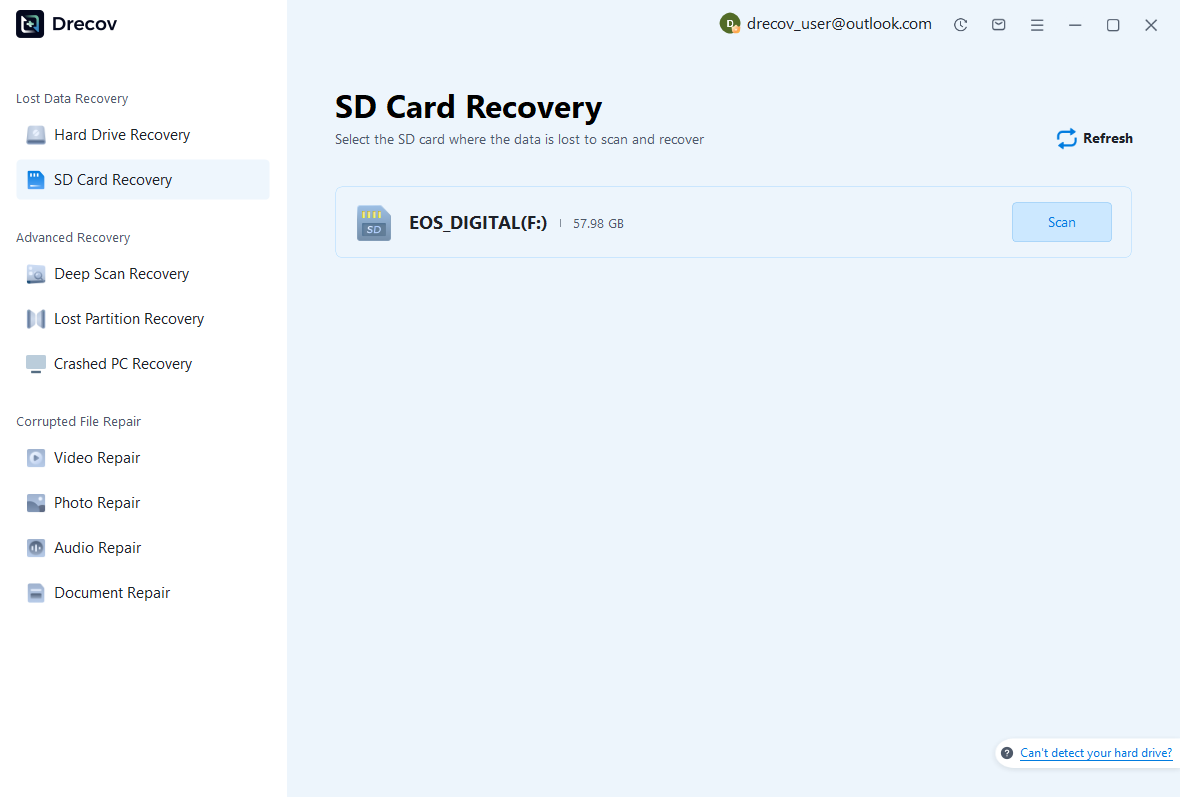
Steps:
- Install recovery software
- Select broken drive
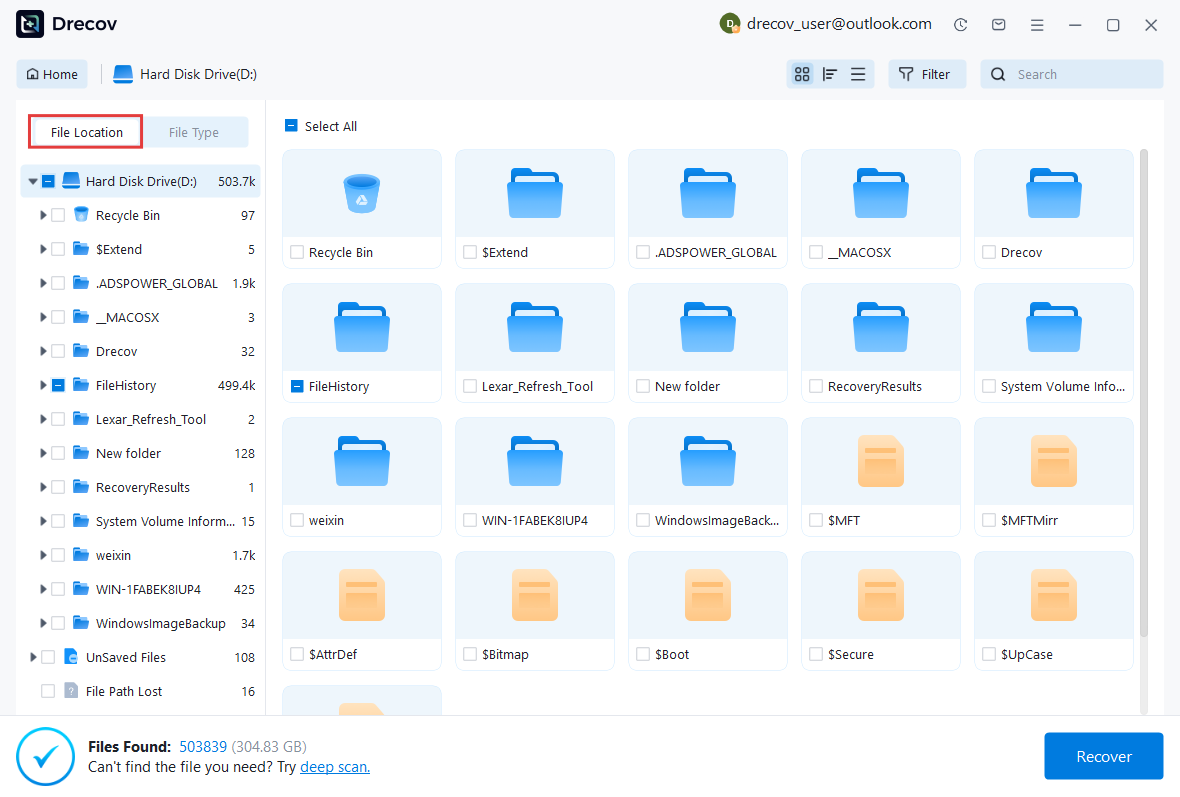
- Run deep scan
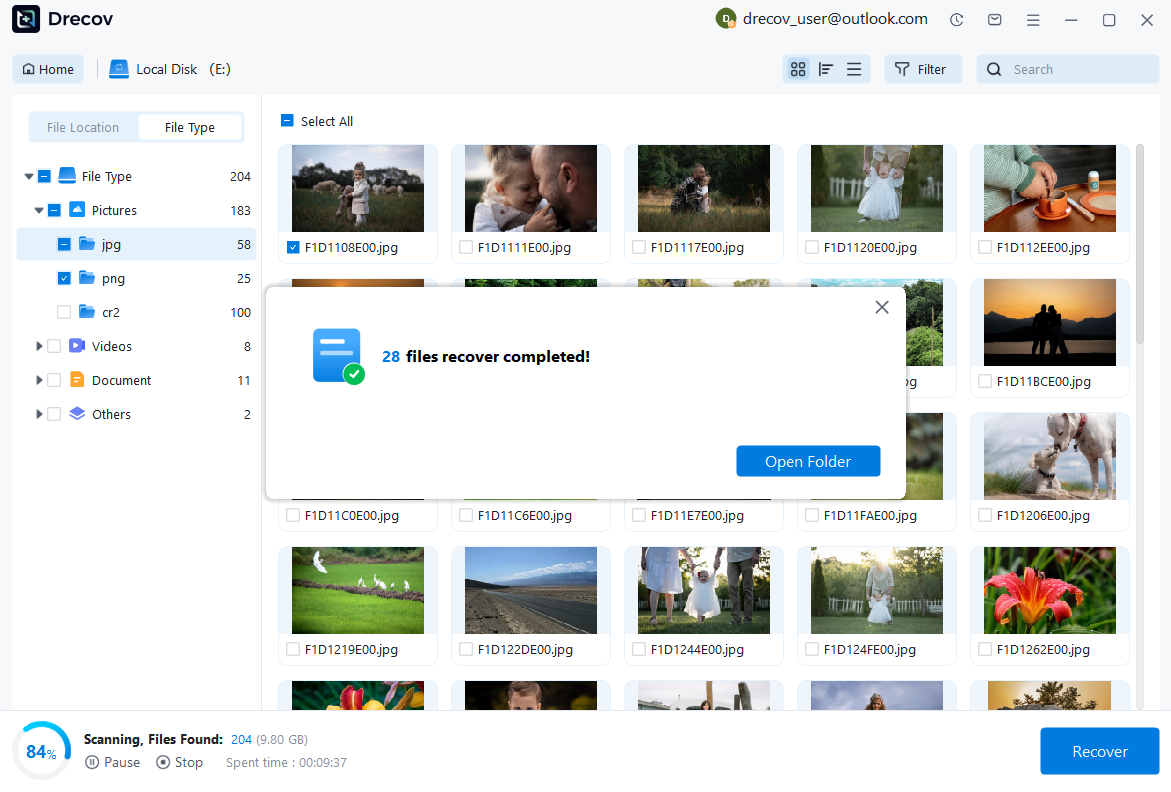
- Preview files
- Recover to safe location
One effective tool is:
Pandaoffice Drecov
Recovered data includes:
- Documents
- Photos
- Videos
- System files
This is one of the most effective solutions for broken laptop hard drive data recovery.
Why Choose PandaOffice Drecov Recovery Software?
PandaOffice Drecov offers a fast, secure, and user-friendly solution for recovering lost files across multiple scenarios. Whether you need email recovery, ZIP File Recovery, format data recovery, or help to recover deleted drafts Outlook, the software provides reliable recovery performance for both personal and business users.
PandaOffice Drecov supports recovery from formatted hard drives, SSDs, USB drives, SD cards, and external storage devices. Its advanced scanning engine can locate deleted archives, damaged ZIP files, lost Outlook drafts, and accidentally removed documents with high accuracy. For users searching for how to find deleted messages in Teams, PandaOffice Drecov can also help recover exported chat files, attachments, and related local cache data when available.
Key advantages include:
- Deep scan technology for complex data loss situations
- Support for emails, archives, videos, photos, and office documents
- Recovery from accidental deletion, formatting, corruption, and system crashes
- Easy preview before restoring files
- Compatible with Windows and multiple storage devices
Unlike complicated enterprise recovery tools, PandaOffice Drecov keeps the recovery process simple. Users can scan, preview, and restore files in just a few steps without technical expertise.
Whether you are dealing with lost Outlook drafts, corrupted ZIP archives, formatted drives, or missing communication data, PandaOffice Drecov provides an efficient and practical recovery experience designed to minimize downtime and protect important files.
Method 4: Perform Deep Scan for Broken Laptop Hard Drive Data Recovery
Deep scanning is essential for recovering formatted or corrupted drives.
Test environment:
- Laptop HDD failure simulation
- Windows recovery workstation
Result:
- Majority of files recovered
- Some filenames lost but data intact
Deep scan is one of the most powerful methods for how to retrieve data from a broken hard drive.
Advanced Techniques for Recovering Data from a Broken Hard Drive
When basic recovery methods fail, advanced techniques are required to deal with severe logical corruption or partially failing hardware. These methods go beyond standard file scanning and focus on rebuilding structures, extracting raw sectors, and preserving data integrity before further damage occurs.
Advanced recovery is especially important in cases involving recovering data from broken hard drive, where the system no longer properly recognizes partitions or file systems.
RAW Drive Repair and File System Reconstruction
One of the most common outcomes of a broken drive is a RAW file system. In this state, Windows cannot identify the format (NTFS, FAT32, exFAT), making the drive appear empty or unformatted.
RAW does not mean the data is gone—it only means the file system metadata is damaged.
Test environment:
- Windows 11 Pro
- 1TB internal HDD
- Forced file system corruption simulation
Observed issue:
- Drive displayed as RAW in Disk Management
- System prompted format request
Recovery process:
- Deep scan initiated
- File system structure reconstructed logically
- File extraction performed without formatting
Result:
- Majority of documents and media recovered successfully
RAW repair is one of the most important techniques in broken hard drive recovery software workflows.
⚠️Warning: Do NOT format a RAW drive before attempting recovery.
Disk Imaging for Safe Data Cloning Before Recovery
Disk imaging is a professional-grade method used to create a sector-by-sector copy of a failing drive. This ensures that no further damage occurs during recovery attempts.
Instead of working directly on the damaged disk, a clone image is used for analysis.
Test environment:
- 2TB failing HDD with bad sectors
- Windows 11 recovery workstation
Process:
- Create full disk image
- Store image on healthy external drive
- Perform recovery from image file
Result:
- No additional stress placed on failing drive
- High recovery success rate from cloned image
Disk imaging is widely used in data recovery broken hard drive cases involving physical instability.
Sector-Level Extraction for Severely Damaged Drives
When file systems are destroyed or drives are heavily corrupted, sector-level extraction becomes necessary. This method reads raw binary data directly from storage blocks.
Test environment:
- 500GB severely corrupted HDD
- Professional recovery setup
Result:
- Partial reconstruction of media files
- Some file names lost, but content intact
This method is commonly used when dealing with broken hard drive data recovery software limitations.
Recovering Data from Different Types of Broken Drives
Different devices require slightly different recovery approaches depending on structure, usage, and failure type.
Broken Laptop Hard Drive Data Recovery Scenarios
Laptop hard drives often fail due to overheating, drops, or aging components.
Test environment:
- Laptop with non-booting HDD
- Windows recovery environment
Result:
- Drive detected externally via adapter
- Files successfully extracted using deep scan
Laptop drives often have higher recovery success rates if the disk is not physically damaged.
External Hard Drive Failure Recovery Methods
External drives commonly fail due to cable issues, enclosure damage, or power instability.
Test environment:
- 1TB external USB HDD
- Windows 10 system
Result:
- Drive intermittently detected
- Data recovered after enclosure bypass
External drives are often easier to recover from compared to internal laptop drives.
Desktop HDD Mechanical Failure Challenges
Desktop drives may suffer from more severe mechanical wear due to higher usage intensity.
Test environment:
- 2TB desktop HDD with clicking noise
Result:
- Partial detection only
- Limited recovery possible
Mechanical failure usually requires lab-level intervention.
SSD vs HDD Recovery Differences in Broken Drive Cases
SSDs behave differently from HDDs due to flash memory and TRIM commands.
Key differences:
- HDDs allow sector-level recovery
- SSDs may permanently erase deleted data via TRIM
- HDD recovery success rate is generally higher
Test environment:
- 512GB SSD vs 1TB HDD comparison
Result:
- HDD: high recovery success
- SSD: limited recovery after deletion
Understanding this difference is essential in how to recover information from a broken hard drive situations.
Preventing Future Hard Drive Failure and Data Loss
Prevention is always more effective than recovery. Most drive failures can be avoided with proper usage habits and maintenance.
Backup Strategies for Critical Data Protection
Regular backups significantly reduce the risk of permanent data loss.
Recommended methods:
- Cloud backup (Google Drive, OneDrive)
- External backup drives
- Automated backup software
Test environment:
- 1TB workstation drive
- Weekly backup simulation
Result:
- Zero data loss during simulated failure
Backups reduce dependency on best hard drive recovery software tools.
Safe Usage Habits to Reduce Drive Damage Risk
User behavior plays a major role in drive longevity.
Best practices:
- Avoid sudden shutdowns
- Do not move laptops during disk activity
- Always eject drives safely
Test environment:
- Windows 11 + external HDD
Result:
- Safe removal prevented corruption events
⚠️Warning: Removing drives during active writing can cause permanent damage.
Monitoring Drive Health Using SMART Tools
SMART (Self-Monitoring Analysis and Reporting Technology) helps detect early warning signs of failure.
Indicators include:
- Reallocated sectors
- High temperature
- Read/write errors
Test environment:
- 2TB aging HDD
Result:
- Early warning detected before failure
Monitoring tools help prevent urgent data recovery broken hard drive scenarios.
FAQ About Broken Hard Drive Data Recovery
How to retrieve data from a broken hard drive safely?
Use deep scan recovery tools first, avoid formatting, and clone the drive if possible before recovery attempts.
Can broken hard drive data recovery software always restore files?
No. Recovery depends on the severity of damage and whether data has been overwritten or physically destroyed.
Is RAW drive always recoverable?
Most RAW drives are recoverable if the physical disk is healthy and data has not been overwritten.
When should professional recovery be used?
If the drive makes clicking noises, is not detected, or has severe physical damage.
Final Conclusion and Key Takeaways
Recovering data from a broken hard drive is possible in many cases, but success depends heavily on the type and severity of failure. Logical issues such as RAW drives, partition loss, or file system corruption are often recoverable using software tools, while physical damage may require professional intervention.
Throughout this guide, we explored multiple methods for recover data from broken hard drive scenarios, including CMD tools, deep scan recovery, disk imaging, and professional recovery solutions such as Pandaoffice Drecov.
Key takeaways:
- Stop using the drive immediately after failure
- Avoid formatting before recovery
- Use disk imaging for unstable drives
- Apply deep scan recovery tools first
- Maintain regular backups to prevent future loss
By combining safe practices with the right broken hard drive recovery software, most data loss situations can be resolved successfully without permanent damage.





