







A PST repair utility is appropriate when an Outlook Data File exists but Outlook reports structural errors, cannot open it, or shows damaged folders. It is not the right first tool when the PST was deleted, the wrong profile is open, or a Microsoft 365 mailbox is merely out of sync. Preserve the original file, identify which condition you actually have, and repair only a duplicate. That distinction prevents a repair attempt from overwriting the evidence needed for recovery.
Start by Classifying the PST Problem
A Personal Storage Table stores local Outlook items such as messages, folders, contacts, calendar entries, and attachments. Outlook may use a PST for a POP account, an exported archive, or manually opened data. Exchange, Microsoft 365, and many IMAP configurations commonly use an OST as a synchronized cache instead. Repairing the wrong file wastes time and can create confusion.
Close Outlook before inspecting the files. Open Account Settings and review the Data Files tab if the application still starts. Note the active path, account, file type, and size. When Outlook will not open, search the expected profile locations without moving or renaming every result. A large archive with an older date may be a backup, while a small new PST may belong to a fresh profile.
| What you observe | Likely task | Suitable first path |
|---|---|---|
| PST exists, but Outlook reports errors in the file | Structural repair | Duplicate the PST, then run Microsoft’s Inbox Repair Tool on the copy |
| PST was deleted or the storage volume was formatted | File recovery | Stop writes and recover the original archive to another device |
| Mail appears on the server but not in Outlook | Account or synchronization diagnosis | Check account, webmail, profile, and sync state |
| Only one Outlook folder is missing | Folder deletion or wrong data file | Check Deleted Items, Recoverable Items, and opened data files |
| Drive clicks, disconnects, or reads extremely slowly | Physical storage risk | Stop repair and repeated scans; consider imaging or professional recovery |
Do not assume that every Outlook startup error proves PST corruption. A disabled add-in, damaged profile, authentication failure, or unavailable network path can produce a similar symptom. Test whether Outlook opens in safe mode and whether another known-good profile works. Keep the suspect PST untouched during these comparisons.
Protect the Original Before Any Repair Pass
Exit Outlook and confirm that OUTLOOK.EXE is no longer running in Task Manager. Copy the suspect PST to a healthy disk. Work on that duplicate and retain the source as evidence. If Windows cannot copy the file cleanly, do not keep forcing the same transfer. Repeated read errors or device disconnects move the case from logical repair toward storage recovery.
Record the original path, file size, modified date, and a hash if your workflow uses one. Make enough free space for a second working copy and any backup produced by the repair program. Do not store all copies on the same questionable drive. Encryption and access permissions should also remain documented before moving an archive between accounts.
Repair can remove malformed records to make a PST readable. That tradeoff may be acceptable, but it means “Outlook opens” is not the same as “every item survived.” Preserving the original lets you compare another repair method or seek specialist help later.
Where Drecov Fits When the PST Is Missing
Drecov addresses file loss, not the internal repair of an existing PST. It recovers Windows data from PCs, HDDs, SSDs, external drives, USB storage, and memory cards. Supported search categories include email data, documents, photos, video, audio, and archives. Quick Scan looks for recent logical loss. Deep Scan searches a stable device more broadly. Filters, path browsing, and preview help narrow the results before files are saved elsewhere. Lost Partition Recovery is relevant when the volume that held the archive no longer appears.
Use Drecov only when a local PST was deleted, lost after formatting, or stranded on an inaccessible but stable volume. It cannot repair Outlook profiles, synchronize a cloud mailbox, rebuild corrupt PST records, or fix a failing drive. SSD TRIM and later writes may make deleted content unrecoverable, so avoid installing software on the source partition.
⚠ Warning: Install it on a drive different from the one where your data was lost to prevent overwriting.
Step 1: Open Drecov and select the PST’s former location
Prepare another healthy drive for recovered output. Open Drecov without installing it on the volume that lost the archive. Select the original user profile, partition, or storage device. If the partition is missing, use Lost Partition Recovery. Stop if the source clicks, repeatedly disconnects, changes capacity, or reports severe read errors.

Step 2: Run Quick Scan and inspect known Outlook paths
Start Quick Scan for a recently deleted or newly inaccessible PST. Browse former Outlook and Documents locations, then search for the known archive name. Compare size and date with your earlier records. A tiny PST bearing the expected name may be a newly created profile file rather than the lost archive.
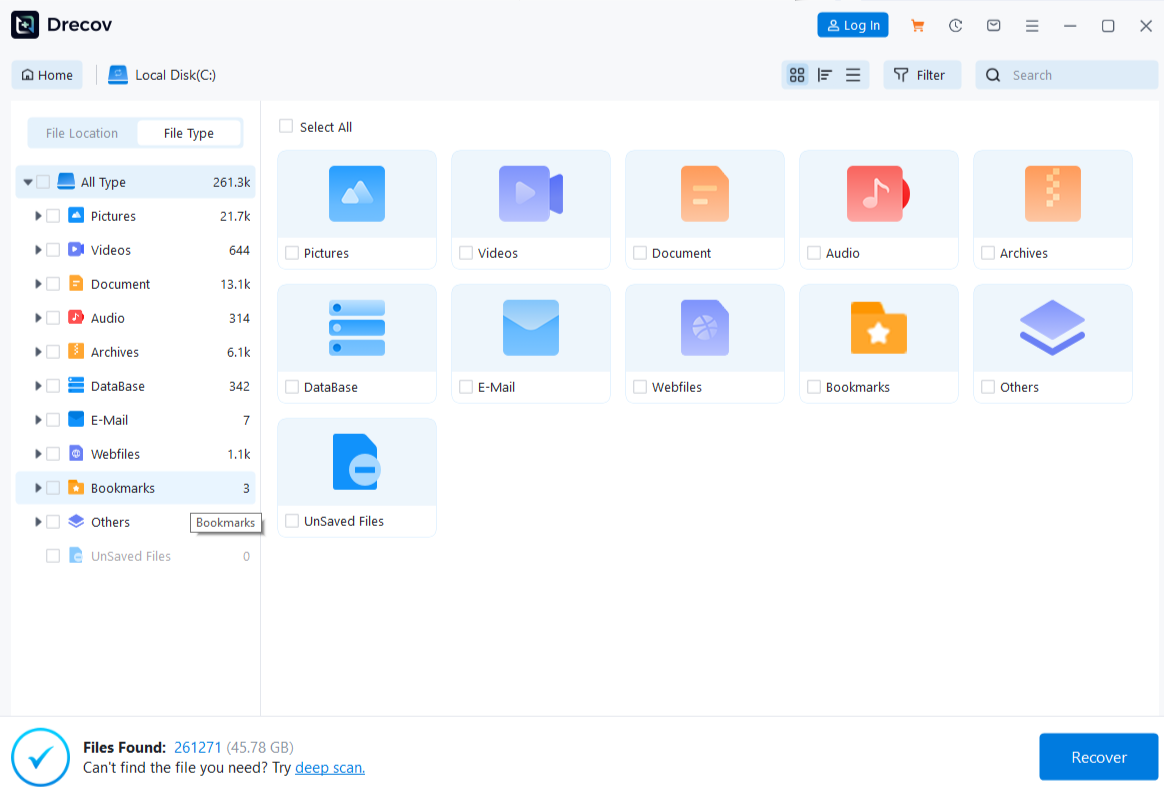
Step 3: Use Deep Scan only when the medium remains stable
Continue with Deep Scan if Quick Scan misses the required archive and the device responds normally. A large PST may take time to locate and restore. End the attempt when reads become unstable. Long scanning is not a substitute for imaging failing media.
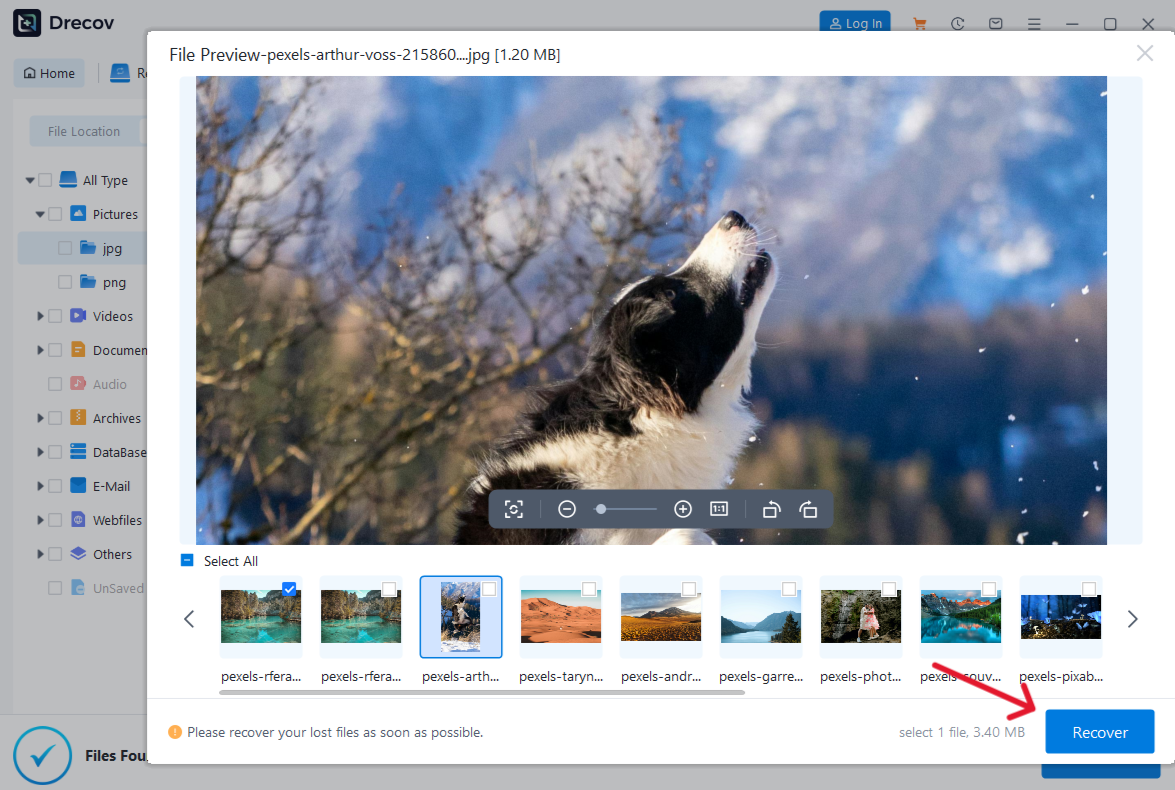
Step 4: Filter, preview, and choose plausible candidates
Filter for email or PST results and use the former path, filename, date, and size to rank candidates. Preview support varies by file condition and type. A visible filename or preview does not prove every message and attachment is intact. Recover more than one plausible version when space allows.
Step 5: Recover to the healthy drive and verify separately
Save candidates to the prepared destination, never back to the source. Check Drecov Folder or Recovery Folder if the expected path is not reproduced. Preserve the recovered PST, create a duplicate, and run repair on that duplicate. Open it in a test Outlook profile and inspect representative folders before attaching it to daily mail. The guide to recovering deleted email and local archives explains the boundary between server items and local containers.
⚠ Warning: Install it on a drive different from the one where your data was lost to prevent overwriting.
Use Microsoft’s Inbox Repair Tool on a Duplicate
Microsoft includes the Inbox Repair Tool, commonly called SCANPST.EXE, with classic Outlook installations. Its location varies by Office version and installation type. Microsoft’s official Outlook data-file repair instructions provide current paths and usage details. Obtain the tool from the installed Office environment rather than an unknown download site.
Point SCANPST at the working copy
Close Outlook, launch the Inbox Repair Tool, and browse to the duplicated PST. Start the scan and read the result. Enable its backup option when offered, even though you already retained the untouched original. The tool may need more than one pass, but repeated passes should be performed on a copy whose prior state you can restore.
Read the repair log instead of trusting one message
A completed repair means the tool corrected or removed structures it recognized. It does not certify every item. Keep the log and the generated backup. If the repaired PST will not open, return to a fresh duplicate of the original rather than repeatedly modifying the same failed output.
Open the result in a separate Outlook profile
This check is especially useful for PST repair utility. Create or use a test profile that does not replace your working mailbox configuration. Open the repaired PST as an additional data file. Check the folder tree, item counts, date ranges, contacts, calendar entries, attachments, and search behavior. Look for a Lost and Found folder that may contain recovered items without their original hierarchy.
Exporting verified folders into a new PST can produce a cleaner daily-use container. Do this only after checking the repair output. Keep the repaired file and original source outside the live profile until the new archive passes review.
Decide When a Third-Party PST Tool Is Justified
A commercial utility may be reasonable when SCANPST cannot open a stable duplicate, the folder hierarchy is critical, or the archive needs selective export. Choose by documented input limits, supported Outlook versions, privacy model, preview behavior, export formats, and the ability to work on a copy. Do not choose by an unexplained recovery percentage.
Confirm whether processing occurs locally or uploads mailbox content. PST files can contain private mail, attachments, addresses, and authentication-related information. Review the vendor’s privacy and retention documentation before submitting any archive. For regulated or confidential mail, organizational policy may rule out an online service.
Free previews can show whether a tool recognizes folders, but recognition is not full recovery. Verify whether saving is restricted before investing time. Avoid utilities that require disabling security controls, promise guaranteed repair, or modify the only original. A product comparison should distinguish file-size limitations from actual repair capability.
If the archive resides on unstable storage, no PST software should be the first step. Secure a controlled image or obtain professional help. Logical record repair cannot correct bad heads, controller failure, or NAND instability.
Verify Mail Content Before Replacing the Original
Build a short acceptance checklist based on how the archive is used. Open messages from the oldest, middle, and newest periods. Test large attachments and messages with non-Latin text. Compare expected folder names and approximate item counts. Open contacts and recurring calendar events. Search for several known senders and subjects.
Do not copy a repaired PST back over the original merely because Outlook launches. Store the approved result on a healthy device, then make a second backup. Add it to Outlook by using the supported Open Outlook Data File command. Moving a live PST through a consumer sync folder can create conflicts, so follow the organization’s supported storage policy.
If one folder was deleted rather than the whole archive, check Outlook’s own deletion and server recovery paths first. The focused guide to restoring a deleted Outlook folder covers that narrower task. For a file removed from Windows storage, the steps for recently deleted files help establish whether recovery is needed before PST repair.
PST Repair Utility Questions
Is SCANPST.EXE included with every Outlook experience?
It is associated with supported classic Outlook installations, and its location varies. New Outlook and web Outlook do not expose the same local PST workflow. Use Microsoft’s instructions for the installed edition.
Can Inbox Repair Tool recover a deleted PST?
No. It needs an existing data file to scan. A deleted archive must first be restored from backup, Recycle Bin, Previous Versions, or suitable recovery software.
Does a successful repair preserve every email?
Not necessarily. Repair may remove malformed records. Check folder counts, date ranges, attachments, contacts, calendar items, and any Lost and Found content before accepting the result.
Can Drecov repair corrupted PST records?
No. Drecov recovers a missing or inaccessible PST from stable storage. SCANPST or a qualified PST repair product handles the internal data structure afterward.
Should I repair the PST on its original drive?
No. Preserve the source, make a working copy on healthy storage, and repair that copy. This keeps another path available if the first attempt removes useful records.
Conclusion
The right PST repair utility depends on the actual failure. Use SCANPST on a duplicate when the archive exists but has structural errors. Investigate the account and profile when mail is merely absent from view. If the local PST was deleted or its stable volume became inaccessible, Drecov can recover candidate archives to another healthy drive before repair. Keep the original unchanged, validate mail and attachments in a test profile, and replace nothing until the recovered or repaired result passes a representative content check.
⚠ Warning: Install it on a drive different from the one where your data was lost to prevent overwriting.





