







If you have already removed Mozilla Firefox from your computer but still see leftover plugins, extensions, or related files, you are not alone. Many users uninstall a browser and assume everything disappears automatically; however, in reality, certain components can remain behind. In this detailed guide, you will learn how to delete Firefox browser plug when Firefox is deleted, step by step. Whether you’re using Windows or macOS, this article walks you through every possible location where leftover Firefox plugins may hide. By the end, your system will be completely clean and free of unused browser components.
Understanding Why Firefox Plugins Remain After Uninstalling
Before jumping into removal steps, it helps to understand why plugins stay behind even after you uninstall Firefox. When Mozilla Firefox is uninstalled, the primary executable files are removed from the “Program Files” directory. However, user-specific data is often left untouched to protect your settings in case of a future reinstallation.
Commonly ignored files include:
- Extensions and Add-ons: Small software programs that customize the browsing experience.
- Plugins: External libraries (like legacy Silverlight or Java components).
- Profiles: Folders containing your history, bookmarks, and saved passwords.
- Registry Entries: Configuration keys stored within the Windows database.
If your goal is a complete cleanup, manual intervention is required to address how to delete Firefox browser plug when Firefox is deleted effectively.
What Are Firefox Plugins and Extensions?
Before proceeding, a distinction must be made between two types of browser add-ons:
- Plugins: These are external components that integrate with the browser (e.g., legacy Adobe Flash). These files often reside in system-level folders rather than the browser’s own directory.
- Extensions (Add-ons): These are internal browser tools. While modern Firefox (versions 57+) uses the WebExtensions API, older versions and specific enterprise tools might still leave “stub” files behind.
Even if the main application is gone, these “orphan” files can consume disk space or cause conflicts with other software.
How to Delete Firefox Browser Plug When Firefox Is Deleted (Windows)
For Windows users, the removal process involves navigating through hidden folders and the system registry.
- Step 1: Verify the Core Uninstallation
Before hunting for leftovers, ensure the main software is gone.
- Press
Windows + R, typeappwiz.cpl, and press Enter. - Search the list for Mozilla Firefox. If it remains, right-click and select Uninstall.
- Step 2: Clear the AppData Profile Folders
This is where the majority of extension data is stored.
- Press
Windows + R, type%APPDATA%\Mozilla\, and press Enter. - Locate the folder named Firefox and delete it.
- Next, press
Windows + Ragain, type%LOCALAPPDATA%\Mozilla\, and delete the Firefox folder there as well.
- Step 3: Clean the Windows Registry
To truly master how to delete Firefox browser plug when Firefox is deleted, you must scrub the registry.
- Type
regeditin the Windows search bar and run as Administrator. - Navigate to
HKEY_LOCAL_MACHINE\SOFTWARE\MozillaPlugins. - Right-click and delete any Firefox-related sub-keys.
- Also, check
HKEY_CURRENT_USER\Software\Mozillaand remove it.
⚠️ Only do this if you’re comfortable with the Windows Registry. Before editing, you may want to review Microsoft’s guide on Windows Registry to ensure you handle these system keys safely.
Advanced Recovery: Using PandaOffice Drecov for Accidental Deletion
In some cases, users realize they have deleted a critical plugin or a profile folder containing essential data (like saved passwords or specific enterprise plugins) and need it back after the cleanup. This is where PandaOffice Drecov becomes an invaluable asset. It is a professional-grade recovery tool designed to retrieve lost configuration files and browser data.
If you find that you deleted a “plug” or a profile folder by mistake during the cleanup process, follow these steps to recover it:
- Step 1: Launch and Select Location. Open PandaOffice Drecov. On the main interface, select the drive where Firefox was originally installed (usually the
C:drive).

- Step 2: Scan for Deleted Metadata. Click the “Deep Scan” button. The software will look for specific file signatures associated with Firefox profiles, such as
.sqlitedatabases orextensions.jsonfiles.

- Step 3: Filter and Preview. Once the scan completes, use the search bar in the top right corner. Type “Mozilla” or “Extensions” to filter the results. PandaOffice Drecov allows you to preview the file structure before committing to recovery.
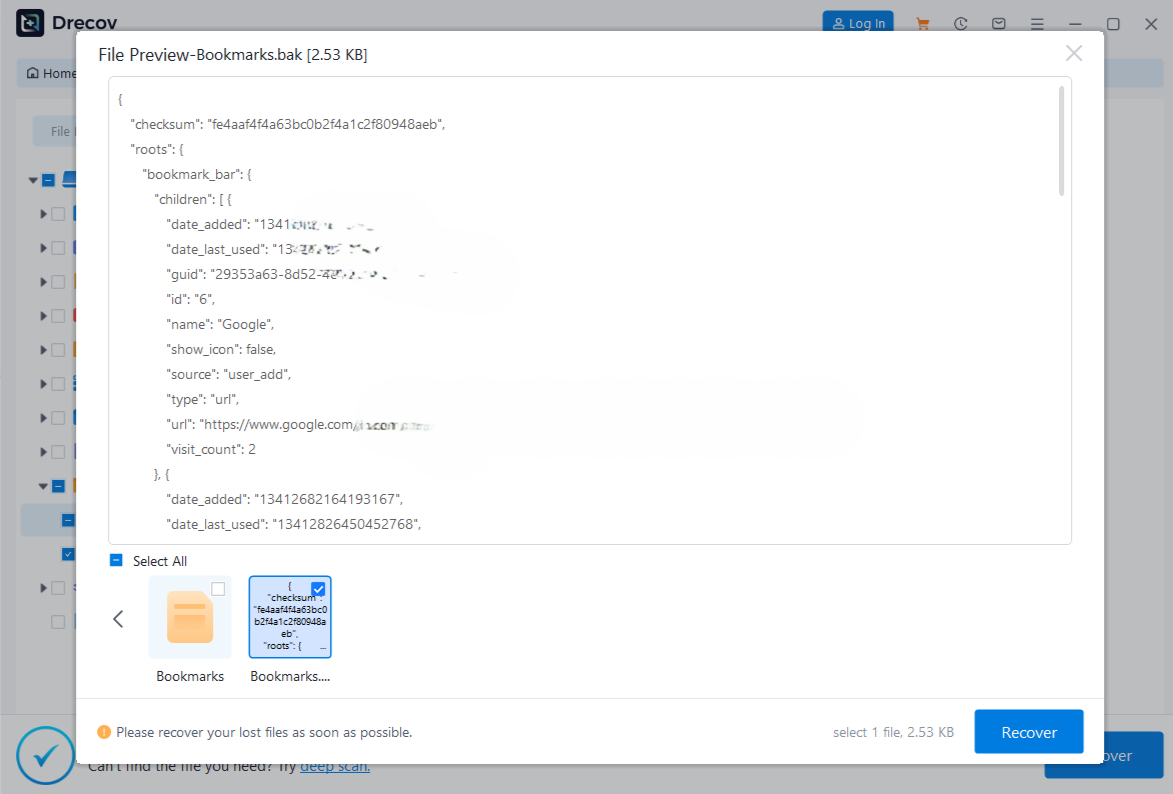
- Step 4: Execute Recovery. Select the folders you mistakenly deleted (e.g., the
%APPDATA%\Mozilla\Firefox\Profiles\path). Click “Recover” and choose a destination folder different from the original path to avoid data overwriting.
By utilizing PandaOffice Drecov, you ensure that even if a mistake is made during a deep system purge, your valuable data remains accessible.
How to Delete Firefox Browser Plug When Firefox Is Deleted (macOS)
Mac users face a different file structure, as macOS stores “Application Support” files in a hidden Library.
- Step 1: Remove the Application Container
- Open Finder and navigate to Applications.
- Locate Mozilla Firefox and move it to the Trash. Empty the Trash immediately.
- Step 2: Purge the Library Folders
- In Finder, click Go in the top menu bar, hold the Option key, and select Library.
- Navigate to
~/Library/Application Support/Firefox/and delete the entire directory. - Go to
~/Library/Caches/Firefox/and remove those files. - Check
~/Library/Internet Plug-Ins/for any files with “Firefox” in the name.
Manually Removing Hidden Third-Party Plugins
Sometimes, a plugin isn’t actually “in” Firefox—it’s a system-wide component that Firefox was merely using. To address how to delete Firefox browser plug when Firefox is deleted for these specific cases, check these paths:
Windows Paths:
C:\Windows\System32\Macromed\Flash(Legacy)C:\Program Files\Java\jre[version]\bin\plugin2
macOS Paths:
/Library/Internet Plug-Ins//Library/Receipts/(Check for .pkg files related to browser extensions)
| Component Type | Storage Path (Windows) | Storage Path (macOS) |
| Profile Data | %APPDATA%\Mozilla\Firefox | ~/Library/Application Support/Firefox |
| Cache | %LOCALAPPDATA%\Mozilla\Firefox | ~/Library/Caches/Firefox |
| Registry/System | HKEY_LOCAL_MACHINE\Software\MozillaPlugins | /Library/Internet Plug-Ins/ |
Optimizing Your System After Plugin Removal
Once the files are gone, your system might still have cached paths pointing to non-existent plugins. To ensure peak performance, follow these three final actions:
- Flush DNS Cache: Sometimes plugins interact with network settings. Open Command Prompt and type
ipconfig /flushdns. - Clean Temporary Files: Use the built-in Windows “Disk Cleanup” tool to remove any temporary installation logs.
- Check Startup Items: On Windows, press
Ctrl + Shift + Escand go to the Startup tab. Disable any “Mozilla Maintenance Service” or unknown “Browser Helper Objects” (BHOs).
How to delete firefox browser plug FAQs
1. Why do I still see Firefox as an option for opening files?
This happens because the Windows Registry still contains file associations. You must navigate to HKEY_CLASSES_ROOT in the Registry Editor and delete keys associated with .html or .xhtml that point to “FirefoxHTML”.
2. Can I use PandaOffice Drecov to recover deleted bookmarks only?
Yes. When using PandaOffice Drecov, look for a file named places.sqlite. This specific file contains your bookmarks and history. Recovering just this file allows you to import it into a different browser later.
3. Is it dangerous to delete the “MozillaPlugins” registry key?
If Firefox is already uninstalled, it is generally safe. However, if you have other Mozilla products (like Thunderbird), ensure you only delete sub-keys specifically mentioning “Firefox” to avoid breaking your email client.
4. How do I know if a plugin is successfully deleted?
A successful deletion is confirmed when the folder paths mentioned in this guide no longer exist and the search term “Firefox” yields no results in your system’s “Program Files” or “Applications” folders.
5. Will removing these plugins speed up my computer?
Removing unused plugins reduces the number of background processes and clears up disk space. While the speed boost may be subtle, it significantly improves system security by removing unpatched, legacy software.
Conclusion
Mastering how to delete Firefox browser plug when Firefox is deleted requires a thorough approach that goes beyond the standard uninstaller. By manually purging the %APPDATA% folders, cleaning the Windows Registry, and checking system-level Internet Plug-Ins on macOS, you can ensure a truly clean environment. If you accidentally delete important data during this process, tools like PandaOffice Drecov provide a reliable safety net for recovery.
In summary, remember these three pillars of a clean system:
- Manual Deletion: Always check the hidden Library or AppData folders.
- Registry Hygiene: Remove orphaned keys to prevent file association errors.
- Recovery Preparedness: Keep a tool like Drecov handy for unintended data loss.
Following these steps will result in a faster, more secure computer free from the digital ghosts of browsers past.






