







For card is not formatted meaning, protect the original data first. The “card is not formatted” message means the camera, phone, or computer cannot mount the card’s current file system in the expected way. It does not prove that the card is blank, and formatting is not a recovery step. Cancel the prompt when files matter. Check the reader, device compatibility, capacity, and physical stability first. Recover or copy important files to another device before formatting, repairing, or initializing the card.
card is not formatted meaning: safe diagnosis
The reader or adapter cannot communicate reliably
A worn adapter, marginal USB reader, dirty contact, underpowered hub, or damaged port can interrupt identification. Test one known-good reader and direct port. For microSD, try another compatible adapter. Avoid cycling through many connections when the card repeatedly vanishes or becomes hot.
The device does not support the card or file system
An older camera may not support a high-capacity SDXC card or the file system used by another device. A card formatted for a phone or specialized system can appear unformatted to Windows. Check the host device’s supported capacity and card type before changing anything.
The file system is logically damaged
Unsafe removal, power loss during writing, a camera crash, or interrupted formatting can damage the boot sector, allocation structures, or directory records. The device may see the card’s capacity yet be unable to mount its folders. This is a logical-loss situation only if the card remains stable.
The flash media or controller is failing
A card that changes capacity, disconnects, becomes read-only unexpectedly, reports pervasive I/O errors, or disappears across readers may have hardware trouble. Stop repeated scans and do not format it. Valuable data may require a specialist with suitable imaging capability.
Read the Detection State Without Writing to the Card
Cancel every format or initialize prompt. In Windows, inspect Disk Management without creating a volume. Record the reported capacity, partition state, and file system. A correct capacity with RAW or an unreadable partition points toward logical damage. No media, zero capacity, or changing capacity suggests a deeper detection problem.
Cross-test carefully: one card in another known-good compatible reader, and one known-good card in the original reader. If the problem follows the reader, replace the reader. If it follows the card, preserve the card. If it occurs only in one camera, check that device’s supported card specifications and whether it expects in-camera formatting.
Do not run CHKDSK before needed files are safe. CHKDSK changes file-system metadata and may reconnect or discard damaged entries to make the volume consistent. Do not use DiskPart clean, create partition, or format. Those commands replace structures recovery depends on.
Check the adapter’s write-protect switch, but do not confuse read-only access with an unreadable file system. Counterfeit or failing cards may report false capacity and corrupt data beyond a threshold. Preserve readable data before any destructive capacity test. A battery failure during recording or removal while the activity light was on also points toward interrupted metadata.
If only one large video is missing while other folders open normally, the issue may be an unfinished recording rather than an unformatted volume. Copy every readable file first, including sidecar and database files. Later video repair should use copies, not the only card.
The related SD card detection checklist helps when Windows asks for media rather than showing a stable capacity.
Recover Files From a Stable Card Before Repair
Drecov is Windows data recovery software for logical data loss on SD cards, memory cards, USB devices, PCs, hard drives, SSDs, and external drives. Its read-only recovery mode, SD Card Recovery, Quick Scan, Deep Scan, filtering, preview, and recovery to another healthy location fit a card that remains detected with consistent capacity. Lost Partition Recovery applies when a partition entry disappeared. Drecov does not repair flash hardware, fix a defective reader, or guarantee overwritten files.
⚠ Warning: Install it on a drive different from the one where your data was lost to prevent overwriting.
Remove the card from the device that produced the prompt. Use a reliable reader and prepare a healthy destination. If the card disconnects or produces serious read errors, stop. Imaging or professional recovery is safer than repeated direct scans.
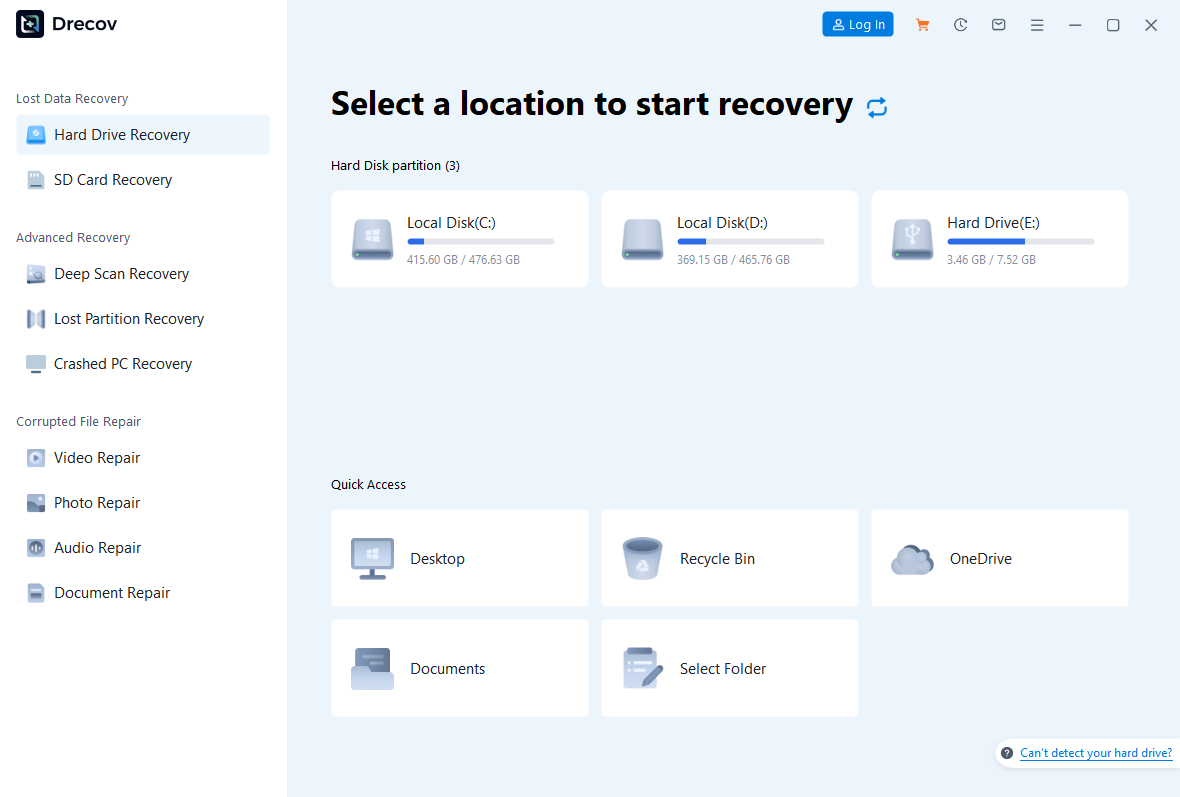
Step 1: Open Drecov and choose the original card
Do not install Drecov on the card or any volume containing other lost files. Open Drecov, select SD Card Recovery, and confirm the source by capacity. If the partition is missing, select Lost Partition Recovery rather than recreating it.
Step 2: Run Quick Scan
Start Quick Scan and browse expected camera folders, user folders, names, dates, and sizes. Prioritize unique photos, videos, and documents. The deleted-photo recovery methods provide additional photo-specific checks.
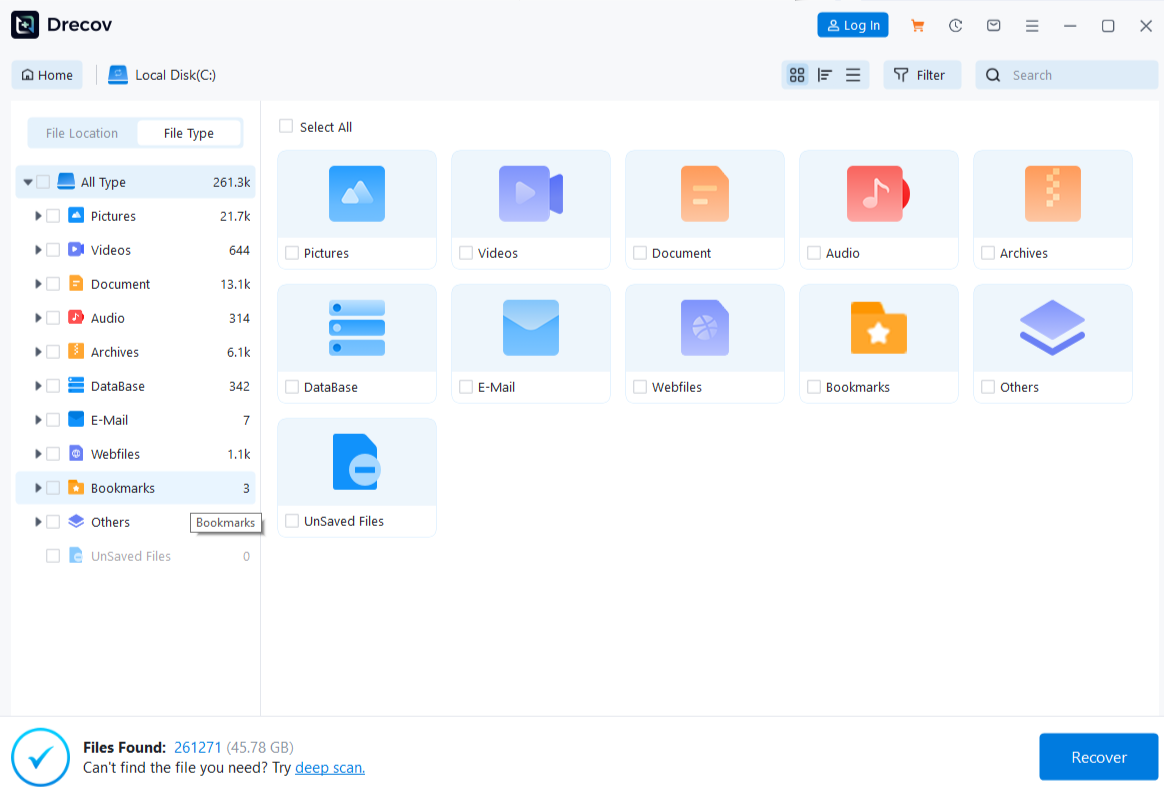
Step 3: Use Deep Scan only while the card is stable
This check is especially useful for card is not formatted meaning. If Quick Scan misses the target files and detection remains consistent, run Deep Scan. Stop if the card drops offline, slows severely, changes capacity, or causes repeated I/O errors.
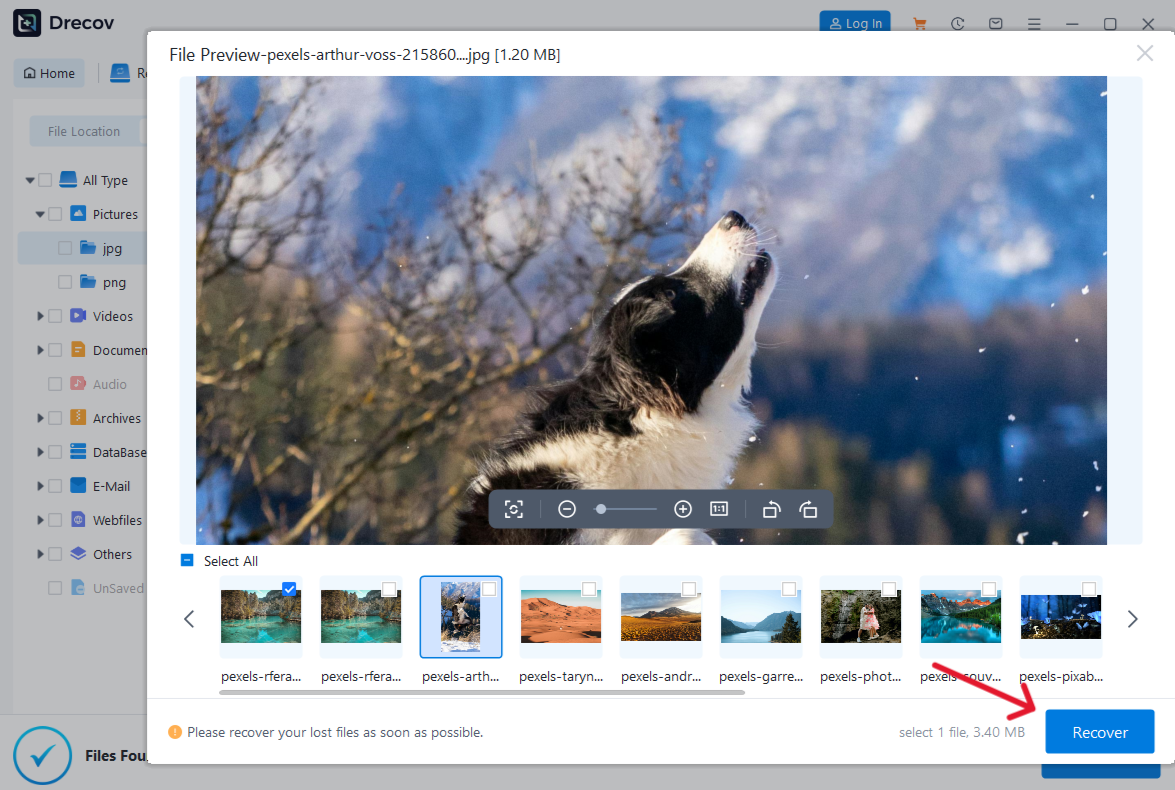
Step 4: Filter and preview representative files
It helps diagnose card is not formatted meaning without changing the source data. Filter by file type, former path, name, size, or date. Preview supported photos, videos, documents, and archives. A successful preview is evidence for that sample, not every frame or page.
Step 5: Recover to another healthy device
Save selected files to the prepared disk, never back to the card. Check the Drecov Folder or Recovery Folder if output is not where expected. Keep uncertain versions rather than overwriting files with identical names.
⚠ Warning: Install it on a drive different from the one where your data was lost to prevent overwriting.
Step 6: Verify before formatting
Open recovered documents, inspect photos at full resolution, play videos beyond the opening seconds, and extract archives. Back up the verified results. Only then consider formatting or replacing the card. The Drecov homepage is the product entry point.
Format Only After the Data Decision Is Finished
If no files are needed, or recovery and backup have been verified, format the card in the device that will use it when the manufacturer recommends that workflow. For general SD media on a computer, the SD Association provides an official formatter and explains that quick formatting initializes file-system parameters. Review its SD Memory Card Formatter FAQ rather than assuming format has no data consequence.
Choose the file system and capacity supported by the destination device. Do not select allocation settings merely because a forum claims they improve speed. Cameras often create their expected folder structure after in-device formatting. A card that immediately returns to RAW, rejects formatting, or fails verification should be retired rather than trusted with new photos.
After formatting, perform a controlled test. Capture several nonessential files, power the device down normally, reconnect the card, copy the files, and open them. Check the full reported capacity. A successful short test does not make an aging card archival storage; maintain another copy of important content.
Do not trust the card solely because formatting completes. Destructive capacity tests belong only after recovery. If the format prompt returns, capacity changes, or verification fails, retire the card. For future use, copy rather than move files, verify two copies, and format in the camera only after the ingest is complete.
The exFAT allocation-unit explanation is relevant after recovery when preparing supported high-capacity media, not while irreplaceable data remains inaccessible.
Questions Behind the Format Warning
Does the prompt mean the card is empty?
No. Data can remain present while the file-system structures needed to list it are damaged or unsupported.
Will quick format make files visible again?
No. Formatting creates new file-system structures. It can make the card usable but does not restore the old directory tree.
Can I try the card in another phone or camera?
Use only a compatible device and reject any format request. A reliable reader connected to a computer usually gives clearer detection evidence.
Why does the card work in the camera but not Windows?
The reader or computer may lack support for the card type or file system, or the camera may expose files through a different connection method. Copy through the working device before experimenting.
Should I keep using a card after recovery?
Only after formatting and testing, and never as the sole storage for important files. Repeated errors, changing capacity, or renewed format prompts justify replacement.
Treat Formatting as the Final Step
Keep a simple incident record before returning the card to service: device model, card capacity, reader used, exact prompt, last successful operation, recovery destination, and verification result. This record helps distinguish a one-time unsafe-removal event from a recurring hardware fault. It also prevents another person from accepting the format prompt before checking whether recovery finished. Label the card as suspect until testing is complete, and never use it for the only copy of a new event or project.
A card format warning is a symptom, not permission to erase. Determine whether the fault follows the reader, host compatibility, file system, or physical card. If the card is stable and data matters, Drecov can scan it and recover selected files to another healthy device. Verify those files first, including complete documents, large videos, and compressed archives rather than thumbnails alone. Format and test only after the recovery decision is complete, and retire any card that cannot remain consistently and reliably readable.
⚠ Warning: Install it on a drive different from the one where your data was lost to prevent overwriting.





