







For mbr2gpt can only be used from the windows preinstallation environment, protect the original data first. If MBR2GPT says it can only be used from the Windows Preinstallation Environment, you probably launched its default mode from full Windows. Microsoft supports running it in Windows PE, or in a supported full Windows installation with the /allowFullOS option. Do not jump straight to conversion. Confirm the disk number, protect important files, run validation first, and verify that the computer supports UEFI. Conversion changes partition and boot metadata even though the tool is designed to preserve data.
mbr2gpt can only be used from the windows preinstallation environment: safe diagnosis
MBR2GPT defaults to the Windows PE execution path. When it detects a normal running Windows session without the override, it blocks the operation and displays the environment message. This is not a disk-layout validation result. It says the command mode and environment do not match.
Microsoft’s official MBR2GPT documentation states that /allowFullOS permits execution in full Windows. It also explains an important difference: because the existing MBR system partition is in use, full-OS conversion may create a new EFI System Partition by shrinking the OS partition. The tool validates prerequisites before conversion, but that does not replace a backup.
Windows PE remains useful when the installed system cannot boot, when an offline workflow is required, or when deployment tooling already runs there. Full Windows is more convenient for a healthy machine, but convenience is not permission to skip validation or firmware planning.
Complete the Preflight Before Changing Partition Style
Confirm that you are working on the system disk
MBR2GPT is intended for an operating-system disk, not a random data disk. Open Disk Management or use read-only DiskPart listing commands to identify the current Windows disk by model, size, partitions, and the active system layout. Do not assume Disk 0 on every machine. Disconnect unrelated removable drives when practical.
Check that the disk is MBR and the firmware supports UEFI
A GPT conversion is useful only if the machine can boot in UEFI mode afterward. Check the motherboard or PC documentation. Record the current firmware settings rather than toggling them before conversion. MBR2GPT’s successful conversion must be followed by switching the firmware boot mode to UEFI; otherwise Windows may not start.
Review the layout limits
Microsoft lists prerequisites including an MBR disk, sufficient unallocated space for GPT structures, no extended or logical partition, no more than three primary partitions, a recognized system partition, retrievable volume IDs, and a valid default OS entry in BCD. Validation failure is a request to inspect the layout, not to delete partitions blindly.
Preserve BitLocker recovery material
If BitLocker protects the disk, save and verify the recovery key. Follow Microsoft’s supported preparation for protection suspension. Do not clear the TPM or delete recovery information. Firmware and boot-mode changes can trigger a legitimate recovery-key request.
Protect Files Before Validation Becomes Conversion
Make a current backup to separate healthy storage and open a representative sample. If Windows is unstable, partitions are missing, or files are inaccessible, recover data before conversion. MBR2GPT updates the partition style, creates or reuses an EFI System Partition, installs UEFI boot files, and updates BCD. Those are purposeful writes to critical metadata.
Do not use DiskPart clean, delete a recovery partition, shrink volumes manually, or run third-party partition fixes merely to make validation pass while needed files lack a verified copy. Investigate the reported return code and logs. The guide to a missing EFI System Partition explains why EFI creation and data recovery are separate tasks.
If the drive clicks, disappears, reports severe read errors, or changes capacity, stop. Partition conversion is inappropriate for unstable hardware. Image the source with a recovery-aware method or consult a professional.
Test trusted Windows recovery media before conversion so WinRE remains available if firmware does not find the new boot entry. Record the existing partition map and validation logs. If MBR2GPT later reports that it cannot identify Windows, use the separate OS partition diagnosis rather than repeating conversion or deleting partitions.
Keep the manufacturer’s firmware instructions offline. After conversion, you must know how to enter setup, select UEFI mode, and choose Windows Boot Manager. This preparation turns a boot-mode change into a reversible diagnostic step instead of guesswork.
Run the Supported Path for Your Environment
Path A: Validate from full Windows
Open Command Prompt as administrator. Use the verified disk number and run a validation command such as mbr2gpt /validate /disk:0 /allowFullOS, replacing 0 only when your evidence identifies another system disk. Validation performs eligibility checks without requesting conversion. Read the return code and logs before proceeding.
If validation succeeds and the backup is verified, the corresponding conversion command uses /convert with the same disk and /allowFullOS. Do not copy a command from another computer without confirming its disk number. Full-OS conversion may need to shrink the Windows partition to create the EFI partition.
Path B: Validate from Windows PE
Boot trusted Windows installation or recovery media in the intended architecture. Choose the repair or command-prompt path rather than beginning installation. In WinPE, drive letters may differ from normal Windows. Identify disks by size, layout, and contents. The default MBR2GPT mode does not require /allowFullOS there.
This check is especially useful for mbr2gpt can only be used from the windows preinstallation environment. Run validation first. If it succeeds, conversion can follow using the same verified disk number. Preserve logs where possible. A return code other than success should lead to diagnosis, not repeated conversion attempts.
After conversion
Restart into firmware setup and change Legacy/CSM boot to UEFI according to the manufacturer’s instructions. Select Windows Boot Manager if necessary. Once Windows starts, inspect Disk Management, verify the EFI partition and GPT style, check BitLocker state, and open important files. The Windows Boot Manager checks help when firmware cannot find the new entry.
When Drecov Is Needed Before MBR2GPT
It helps diagnose mbr2gpt can only be used from the windows preinstallation environment without changing the source data. Drecov is Windows data recovery software for logical loss on PCs, hard drives, SSDs, external drives, USB devices, and memory cards. Pandaoffice Drecov offers read-only recovery mode, Quick Scan, Deep Scan, filters, preview, recovery to a healthy destination, Lost Partition Recovery, and Crashed PC Recovery. It fits a case where needed files or a partition are missing before conversion. It does not perform MBR-to-GPT conversion, repair firmware, or guarantee recovery from overwritten or physically damaged media.
⚠ Warning: Install it on a drive different from the one where your data was lost to prevent overwriting.
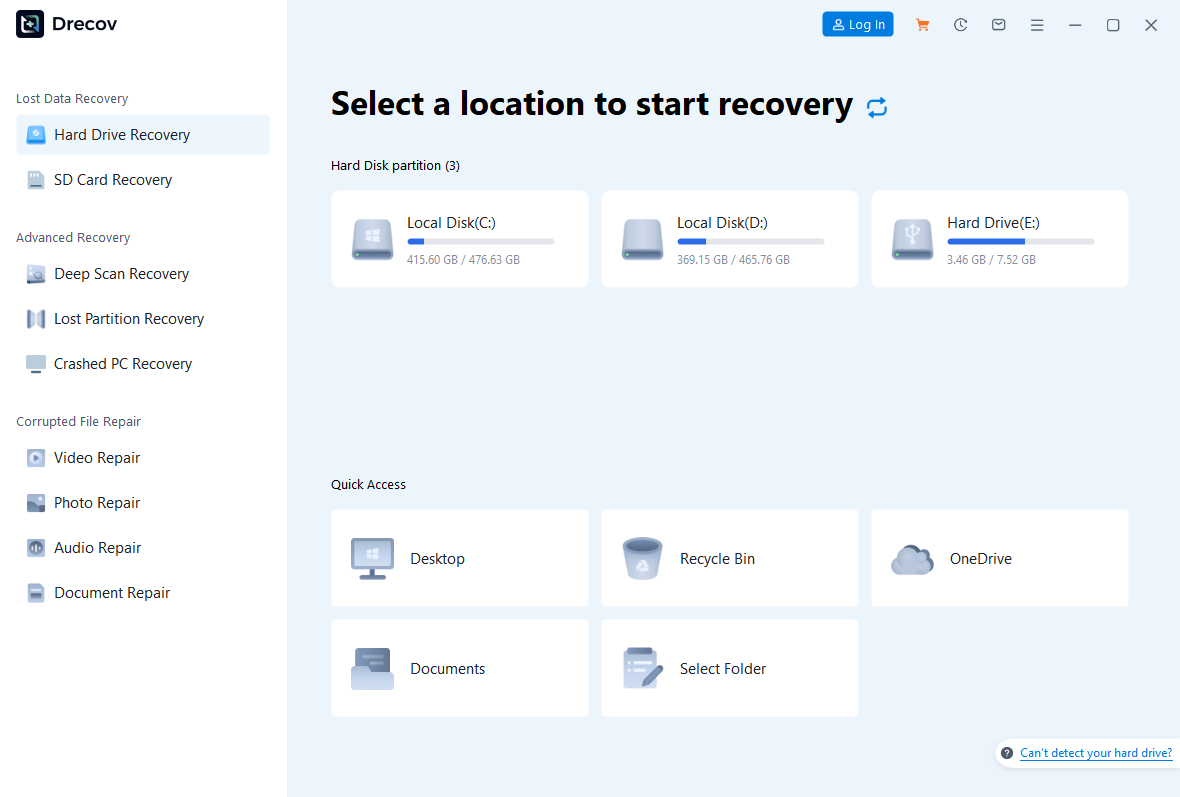
Step 1: Open Drecov and choose the original location
Prepare another healthy destination. Do not install Drecov on the affected Windows partition. Open it and select the volume that held the files. If the partition entry is missing, use Lost Partition Recovery; if the PC cannot boot, use the supported Crashed PC Recovery path.
Step 2: Start Quick Scan
Run Quick Scan and inspect original folders, names, dates, and sizes. Prioritize irreplaceable documents and project data before any conversion work.
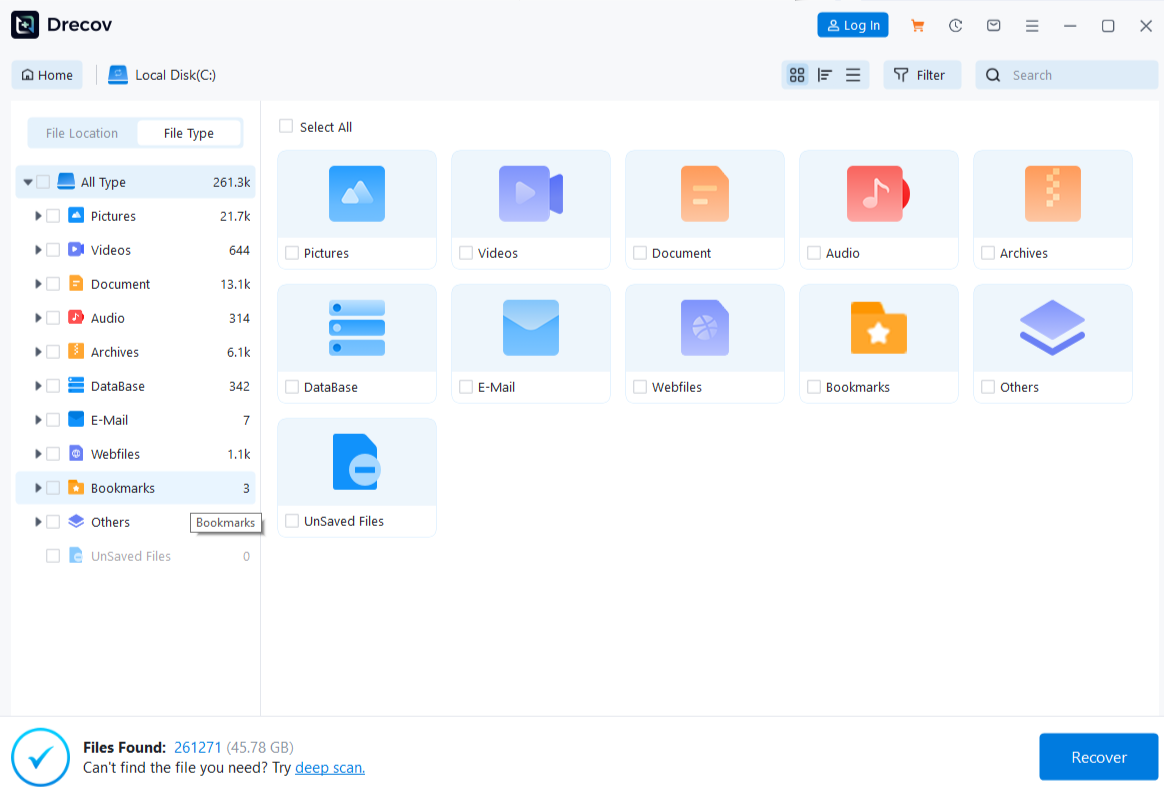
Step 3: Use Deep Scan only on stable media
Continue with Deep Scan if Quick Scan misses the target and the disk remains stable. Stop direct scanning if the drive disconnects or reports serious read errors.
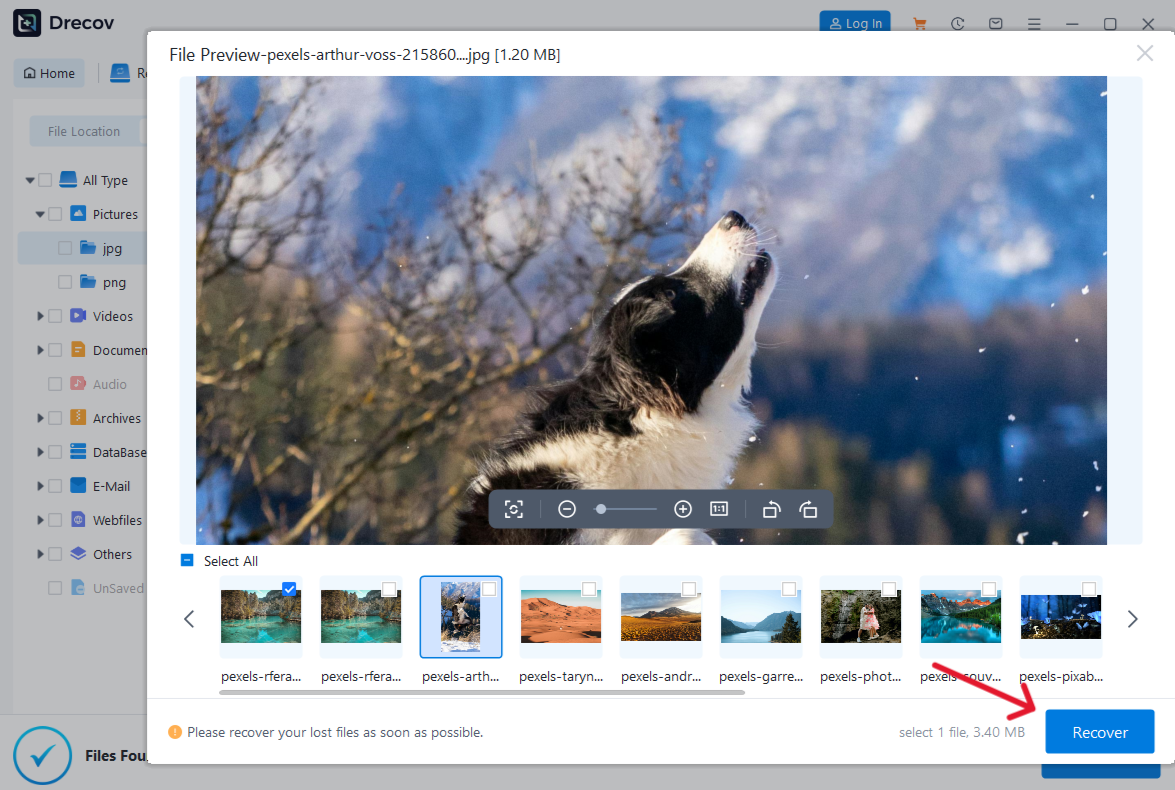
Step 4: Filter and preview files
Filter by type, former path, name, size, or date. Preview representative supported files. Preview confirms only the samples inspected, not the entire data set.
Step 5: Recover to another disk
Save selected files to the separate healthy destination, never the source. Check the Drecov Folder or Recovery Folder if output is not in the expected directory.
⚠ Warning: Install it on a drive different from the one where your data was lost to prevent overwriting.
Step 6: Verify, then return to conversion
Open recovered files, compare expected counts, and create another backup where appropriate. Only then resume MBR2GPT validation. The Drecov homepage provides the recovery entry point.
Interpret Common Outcomes Without Guessing
The same environment message remains
Confirm that /allowFullOS is present only when running in full Windows and that the executable is the supported system copy. In WinPE, omit the override and verify the command syntax.
Validation fails on disk layout
Read the logs and return code. Count partitions and check for extended or logical layouts, free space requirements, BCD state, encryption, and recognized partition types. Do not delete data partitions as a generic fix.
Conversion succeeds but the PC does not boot
Confirm the firmware changed to UEFI and that Windows Boot Manager is selected. Avoid reconverting or formatting. If the EFI entry is absent, diagnose boot files after confirming that data remains safe.
The machine lacks UEFI support
Do not convert solely to satisfy a Windows requirement the hardware cannot meet. Keep the verified backup and reconsider the upgrade or hardware plan.
Conclusion
Do not remove the pre-conversion backup after the first successful boot. Restart at least once, confirm Windows updates and storage drivers load, inspect Device Manager, and open files from several folders. Verify recovery media still boots in UEFI mode. If the machine belongs to an organization, confirm that BitLocker escrow and management tools recognize the converted device. Only then should you retire the fallback image or reuse its storage.
The Windows PE warning is usually solved by using the correct execution mode, but the larger task is safe conversion. Verify the system disk, UEFI support, partition layout, BitLocker material, backup, and validation result. Use Drecov first when files are missing or inaccessible. Then run MBR2GPT from WinPE or with /allowFullOS, change firmware to UEFI, and verify Windows and data before removing the fallback copy.
⚠ Warning: Install it on a drive different from the one where your data was lost to prevent overwriting.





