







If “the drive where Windows is installed is locked” appears during Reset, Refresh, or recovery, do not immediately format the disk or run a chain of boot commands. The message can mean BitLocker is protecting the volume, Windows Recovery Environment cannot see the storage controller, the offline Windows partition has a different letter, or file-system and boot metadata are damaged. First determine whether the disk is detected and whether your files remain readable. That evidence decides whether you should unlock, recover data, load a driver, or repair startup files.
the drive where Windows is installed is locked: safe diagnosis
The warning usually appears outside the normal Windows session, often after choosing a recovery option. It describes the recovery tool’s inability to use the Windows volume in the expected way. It does not prove that the disk is encrypted, physically broken, or permanently inaccessible. Treat it as a state report rather than a diagnosis.
WinRE can assign letters differently from normal Windows. Your usual C: volume may appear as D: or E:. A command aimed at C: can therefore inspect the recovery partition instead of the installed operating system. Storage-controller drivers can also be absent from recovery media, especially on systems using RAID or vendor-specific controllers. In that case, DiskPart may show no internal disk even though firmware still lists it.
Encryption is another branch. BitLocker can leave an operating-system volume locked until the recovery key is supplied. Microsoft explains that changes to the trusted boot environment can trigger recovery and that WinRE can unlock a protected volume with the correct recovery material. Review the official BitLocker recovery guidance before entering keys or changing firmware settings.
Read the Detection State Before Choosing a Repair
The disk is absent from firmware
If BIOS or UEFI does not list the internal drive, Windows commands cannot solve the underlying detection problem. Power down. For a desktop, check one known-good power and data connection if you are comfortable working inside it. For a laptop, avoid repeated disassembly. Clicking, repeated spin-up, unexplained disappearance, or changing capacity indicates possible hardware instability. Stop power cycling and seek professional recovery when the files matter.
Firmware sees the disk, but WinRE does not
This pattern points toward a missing storage-controller driver, a controller-mode change, or incompatible recovery media. Record the current SATA, AHCI, RAID, or VMD setting before touching it. Do not toggle controller modes at random because Windows may then fail to boot for a second reason. Obtain the correct storage driver from the PC or motherboard manufacturer and use WinRE’s Load Driver option where applicable.
DiskPart shows the disk and partitions
At the WinRE command prompt, diskpart, list disk, and list volume provide a read-only inventory until you issue a modifying command. Match volumes by size, file system, label, and contents rather than assuming a letter. Exit DiskPart before browsing a candidate volume. A folder listing that contains Windows, Users, and Program Files is stronger evidence of the correct OS volume than the letter alone.
The volume reports BitLocker protection
Use manage-bde -status to inspect protection state. If the volume is locked, locate the genuine recovery key from the Microsoft account, organizational directory, printout, or saved file associated with that device. Do not disable Secure Boot, clear the TPM, or erase protectors merely to suppress the prompt. Those actions can complicate legitimate recovery.
Protect Personal Files Before Reset or Boot Reconstruction
If the disk remains stable and the volume is readable after unlocking or identifying its correct letter, copy irreplaceable files to a separate healthy drive before repair. Prioritize user profiles, project folders, email data, browser exports, and application-specific databases. Open a sample from the destination to prove the copy is usable. A completed copy is more meaningful than a command reporting success.
Do not choose Reset, reinstall Windows, initialize the disk, delete partitions, or format a volume while the only copy of needed files remains there. The same caution applies to aggressive use of CHKDSK. File-system repair changes metadata; it is not a file-recovery method. The safer order is recovery or verified backup, then repair.
If the computer will not boot but its disk is stable and readable, the Windows Boot Manager diagnosis can help separate a missing boot entry from a missing disk. When the machine cannot see any boot device, use the checks in No Boot Disk Has Been Detected. These are related conditions, but neither should be assumed solely from the locked-drive wording.
Recover Files From a Stable, Detectable Windows Disk
Drecov is Windows data recovery software for PCs, hard drives, SSDs, external drives, USB devices, and memory cards. Its read-only recovery workflow, Quick Scan, Deep Scan, filtering, preview, and recovery to a separate healthy destination fit a logical-loss case where the original disk stays detectable. Lost Partition Recovery is available when a partition entry has disappeared, while Crashed PC Recovery addresses a non-booting PC workflow. Drecov does not unlock BitLocker without the key, repair a storage controller, fix physical damage, or guarantee data that has been overwritten.
⚠ Warning: Install it on a drive different from the one where your data was lost to prevent overwriting.
Use recovery software only when the source remains stable. If the disk disconnects, produces severe read errors, makes abnormal sounds, or changes capacity, stop direct scanning. A specialist can decide whether imaging with controlled hardware is safer.
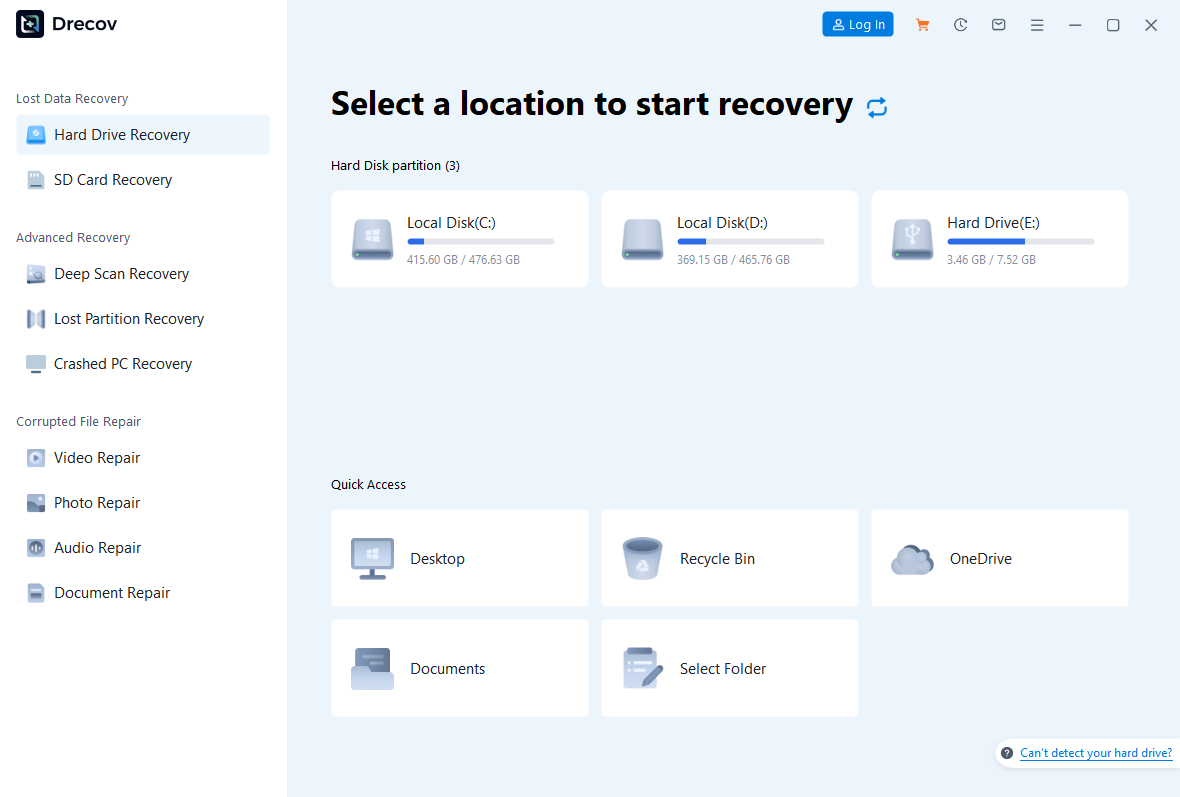
Step 1: Open Drecov and choose the original loss location
Prepare another healthy disk with enough free space. Install and run Drecov from Windows or a suitable recovery setup without installing it on the affected partition. Select the original Windows volume if it is visible. If the partition itself is missing, choose Lost Partition Recovery rather than creating a new partition.
Step 2: Run Quick Scan and inspect the first results
It helps diagnose the drive where Windows is installed is locked without changing the source data. Start Quick Scan. Browse the original folder structure and check whether the needed user files appear with plausible names and sizes. Do not interpret a large result count as proof that every item is recoverable.
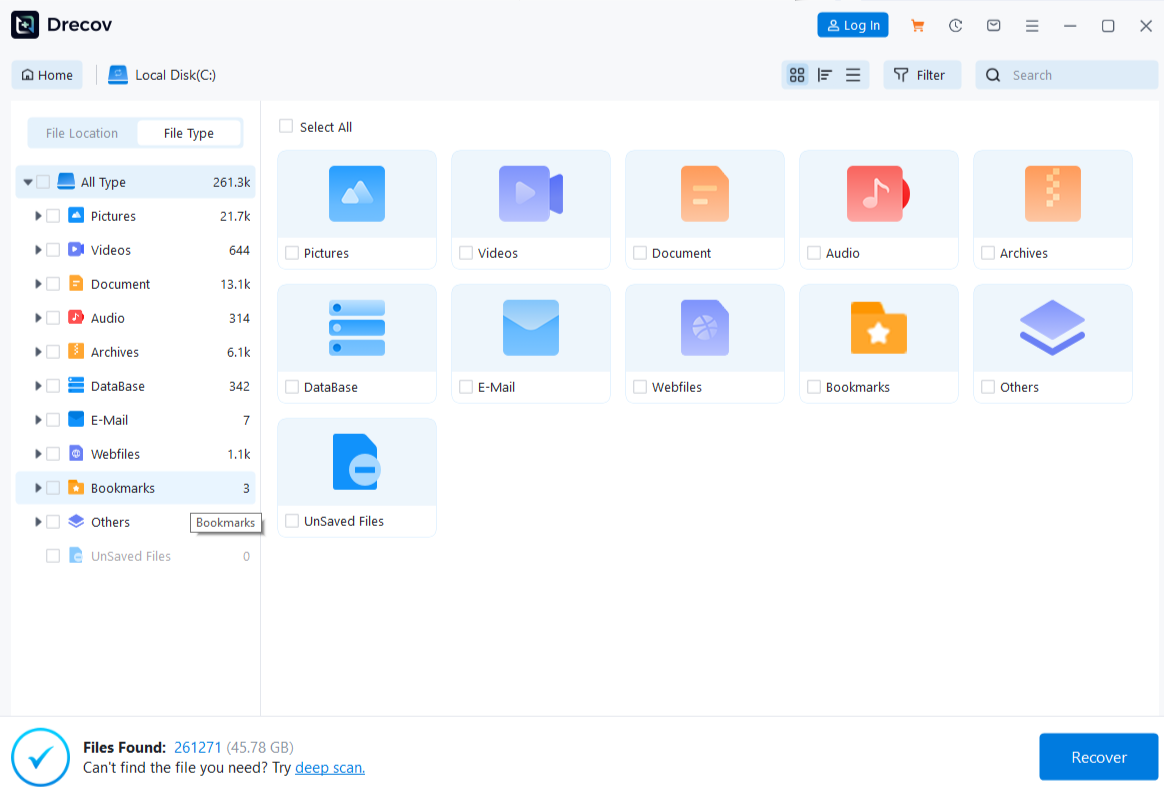
Step 3: Use Deep Scan only when the disk is stable
This check is especially useful for the drive where Windows is installed is locked. If Quick Scan does not locate the target files and the disk maintains a stable connection, run Deep Scan. A deeper search can find records no longer linked through the current file system, but it causes additional reads. Stop if the device becomes unstable.
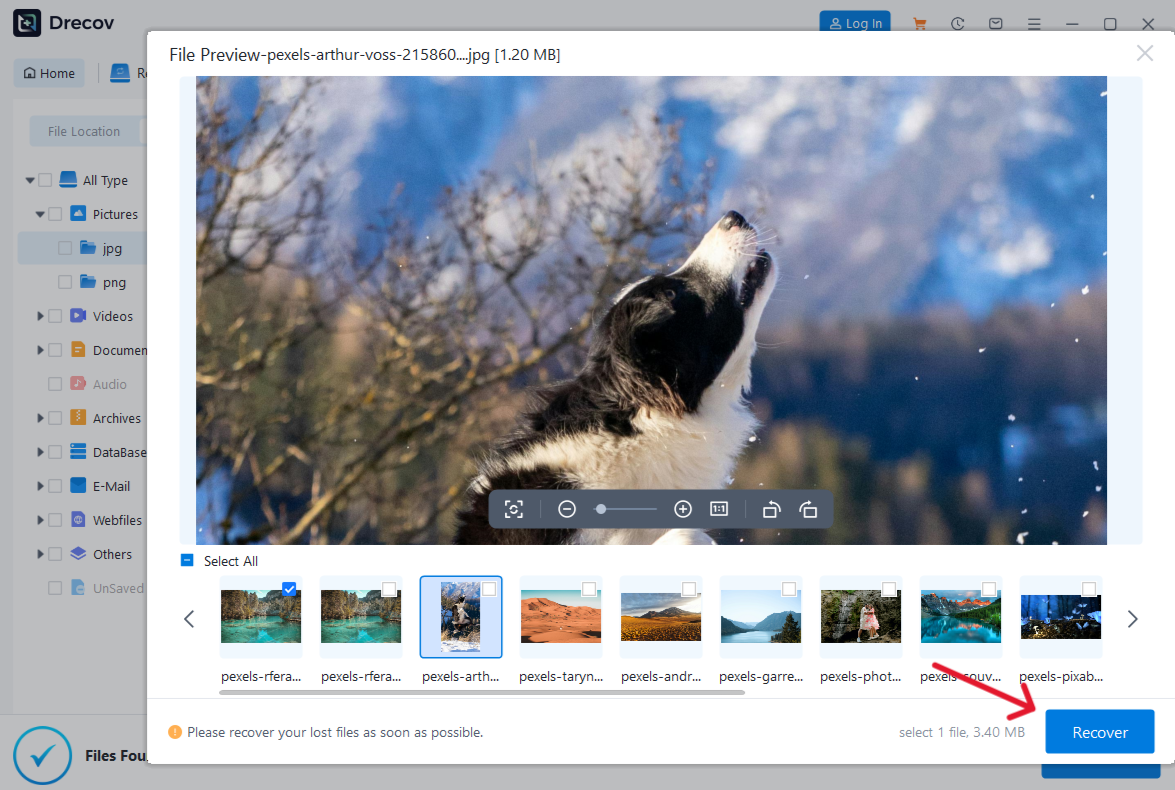
Step 4: Filter, locate, and preview representative files
Narrow the results by file type, former path, name, size, or date where available. Preview several important documents, photos, videos, archives, or email files. A successful preview is useful evidence for that sample, but it cannot certify every page, frame, or archive member.
Step 5: Recover to another healthy device
Select the required files and save them to the prepared destination, never back to the locked Windows disk. Writing to the source can overwrite other recoverable data. If output is not where expected, check the Drecov Folder or Recovery Folder.
⚠ Warning: Install it on a drive different from the one where your data was lost to prevent overwriting.
Step 6: Verify before changing the source
Open a representative group of recovered files from the destination. Check document contents, photo resolution, video playback, archive extraction, and project dependencies. Only after verification should you proceed with boot repair, Reset, partition work, or reinstallation. The Drecov homepage provides the product entry point.
Choose the Repair That Matches the Evidence
BitLocker is the only barrier
Unlock the correct volume with its valid recovery key. Confirm access to files before attempting Reset again. If the key is rejected, verify the key identifier and device account instead of trying unrelated keys. A BitLocker problem is not solved by rebuilding BCD data.
The recovery environment used the wrong letter
Repeat any diagnostic command against the verified OS volume. Keep a written mapping for that WinRE session. Drive-letter differences outside Windows are normal and do not require permanent reassignment.
Boot records are inconsistent
After data is safe, Startup Repair is a reasonable first built-in option. Manual BCD reconstruction is appropriate only when diagnostics support a boot-configuration fault. Record the output of each command and stop when the result changes; repeating a collection of boot commands can hide the original evidence.
The file system is damaged
Recover or image important data before repair. Then evaluate CHKDSK on the correct volume, understanding that it may discard or reconnect damaged metadata to make the file system consistent. If you encounter an in-use-volume message, read the explanation of CHKDSK cannot lock the current drive rather than forcing the command.
Questions People Ask About a Locked Windows Drive
Does the message always mean BitLocker is enabled?
No. BitLocker is one cause. A missing controller driver, wrong offline drive letter, damaged file system, or inconsistent boot metadata can produce a similar recovery failure.
Can I format the partition to unlock it?
Formatting creates a new file system and destroys the current access structure. It is not an unlocking method. Recover or verify backups first.
Should I run CHKDSK immediately?
Not when needed files lack a verified backup. CHKDSK modifies file-system structures. Copy, image, or recover data before using it on a damaged volume.
Why is Windows on D: in the recovery command prompt?
WinRE builds its own temporary letter mapping. Identify the OS partition by size and folders rather than relying on the letter used during normal startup.
Can Drecov unlock an encrypted drive?
No. The volume must be legitimately unlocked with its BitLocker recovery material before software can access its files. Drecov addresses logical data recovery, not encryption bypass.
Conclusion
The locked-drive message becomes manageable once you stop treating it as a single fault. Confirm hardware detection, identify the real Windows volume, check BitLocker status, and secure important files. Use Drecov only for a stable, detectable logical-loss case and recover to another device. With data verified, apply the repair supported by the evidence—driver loading, legitimate unlocking, Startup Repair, file-system repair, or reinstallation—without gambling the only copy of your files.
⚠ Warning: Install it on a drive different from the one where your data was lost to prevent overwriting.





