







In the modern digital landscape, your web browser is more than just a window to the internet; it is a complex engine that stores vast amounts of temporary data to speed up your browsing experience. However, this convenience often comes at a cost. Over time, accumulated data can lead to performance lags, privacy concerns, or technical glitches. Knowing how to clear cache and cookies on Firefox is a fundamental skill for any internet user.
But what happens when you go too far? Perhaps you accidentally wiped your browsing history or deleted essential cookies that kept you logged into critical work portals. This guide provides a comprehensive deep dive into maintaining your Firefox browser, troubleshooting common issues, and utilizing professional tools like PandaOffice Drecov data recovery software to rescue lost information.
Understanding the Basics: Why Clear Your Browser Data?
Before we jump into the technical steps, let’s clarify what we are actually removing.
- Cache: This is a collection of temporary files (images, scripts, and stylesheets) from websites you have visited. Firefox saves these so that when you return to the site, it doesn’t have to download everything from scratch.
- Cookies: These are small text files that websites place on your computer to remember your preferences, login status, and tracking information.
While these tools are designed to help you, they can become corrupted. If a website looks “broken” or won’t let you log in, learning how to clear cache and cookies on Firefox is usually the first step to a fix.
Standard Procedure: How to Clear Cache and Cookies on Firefox
Firefox provides a user-friendly interface to manage your data. Follow these steps to perform a standard cleanup.
- Step 1: Open your Firefox browser and click on the Application Menu (the three horizontal lines in the top-right corner).
- Step 2: Select Settings from the dropdown menu.
- Step 3: On the left-hand sidebar, click on Privacy & Security.
- Step 4: Scroll down to the Cookies and Site Data section.
- Step 5: Click the Clear Data… button.
- Step 6: A dialog box will appear. Ensure both “Cookies and Site Data” and “Cached Web Content” are checked, then click Clear.
Pro Tip: You can quickly access this menu using the hotkey Ctrl + Shift + Delete (Windows) or Command + Shift + Delete (Mac).
Selective Cleaning: Clear Firefox Cache Without Deleting History
Many users hesitate to perform a full cleanup because they don’t want to lose their list of visited websites. Fortunately, you can easily clear Firefox cache without deleting history by being selective in the settings.
- Step 1: Use the hotkey Ctrl + Shift + Delete to bring up the “Clear Recent History” window.
- Step 2: In the “Time range to clear” dropdown, select Everything to ensure a deep clean of the files.
- Step 3: Under the “History” list, uncheck the box labeled “Browsing & Download History”.
- Step 4: Ensure that Cache is checked. You may also choose to check Cookies if you are okay with logging back into your sites.
- Step 5: Click OK to execute the command.
This method ensures your “Awesome Bar” (the address bar) still suggests sites you’ve visited before, while removing the bulky temporary files that slow down the browser.
Troubleshooting: Firefox Clearing Cache Not Working
Sometimes, the standard “Clear Data” button seems to do nothing, or the browser freezes during the process. If you find firefox clearing cache not working, the issue might be rooted in file permissions or a corrupted profile.
Method 1: Manual Deletion via Profile Folder
If the internal UI fails, you can go straight to the source.
- Step 1: Open Firefox and type
about:supportin the address bar, then press Enter. - Step 2: Find the Profile Folder entry and click Open Folder.
- Step 3: Close Firefox completely.
- Step 4: In the folder that opened, locate the
cache2folder. - Step 5: Right-click the folder and select Delete. Firefox will recreate a fresh, empty version the next time it starts.
Method 2: Refreshing Firefox
If the cache remains stubborn, your profile might be the culprit.
- Step 1: Go back to
about:support. - Step 2: Click on Refresh Firefox… in the top right box.
- Step 3: Confirm the action. This will reset your settings but keep your bookmarks and passwords.
The Panic Moment: How to Recover Cleared History on Firefox
It happens to the best of us: you were following a guide on how to clear cache and cookies on Firefox, but you accidentally selected “Everything” and wiped your history from the last three years. If you need to know how to recover cleared history on Firefox, there are two primary routes: system backups and data recovery software.
Option 1: Using Windows Shadow Copies
Windows occasionally saves “Previous Versions” of folders.
- Step 1: Navigate to
C:\Users\[YourUsername]\AppData\Roaming\Mozilla\Firefox\Profiles\. - Step 2: Right-click your profile folder (usually ends in
.default-release). - Step 3: Select Properties and click the Previous Versions tab.
- Step 4: If a version exists from before the deletion, select it and click Restore.
Option 2: DNS Cache (Partial Recovery)
While this won’t restore your full history UI, it shows you which domains you’ve visited recently.
- Step 1: Type
cmdin the Windows search bar and run as administrator. - Step 2: Type
ipconfig /displaydnsand press Enter. This displays the web addresses currently cached by your network.
Professional Restoration: PandaOffice Drecov Data Recovery Software
When manual methods fail, you need a high-level tool designed to scan your hard drive for deleted file fragments. PandaOffice Drecov data recovery software is an industry-leading solution for retrieving lost browser data, including SQLite databases that store your history and cookies.
Unlike standard Windows tools, PandaOffice Drecov data recovery software performs a deep sector-level scan to find files that have been marked as “deleted” by the operating system but haven’t been overwritten yet.
⚠ Warning: Install it on a drive different from the one where your data was lost to prevent overwriting.
Steps to Recover Firefox Data with PandaOffice Drecov
Step 1: Scanning for Browser Files
Click Scan. The software will begin analyzing the file system. Use the filter feature to look for specific file extensions used by Firefox, such as .sqlite (which stores history and cookies) or .jsonlz4 (which stores bookmarks).

Step 2: Previewing Results
Once the scan is complete, browse to the path: Users > [YourName] > AppData > Roaming > Mozilla > Firefox > Profiles. Look for a file named places.sqlite. PandaOffice Drecov data recovery software allows you to preview the file’s metadata to ensure it’s the right size and date.
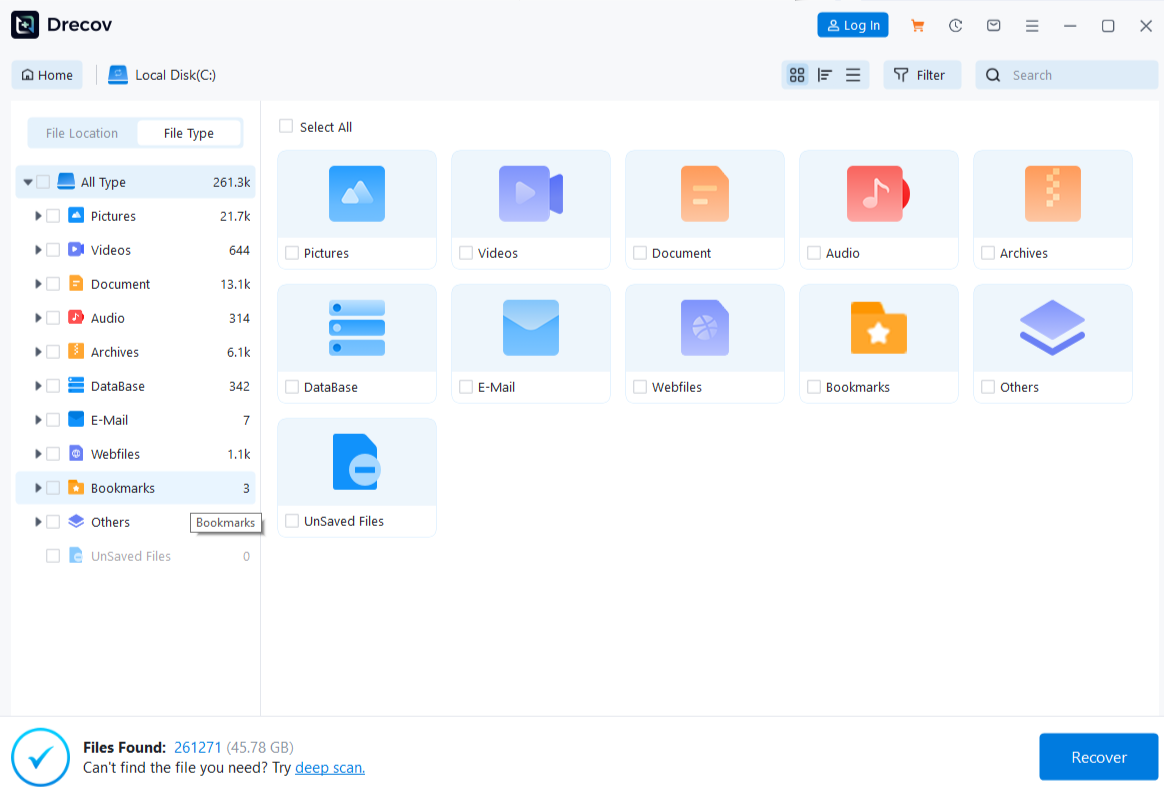
Step 3: Recovery
Check the boxes for the files you need and click Recover. Save these files to an external USB or a different partition.
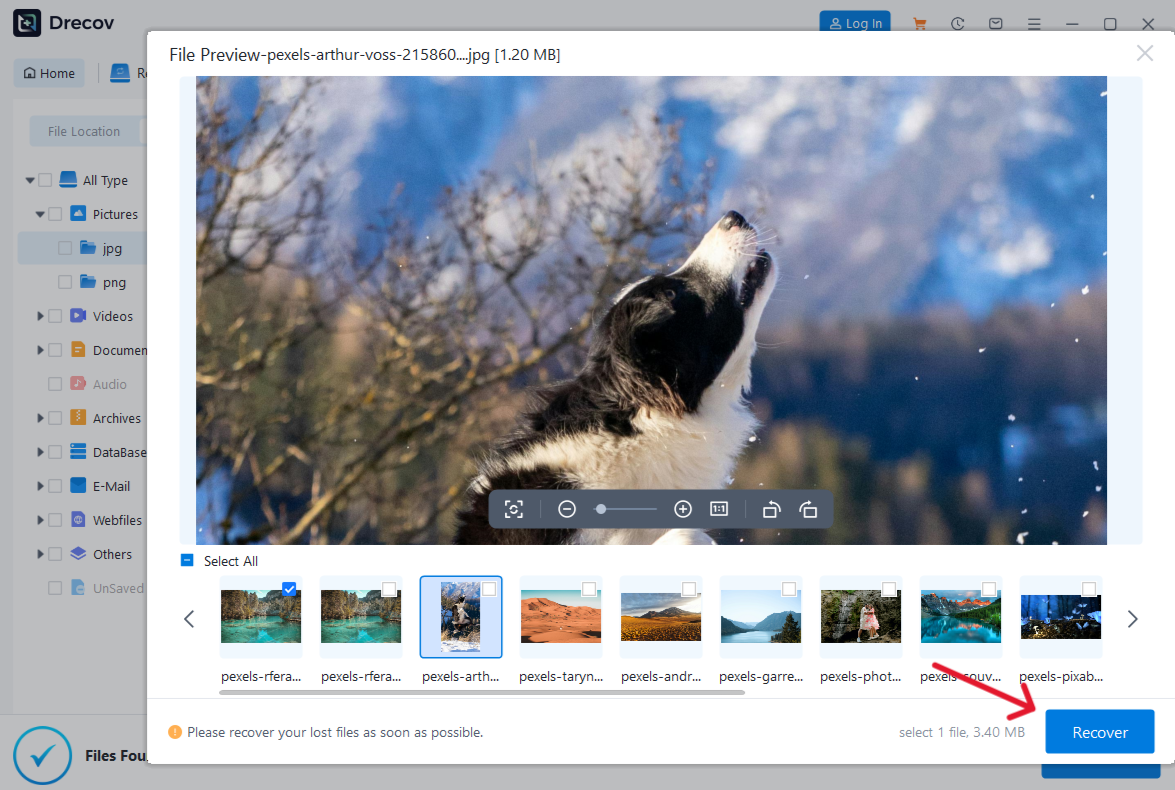
Step 4: Restoration
Copy the recovered places.sqlite file back into your current Firefox profile folder while the browser is closed. When you restart, your history and bookmarks should be back!
Warning: To maximize your chances of success, stop using your computer immediately after realizing your data is gone. New downloads or browser activity can overwrite the deleted history files, making them unrecoverable even for professional software.
After you have successfully managed your data recovery, you might be interested in enhancing your Firefox experience further. Check out these helpful guides:
- How to download video from Firefox 2026 guide
- Find your Firefox bookmarks location instantly
- Where are Firefox bookmarks stored on your PC?
By following the steps outlined in this article, you are now equipped to handle any browser-related data challenge. From simple maintenance to complex recovery with PandaOffice Drecov, you are in full control of your digital life.
Advanced Maintenance for Power Users
Knowing how to clear cache and cookies on Firefox is just the start. To keep your browser running at peak performance, you can automate these tasks.
Automating the Cleanup
You can tell Firefox to clear your data every time you close the window.
- Go to Settings > Privacy & Security.
- Under History, change the setting to “Use custom settings for history”.
- Check the box for Clear history when Firefox closes.
- Click Settings next to it to choose exactly what gets deleted (e.g., just cache, not history).
Official Resources for Firefox Users
If you are still experiencing issues, visit the official Mozilla Support page for deeper diagnostic tools.
Clear Cache and Cookies on Firefox FAQs
Yes, in most cases. Cookies are the files that store your session “tokens” or login status. When you clear cache and cookies on firefox, the browser removes these tokens, and websites will no longer recognize your device. To avoid this, you can use the Manage Data feature to delete cookies for all sites except the ones where you wish to remain logged in, or ensure your passwords are saved in a secure manager like PandaOffice Drecov’s integrated vault features.
2. Is there a way to clear the cache for just one specific website?
Absolutely. If only one site is acting up, you don’t need to wipe your entire browser.
- Step 1: Visit the website in question.
- Step 2: Click the Padlock icon to the left of the URL in the address bar.
- Step 3: Select Clear cookies and site data… This is a precise way to fix “corrupted” site displays without affecting your global browsing speed or other active sessions.
3. Does clearing the cache also delete my bookmarks?
No. Your Firefox bookmarks are stored in a separate database file called places.sqlite. Standard cache clearing only targets temporary images and scripts. However, if you are performing deep system cleaning or using third-party tools, there is a small risk of database corruption. If your bookmarks do disappear, you should immediately use PandaOffice Drecov data recovery software to scan your profile folder for deleted .sqlite or .json backup files.
4. Why does my Firefox disk space usage remain high even after clearing the cache?
This often happens if the firefox clearing cache not working issue is related to “database fragmentation.” Even when entries are deleted, the file size on your hard drive may not shrink immediately. You can resolve this by using the Compact command in the about:support menu (look for “Place Database”) or by performing a clean reinstall and then recovering your essential data using a professional recovery tool.
5. Can I recover my history if I cleared it while “Sync” was turned on?
This is tricky. If Firefox Sync is active, deleting your history on one device often sends a command to delete it from the cloud and all other synced devices. To how to recover cleared history on firefox in this scenario, you must act quickly. Disconnect your computer from the internet immediately to prevent the “delete” command from spreading, and then use PandaOffice Drecov to pull the local history files from your hard drive’s “shadow copies” or unallocated sectors.
Conclusion
Digital hygiene is an ongoing process. Learning how to clear cache and cookies on Firefox helps maintain speed and security, while tools like PandaOffice Drecov data recovery software provide a much-needed safety net when mistakes happen. By following the steps outlined above—from selective cleaning to deep-tissue data recovery—you can browse with confidence, knowing that your data is both optimized and protected.
Remember, the key to a fast browser isn’t just about deleting data; it’s about managing it smartly. Keep your software updated, use recovery tools wisely, and always keep a backup of your most important profile files. Happy browsing!






