







If you need to know how to unlock pendrive access, start with the exact message rather than formatting the device. A BitLocker prompt needs a valid password or recovery key. “Write protected” means Windows can read but not modify the drive. “Access denied” may involve permissions. A drive that disappears or reports the wrong capacity may be failing. Copy readable files first, then follow only the branch that matches your evidence.
how to unlock pendrive: safe diagnosis
People use “locked” for several unrelated conditions. Windows may show a padlock icon, ask for a BitLocker key, refuse writes, deny folder access, or suggest formatting. These symptoms have different causes and different risks. A command that removes a read-only attribute cannot decrypt BitLocker. Formatting may create an empty usable volume, but it does not unlock or preserve encrypted files.
| What Windows shows | What it usually means | Safest first action |
|---|---|---|
| Enter the password to unlock this drive | BitLocker or BitLocker To Go encryption | Locate the valid password or 48-digit recovery key |
| The disk is write protected | Physical switch, device state, or Windows read-only policy | Copy files, inspect the switch and disk attributes |
| Access is denied | NTFS permissions, ownership, policy, or encryption | Test the authorized account and inspect Security properties |
| You need to format the disk before you can use it | Unreadable file system, unsupported format, or damaged metadata | Cancel formatting and protect or recover the data |
| Drive disconnects, freezes, or changes capacity | Connection or physical media instability | Stop repeated attempts and consider imaging or professional help |
Record the full wording and where it appears. Try one known-good USB port without a hub. If another trusted computer detects the same drive consistently, compare the message there. Do not cycle through many machines when the device grows hot, repeatedly disconnects, or stalls each system.
Unlock BitLocker Only With Authorized Credentials
A BitLocker-protected pendrive encrypts its contents. The normal unlock path uses the password configured for the removable drive. If that password is unavailable, Windows can use the 48-digit recovery key. The key may have been saved to a Microsoft account, printed, stored in a file, or held by an organization. Microsoft’s official recovery-key guidance explains the supported locations.
Match the recovery-key ID shown by Windows with the stored record. A key for another device will not unlock this volume. Corporate media may be managed by an administrator, so contact the responsible IT team rather than trying to bypass policy. Drecov, DiskPart, CHKDSK, and ordinary file recovery cannot decrypt a BitLocker volume without valid credentials.
Unlock first, then create a normal backup
After the authorized key opens the drive, copy important folders to healthy storage. Open representative files from the copy. If you no longer need encryption, decrypt the drive through BitLocker management only after the backup passes verification. Removing encryption changes the whole volume and needs stable power.
If Windows accepts the key but asks again on every connection, that is not a missing-key problem. Confirm whether auto-unlock is appropriate for the computer and whether organizational policy allows it. Keep the recovery key outside the USB drive itself.
Remove Write Protection Without Starting With Format
Write protection often allows reading, so use that advantage. Copy valuable files before changing attributes. Some SD adapters and specialty USB devices have a physical lock switch. Power down or eject the device, move the switch fully, reconnect it, and test a small disposable file. A loose switch can remain between positions.
For an ordinary USB flash drive, open Disk Management and identify the device by capacity. Confirm that you are not looking at the system disk. Then open an elevated terminal and use DiskPart carefully:
- Run
diskpart, thenlist disk. - Identify the USB by its exact size and run
select disk N, replacing N with the correct number. - Run
detail diskto verify the model and volumes before continuing. - Run
attributes diskand read the current read-only state. - If the device is stable, backed up, and only the software attribute is set, run
attributes disk clear readonly.
Do not run clean. That command removes partition information and is not required to clear the attribute. If “Current Read-only State” remains Yes after the attribute is cleared, the controller may be enforcing read-only mode. Flash memory sometimes does this when it can no longer write reliably. Replace the device after copying or recovering the contents.
Check policy only when more than one drive is affected
If several removable drives become read-only on one managed computer but work elsewhere, a Windows or organizational policy is plausible. Ask the administrator to check removable-storage restrictions. Changing Registry or Group Policy without authority can violate security controls. A single drive that is read-only everywhere points more strongly to the device.
Resolve Access Denied Without Destroying Ownership Evidence
“Access denied” on an NTFS-formatted pendrive can follow from permissions assigned on another Windows installation. Sign in with the authorized account and inspect the Security tab. If the device belongs to an organization, do not take ownership without approval. Encryption such as EFS also requires the corresponding certificate; changing permissions does not decrypt those files.
Before editing access control entries, test whether another folder on the drive opens. Note whether the denial applies to the root, one user folder, or individual files. This scope matters. Malware protection can also block a suspicious executable while allowing documents. Do not disable security for the entire device simply to open one flagged item.
If the pendrive uses exFAT or FAT32, it does not carry normal NTFS permissions in the same way. An access error there is more likely to involve file-system damage, a security product, or device instability. Cancel any format prompt. The guide to a USB drive that is not showing correctly helps separate missing letters from missing hardware.
Recover Files Before Formatting an Unreadable Pendrive
It helps diagnose how to unlock pendrive without changing the source data. Drecov is relevant when files have been deleted or the drive is logically inaccessible, yet Windows detects the device stably with a plausible capacity. It recovers data from Windows PCs, HDDs, SSDs, external drives, USB media, SD cards, and memory cards. Quick Scan addresses recent logical loss. Deep Scan searches a stable device more broadly. Filters, path browsing, and preview help select documents, photos, videos, audio, email data, and archives. Lost Partition Recovery covers a missing former volume.
⚠ Warning: Install it on a drive different from the one where your data was lost to prevent overwriting.
This check is especially useful for how to unlock pendrive. Drecov does not bypass BitLocker, remove a password, change NTFS authorization, clear a hardware write lock, or repair failing flash memory. Valid encryption credentials must unlock the volume first. Do not scan a device that repeatedly disconnects, overheats, reports the wrong capacity, or freezes the computer. Those signs call for controlled imaging or professional recovery.
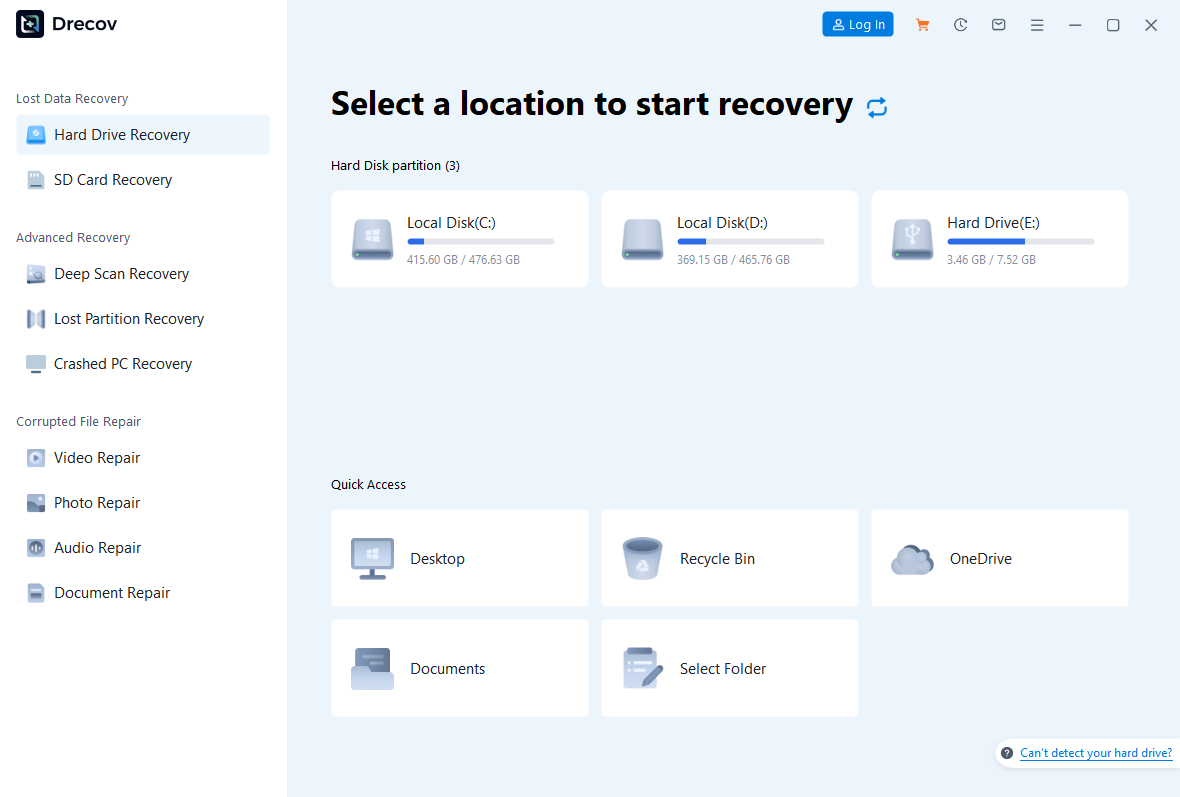
Step 1: Open Drecov and select the original pendrive
Prepare another healthy drive with enough space for the recovered files. Do not install the software on the affected USB device. Open Drecov from stable Windows and select the pendrive by its correct size and label. If its former partition is missing, choose Lost Partition Recovery. Stop if detection becomes unstable.
Step 2: Run Quick Scan and check expected folders
Start Quick Scan for recent deletion or a newly unreadable directory. Browse the old folder tree and search for known filenames. Compare dates and sizes. Do not select every result before confirming that the device remains responsive.
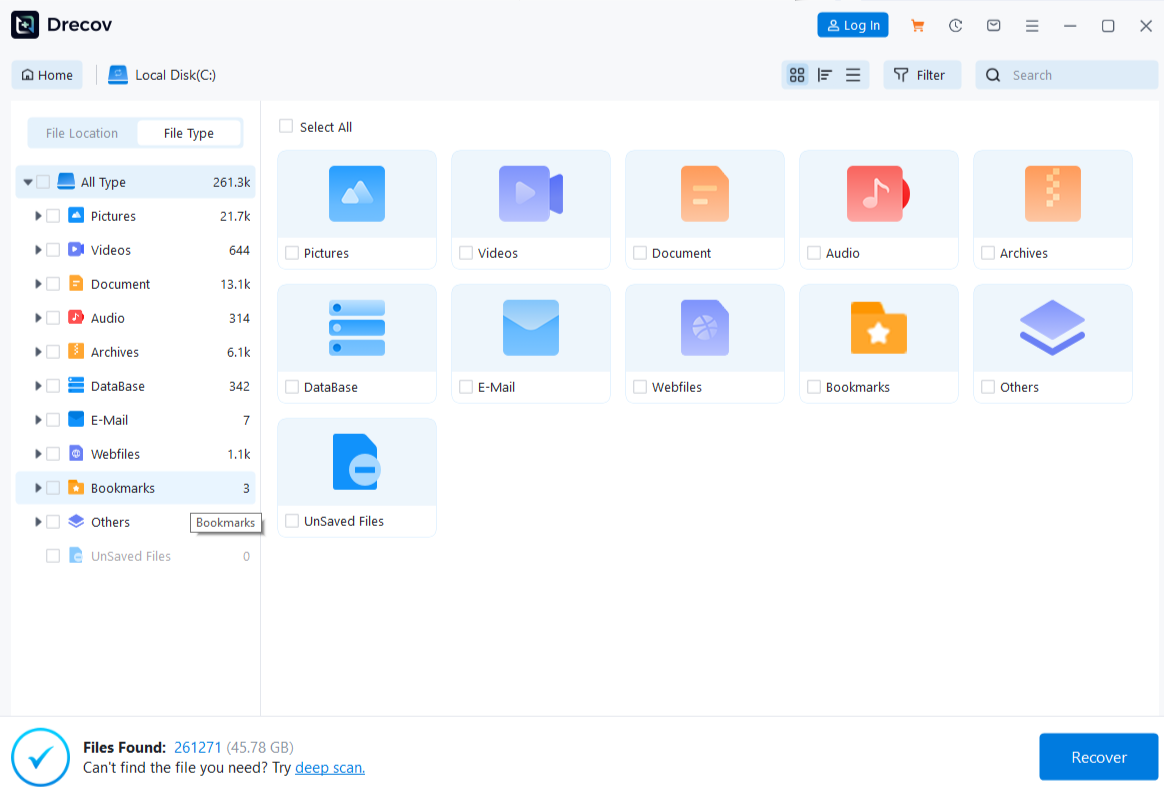
Step 3: Use Deep Scan only while the USB remains stable
Continue with Deep Scan when Quick Scan misses the required files and the drive maintains a steady connection. Stop if read errors, disconnects, or severe slowdowns appear. Repeated full scans do not repair worn flash storage.
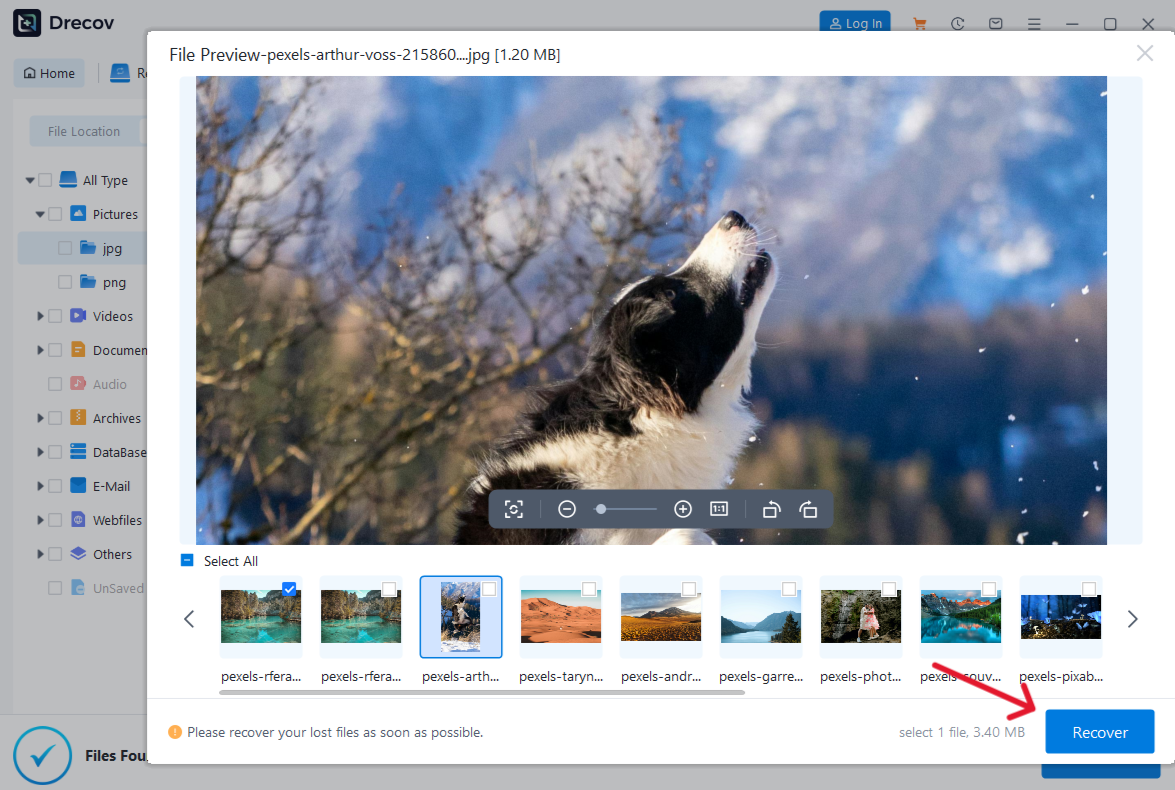
Step 4: Filter and preview representative results
Filter by type, former path, filename, date, or approximate size. Preview several supported files from each important group. A successful preview confirms only the displayed sample. It cannot guarantee every page, video frame, archive member, or linked project asset.
Step 5: Recover to another drive and verify
Save selected items to the prepared healthy destination, never back to the pendrive. Check Drecov Folder or Recovery Folder if output is not in the expected path. Open representative files and make a second backup. Only then consider formatting the USB. The article on formatting a USB after protecting its files explains that later stage.
⚠ Warning: Install it on a drive different from the one where your data was lost to prevent overwriting.
Prove the Drive Is Writable and Trustworthy
After the matching unlock action, create a small disposable folder and file. Eject the pendrive safely, reconnect it, and confirm that the file remains readable and can be renamed. Check the reported capacity and free space. A one-time successful write does not prove that aging flash is reliable, so keep the important data elsewhere.
If BitLocker was the cause, lock and unlock the device once with the intended credentials. Verify the recovery key separately. If a read-only attribute was cleared, run attributes disk again after reconnection. When the controller restores read-only state, retire the drive instead of repeatedly clearing it.
If the problem occurs only on one computer, test its USB port and policy with a disposable known-good device. The article on opening a USB drive safely covers drive-letter and navigation checks. Never use the only copy of important files as the test device.
Questions About Unlocking a Pendrive
Can I unlock a BitLocker pendrive without the password or key?
No supported method can decrypt the content without valid credentials. Search the authorized recovery-key locations or contact the organization that manages the device.
Will formatting remove the lock?
Formatting may create a new empty file system in some logical cases, but it erases access to existing data. It will not repair a controller that enforces read-only mode.
Why is the USB still read-only after DiskPart?
The physical switch, policy, controller, or failing flash may be enforcing the state. Copy readable data and replace a device that repeatedly returns to read-only mode.
Does Drecov unlock encrypted USB drives?
No. Unlock BitLocker with authorized credentials first. Drecov can recover lost files only when Windows can access stable, detectable storage.
Is CHKDSK an unlocking command?
No. CHKDSK checks file-system structures and can modify them with repair options. It does not decrypt, change permissions, or clear a physical lock.
Conclusion
To unlock a pendrive safely, name the lock before applying a fix. Use authorized BitLocker credentials for encryption, inspect the real read-only state for write protection, and handle permissions only with the proper account. Stop when the device becomes unstable. If files are missing or the stable USB is unreadable, Drecov can scan the original location and recover verified candidates to another healthy drive. Format or retire the pendrive only after the data is protected and the appropriate unlock branch has been tested.
⚠ Warning: Install it on a drive different from the one where your data was lost to prevent overwriting.





