







MP4Fix is an Android app aimed at MP4 recordings left unplayable after a camera crash, dead battery, or exhausted storage. Its documented method uses another working video recorded by the same phone and camera app as a structural reference. That narrow purpose is useful: it tells you when the app is worth trying and when it is the wrong tool. A missing, overwritten, zero-byte, downloaded, or unreadable source needs a different response.
Start With the Recording Event, Not the Error Message
“Cannot play video” does not identify the damaged layer. Android may show the same message for an unsupported codec, an incomplete file, denied media access, a bad copy, or failing storage. First recall what happened when the clip was created. Did the phone power off before you stopped recording? Perhaps the camera application crashed. Storage may also have reached zero free space. Those events can prevent the MP4 container from receiving the metadata needed to describe its streams and duration.
A different story calls for a different test. If the video came from a drone, messaging app, web download, dashcam, or desktop editor, do not assume an Android phone repair workflow fits it. If several ordinary videos stopped playing after an operating-system update, test another player and verify storage access. When only a transferred copy is bad, return to the source and make a fresh copy instead of repairing the incomplete destination.
| What happened | First useful check | MP4Fix fit |
|---|---|---|
| Phone died during its own camera recording | Confirm a nonzero MP4 remains | Strongest documented use case |
| Camera app crashed while filming | Keep the file and record a short reference | Plausible when storage is healthy |
| Storage filled completely | Free space elsewhere without deleting the source | May help if media payload was written |
| Downloaded MP4 will not play | Download again and compare sizes | Outside the app’s stated recording focus |
| Video was deleted | Stop writing and recover the file | Repair cannot locate a missing file |
| SD card disconnects or reports read errors | Stop repeated access | Stabilization or imaging comes first |
What the Official MP4Fix Material Says
The official MP4Fix website presents the product as an Android application for broken phone recordings and directs users to Google Play. It says a correctly recorded video from the same phone is required. The site also describes on-device repair and explains that saving or sharing repaired output may involve a paid feature. Commercial terms, Android compatibility, and permissions can change, so check the current Google Play listing and in-app screen rather than relying on an old review.
This article does not claim a tested success rate, star score, repair speed, or price. Vendor download figures and testimonials are not substitutes for a reproducible file set. A responsible decision can still be made from the documented scope, your recording event, the quality of the reference clip, and a careful preview.
The reference clip is part of the diagnosis
Record a short healthy video with the same Android phone, rear or front camera, camera application, resolution, frame rate, orientation, HDR setting, and stabilization mode used for the damaged clip. Store it on healthy internal space if the original SD card is questionable. A reference made with another model or a different recording profile can describe a different MP4 layout, even though both files end in .mp4.
Do not edit, trim, export, or send the reference through a messaging service. Those operations can rewrite its container. The best reference comes directly from the camera pipeline that created the damaged recording. Keep the damaged file and reference clearly named so they cannot be reversed during selection.
A Safe Trial Workflow on Android
Preserve the only source
Before opening any repair app, copy the broken MP4 to a computer, external drive, or another trusted location if it can be read normally. Keep its original filename, byte size, and timestamp in a note. Do not use “cleaner” apps on the phone, clear the camera folder, or repeatedly move the sole file. If copying causes the phone or card to disconnect, stop. Repair activity is not a cure for damaged flash memory.
Install from the verified distribution channel
Follow the official website’s store link rather than downloading an APK from an unrelated mirror. Review requested permissions against the task of selecting and saving videos. Android’s permission model varies by version, so a screenshot from an old guide may not match the current picker. Avoid granting unrelated privileges merely to move past a prompt.
Select the damaged file and a matching reference
Choose the unplayable phone recording, then the short working clip made with matching settings. If the app cannot see the source, check Android’s selected-media permission and the folder actually used by the camera. Do not rename a non-MP4 file to .mp4; an extension change does not create an MP4 container.
Judge the preview across the timeline
A successful opening frame is encouraging but incomplete. Seek to early, middle, and late sections. Check the expected duration, orientation, resolution, audio synchronization, and transitions between scenes. Listen through several separated samples. Watch for a point where motion freezes while audio continues, or where playback returns to the beginning. Those signs reveal partial reconstruction.
If the preview is useful, inspect the current save and sharing terms before purchase. Save to a location with sufficient space and keep the original untouched. Open the saved file in a second Android player and on a computer when the clip must be archived or edited. The output should survive outside the repair app.
Review Privacy and Storage Before Processing
The MP4Fix site says video repair occurs on the smartphone and that video parts are not transferred. Its privacy explanation mentions collection of statistics rather than the private video content. Treat that as a vendor statement, then read the current privacy policy and Google Play data-safety disclosure before using sensitive footage. Policies, analytics libraries, and declared data categories can change.
Local processing has a practical advantage: a large confidential clip need not be uploaded merely for repair. It does not eliminate every privacy decision. Android still controls media permissions, the repaired file remains on the device, and cloud gallery synchronization may upload new output under your own account settings. Check Google Photos, OneDrive, or another gallery backup if the recording is confidential.
Storage space also matters. A repair may need room for a separate output close to the source size. Do not delete the damaged recording to make room. Move unrelated files to another device, or use supported healthy storage. If the app stores repair state internally, uninstalling it or clearing app data may remove that state. Export and independently verify any valuable result first.
Boundaries No Android Repair App Can Cross
MP4Fix cannot create footage the camera never wrote. If the file is zero bytes, the directory entry offers no media payload to restructure. Later phone use may have overwritten deleted sectors; reference metadata cannot reverse that change. A failing flash chip or SD card also makes repeated full-file reads unsafe and may reduce the chance of controlled recovery.
The app’s documented focus is interrupted Android camera recording. It is not a general converter for every MP4 found online. A file that works in one player but not another may need codec support rather than repair. A clip whose image plays but sound does not may contain an unsupported audio stream. The MP4 structure explanation shows why a container extension alone cannot identify the failure.
Repair and recovery remain separate. Repair reconstructs an existing file. Recovery searches storage for a lost file or earlier version. The order matters: recover first, preserve the recovered output, then repair a duplicate if playback is still damaged.
When the Android Recording Has Disappeared
Check Google Photos or another configured cloud service, the gallery trash, the camera folder, messaging exports, and computer imports before scanning. If the video was stored on a removable microSD card, stop using that card immediately. Continued recording can overwrite the deleted payload.
Drecov is Windows data-recovery software for logical loss from PCs, HDDs, SSDs, external drives, USB devices, SD cards, and memory cards. It supports videos as well as photos, documents, email data, audio, and archives. Quick Scan handles recent logical loss; Deep Scan searches more broadly on stable media. Filtering, path information, and preview help identify candidates. Lost Partition Recovery covers a missing former volume. Drecov does not repair Android hardware, reconstruct an interrupted MP4 container, recover overwritten bytes, or make an unstable card safe.
⚠ Warning: Install it on a drive different from the one where your data was lost to prevent overwriting.
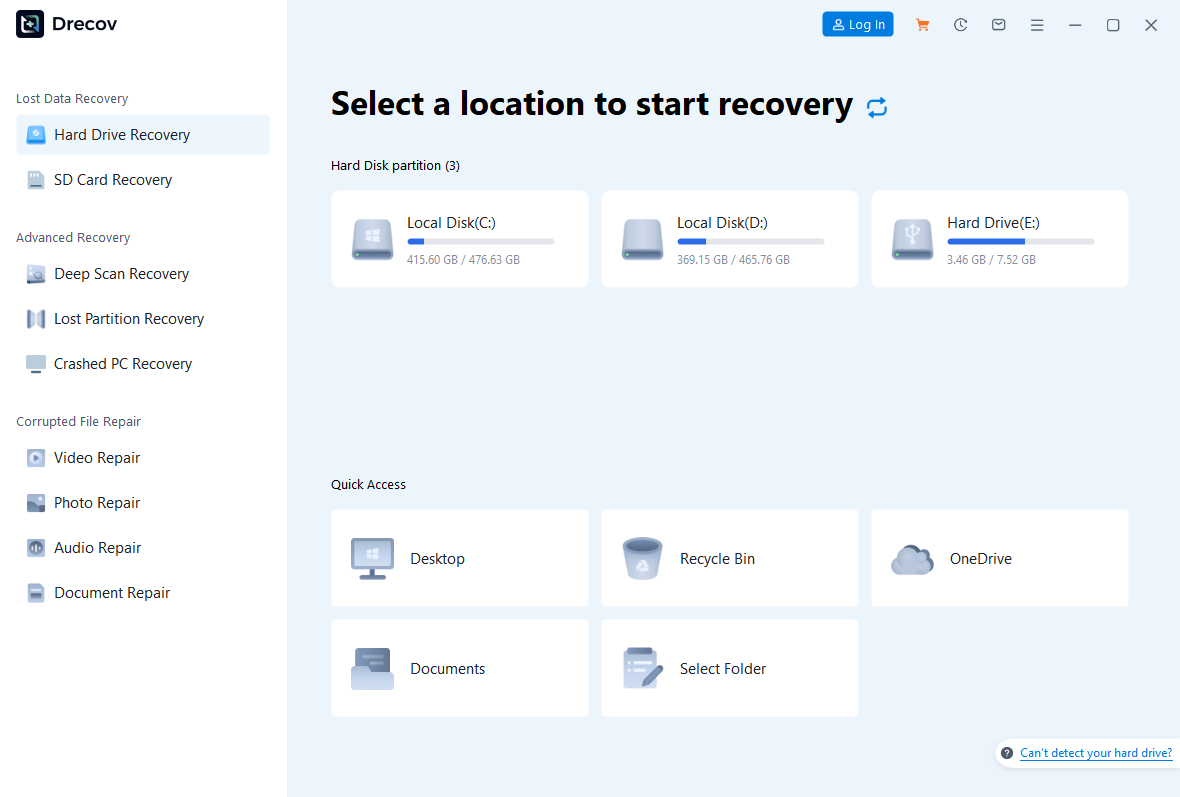
Step 1: Open Drecov and select the original removable storage
Prepare a separate healthy drive for output. Do not install Drecov on the source card or source partition. Open Drecov on Windows and select the connected microSD card, former import folder, or other original location. Use Lost Partition Recovery only if the volume disappeared. Stop if the card disconnects, reports severe read errors, or becomes unusually slow.
Step 2: Run Quick Scan, then conditionally Deep Scan
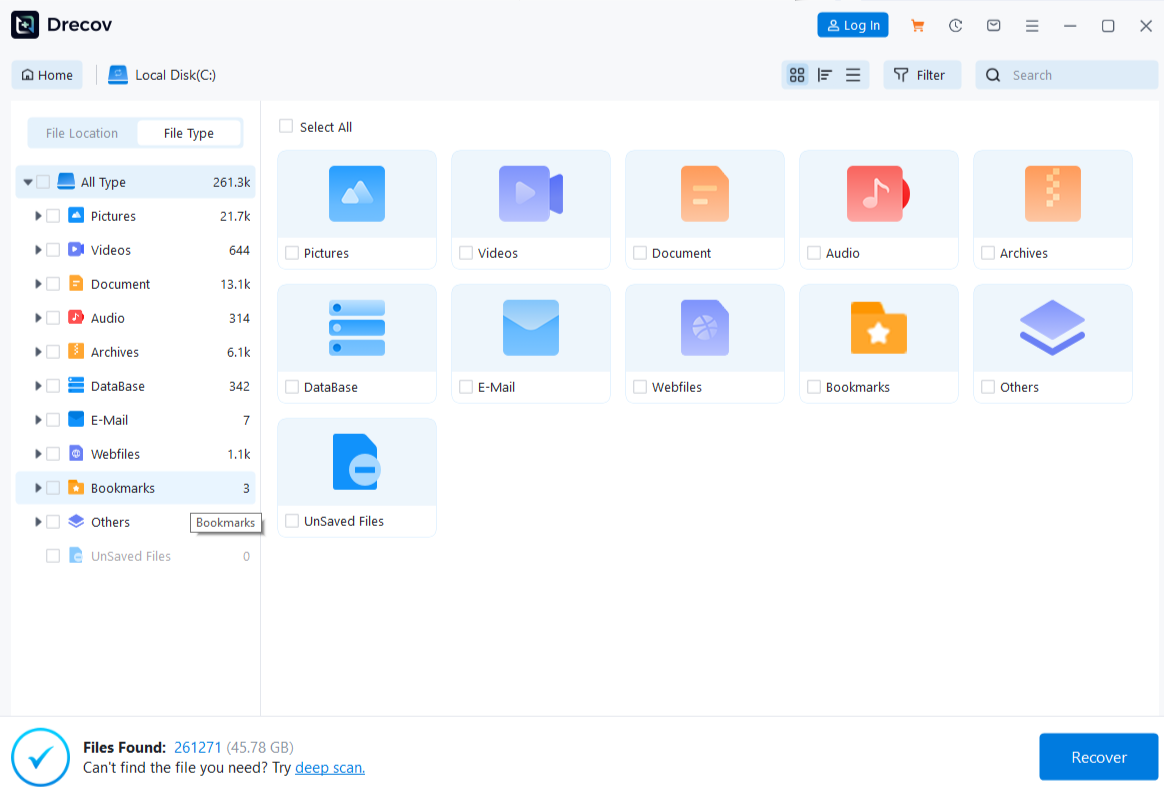
Start Quick Scan and inspect the camera’s DCIM path. Filter by MP4, approximate recording time, and expected size. If the target is absent and the card remains stable, use Deep Scan. Do not repeatedly rescan an unstable card.
Step 3: Preview, recover elsewhere, and verify
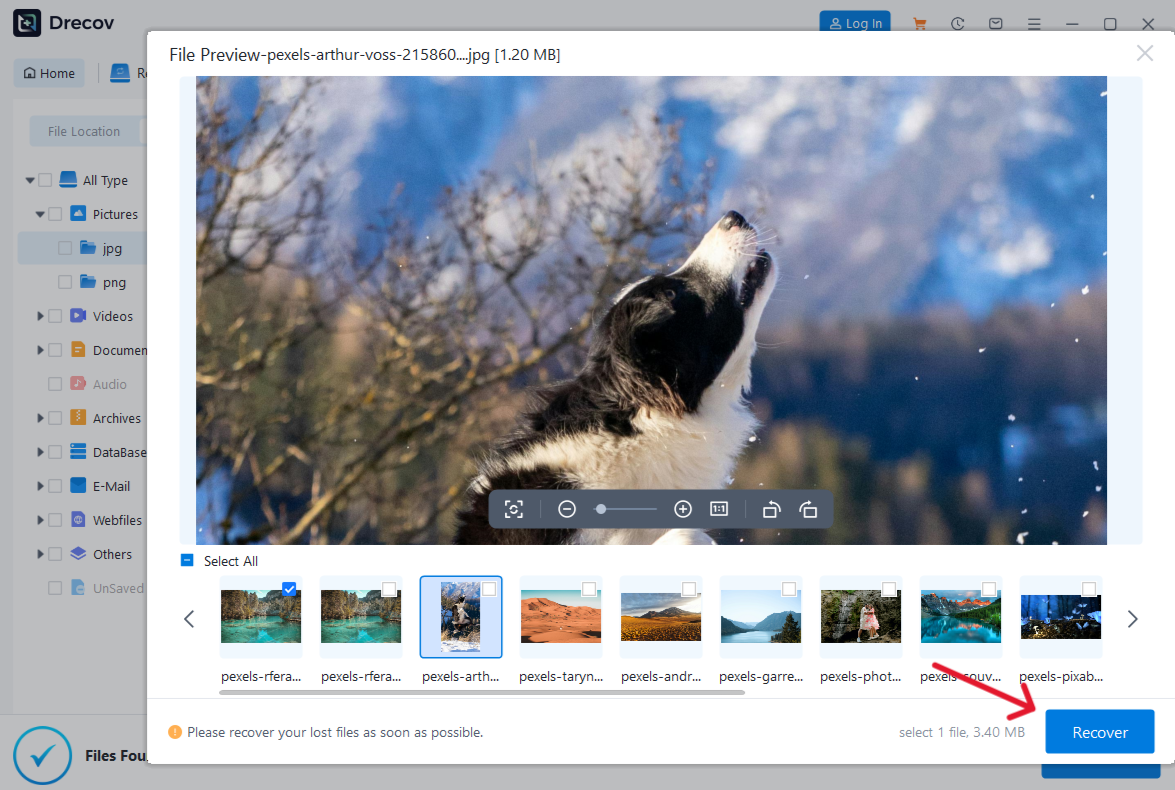
Preview representative candidates where supported, but remember that a preview proves only the sampled portion. Recover selected videos to the other healthy drive, never back to the card. Check Drecov Folder or Recovery Folder if the original hierarchy is missing. Open each output and sample its timeline. Keep one recovered copy untouched before trying MP4Fix. See the complete options to recover deleted videos when a backup or trash copy may exist.
⚠ Warning: Install it on a drive different from the one where your data was lost to prevent overwriting.
Questions About MP4Fix
Does MP4Fix work on iPhone or Windows?
The current official positioning is an Android app. Do not assume that an iPhone or desktop workflow is supported without checking the present vendor listing.
Can I use any healthy MP4 as the reference?
Use a working clip made by the same phone, camera app, and recording settings. A random MP4 can have a different internal layout.
Will MP4Fix recover a deleted recording?
No. A deleted file must first be restored from trash, backup, cloud storage, or recoverable physical storage. Repair begins after a file exists.
Is on-device repair automatically private?
It avoids uploading the full video according to the vendor, but you should still review current permissions, analytics disclosures, cloud synchronization, and the privacy policy.
Why does the preview work but the saved video fail elsewhere?
The app and another player may use different decoders. Verify a saved output on the devices and editors that will actually use or archive it.
Conclusion
MP4Fix has a clear, limited role: repairing an existing Android camera MP4 left unfinished by a crash, dead battery, or storage shortage, with help from a matching healthy reference. Preserve the source, install only through the official route, inspect privacy and save terms, and test the entire timeline. When the recording is missing from removable storage, use Drecov to recover candidates to another healthy drive before any structural repair. Neither tool can recreate never-recorded or overwritten footage.
⚠ Warning: Install it on a drive different from the one where your data was lost to prevent overwriting.





