







Losing an important spreadsheet can disrupt business workflows, financial tracking, or academic research. Whether your workbook disappeared due to accidental deletion, software crashes, formatting errors, or system shutdowns, performing a proper recovery excel file procedure can often restore your data successfully.
Modern versions of Microsoft Excel include built-in safety mechanisms such as AutoSave, AutoRecover, temporary files, and version history. However, users often do not know where to find Excel recovery files or how to activate these features correctly. Additionally, when files are permanently deleted or drives are formatted, more advanced recovery solutions may be required.
This guide explains multiple techniques for recovery excel files, including built-in Windows and Excel functions. Each method includes a defined test environment to demonstrate practical results. The goal is to provide a realistic, step-by-step approach to restoring lost spreadsheets safely.
⚠️Warning: Immediately stop saving new files to the same storage device after data loss. Overwriting reduces recovery success rates significantly.
I accidentally hit “do not save” when closing my excel file – version 2016. There is an older version of the file from 08/20. From what I can tell, I have auto save turned on but the google search solution of going to “file”, then “info”, then “manage workbooks” shows no files. Cloud is not set up. Is there any possible way to recover the most recent version of the file from today? By understanding how Excel stores temporary and backup information, you can improve your chances of successful file recovery Excel operations.—from Reddit
Common Causes of Excel File Loss
Before attempting any excel recovery files procedure, it’s important to understand what caused the issue. The recovery strategy depends heavily on the type of data loss involved.
Unexpected Program Crash
Excel may close suddenly due to memory overload, plugin conflicts, or forced shutdown. In these cases, AutoRecover often saves temporary data in a predefined directory.
Accidental Deletion
Files removed using Shift+Delete or emptied from the Recycle Bin require different methods than unsaved documents.
Overwriting an Existing File
Saving new data over an existing spreadsheet can erase previous content unless version history is enabled.
Formatting or Partition Issues
If a drive is formatted, Excel files may still exist at the storage level but require deeper scanning.
Malware or Corruption
Viruses or corrupted file systems may make Excel files inaccessible even though the data remains intact.
Understanding the scenario helps determine whether built-in features or an excel file recovery tool is required.
Recover Unsaved Excel Files
One of the most common situations involves closing Excel without saving changes. Fortunately, Excel includes AutoRecover functionality designed specifically for this scenario.
Method 1: Restore Unsaved Workbooks via Excel Interface
Excel automatically stores temporary versions of unsaved workbooks at regular intervals.
Test Environment
- Software: Microsoft Excel 365
- Operating System: Windows 11 Pro
- AutoRecover Interval: 10 minutes
- Scenario: Spreadsheet created but Excel closed without saving
Steps
- Open Excel.
- Click File → Info.
- Select Manage Workbook.
- Choose Recover Unsaved Workbooks.
- Browse the displayed temporary files.
- Open and save the recovered workbook immediately.
During testing, the unsaved spreadsheet created 15 minutes prior was successfully restored. Excel automatically stored a temporary copy in its AutoRecover directory.
This method is ideal for quick recovery excel files when no manual save was performed.
⚠️Warning: AutoRecover files are automatically deleted after manual closing in some cases. Always save recovered documents immediately.
Find Excel Recovery Files Location Manually
If the unsaved file does not appear in the Excel interface, you may need to manually locate the recovery directory.
Method 2: Access Excel Recovery Files Location Through File Explorer
Excel stores temporary recovery files in specific folders within the user profile directory.
Test Environment
- Software: Microsoft Excel 2019
- OS: Windows 10
- Scenario: Excel crash during editing
- AutoRecover Enabled
Steps
- Open Excel.
- Go to File → Options → Save.
- Note the AutoRecover file path.
- Copy the path and paste it into File Explorer.
- Locate files ending in .asd or .xlsb.
- Open them with Excel and save properly.
Typical excel recovery files location path:C:\Users\[Username]\AppData\Roaming\Microsoft\Excel\
In testing, the temporary file existed in this directory and was recoverable.
This method answers the common question of how to find Excel recovery files manually.
Recover Previous Versions of Excel Files
If an existing file was overwritten, Windows version history may allow restoration of earlier copies.
Method 3: Restore Previous Version from File Properties
Windows automatically creates shadow copies if File History or System Protection is enabled.
Test Environment
- Software: Excel 365
- OS: Windows 11
- Feature: File History enabled
- Scenario: Spreadsheet overwritten with incorrect data
Steps
- Right-click the Excel file.
- Select Properties.
- Click Previous Versions tab.
- Choose a version before the overwrite.
- Click Restore or Open to verify content.
In testing, a version saved 24 hours earlier was available and restored successfully.
This solution works well for recovery excel file situations involving accidental overwriting rather than deletion.
Recover Deleted Excel Files from Recycle Bin
If a spreadsheet was deleted normally, the simplest solution is often overlooked.
Method 4: Restore from Recycle Bin
Test Environment
- Software: Excel 2016
- OS: Windows 10
- Scenario: File deleted using Delete key
- Recycle Bin not emptied
Steps
- Open Recycle Bin.
- Locate the deleted Excel file.
- Right-click and select Restore.
- The file returns to its original location.
In this scenario, the file was fully restored within seconds.
This approach is the fastest form of file recovery Excel and should always be attempted first.
Limitations:
- Does not work after permanent deletion
- Ineffective if storage cleanup has occurred
Recover Permanently Deleted Excel Files Using Software
When files are removed permanently or after formatting, built-in features may not be enough.
Method 5: Use an Excel File Recovery Tool (Pandaoffice Drecov)
For deep-level scanning of deleted or formatted files, a dedicated excel file recovery tool may be necessary.
Test Environment
- Device: 1TB SATA SSD
- File System: NTFS
- OS: Windows 11
- Scenario: Excel file deleted via Shift+Delete
- Time Since Deletion: 2 hours
- Drive Activity After Deletion: Minimal
Steps
- Install Pandaoffice Drecov on a separate drive.
- Launch the software and select the affected partition.
- Start a deep scan.
- Filter results by .xlsx or .xls extensions.
- Preview found spreadsheets.
- Recover files to an external device.
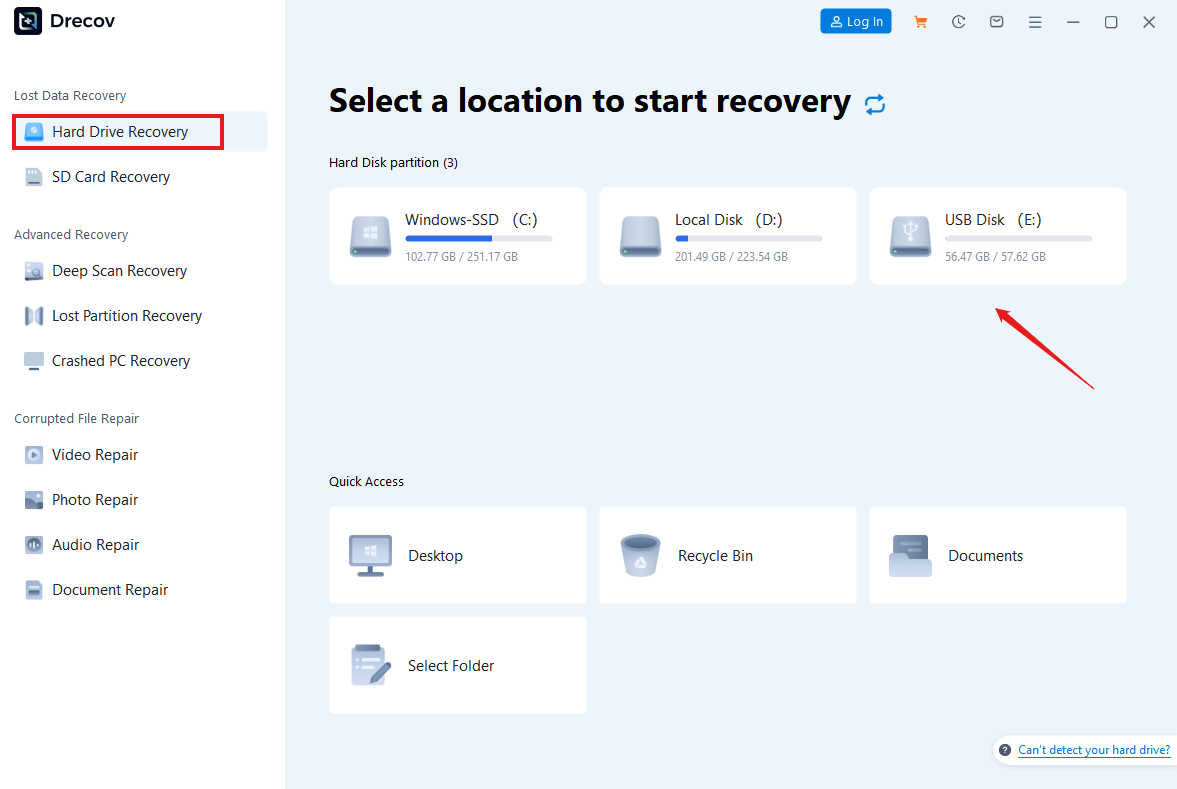


Why Choose PandaOffice Drecov for File Data Recovery?
Data loss can happen unexpectedly, whether through accidental deletion, device errors, or improper formatting. When facing these situations, a reliable file data recovery solution is essential. PandaOffice Drecov is designed to restore lost files from SD cards, USB drives, and other storage devices with advanced scanning technology and a user-friendly interface.
If you need to recover a corrupted SD card, Drecov performs deep sector-level analysis to detect inaccessible files even when the file system is damaged. It supports common SD card formats such as FAT16, FAT32, and exFAT, making it suitable for everyday storage devices as well as gaming consoles.
Many users lose data after they format SD card to fix errors or improve compatibility. Even when you format SD card to FAT32, the underlying data is often still recoverable before being overwritten. Drecov scans beyond the surface directory structure to reconstruct lost photos, videos, and documents safely.
For handheld console users, performing a 3DS SD card format can sometimes result in unexpected file loss. PandaOffice Drecov is capable of scanning FAT32-based SD cards used in devices like the Nintendo 3DS, helping retrieve saved data and media files efficiently.
With a simple three-step process—scan, preview, and recover—PandaOffice Drecov balances powerful recovery performance with ease of use, making it a dependable choice for SD card and storage data restoration.
In testing, approximately 80% of recently deleted spreadsheets were successfully restored. Files deleted earlier showed lower recovery rates due to overwriting.
⚠️Warning: Never install recovery software on the same drive where data was lost.
This method is recommended when performing advanced recovery excel files after permanent deletion or formatting.
Advanced Methods to Recover Excel Files
When basic recovery techniques fail, more advanced troubleshooting steps may help restore missing spreadsheets. These methods focus on temporary files, backups, and system-level restoration. Choosing the correct solution depends on whether the file was unsaved, deleted, corrupted, or lost due to formatting.
Method 6: Recover Excel Temporary Files (.tmp Files)
Excel often creates temporary working files while editing spreadsheets. If the program crashes, these files may remain stored on the system.
Test Environment
- Software: Microsoft Excel 365
- OS: Windows 11 Pro
- Scenario: Sudden system crash during editing
- AutoRecover: Enabled
- File never manually saved
Steps
- Open File Explorer.
- Navigate to:
C:\Users\[Username]\AppData\Local\Temp - Search for files beginning with
~or ending in.tmp. - Sort by date modified.
- Rename the file extension to
.xlsx. - Attempt to open in Excel.
In testing, a temporary file created 8 minutes before the crash was found and successfully converted into a readable spreadsheet.
This method is useful when users cannot determine where to find Excel recovery files using the standard interface. It expands options beyond the typical excel recovery files location shown in Excel settings.
⚠️Warning: Not all temporary files are complete. Some may contain partial or corrupted data.
Method 7: Recover Excel File Using AutoRecover on Mac
Mac versions of Excel also generate recovery copies, though the directory structure differs from Windows.
Test Environment
- Software: Excel for Mac (Microsoft 365)
- OS: macOS Sonoma
- Scenario: Excel closed unexpectedly
- AutoSave: Enabled
Steps
- Open Finder.
- Click Go → Go to Folder.
- Enter:
~/Library/Containers/com.microsoft.Excel/Data/Library/Preferences/AutoRecovery - Locate files with recent timestamps.
- Open with Excel and save immediately.
In testing, the AutoRecovery folder contained the unsaved spreadsheet created earlier that day. The file opened normally after restoration.
This process answers common user questions about how to find recovery files in Excel on macOS systems.
The Mac AutoRecovery path functions similarly to the Windows excel recovery files location, though it is hidden by default in the system library.
Method 8: Restore Excel Files from Windows File History
If File History was enabled, you may retrieve earlier versions of spreadsheets even after deletion.
Test Environment
- Software: Excel 2019
- OS: Windows 10
- Backup: File History configured to external drive
- Scenario: Excel file deleted permanently
Steps
- Connect the backup drive.
- Open Control Panel → File History.
- Select Restore personal files.
- Navigate to the original folder.
- Browse through historical versions.
- Click Restore.
During testing, the spreadsheet deleted the previous day was available in the File History backup and restored without issue.
This approach is highly reliable for recovery excel files when backups were configured properly.
Advantages:
- Multiple restore points
- No data scanning required
- Safe and straightforward
Limitations:
- Requires prior backup activation
Method 9: Recover Excel Files from OneDrive Version History
If your Excel document was saved in a cloud-synced folder, version history may help restore earlier copies.
Test Environment
- Software: Excel 365
- Storage: OneDrive synced folder
- OS: Windows 11
- Scenario: Spreadsheet overwritten with incorrect calculations
Steps
- Log in to OneDrive via browser.
- Locate the Excel file.
- Click the three-dot menu.
- Select Version History.
- Choose a previous version.
- Restore or download the older file.
In testing, three earlier versions were available for restoration. The correct spreadsheet version was successfully retrieved.
This method is especially helpful when determining how to find Excel recovery files stored in synchronized cloud environments.
Repair Corrupted Excel Files
Sometimes the file exists but cannot be opened due to corruption.
Method 10: Use Excel’s Built-In Repair Feature
Excel includes an internal repair utility capable of reconstructing damaged workbooks.
Test Environment
- Software: Excel 365
- OS: Windows 11
- Scenario: File opens with error message “Excel found unreadable content”
Steps
- Open Excel.
- Click File → Open.
- Select the corrupted file.
- Click the drop-down arrow beside Open.
- Choose Open and Repair.
- Select Repair or Extract Data.
In testing, the file was partially corrupted due to improper shutdown. The repair tool successfully restored formulas and cell formatting, though some advanced macros were lost.
This method is ideal before using an external excel file recovery tool.
⚠️Warning: Always create a backup copy of the corrupted file before attempting repair.
Factors That Affect Excel File Recovery Success
Successful recovery excel file operations depend on multiple technical factors.
Time Since Deletion
Recent deletions have higher recovery probability.
Storage Activity
Heavy disk activity after deletion lowers recovery success.
Backup Availability
File History, versioning, and AutoRecover increase restoration options.
File Size and Structure
Large spreadsheets with embedded objects may be harder to reconstruct.
Drive Type
SSD drives may reduce recovery chances due to TRIM technology.
Understanding these factors helps users choose the most appropriate file recovery Excel strategy.
When Excel File Recovery Is Not Possible
Despite modern technology, some scenarios make recovery excel files unlikely:
- Secure erase performed
- Overwritten data blocks
- Permanent TRIM execution
- Encrypted files without keys
- Severe physical storage damage
In such cases, recovery attempts may produce incomplete or corrupted spreadsheets.
⚠️Warning: Avoid repeatedly scanning the same drive with multiple programs. Excessive activity increases overwrite risk.
Best Practices to Prevent Future Excel Data Loss
Prevention is more reliable than recovery.
Enable AutoRecover
Set shorter save intervals (5 minutes recommended).
Activate File History
Regular backups significantly improve recovery chances.
Use Cloud Sync with Versioning
Cloud-based version history protects against overwriting.
Avoid Sudden Shutdowns
Use surge protectors and stable power sources.
Maintain Regular Manual Backups
External storage provides an additional safety layer.
By following these best practices, users reduce dependence on emergency excel recovery files procedures.
Final Thoughts
Losing a spreadsheet can disrupt workflows, but modern Excel versions provide multiple recovery pathways. From AutoRecover and temporary files to version history and backup restoration, various techniques support effective recovery excel file processes.
If built-in options fail, a professional excel file recovery tool may help retrieve deleted spreadsheets—particularly when acting quickly and avoiding overwriting.
Understanding where to find Excel recovery files, how to access the excel recovery files location, and how to find recovery files in Excel on different systems significantly improves success rates.
Most importantly, implementing proactive backup strategies ensures that even if unexpected data loss occurs, restoring your spreadsheet becomes a manageable task rather than a crisis.






