







DiskGenius can search for missing files, but its disk-management functions can also change the device you are trying to recover. The safest starting point is therefore an operation, not a button sequence: extract needed data to another device before attempting repairs. Do not assume that every command inside a recovery-capable application is read-only.
This is a documentation-based assessment of DiskGenius software, not a measured performance test. The informal search phrase “disk genie” can refer to other products, so confirm the official software identity before downloading. No recovery rate, scan-time comparison or guaranteed outcome is implied here.
Separate three operations that look deceptively similar
Finding files without changing their source
File recovery looks for recoverable content and lets you copy selected results elsewhere. DiskGenius documents a read-only recovery process. That protection concerns the recovery operation; it should not be extended to unrelated commands. Choose the original source carefully, and have a healthy destination ready before saving results.
A successful search can show files even when Explorer cannot open the volume. This does not prove that its filesystem has been repaired. It means the program found enough information to offer candidates. Preserve that distinction until actual files open correctly outside the affected disk.
Searching for a lost partition
Partition recovery addresses a missing volume rather than only a deleted file. The official documentation says partition searching is read-only. Searching and committing disk-layout changes are different decisions, however. Finding a plausible partition is not sufficient reason to write new metadata before protecting its files.
If the volume has disappeared, compare its expected capacity and folder contents with any detected candidate. Do not create a new partition in the apparently unallocated space. The lost-partition recovery principles explain why retrieving data should precede layout changes.
Repairing or reorganizing storage
Formatting, repartitioning and repair operations modify storage. They solve different problems from extracting files. DiskGenius specifically warns that bad-sector repair can destroy data on or near affected areas. Never interpret the presence of that feature as a recommendation to use it on the only copy.
A device producing clicking sounds, repeated disconnects or serious read errors needs a different response. Stop routine software attempts and seek suitable imaging or professional recovery. A utility cannot turn physical damage into a safe logical recovery simply by offering more advanced controls.
Where Drecov fits a simpler Windows recovery task
For a stable Windows-accessible source, PandaOffice Drecov offers a file-focused recovery path. It supports hard drives and SSDs in PCs, external disks, USB storage, and SD or other memory cards. Recoverable categories include documents, images, videos, audio, email and archives. The practical purpose is recovering missing content to a different healthy location.
Drecov combines read-only recovery mode with Quick Scan, Deep Scan, filtering and previews. These features help narrow a large result set before recovery. Lost Partition Recovery is also available when the original partition is missing. It should not be mistaken for guaranteed partition-table reconstruction or a promise to restore bootability.
⚠ Warning: Install it on a drive different from the one where your data was lost to prevent overwriting.
That workflow may suit someone who needs files rather than disk-layout changes. It does not establish that Drecov replaces every DiskGenius management feature. Neither product can promise to reconstruct fully overwritten data. The comparison should remain about your required operation and verifiable output, not an unsupported declaration of a universal winner.
Choose the DiskGenius action from the observed problem
| What you observe | Relevant question | What not to do first |
|---|---|---|
| The partition opens, but files were deleted. | Can file recovery locate usable copies? | Install software or save new data onto that partition. |
| The disk is stable, but its volume is missing. | Can a partition search locate the expected files? | Create or format a replacement volume. |
| The volume exists but Windows requests formatting. | Can recoverable content be copied elsewhere? | Accept the formatting prompt. |
| The device disconnects or develops severe read errors. | Does it need specialist imaging or physical recovery? | Repeat scans or attempt bad-sector repair. |
This decision separates the reason for opening the program from its broader capabilities. Begin with the narrowest relevant operation. A deleted spreadsheet does not justify partition reconstruction. An absent volume does not prove its data has been erased. For a questionable external device, establish its physical and logical condition before selecting a tool.
Check intact copies before searching disk contents
A backup, Recycle Bin entry or version-history copy can be more useful than scan results. Restore it to a separate location and inspect the content. Do not immediately overwrite the current file just because the backup has the right name. An older usable version may still lack the last edits.
If deletion is the only problem, these file restoration methods help distinguish built-in options from a software scan. Keeping the task narrow also reduces unnecessary disk writes and makes the recovery result easier to evaluate.
Assess a file-recovery result without committing disk changes
The official DiskGenius file-recovery instructions describe selecting the source partition and using File Recovery. Follow the documentation for your installed interface, while keeping your objective explicit: copy needed files onto independent storage. Do not switch to a modifying operation merely because a scan finds incomplete results.
Inspect candidates rather than trusting their names
Match the expected folder, file type and recognizable content. Multiple versions may share a filename. Some recovered files may lose their original names or directory relationships. That makes inspection more important, not less. Keep uncertain versions separate until their contents establish which one is useful.
Opening a document once is not the whole test. Check important pages, worksheets or linked resources. Play longer videos beyond the first few seconds. Extract archives into a test folder on healthy storage. A thumbnail or opening frame may survive when later content does not.
Keep the destination independent
Save results to another physical device with adequate space. Recovering back to the source may overwrite files that remain undiscovered. Label the output by attempt and source location. Preserve any existing good backup separately rather than merging everything into one folder during the recovery.
Check current licensing and export conditions before relying on a particular feature. This review does not promise a free allowance or quote a price. The useful purchase criterion is whether the applicable edition supports your actual task and produces results you can verify.
A complete Drecov route for stable local file loss
If you choose Drecov instead, stop source writes before preparing it. Do not install the application onto the affected partition. Connect a healthy recovery destination and inspect backups first. SSD TRIM may reduce recovery prospects, so avoid treating more scanning as a guaranteed remedy.
⚠ Warning: Install it on a drive different from the one where your data was lost to prevent overwriting.
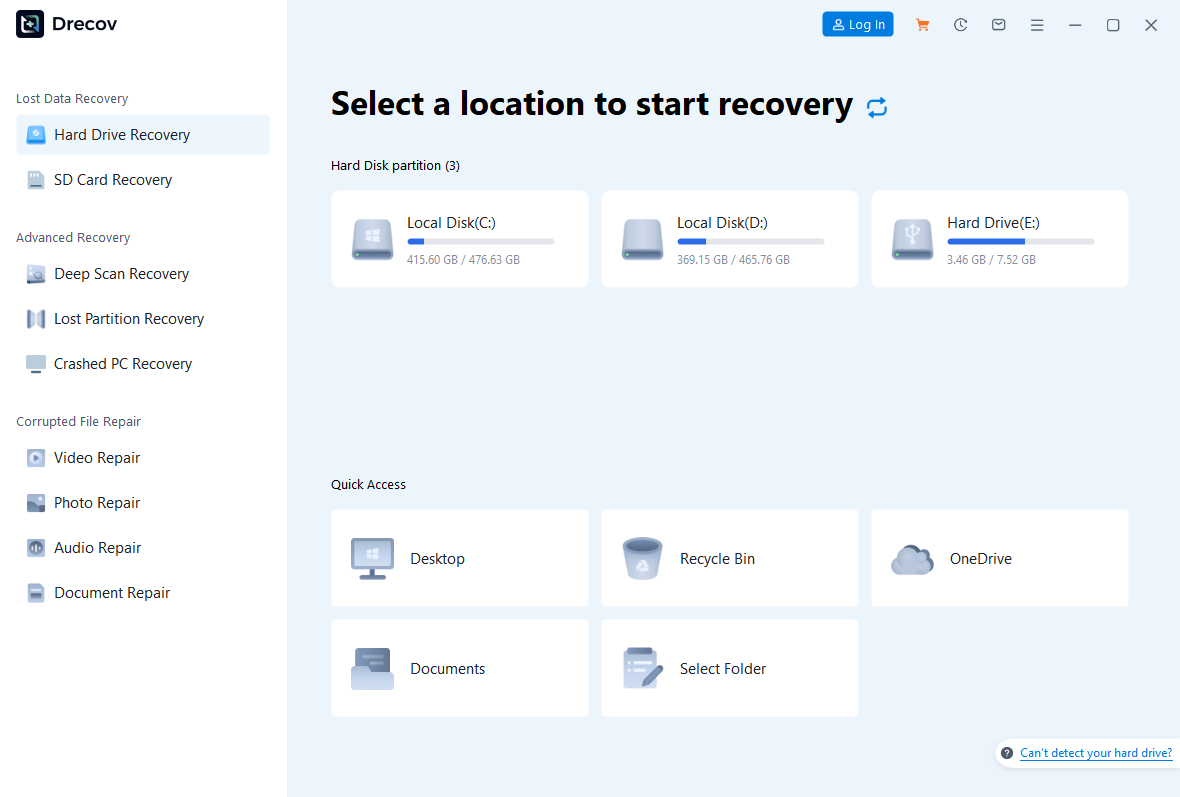
Step 1: Open Drecov and select where the files originally lived
Identify the affected disk using its device details and capacity. Select the original location, not the destination for recovered files. If the partition is missing, use Lost Partition Recovery where appropriate. Do not initialize the disk to make it appear more familiar.
Step 2: Run Quick Scan and inspect the initial results
Start with the priority files rather than recovering everything immediately. Browse available folders and compare names with your records. A current working document is more valuable than a large collection of unrelated candidates. Note any missing items before deciding whether further scanning is useful.
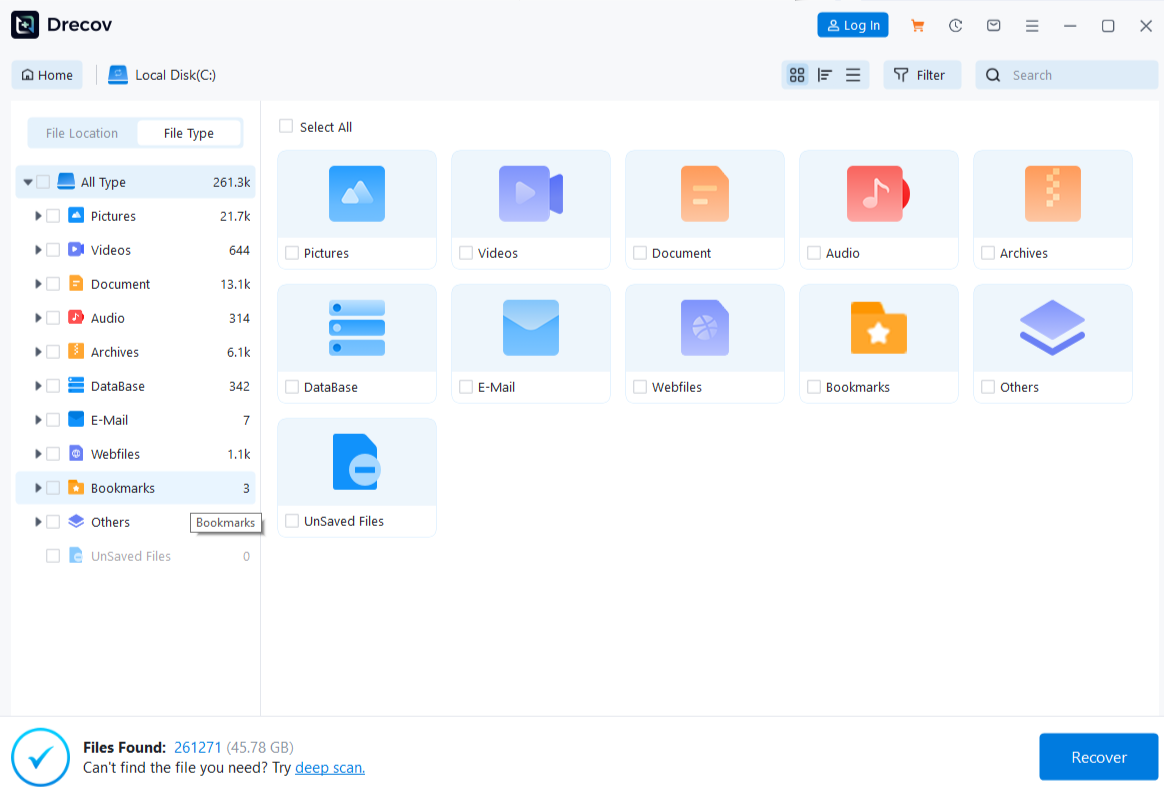
Step 3: Expand to Deep Scan only on a stable device
Use Deep Scan if the initial search does not locate the required content. Stop when the source develops instability or severe read errors. Specialist imaging may be safer than repeated direct access. A deeper search cannot restore bytes that have already been overwritten.
Step 4: Filter and preview the files that matter
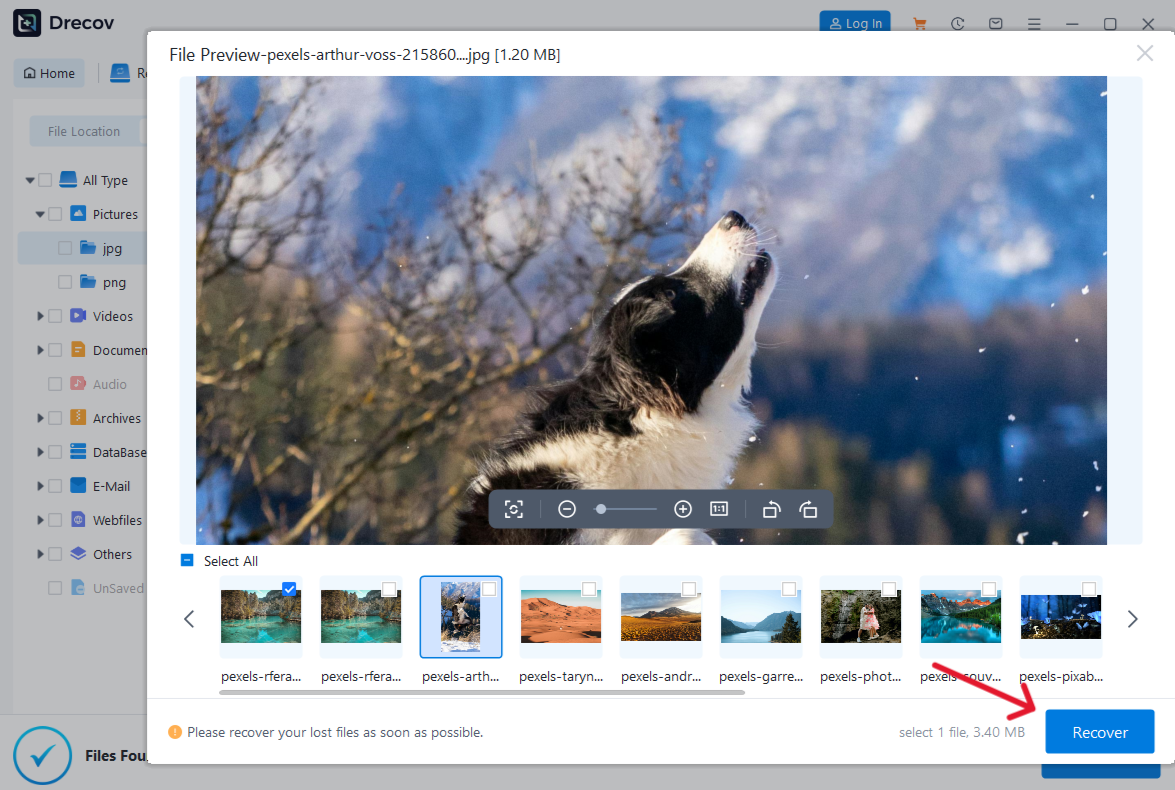
Narrow results using available type, location and filename controls. Preview supported examples from the selected groups. Treat previews as evidence for identification, not complete integrity certificates. Keep alternate candidates when dates or names cannot resolve which version contains the needed work.
Step 5: Recover into a new folder on the healthy device
Confirm the destination before starting the save operation. Never choose the original disk, even if it now appears accessible. Keep the recovered set distinct from existing originals and backups. That separation makes comparisons possible without sacrificing either version.
⚠ Warning: Install it on a drive different from the one where your data was lost to prevent overwriting.
Step 6: Verify the saved files before repairing the source
Look in the selected folder and check Drecov Folder or Recovery Folder if the expected output is missing. Open important files in their normal applications. Verify representative content and retain another copy of valuable results. Only then consider repairs, partition changes or formatting the original device.
Questions about using DiskGenius safely
Is every DiskGenius function read-only?
No. Read-only searching does not make formatting, partition edits or repair functions read-only. Identify the exact operation before confirming it.
Does finding a partition mean I should restore its layout?
Not automatically. First inspect the detected contents and protect needed files elsewhere. A plausible candidate does not prove that writing its metadata is appropriate.
Can I fix bad sectors before recovering files?
That is unsafe when needed data remains unprotected. The vendor warns that repair can destroy nearby data. Physical instability also warrants specialist assessment.
Is a preview enough to confirm recovery?
A preview helps identify content, but verification must continue after saving. Check the portions of the file that matter to your work.
Is Drecov a partition-repair replacement?
Drecov supports Lost Partition Recovery for retrieving files. That does not establish partition-table repair or boot reconstruction. Keep extraction and modification separate.
Conclusion
Use DiskGenius with a clear boundary between finding data and changing storage. For an appropriate local Windows loss, Drecov supplies an alternative scan-and-save workflow with previews and lost-partition support. Whichever tool you choose, usable files on another healthy device are the milestone that matters before disk repairs begin.
⚠ Warning: Install it on a drive different from the one where your data was lost to prevent overwriting.





