







The right Buffalo LinkStation backup software depends on which device holds the original files. A Windows PC sending files to the NAS needs a computer backup application. A LinkStation copying its shared folders elsewhere uses the NAS backup facilities supported by its model. These are separate jobs. Setting up one does not automatically protect the other.
Start by drawing a simple arrow from the original location to the intended backup destination. Then identify what would happen if either device failed. A folder stored only on the LinkStation remains a single copy, even when several computers can access it. Access from different computers does not create independent backups.
Identify the copy you need before choosing software
When the original lives on a Windows computer
A PC backup job reads selected local folders and writes a recoverable copy to the network destination. NovaBACKUP is associated with Buffalo’s bundled backup offering. However, confirm the entitlement for your registered device before installing or renewing anything. Software availability, licensing and supported features are not determined by the word LinkStation alone.
Decide whether you need selected documents or a broader system backup. Those goals have different storage and restoration requirements. A readable copy of a spreadsheet helps after accidental deletion. It does not necessarily supply everything needed to restore Windows onto a replacement system disk. Keep that distinction visible when selecting the job type.
When the original already lives on the NAS
For shared folders stored on the appliance, investigate its built-in backup settings. Supported destinations depend on the model and configuration. Buffalo documents jobs targeting attached USB storage or another Buffalo NAS. A second folder on the same failing device cannot provide the same protection as an independent destination.
NAS Navigator helps locate the appliance and access its configuration. Do not mistake device discovery for a completed backup job. Finding a shared folder in Explorer proves connectivity, not protection. The backup needs a defined source, destination, schedule and successful restoration test.
What to do if the source is already missing
Creating a fresh backup will not recreate a file deleted before the job ran. Check earlier backup sets and any available version history first. Keep existing sets untouched while investigating. A newly configured job that replaces destination contents could remove the older copy you actually need.
For a deleted local Windows original, PandaOffice Drecov provides a separate recovery path. It supports Windows data recovery from PCs, hard drives, SSDs, external drives, USB devices and memory cards. Its read-only recovery mode, Quick Scan, Deep Scan, filtering and previews help locate candidates before saving them elsewhere. Supported file categories include documents, photos, videos, email, audio and archives.
⚠ Warning: Install it on a drive different from the one where your data was lost to prevent overwriting.
Drecov also includes Lost Partition Recovery when the original partition is missing. This retrieves recoverable files; it does not promise partition-table repair. A mapped LinkStation share is not equivalent to a local disk for scanning. Do not remove NAS drives or dismantle an array merely to try the Windows workflow below. NAS-only loss requires the appliance’s backups or appropriate specialist assistance.
Configure Buffalo LinkStation backup software around a restore plan
Prepare the destination without sacrificing its contents
Label the destination clearly and inspect what is already stored there. Confirm available capacity against both the current source and expected growth. Leave room for retained versions if your selected backup method keeps them. A destination that fills immediately may make later jobs incomplete, even though the first job succeeded.
Buffalo’s LinkStation backup configuration instructions show an attached USB destination formatted as EXT3. That is a documented setup, not permission to erase any connected drive. Check your model’s requirements first. If formatting is necessary, preserve everything needed from that destination on another device before proceeding.
Build one small job before expanding it
Enter the LinkStation settings using its known address, then open the appropriate advanced backup controls. Create a clearly named job and select a small, recognizable source folder. Choose the destination explicitly. Read the displayed paths back to yourself so the source and target cannot be confused.
Inspect the available job behavior before saving. Determine whether it retains older versions, overwrites matching files or removes destination items. Do not infer these behaviors from labels such as copy or synchronize. Where the interface is unclear, consult the matching model documentation before using valuable data.
For a PC-to-NAS job, confirm that the backup application can authenticate to the intended share. Use credentials with the required access, and avoid casually broadening permissions for every user. Schedule around the computer’s availability. A powered-off source cannot supply new local files simply because the NAS remains online.
Record what recovery would require
Keep the job name, source paths, destination, retention choice and restore instructions somewhere accessible outside the NAS. Record any required credentials securely. For a dedicated USB backup strategy, this external-drive restore checklist helps distinguish possession of a backup disk from a usable recovery plan.
Prove that the backup restores the version you need
A completed status is a useful starting point, but the decisive test is opening restored data. Choose several files that represent your work. Include a document with recognizable recent edits, a larger file and a nested folder. Restore them into a separate test location, never over the originals.
- Compare the restored folder structure and expected filenames.
- Open the document and check its latest meaningful edit.
- Inspect a media file beyond its thumbnail or first few seconds.
- Check whether an older version can be selected when version retention matters.
- Confirm that another authorized person could follow the recovery instructions.
It helps diagnose buffalo linkstation backup software without changing the source data. If the test returns yesterday’s content, investigate the selected backup set and job timing. If authentication fails, resolve permissions without deleting the backup. A file that exists only as an unreadable archive has not yet met the restore test. Keep a dated note of what you restored and which backup supplied it.
Repeat a small rehearsal after major configuration changes. Moving folders, replacing the destination or changing credentials can alter a previously reliable workflow. Readers considering a different PC-side method can compare Windows backup choices without assuming every method stores the same kind of recoverable copy.
Recover a deleted local original before restarting its backup
This check is especially useful for buffalo linkstation backup software. This procedure applies when the missing file originally occupied a stable Windows-accessible device. Stop new writes to that device and pause jobs that could overwrite older backups. If it disconnects, clicks or produces severe read errors, stop repeated scanning. Arrange suitable imaging or professional recovery instead. Software scanning cannot repair physical damage.
Prepare another healthy device with sufficient free space. Install recovery software somewhere other than the affected partition. Check the Recycle Bin and known backup sets before scanning. The broader deleted-file recovery options may reveal an intact copy that avoids scanning altogether.
Step 1: Open Drecov and select the former local folder location
Choose the disk or partition where the original lived before it was copied to LinkStation. Do not select the mapped NAS letter simply because it appears in Explorer. For a missing local partition, consider Lost Partition Recovery. Confirm the physical device’s identity before starting.
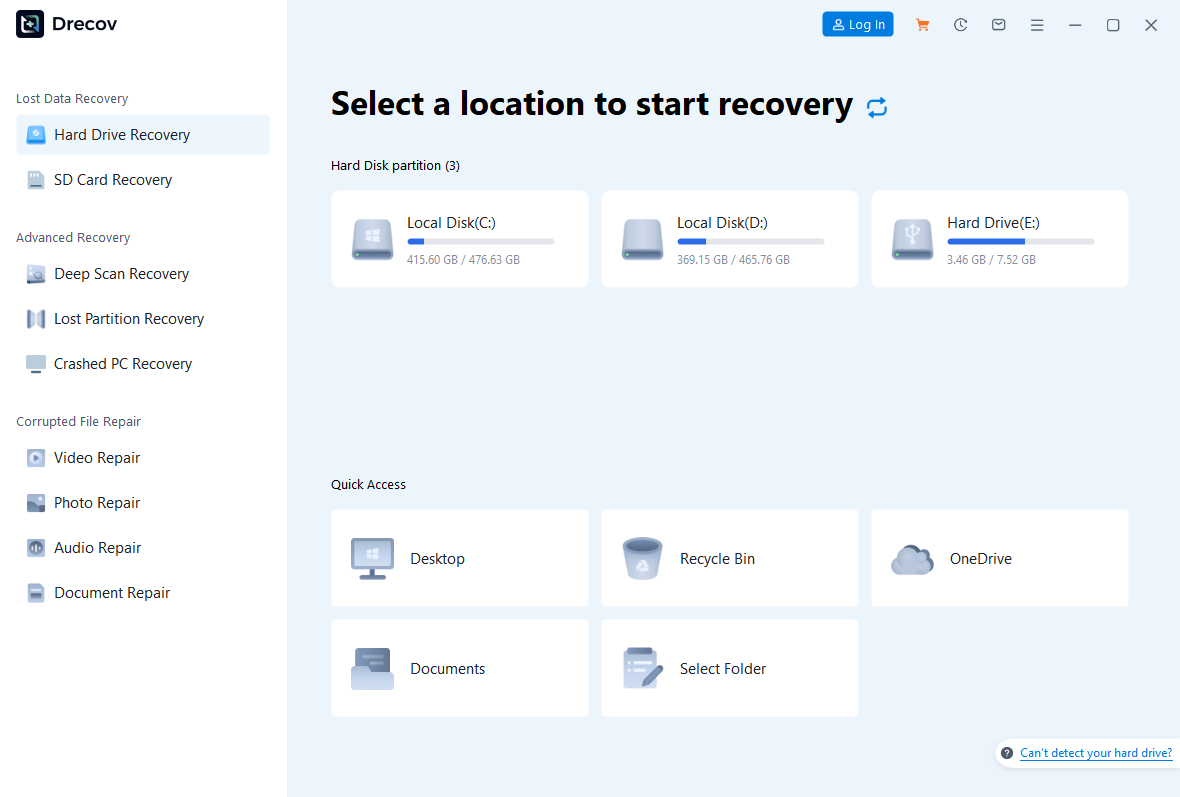
Step 2: Run Quick Scan for the missing source files
Review the results against the original folder names and known filenames. Look for the document that missed its scheduled backup, rather than selecting every similarly named object. A recovered older version may be useful, but it should not silently replace a newer intact backup.
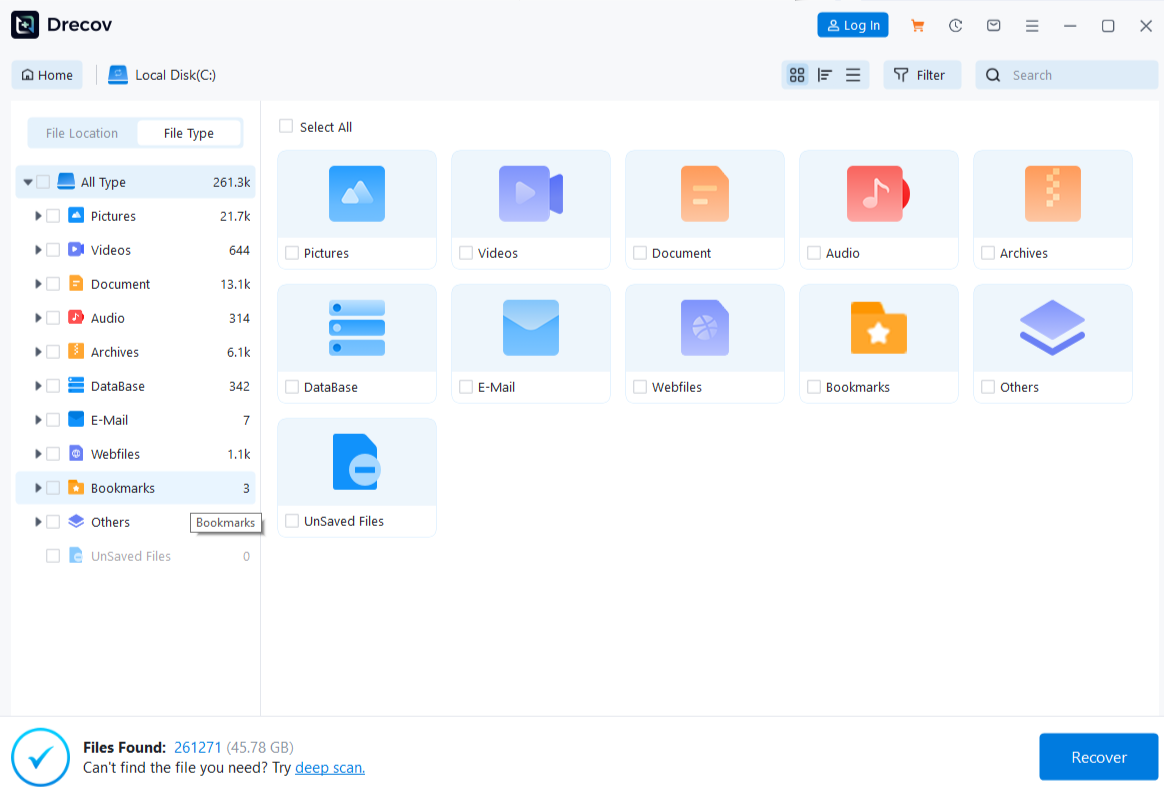
Step 3: Use Deep Scan only while the source remains stable
If Quick Scan does not locate the needed files, use Deep Scan on the stable device. Stop if access becomes erratic. Additional scanning cannot reverse overwritten content, and SSD TRIM can reduce what remains available. Avoid recording new work onto the source during this attempt.
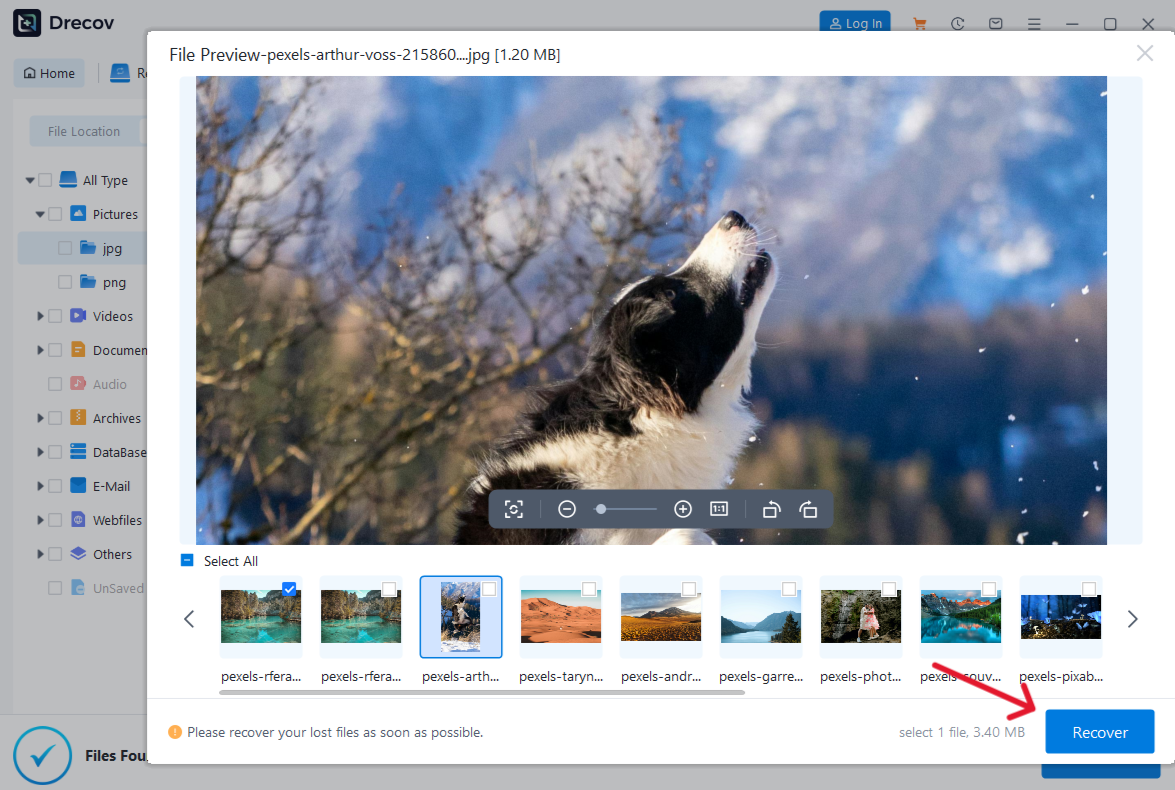
Step 4: Locate and preview the relevant candidates
Use available filename, location and file-type filters to narrow the results. Preview representative supported files. A visible preview helps identify a candidate, but it does not prove that every page or archive member is intact. Compare dates and content rather than trusting the filename alone.
Step 5: Save recovered files to the prepared healthy device
Recover into a new destination folder, away from the source disk. Do not immediately merge results into an existing LinkStation backup set. Keeping candidates separate preserves both versions and avoids overwriting an intact copy during an uncertain recovery.
⚠ Warning: Install it on a drive different from the one where your data was lost to prevent overwriting.
Step 6: Verify the files before adding them to the backup
Check the selected destination and, if necessary, the Drecov Folder or Recovery Folder. Open the recovered files in their normal applications. Only after verification should you rebuild the intended source folder and resume backup jobs. Keep uncertain or older candidates labeled separately.
Buffalo linkstation backup software FAQs
No. Locating the NAS or opening its settings does not create a scheduled PC backup. Confirm that a backup application has an active job and test its output.
Can one LinkStation protect another?
Buffalo documents another LinkStation or TeraStation as a backup destination. Confirm compatibility and configuration for both models. A destination in the same location still shares some physical risks.
Should I format a USB drive when the NAS requests it?
Not while it contains your only needed copy. Preserve its contents first and verify the exact model’s supported destination format. Formatting erases access to existing data.
Why does a successful job restore an older file?
The job may have run before the last edit, or you may have selected an older backup set. Compare timestamps, source paths and actual document content before changing the configuration.
This workflow does not establish that capability. Use Drecov for a recoverable local original on supported Windows-accessible media. For NAS-only loss, check NAS backups and appropriate specialist options.
Conclusion
Choose the backup direction first, then verify a small restore before trusting a large scheduled job. Keep the LinkStation copy independent from the original where possible. If a local original vanished before backup, Drecov can help retrieve recoverable candidates from stable media. Verify those files elsewhere before bringing them into the backup routine.
⚠ Warning: Install it on a drive different from the one where your data was lost to prevent overwriting.





