







A repair service needs a video file to work on. If your recording has disappeared, uploading an empty placeholder will not bring it back. CleverFiles video repair is relevant when a damaged clip still exists. Its official service, Clever Online Video Repair, analyzes that file and may request a matching playable sample. First establish whether you need to repair existing footage or recover a missing original.
This assessment uses the service’s documented workflow, not a hands-on performance test. There are no measured recovery rates or speed comparisons here. The useful question is whether your available files meet the workflow’s requirements. A successful result must also preserve the scenes and sound you need, not merely open in a player.
Which File Should You Give CleverFiles Video Repair?
Start with the earliest intact copy available from the camera, phone, recorder, or editing project. A messaging-app download may already have different encoding or reduced detail. Repeated exports can add uncertainty about where the damage began. Keep the original filename and recording date in your notes so you can distinguish each candidate.
Present but unplayable is different from missing
An existing clip with an opening error is a plausible repair candidate. A deleted recording requires a search of backups or the original storage first. A zero-byte file contains no video payload for a repair service to analyze. Likewise, a tiny interrupted copy may lack most of the recording. Compare its size with similar clips from the same session before drawing conclusions.
A video that opens but looks blocky presents another problem. Test the unchanged file in another trusted player or device. If it looks correct elsewhere, investigate playback rather than uploading it immediately. Our explanation of pixelated video and source quality covers that separate diagnostic path.
Where Drecov fits before a repair attempt
PandaOffice Drecov is Windows data recovery software, not a video-stream repair service. It can search supported local storage for deleted or missing files. That includes videos on HDDs, SSDs, external drives, USB drives, and memory cards. Quick Scan, Deep Scan, result filtering, and supported previews help you evaluate candidate files before saving them elsewhere.
⚠ Warning: Install it on a drive different from the one where your data was lost to prevent overwriting.
Its read-only recovery mode is useful when you need to preserve the source while searching. Lost Partition Recovery also addresses files on a lost partition; it does not rebuild damaged video structure. Drecov cannot repair physical storage failure or guarantee recovery after overwriting. This makes it a possible route to a better original, not a substitute for evaluating the broken clip.
Prepare the Upload Without Sacrificing Your Only Copy
Copy readable footage to healthy storage before experimenting. Work from that copy, leaving the source untouched. If a card disconnects or produces repeated read errors, stop copying and scanning repeatedly. Professional recovery or suitable imaging may be safer. Do not record a reference clip onto the same card while deleted footage might remain there.
Choose a reference recording that actually matches
The official Clever Online Video Repair service may request a playable sample when automatic detection cannot determine recording parameters. The sample should come from the same device or software with identical recording settings. Check codec, resolution, frame rate, and bitrate. Sharing an extension alone does not establish a match.
Look for a healthy clip from the same recording session before creating anything new. A phone might change recording settings between modes. An edited export may differ from camera output even when both files end in MP4. If no suitable sample exists, acknowledge that limitation instead of supplying an unrelated clip and expecting equivalent results.
Decide whether uploading is acceptable
Online repair requires sending footage to a service. Obtain permission before uploading client work, confidential recordings, or other people’s sensitive material. Review the current retention and account terms at the time of use. An old review cannot reliably establish today’s storage policy, upload limits, or payment conditions.
Keep a simple record of the original, the uploaded copy, and any reference sample. Include their sizes and filenames. This prevents an apparently repaired download from replacing stronger evidence. If an investigation or dispute involves the recording, obtain appropriate handling advice before altering or transmitting it.
If the Original Was Deleted, Search Local Storage First
Check camera imports, external backups, cloud versions, and the computer’s Recycle Bin before scanning. Recoverable trash items follow a simpler path than sector-level recovery. The emptied Recycle Bin recovery options explain what changes after deletion becomes permanent.
For a genuinely missing local clip, stop recording, downloading, and exporting to the affected device. Prepare another healthy drive with enough free space. Install Drecov away from the partition that contained the recording. SSD TRIM and later writes can reduce recovery prospects. Repeated scans cannot restore bytes the device no longer retains.
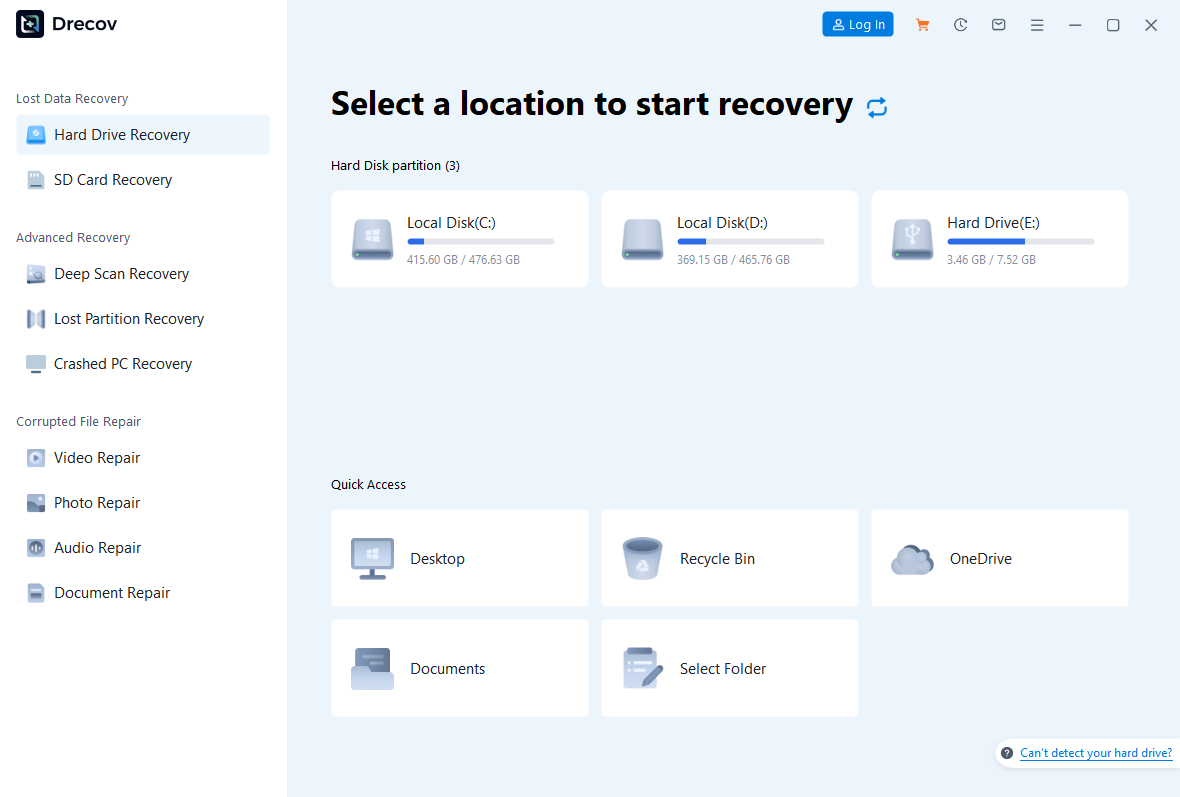
Step 1: Open Drecov and Identify the Recording’s Original Location
Select the card, external disk, or Windows volume that originally held the missing clip. Do not select the folder containing only a failed transfer. Match the device name and capacity carefully. If the relevant partition disappeared, consider Lost Partition Recovery without initializing or formatting the source first.
Step 2: Run Quick Scan for the Missing Recording Session
Review Quick Scan results for the original recording folder and nearby filenames. Cameras often produce similar names, so compare several candidates from the same session. Keep notes about expected duration and approximate size. A matching filename alone does not prove that you found the complete recording.
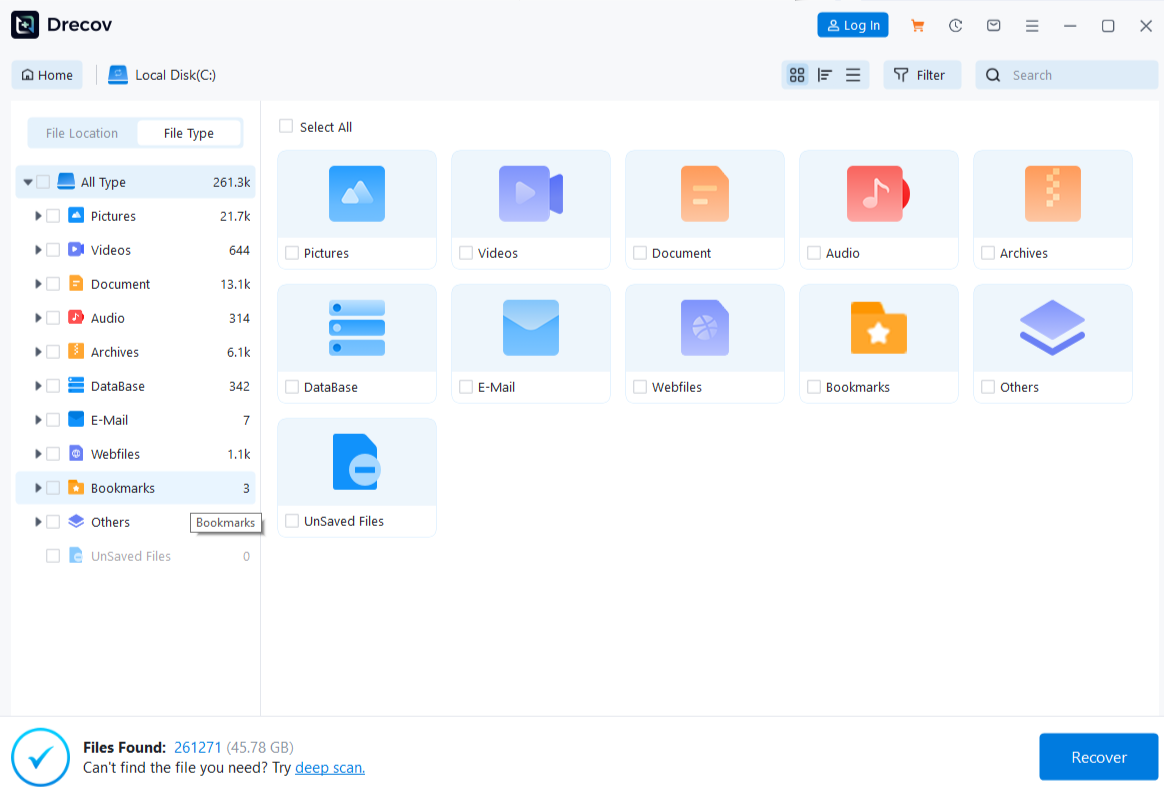
Step 3: Use Deep Scan Only on Stable Storage
If Quick Scan misses the target, use Deep Scan while the device remains stable. Stop if severe read errors or repeated disconnections appear. Longer scanning is not evidence of a healthier result. Seek imaging or professional assistance when the source cannot sustain reliable access; avoid treating an unstable card as a routine software case.
Step 4: Locate Candidates and Check Available Previews
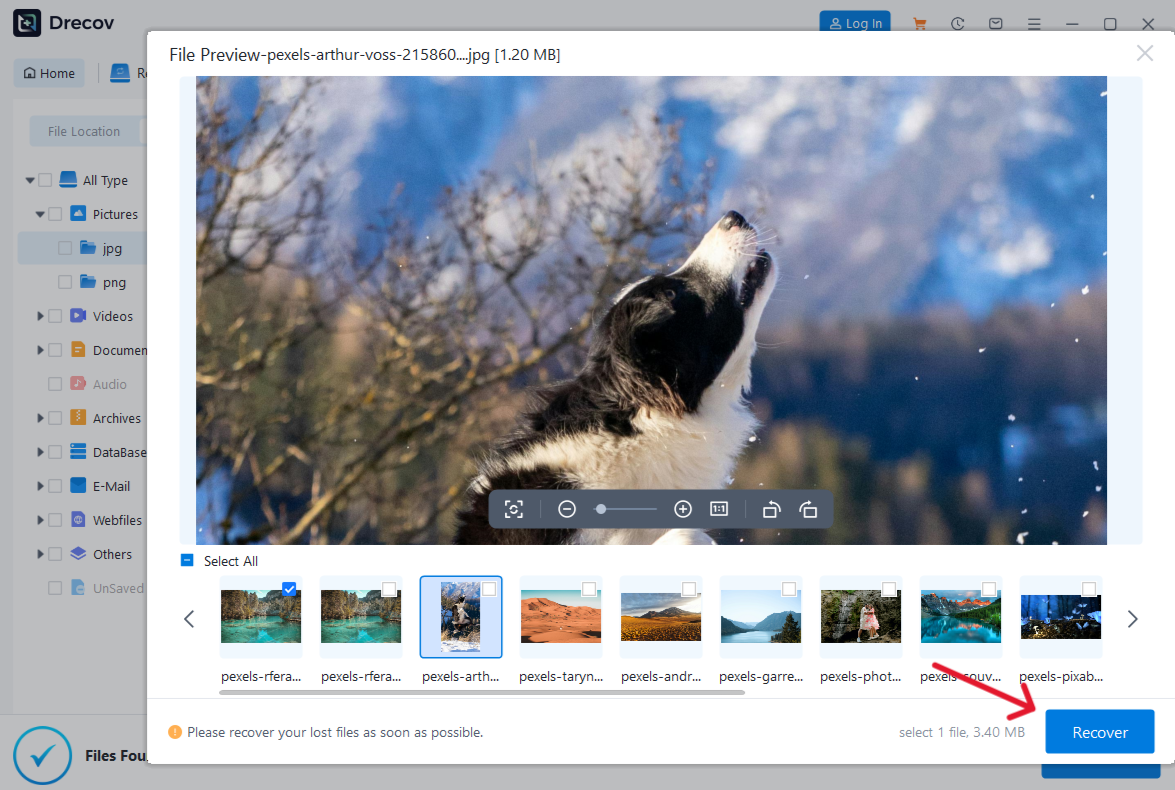
Use available type, filename, and location filters or browse the results directly. Preview representative supported files where possible. Preview availability depends on the file and format, so an absent preview is not a complete diagnosis. Even a playable preview cannot certify every frame or the full audio track.
Step 5: Recover the Selected Clips to Another Drive
Save candidates to the healthy destination, never back to the recording source. Keep alternative versions under distinct filenames rather than overwriting the first result. This matters when one candidate has the beginning of a scene and another contains more of its ending. Preserve both until comparison is complete.
⚠ Warning: Install it on a drive different from the one where your data was lost to prevent overwriting.
Step 6: Find the Output and Verify It Before Repairing
If files are absent from the selected location, check the Drecov Folder or Recovery Folder. Open the recovered copies and compare their duration, scenes, and audio. Only then decide whether a damaged candidate needs repair. For broader missing-clip cases, see the deleted video recovery workflow. Avoid formatting or reusing the source until verification finishes.
Judge the Repaired Deliverable, Not the Success Message
Download repaired output to a separate location and retain the damaged input. Start with ordinary playback, then seek through several points. A clip may begin normally but fail near the original interruption. Compare the result with the event you remember, not simply the duration shown by the player.
- Check the beginning, middle, and final scene for missing sections or frozen frames.
- Listen where speech, impacts, or visible actions make audio synchronization easy to judge.
- Seek forward and backward to detect broken navigation or unexpected jumps.
- Open the saved download in another trusted player, not only the service preview.
- Import a copy into your editor if editing is the actual goal.
These checks answer different questions. Playback confirms decoding; seeking checks navigation; editing tests whether the result suits your next task. None proves that missing original detail was recreated. If only part survives, label the file accordingly and retain every untouched source. A usable excerpt can still help, but it should not be mistaken for a complete restoration.
Keep a short defect log with timestamps for remaining glitches. That lets you compare another recovered copy accurately. Without notes, repeated viewings can make a different failure look like an improvement.
Cleverfiles video repair FAQs
Can CleverFiles video repair retrieve a deleted camera clip?
The online repair workflow needs an existing file to upload. Search backups or recover the deleted local clip first. Once a candidate exists, evaluate whether it is complete and whether repair is still necessary.
Does a healthy sample guarantee a complete repair?
No. A matching sample provides recording information, not the missing event itself. Damaged or absent footage can still limit the result. Verify actual scenes and sound after downloading any repaired output.
Should I convert a broken video before uploading it?
Preserve the original and avoid making conversion your first experiment. A failed conversion can create another incomplete derivative. If you try an export later, use a copy and keep its relationship to the original clear.
Can Drecov make a recovered clip playable?
Drecov can locate and extract recoverable video files from supported storage. It does not guarantee structural video repair. A recovered file might be intact, partial, or damaged, so playback verification remains essential.
What should I do when the repaired file ends early?
Compare its endpoint with other copies and recovered candidates. Keep the partial result without overwriting the source. Search for a better original or seek specialist help if the missing footage is important.
Conclusion
Choose CleverFiles video repair when you have a damaged recording suitable for its documented upload workflow. Preserve the input, provide a genuinely matching sample when requested, and judge the complete downloaded result. If the recording itself is missing, Drecov offers a separate local recovery path. Finding an intact original can remove the need for repair altogether.
⚠ Warning: Install it on a drive different from the one where your data was lost to prevent overwriting.





