







A Windows 10 backup utility should be chosen by what you need to restore, not by the number of features on its download page. File History helps with earlier personal-file versions. A system image targets a whole-machine state. Cloud synchronization helps with access and collaboration but can propagate deletion. Third-party tools may combine file, disk, schedule, and rescue-media features. Before installing anything, define the loss event, the required restore time, and a second destination that is not the source PC.
Windows 10 Backup Utility: Start With the Restore Question
Imagine the event first. Accidental deletion needs versioned files. A failed Windows drive may require a bootable image or a clean reinstall plus file restore. Ransomware demands isolated copies that an infected account cannot rewrite. Moving to a new PC requires application and settings planning beyond copying Documents.
Write a short recovery objective: which folders matter, how old a copy may be, how quickly work must resume, and whether another computer is available. This turns “best backup utility” into a testable requirement. A tool that meets one objective can be unsuitable for another.
Windows 10 reached end of support on October 14, 2025. Existing computers still run, but backup planning should include migration to a supported system. Do not confuse an operating-system upgrade plan with a verified copy of irreplaceable files.
Four Backup Types Solve Different Problems
File History for changing personal files
File History can save versions of files in protected libraries to an external drive or network location. It is useful for recovering an earlier document or a deleted personal file. Confirm which folders are included, because data outside the configured scope may not be protected.
System images for a machine-level checkpoint
An image captures a broader disk state and can shorten recovery after drive replacement. Images are large, restore is less granular, and rescue media must recognize the hardware and destination. Create and test boot media before the emergency.
Cloud services for off-device copies and versions
OneDrive and similar services provide remote access and may retain versions or deleted items. Synchronization is not automatically an independent backup: a deletion, encryption event, or wrong-account action can spread. Check retention and restore controls for the actual account.
Third-party utilities for schedules and mixed jobs
Products such as Veeam Agent, Macrium Reflect, AOMEI Backupper, EaseUS Todo Backup, and Cobian tools address different combinations of file backup, imaging, cloning, scheduling, or destinations. Current editions and free limits change, so verify them on each vendor’s official page rather than relying on an old comparison.
A Practical Selection Matrix
| Need | Best starting category | Proof to require |
|---|---|---|
| Undo an edited document | Versioned file backup | Open an older copy without replacing the current one |
| Recover after disk replacement | System image plus rescue media | Boot the rescue environment and detect the image |
| Keep an off-site copy | Cloud or rotated external backup | Restore after deleting the local test file |
| Move data to another PC | File backup and migration plan | Open restored files under the new account |
| Limit ransomware exposure | Offline or immutable generation | The protected copy is not writable from the PC |
Do not score tools before defining these tests. Encryption, compression, scheduling, and incremental backups are useful only if the catalog, credentials, rescue environment, and storage remain available. A simple copy with disciplined rotation can outperform an elaborate job nobody has restored.
Keep at least one copy disconnected or protected by separate access. A continuously attached USB drive can be affected by malware, power damage, accidental formatting, or a bad cleanup command at the same time as the computer.
Set Up the Backup Without Creating a Single Point of Failure
Choose a destination with enough space for initial data and future versions. Give the backup a clear label, record encryption credentials, and protect recovery keys somewhere separate. Do not store the only password inside the backup it unlocks.
Schedule around real work patterns. A laptop that is rarely connected to its external drive may miss every scheduled job. Review last-success timestamps and failure notifications. Periodically rotate storage so one generation is offline.
Exclude replaceable caches, downloads, and temporary data only after confirming that project files are not mixed into them. Include browser profiles, email archives, game saves, and application data when those items matter. The visible Documents folder is not the whole user state.
For additional context, compare Drecov data recovery, a restorable external-drive backup, OneDrive backup and recovery, and the EaseUS Todo Backup review. Microsoft explains current Windows options in its official backup and recovery overview.
Test a Restore Before Trusting the Schedule
Create several harmless test files, edit them on different days, and delete one. Restore them to a separate test folder. Check names, timestamps, permissions, content, and version choice. Then close and reopen the applications that use them.
For an image job, boot the rescue media without starting a restore. Confirm keyboard, network, storage controller, destination disk, and image visibility. Do not overwrite the production drive for a test. Use spare hardware or the product’s documented verification feature where appropriate.
Record the test date, tool version, destination, restore steps, and result. Repeat after major Windows, encryption, hardware, account, or backup-software changes. A green job log proves creation, not recoverability.
Where Drecov Fits When the Backup Has a Gap
PandaOffice Drecov is Windows data recovery software for PCs, HDDs, SSDs, external drives, USB drives, SD cards, and memory cards. It uses read-only recovery mode, Quick Scan, Deep Scan, filtering, preview, recovery to another healthy destination, and Lost Partition Recovery. It can search supported photos, videos, documents, email data, audio, and archives.
Drecov is not a Windows 10 backup utility and should not replace scheduled, versioned copies. Its role begins when a local file is already deleted, inaccessible, or lost from stable detectable storage and no usable backup version exists. It cannot repair physical damage, undo fully overwritten data, or guarantee a result after SSD TRIM. If the source clicks, repeatedly disconnects, changes capacity, or produces severe read errors, stop direct scanning. Image it under controlled conditions or consult a professional recovery service.
⚠ Warning: Install it on a drive different from the one where your data was lost to prevent overwriting.
Drecov Steps for an Unprotected Local File
Step 1: Open Drecov and choose the original loss location
Stop writing to the source and prepare another healthy device. Do not install Drecov on the partition that held the missing data. Open Drecov and select the original folder, partition, or stable device. Use Lost Partition Recovery only when the partition itself disappeared.

Step 2: Run Quick Scan and check the former folder
Start Quick Scan for a recent deletion. Browse the previous path and filter by file type, name, date, and size. Keep backup software and synchronization from writing to the source during the search.
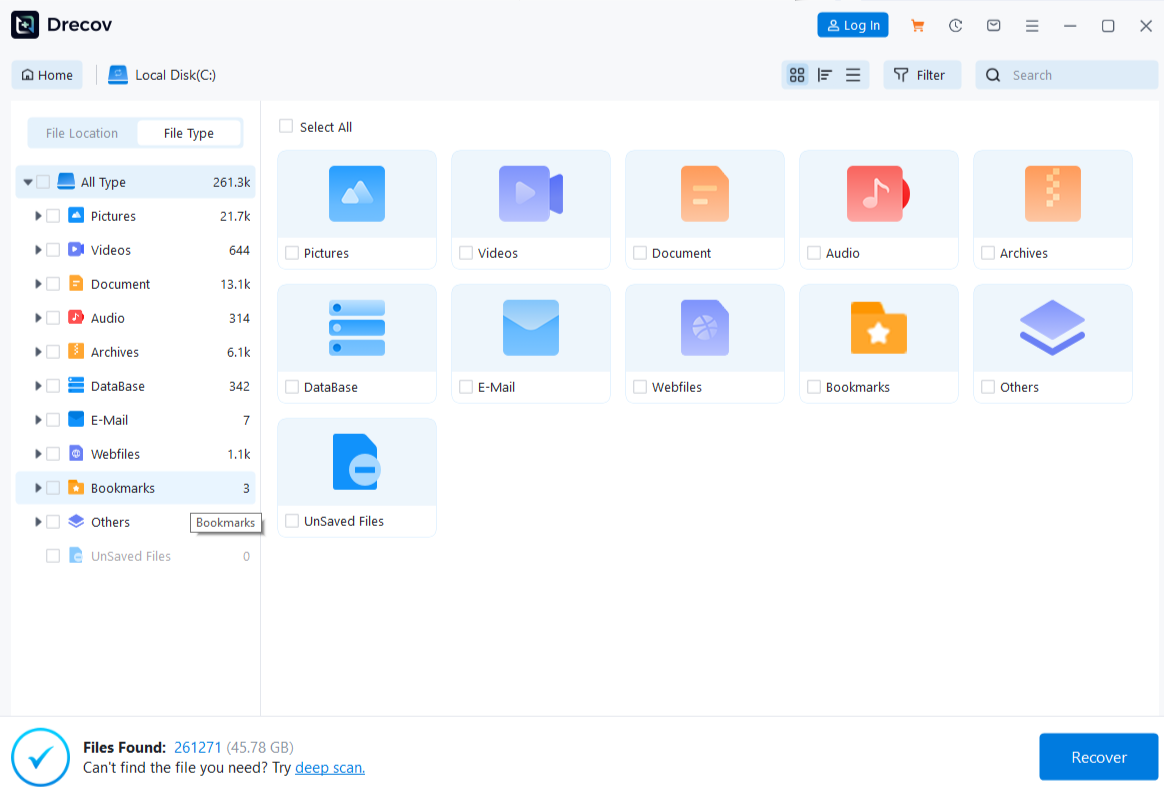
Step 3: Use Deep Scan only on stable storage
If Quick Scan misses the target and the device remains reliable, run Deep Scan. Stop when detection changes, reads stall, or the device disconnects. Longer scanning does not repair failing media.
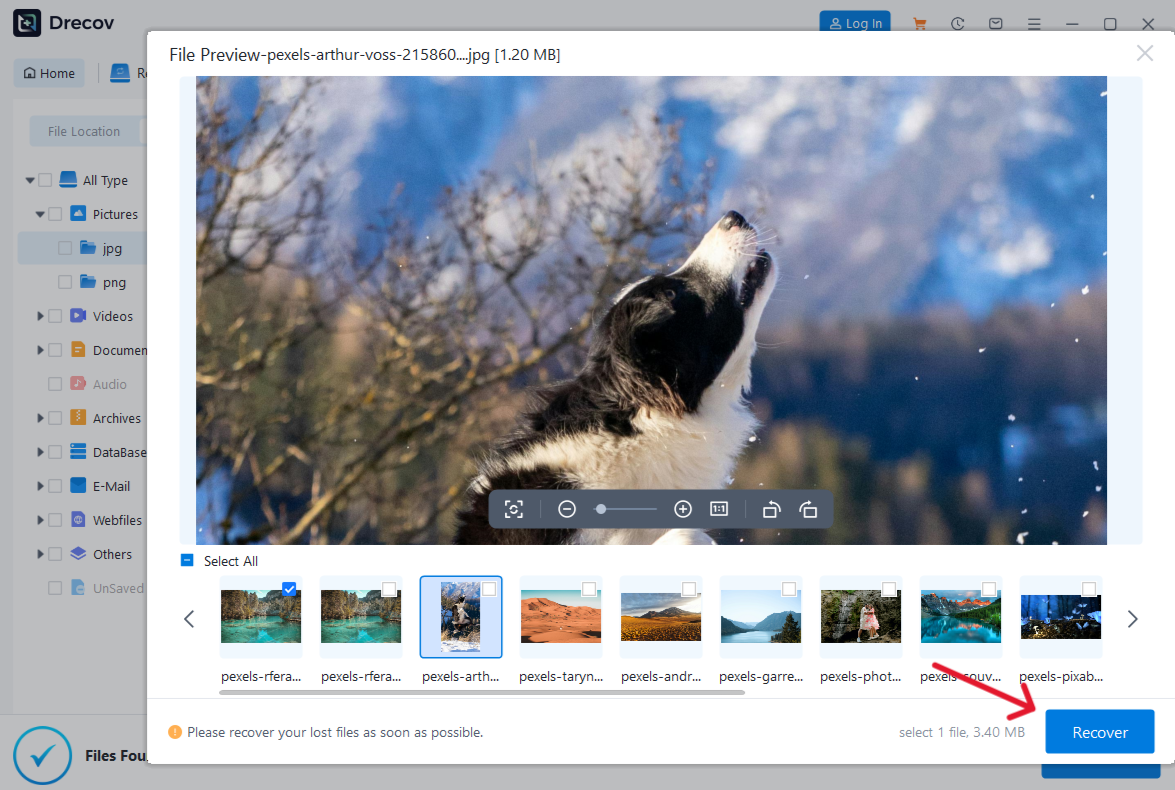
Step 4: Preview candidates and recover elsewhere
Preview representative supported files and select plausible versions. Save them to the prepared healthy destination, never back to the source. Keep several candidates when timestamps or names are incomplete.
Step 5: Verify the output and close the backup gap
If output is not where expected, check Drecov Folder or Recovery Folder. Open files, sample media, test archives, and create a second copy. Only then resume source-disk repair or establish the replacement backup job.
Use a Monthly Recovery Check
Once a month, check the latest successful job, free capacity, alerts, and the age of the oldest useful version. Restore one small file to a separate location. Every quarter, test rescue media and review account recovery information.
When a backup fails, preserve the last known good generation before changing settings. Do not erase the only catalog to make room for a new full backup. Add capacity or create a fresh destination while the older copy remains available.
A reliable plan usually combines versioned personal files, an off-device copy, and a documented way to rebuild or restore the computer. Recovery software remains a fallback for uncovered local loss, not the first line of protection.
Match Retention to the Way Files Actually Change
Retention deserves a separate decision from schedule. A writer may need daily document versions for three months, while a photographer may need every original image indefinitely but only a few catalog checkpoints. Set retention around the cost of recreating work, the delay before mistakes are noticed, and available capacity. If the destination silently removes old versions as it fills, document that behavior and alert before the oldest useful recovery point disappears.
Ransomware and accidental mass deletion make connection state important. A backup disk that stays writable and attached can be damaged by the same incident as the computer. Rotate at least one destination offline or use a service with protected version history and strong account recovery. Cloud synchronization alone is not isolation: a local deletion or encryption event may synchronize unless the service retains recoverable versions.
Back up credentials and context as well as files. Record which Windows account owns encrypted data, where BitLocker recovery information is kept, which application opens specialized formats, and how to boot rescue media. Store this documentation securely outside the protected PC. A complete image without its decryption key or restore instructions can be less useful than a smaller, well-tested file backup.
When replacing a computer, do not erase the old backup immediately after the first successful login. Compare user folders, email archives, browser data, financial files, project assets, and application exports. Keep the previous generation through a normal work cycle, then perform one more restore test before retiring it.
Conclusion
The right Windows 10 backup utility is the one that restores the specific failure you planned for. Match File History, images, cloud versions, or third-party tools to that job, isolate at least one copy, and perform real restore tests. If a local file falls through the backup window, Drecov can search stable storage and recover candidates elsewhere, but it cannot substitute for verified backup generations.
⚠ Warning: Install it on a drive different from the one where your data was lost to prevent overwriting.





