







Solid-state drives have transformed modern computing by delivering significantly faster performance than traditional hard drives. Most modern SSDs include a feature called SSD TRIM support, which helps maintain long-term speed and efficiency. While this technology improves performance, it also introduces unique challenges when data is accidentally deleted.
Many users discover this problem after removing important files and attempting recovery. Unlike traditional hard drives, SSDs may permanently clear deleted data through the TRIM command SSD mechanism, making recovery much more difficult.
As a result, users frequently search for terms such as SSD trim data recovery, what is SSD trim, what is trim in SSD, and how to enable trim on SSD to better understand how the technology affects their chances of recovering lost files.
This guide explains how SSD trimming works, how it influences data recovery success, and what actions should be taken immediately after accidental file deletion. By understanding the relationship between SSD technology and data recovery, users can make informed decisions and improve their chances of protecting valuable information.
Understanding SSD TRIM and Its Impact on Data Recovery
What Is SSD Trim and Why Modern SSDs Use It
One of the most common questions users ask is: what is SSD trim?
TRIM is a command supported by modern operating systems and solid-state drives that helps optimize storage performance. When files are deleted from a traditional hard drive, the operating system typically marks the space as available while the actual data remains until overwritten.
SSDs work differently.
Because flash memory cells require special management procedures, SSD controllers benefit from knowing which storage blocks are no longer needed. The operating system communicates this information through the TRIM command.
When TRIM is enabled:
- Deleted blocks are identified as unused.
- SSD controllers can prepare those blocks for future writes.
- Performance degradation is reduced.
- Write operations become more efficient.
This process improves drive responsiveness and helps maintain long-term storage performance.
Many users researching what is trim support SSD are surprised to learn that TRIM exists primarily to improve SSD efficiency rather than data management.
The feature has become standard across most modern operating systems, including Windows, macOS, and Linux distributions.
How the Trim Command SSD Process Works
Understanding the trim command SSD workflow is essential when evaluating recovery possibilities.
When a file is deleted:
- The operating system removes the file reference.
- The affected storage blocks are marked as available.
- A TRIM notification is sent to the SSD controller.
- The controller identifies blocks eligible for cleanup.
- Data may eventually be erased during internal maintenance operations.
Unlike mechanical hard drives, SSDs rely on flash memory management techniques to optimize performance.
The TRIM process helps the drive avoid unnecessary read-modify-write operations by proactively preparing storage blocks for future use.
Although TRIM improves efficiency, it creates challenges for recovery because deleted data may no longer remain intact for extended periods.
The timing of the cleanup process varies depending on:
- SSD manufacturer
- Controller design
- Operating system behavior
- Drive workload
- Available free space
This variation explains why some deleted files remain recoverable for a short period while others disappear quickly.
The Relationship Between SSD Performance and Trim Support
Many users wonder why SSD manufacturers enable TRIM by default.
The answer lies in long-term performance optimization.
Without SSD trim support, deleted blocks continue occupying storage resources until overwritten manually. Over time, this increases the number of operations required for new writes.
TRIM provides several advantages:
- Faster write performance
- Reduced write amplification
- Improved drive responsiveness
- Better storage management
- Enhanced long-term efficiency
For everyday users, these benefits often outweigh potential recovery concerns.
Consider a heavily used SSD storing operating system files, applications, and documents. Without TRIM, write speeds may gradually decline as available storage becomes fragmented and difficult to manage efficiently.
By allowing the controller to prepare unused blocks proactively, TRIM helps maintain consistent performance throughout the drive’s lifespan.
However, the same optimization that improves performance can reduce the availability of deleted data for recovery purposes.
Why SSD Trimming Changes Traditional Recovery Methods
Traditional data recovery techniques were developed primarily for mechanical hard drives.
On hard drives, deleted files often remain physically present until overwritten by new data. Recovery software can scan storage sectors and reconstruct file contents even after deletion.
SSDs introduce a different situation.
Once SSD trimming occurs, the controller may remove information from storage blocks before new data is written.
As a result:
- Recovery windows become shorter.
- Deleted files may disappear more quickly.
- Success rates vary significantly.
- Immediate action becomes critical.
This difference explains why many users experience successful recovery on hard drives but encounter difficulties when attempting SSD trim data recovery.
Understanding these limitations is the first step toward improving recovery outcomes.
How SSD Trim Affects Deleted Files and Recovery Success
What Happens After a File Is Deleted on an SSD
When a file is deleted from an SSD, several processes occur behind the scenes.
Initially, the operating system removes references to the file from the file system. The actual storage blocks may still contain data temporarily.
At this stage, recovery remains possible under certain circumstances.
However, once TRIM instructions are processed, the SSD controller gains permission to reclaim those storage blocks.
The sequence generally involves:
- File deletion
- File system updates
- TRIM notification
- Controller cleanup operations
- Future write preparation
The speed at which these events occur varies from system to system.
Some drives process TRIM requests almost immediately, while others perform cleanup during idle periods.
This variation explains why recovery outcomes can differ even when similar deletion events occur.
Users who act quickly after discovering data loss often have better chances of successful recovery than those who continue using the drive extensively.
How SSD Drive Trim Removes Recoverable Data
A common misconception is that deleting a file instantly destroys the data.
In reality, the operating system typically removes references first.
The challenge arises when SSD drive trim begins reclaiming storage blocks.
Once the controller processes a block marked by TRIM:
- The data may be erased internally.
- Storage becomes available for future writes.
- Recovery software may find little or no remaining information.
Because cleanup occurs at the hardware level, traditional recovery techniques become less effective.
The speed of this process depends on factors such as:
- Drive firmware
- Controller architecture
- Available storage capacity
- Current workload
- Operating system configuration
This is one reason SSD recovery remains significantly more complicated than hard drive recovery.
Many recovery failures occur because TRIM has already processed the affected storage blocks before recovery attempts begin.
⚠️Warning: Continuing to use the SSD after accidental deletion can accelerate cleanup operations and reduce recovery opportunities.
Differences Between HDD Deletion and SSD Trimming
Comparing SSDs and hard drives helps illustrate why recovery outcomes differ so dramatically.
Traditional HDD deletion:
- File references are removed.
- Data remains until overwritten.
- Recovery windows can be relatively long.
- Sector scanning often remains effective.
SSD deletion with TRIM enabled:
- File references are removed.
- TRIM notifications are issued.
- Storage blocks may be cleared proactively.
- Recovery opportunities may disappear rapidly.
This distinction is critical when evaluating SSD trim data recovery options.
Many users assume that recovery software functions identically across all storage devices. Unfortunately, SSD architecture fundamentally changes how deleted information is managed.
As a result, recovery strategies must adapt to the realities of flash memory technology.
The most important difference is timing. On SSDs, immediate action often determines whether recovery remains possible.
Factors That Influence SSD Trim Data Recovery Results
Not every SSD recovery scenario produces the same outcome.
Several variables affect the likelihood of successful recovery:
TRIM Status
If TRIM is disabled, deleted data may remain available longer.
Drive Usage After Deletion
Continued activity increases the likelihood of cleanup operations and data replacement.
SSD Controller Behavior
Different manufacturers implement storage management differently.
Available Free Space
Drives with limited free space may process cleanup operations more aggressively.
Time Since Data Loss
The longer recovery is delayed, the greater the chance that recoverable information disappears.
Operating System Configuration
Windows, macOS, and Linux may handle TRIM scheduling differently.
Because these variables interact in complex ways, no recovery outcome can be guaranteed.
Nevertheless, understanding these factors helps users make better decisions immediately after discovering data loss.
⚠️Warning: If important files were deleted accidentally, stop writing new data to the SSD immediately and begin recovery procedures as soon as possible.
Methods to Perform SSD Trim Data Recovery
Method 1: Recover Files Before the TRIM Command Executes
Test Environment
- Windows 11 Pro
- NVMe SSD with TRIM Enabled
- Recently Deleted Documents
- Recycle Bin Not Emptied
The best opportunity for recovery often exists before the TRIM process has fully completed.
Immediately after discovering data loss:
- Stop using the SSD.
- Avoid installing software on the affected drive.
- Check the Recycle Bin.
- Look for temporary file copies.
- Begin recovery attempts as quickly as possible.
In some situations, deleted files remain accessible because TRIM cleanup has not yet occurred.
Windows users should first inspect the Recycle Bin since recently deleted files may still be available for immediate restoration.
To restore files:
- Open Recycle Bin.
- Locate the deleted items.
- Right-click the files.
- Select Restore.
- Verify that the files return to their original locations.
If the files are not present, additional recovery methods may still be possible depending on TRIM timing and SSD activity.
The key advantage of this approach is speed. Acting before extensive controller cleanup occurs provides the highest probability of recovering recently deleted information.
Because SSD behavior varies between manufacturers, recovery success cannot be guaranteed, but prompt action consistently improves outcomes.
Method 2: Restore Data from SSD Backups and Snapshots
Test Environment
- Windows 10 Pro
- SATA SSD with TRIM Enabled
- File History Configured
- Deleted Office Documents
When TRIM has already processed deleted storage blocks, backups often become the most reliable recovery option.
Modern operating systems provide several backup mechanisms that can preserve earlier versions of files even after accidental deletion.
Common backup sources include:
- Windows File History
- System Restore snapshots
- Cloud synchronization services
- External backup drives
- Network-attached storage devices
To check for available backups:
- Open the folder that previously contained the file.
- Right-click inside the folder.
- Select Restore Previous Versions if available.
- Review available snapshots.
- Restore the desired version.
Users who regularly back up their data often recover files much faster than those relying solely on recovery software.
Cloud services such as OneDrive, Google Drive, and Dropbox may also retain deleted files for a limited period. Many platforms provide recycle bins or version-history features that allow restoration without requiring complex recovery procedures.
Although backups do not technically perform SSD trim data recovery, they remain one of the most effective ways to recover information after TRIM has already removed the original data.
Method 3: Use PandaOffice Drecov to Scan an SSD Before Data Blocks Are Cleared
Test Environment
- Windows 11
- Internal NVMe SSD
- Recently Deleted Photos and Documents
- Minimal SSD Activity After Deletion
In certain situations, deleted SSD data may still be recoverable if the affected blocks have not yet been fully processed by TRIM operations.
When recovery is attempted quickly, specialized recovery software may locate:
- Recently deleted documents
- Photos
- Videos
- Archives
- Email files
- Project data
PandaOffice Drecov can scan SSD storage devices and search for recoverable information that remains accessible at the file system level.
The typical workflow includes:
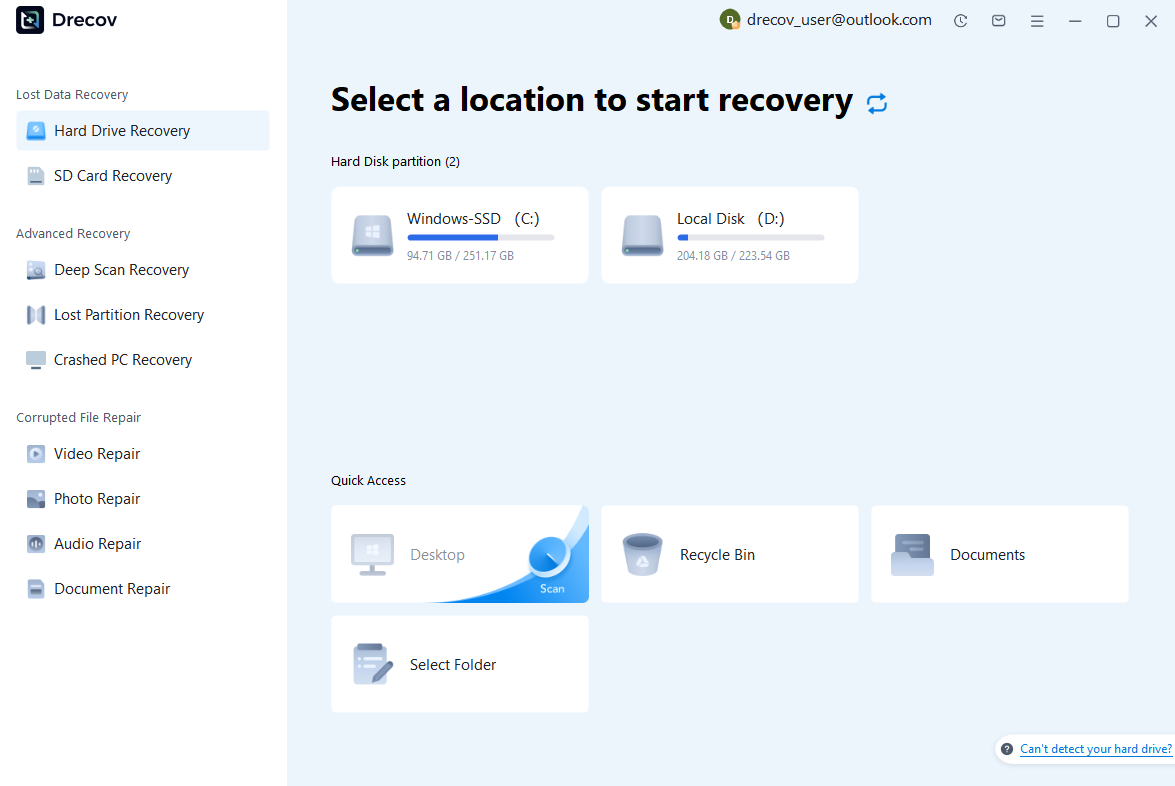
Step 1: Scan the Storage Device (SD Card / Hard Drive / USB)
Connect your device (SD card, HDD/SSD, or USB drive) to your computer and launch PandaOffice Drecov. Select the target device and start the scan. The software will perform a quick scan and deep scan to detect lost or deleted data.
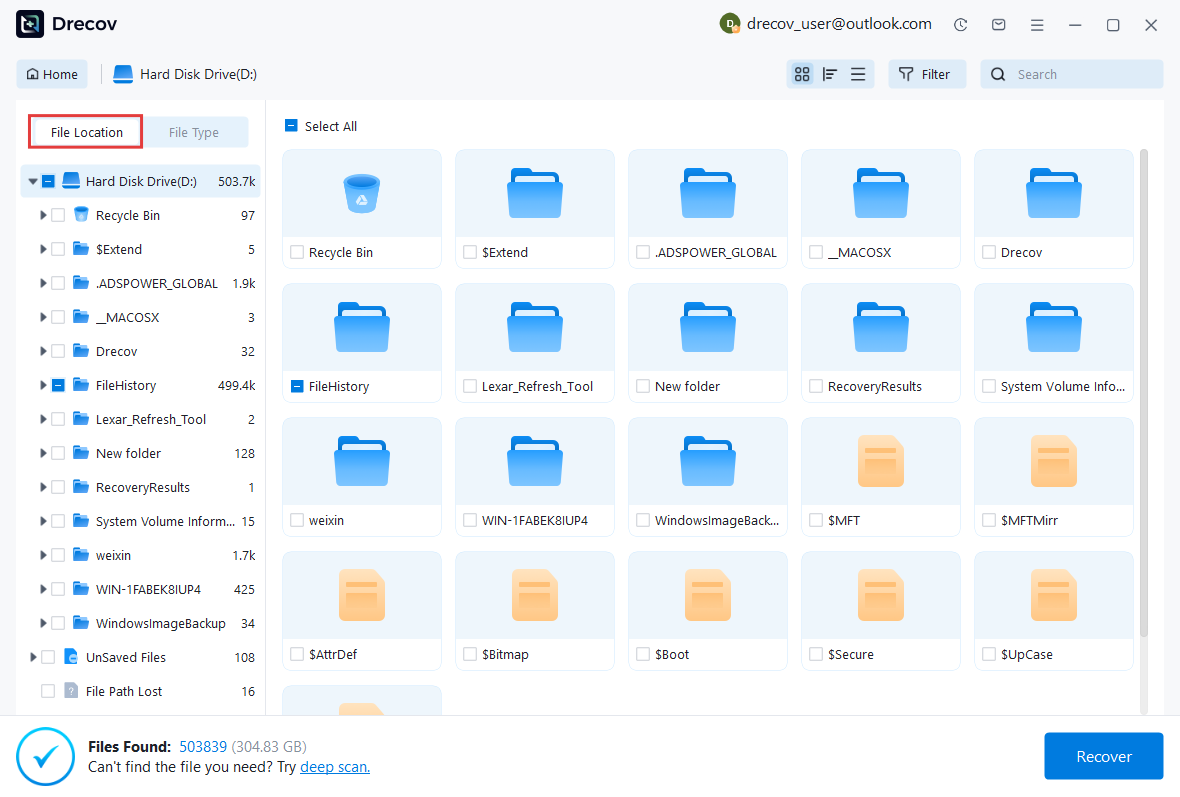
Step 2: Locate and Preview Lost Files
After scanning, browse the detected files and use the preview feature to check recoverable data. You can preview documents (Word, Excel, PDF), photos, and videos to ensure file integrity before recovery.
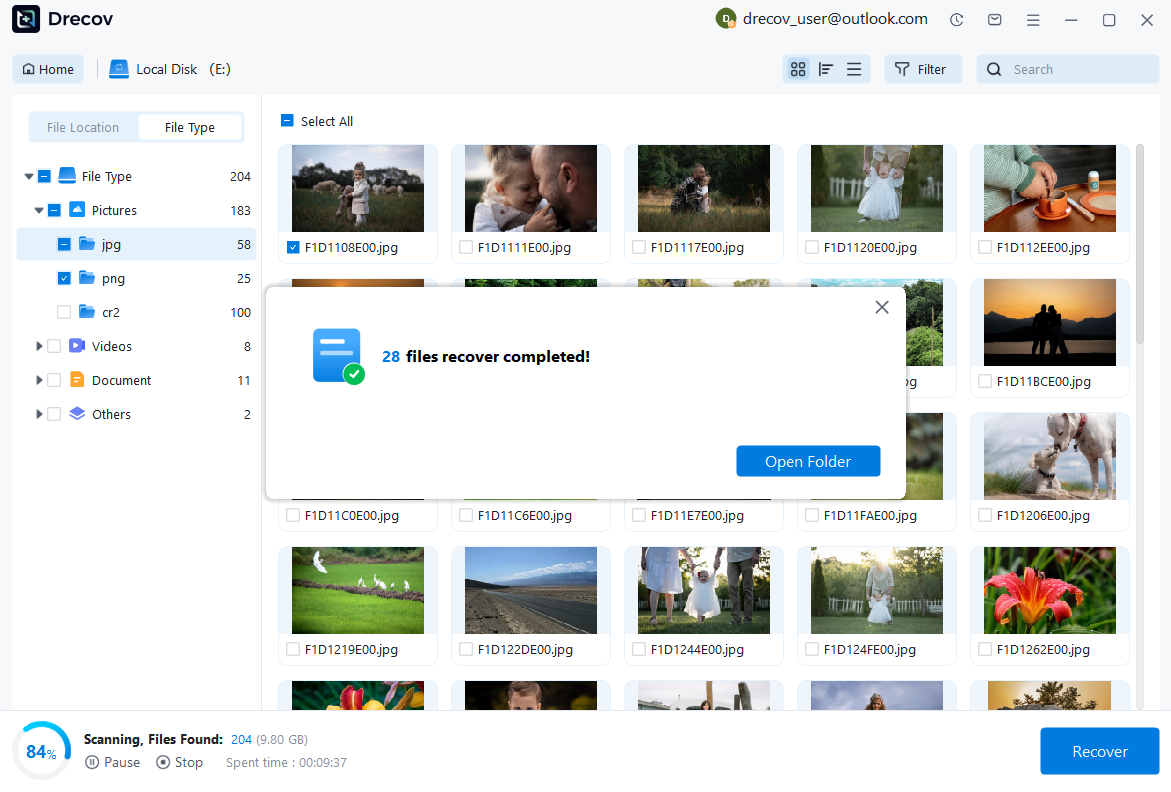
Step 3: Recover and Save to a New Location
Select the files you want to restore and click recover. Save all recovered data to a different drive or location (not the original device) to avoid overwriting lost data.
Why Choose PandaOffice Drecov Recovery Software?
PandaOffice Drecov offers a fast, secure, and user-friendly solution for recovering lost files across multiple scenarios. Whether you need email recovery, ZIP File Recovery, format data recovery, or help to recover deleted drafts Outlook, the software provides reliable recovery performance for both personal and business users.
PandaOffice Drecov supports recovery from formatted hard drives, SSDs, USB drives, SD cards, and external storage devices. Its advanced scanning engine can locate deleted archives, damaged ZIP files, lost Outlook drafts, and accidentally removed documents with high accuracy. For users searching for how to find deleted messages in Teams, PandaOffice Drecov can also help recover exported chat files, attachments, and related local cache data when available.
Key advantages include:
- Deep scan technology for complex data loss situations
- Support for emails, archives, videos, photos, and office documents
- Recovery from accidental deletion, formatting, corruption, and system crashes
- Easy preview before restoring files
- Compatible with Windows and multiple storage devices
Recovery success depends on multiple factors, including:
- Whether TRIM has already executed
- Amount of drive activity after deletion
- SSD firmware behavior
- Available storage space
The sooner the scan begins after data loss, the greater the likelihood that recoverable information remains available.
For best results, avoid installing software directly on the affected SSD because additional writes may reduce recovery opportunities.
⚠️Warning: Always recover files to a separate storage device rather than the SSD being scanned.
Method 4: Recover Data from an SSD Image or Clone
Test Environment
- Windows 11 Pro
- External SSD Enclosure
- Sector-Level Backup Available
- Disk Imaging Software Previously Used
Organizations and advanced users often create disk images or drive clones for backup and disaster recovery purposes.
A disk image captures storage contents at a specific point in time and can serve as an important recovery resource when the original SSD experiences data loss.
If an image exists:
- Mount the backup image.
- Browse stored files.
- Locate the missing data.
- Copy files to a safe destination.
- Verify file integrity.
Drive images offer several advantages:
- Protection against accidental deletion
- Recovery from corruption
- Historical file access
- Reduced dependence on file-level recovery
Because the backup was created before deletion occurred, it may contain intact versions of files that no longer exist on the original SSD.
This approach is particularly valuable when TRIM has already processed deleted blocks on the primary storage device.
Businesses that maintain regular imaging schedules often recover critical files rapidly without needing extensive recovery procedures.
Method 5: Seek Professional SSD Recovery Services
Test Environment
- SSD Exhibiting Severe Logical or Hardware Issues
- Cleanroom Recovery Environment
- Enterprise Recovery Equipment
There are situations where software recovery is no longer sufficient.
Examples include:
- SSD firmware failures
- Controller malfunctions
- Severe logical corruption
- Electrical damage
- Physical component failure
Professional recovery laboratories use specialized tools designed for advanced storage diagnostics and recovery operations.
Their workflow may include:
- Device assessment.
- Hardware diagnostics.
- Firmware analysis.
- Data extraction procedures.
- File reconstruction.
However, even professional services face challenges when TRIM has already permanently removed data.
Unlike traditional hard drives, SSD architecture limits recovery possibilities once storage blocks have been cleared internally.
For this reason, professional services generally achieve better results when contacted immediately after data loss rather than after prolonged device usage.
Organizations storing mission-critical information often combine professional recovery services with comprehensive backup strategies to maximize data protection.
⚠️Warning: Opening an SSD enclosure or attempting hardware repairs without proper equipment may cause additional damage and reduce recovery chances.
How to Check and Manage SSD Trim Support
How to Verify SSD Trim Support in Windows
Many users want to know whether their system currently supports TRIM.
Fortunately, Windows provides a simple method for checking SSD trim support.
Open Command Prompt with administrator privileges and enter:
fsutil behavior query DisableDeleteNotify
Possible results include:
- DisableDeleteNotify = 0 → TRIM enabled
- DisableDeleteNotify = 1 → TRIM disabled
A value of zero indicates that Windows is actively communicating TRIM instructions to compatible SSDs.
Checking this setting can help users better understand how deleted files are handled on their systems.
Those researching what is trim support SSD often use this command as a starting point for evaluating recovery possibilities.
How to Enable Trim on SSD Devices
Another common question is how to enable trim on SSD drives.
If TRIM is disabled, it can usually be activated through Command Prompt.
Run the following command:
fsutil behavior set DisableDeleteNotify 0
After enabling TRIM:
- SSD performance may improve.
- Storage management becomes more efficient.
- Write operations may become faster.
- Long-term drive responsiveness can increase.
For most users, enabling TRIM is recommended because of its performance benefits.
However, those concerned about future recovery possibilities should understand that active TRIM can reduce the amount of deleted data available for recovery.
Understanding this tradeoff helps users make informed decisions about storage management.
How to Confirm TRIM Status on macOS
Apple systems also support TRIM functionality.
To verify TRIM status:
- Open the Apple menu.
- Select About This Mac.
- Choose System Report.
- Navigate to Storage or SATA/NVMe information.
- Locate TRIM Support status.
Many modern Macs automatically enable TRIM for Apple-installed SSDs.
Users installing third-party SSDs may need to review system settings to confirm proper operation.
Because TRIM behavior differs slightly between operating systems, understanding platform-specific implementation can help when evaluating recovery possibilities.
Common Misconceptions About Disabling SSD Trim
Some users believe disabling TRIM will guarantee successful recovery.
This assumption is not entirely accurate.
Although disabling TRIM may increase the likelihood that deleted data remains available for a longer period, it also introduces potential drawbacks:
- Reduced write efficiency
- Increased write amplification
- Lower long-term performance
- Additional controller workload
Furthermore, disabling TRIM does not protect against:
- Overwritten files
- Formatting operations
- Physical drive failures
- Corruption
Rather than relying solely on TRIM configuration, users should prioritize comprehensive backup strategies and responsible data management practices.
⚠️Warning: Changing SSD configuration settings without understanding their impact may affect performance and storage reliability.
Frequently Asked Questions About SSD Trimming
What Is SSD Trimming and Why Is It Important?
Many users ask what is SSD trimming because the technology operates behind the scenes.
SSD trimming is the process through which the operating system informs the SSD about storage blocks that are no longer needed.
This allows the drive to:
- Improve write performance
- Manage flash memory efficiently
- Maintain long-term responsiveness
Without TRIM, SSD performance may gradually decline as storage becomes more difficult to manage efficiently.
What Is Trim for SSD Performance Optimization?
Those searching what is trim for SSD are generally interested in performance benefits.
TRIM helps prepare unused blocks for future writes, reducing the amount of work required during storage operations.
Benefits include:
- Faster writes
- Better efficiency
- Reduced latency
- Improved drive longevity
For most users, TRIM is considered an essential component of modern SSD management.
Can SSD Trim Data Recovery Always Work?
No.
Recovery success depends on:
- TRIM timing
- SSD activity after deletion
- Drive firmware behavior
- Backup availability
In some situations, files remain recoverable temporarily. In others, cleanup operations occur quickly and reduce recovery opportunities significantly.
Should I Disable TRIM to Improve Recovery Chances?
Generally, no.
Although disabling TRIM may preserve deleted data longer, it can negatively affect SSD performance and overall storage efficiency.
Maintaining reliable backups is usually a more effective strategy than altering TRIM behavior solely for recovery purposes.
How to Enable Trim on SSD Drives Safely?
Users wondering how to enable trim on SSD should first confirm that the drive supports TRIM.
After verification, operating-system tools can be used to enable the feature according to manufacturer recommendations.
Following official guidance helps ensure proper functionality and optimal performance.
Conclusion
Understanding the Real Impact of SSD Trim
Modern SSD technology relies heavily on TRIM to maintain performance and storage efficiency.
By understanding what is trim in SSD, users gain valuable insight into why deleted files behave differently compared with traditional hard drives.
Although TRIM improves responsiveness and longevity, it also shortens the window during which deleted data may remain recoverable.
When SSD Data Recovery Is Still Possible
Successful SSD trim data recovery often depends on speed and preparation.
Recovery remains most likely when:
- Data loss is discovered quickly.
- SSD activity stops immediately.
- Backups exist.
- Recovery attempts begin before extensive cleanup occurs.
In some cases, recovery software or backup restoration can successfully retrieve important files even after accidental deletion.
Best Practices for Protecting SSD Data
The most effective protection against SSD data loss includes:
- Regular backups
- Cloud synchronization
- Drive imaging
- Careful file management
- Monitoring SSD health
Whether you are learning what is SSD trim, evaluating SSD disk trim behavior, or researching methods to trim SSD devices properly, understanding the relationship between TRIM and recovery is essential.
By combining proper storage practices with reliable backup strategies, users can enjoy SSD performance benefits while minimizing the risks associated with accidental data loss.






