







The application was unable to start correctly? Record the code, isolate app or Windows scope, protect projects, then apply the matching fix. Use the exact hexadecimal code, application scope, architecture, runtime, permissions, and profile evidence to choose a focused Windows fix. Begin with only one app fails, preserve irreplaceable local data, and change one condition at a time so the result remains meaningful. This guide explains “application unable to start correctly” with practical checks that protect important files before system or storage changes.
The Hexadecimal Code Is Part of the Message
The application was unable to start correctly is a wrapper used with codes such as 0xc000007b, 0xc0000005, or 0xc0000142. Those codes do not share one universal fix. Record the executable, code, launch context, and whether one app or many programs fail. corrupted-file limits The fact behind only one app fails is documented in the official source for this topic.
| Evidence | Meaning | Next decision |
|---|---|---|
| Only one app fails | App package or dependency | Repair from its official installer |
| 0xc000007b | Architecture or dependency mismatch | Verify 32-bit and 64-bit components |
| 0xc0000005 | Access violation path | Check updates, security, memory, and app files |
| Several Windows apps fail | System component or profile | Test another user and repair Windows |
| Started after plug-in install | Extension or injected module | Disable the recent component |
| Project files are local | Reinstall could remove settings | Back up data first |
Evidence-Based Diagnostic Walkthrough
Each observation below narrows one decision for only one app fails. Retest the original symptom after the matching action before escalating, with only one app fails used as the comparison point.
Only one app fails
Read this result in context: app package or dependency. Repair from its official installer and record the new timing, message, or detection state. For only one app fails, preserve readable data before any test that writes, removes access, changes boot behavior, or places sustained load on the device.
0xc000007b
Treat this observation as a branch: architecture or dependency mismatch. Verify 32-bit and 64-bit components and record the new timing, message, or detection state. For 0xc000007b, preserve readable data before any test that writes, removes access, changes boot behavior, or places sustained load on the device.
0xc0000005
Use this evidence to narrow the cause: access violation path. Check updates, security, memory, and app files and record the new timing, message, or detection state. For 0xc0000005, preserve readable data before any test that writes, removes access, changes boot behavior, or places sustained load on the device.
Several Windows apps fail
Let this finding limit the next action: system component or profile. Test another user and repair Windows and record the new timing, message, or detection state. For several windows apps fail, preserve readable data before any test that writes, removes access, changes boot behavior, or places sustained load on the device.
Started after plug-in install
Connect this symptom to the safest test: extension or injected module. Disable the recent component and record the new timing, message, or detection state. For started after plug-in install, preserve readable data before any test that writes, removes access, changes boot behavior, or places sustained load on the device.
Project files are local
Interpret this state before changing anything: reinstall could remove settings. Back up data first and record the new timing, message, or detection state. For project files are local, preserve readable data before any test that writes, removes access, changes boot behavior, or places sustained load on the device.
Preserve Projects, Profiles, and License Information
Locate documents, game saves, catalogs, presets, databases, and exported settings before resetting or removing an application. Do not download individual DLL files from untrusted sites. Keep the error screenshot and installer source so the change can be reversed. Windows component repair Define success for preserve projects, profiles, and license information and identify the condition that ends DIY work. A changed message alone does not prove the underlying device, file, application, or Windows installation is healthy, with only one app fails used as the comparison point.
Recover Local App Data Only When It Is Missing
Drecov is appropriate if project or profile files were deleted or became inaccessible on stable storage, not merely because an executable will not launch. For this only one app fails situation, PandaOffice Drecov provides a read-only Windows recovery workflow with Quick Scan, Deep Scan, filters, supported-file preview, Lost Partition Recovery, and a selectable healthy destination. It cannot repair hardware or recreate overwritten data.
⚠ Warning: Install it on a drive different from the one where your data was lost to prevent overwriting.
Step 1: Identify With the Original Loss Location
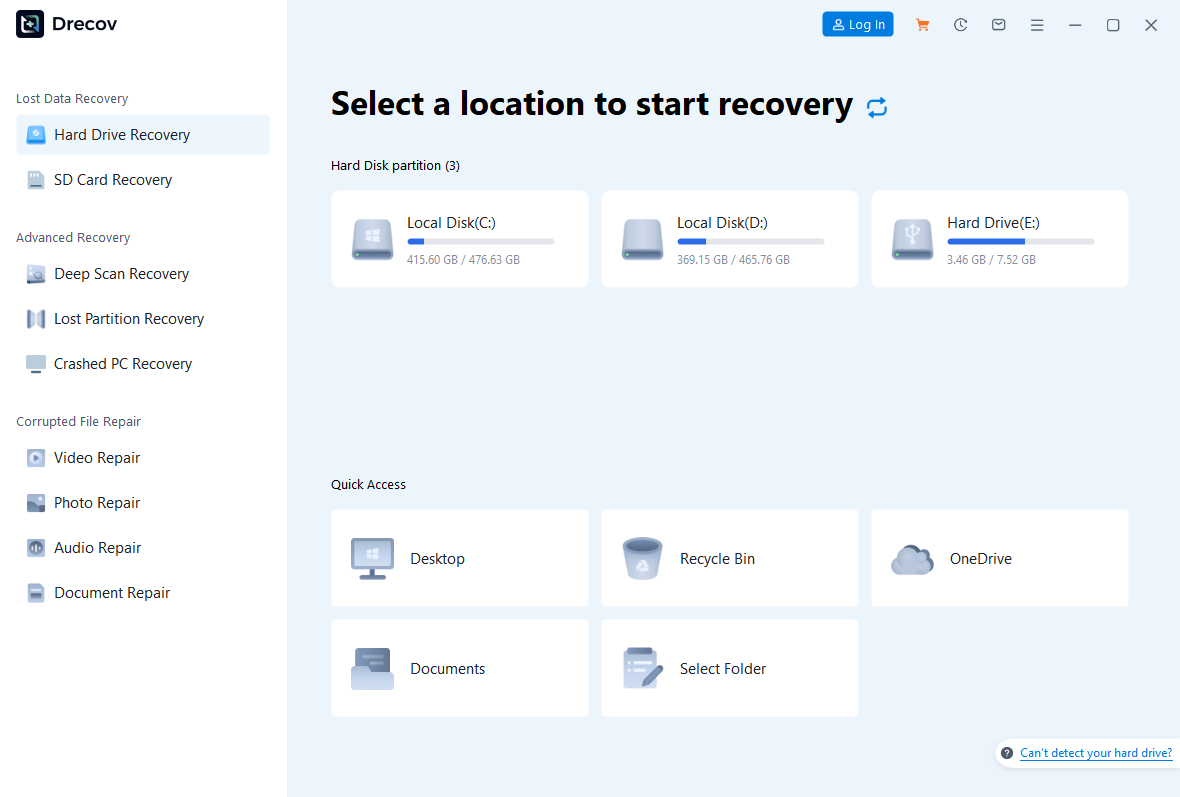
Open PandaOffice Drecov from healthy Windows and select the original stable volume that stored the missing application data. Install and run the software away from the partition that lost data, with only one app fails used as the comparison point. A source showing started after plug-in install or severe instability should be imaged or referred to a professional instead of scanned repeatedly.
Step 2: Correct From Quick Scan to Deep Scan
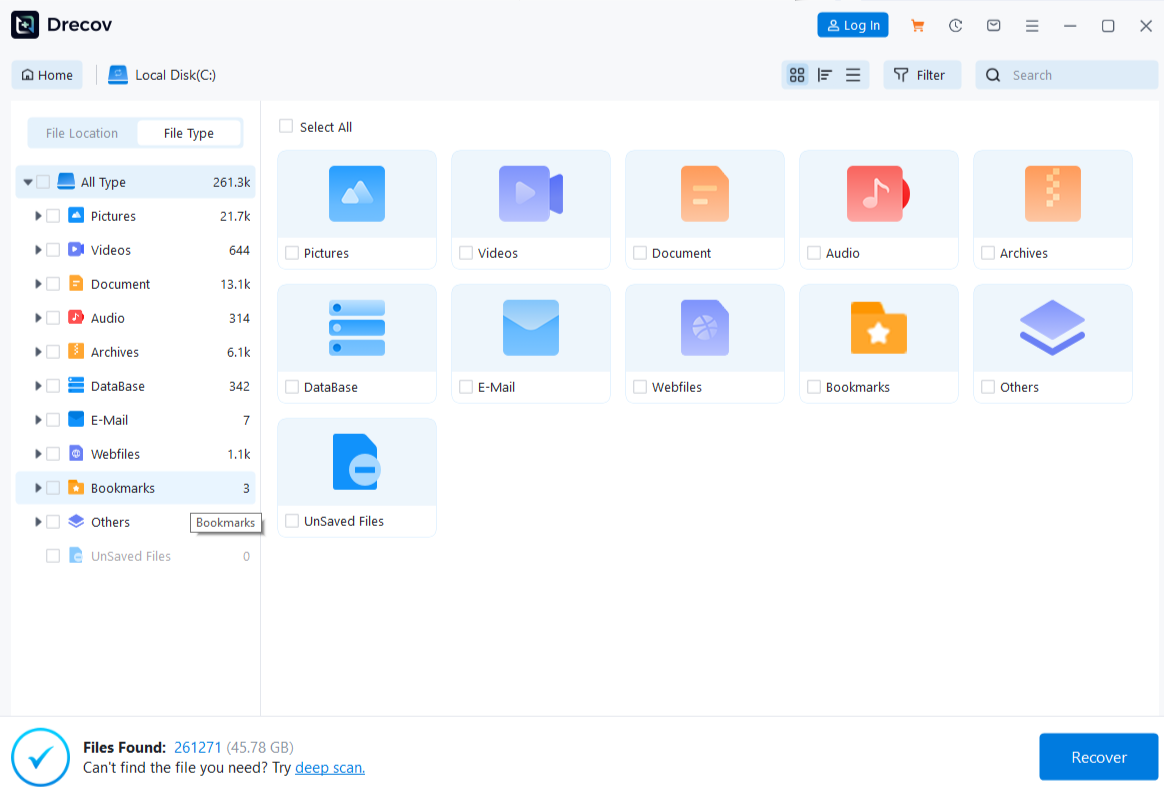
Use Quick Scan for recent deletion or a newly missing path. Continue to Deep Scan only if 0xc0000005 leaves required data absent and the device stays stable. Choose Lost Partition Recovery when a partition entry vanished; do not create a replacement volume first, with only one app fails used as the comparison point. Narrow results by the project extension, former application-data path, filename, and last working date.
Retest With Preview and a Separate Destination
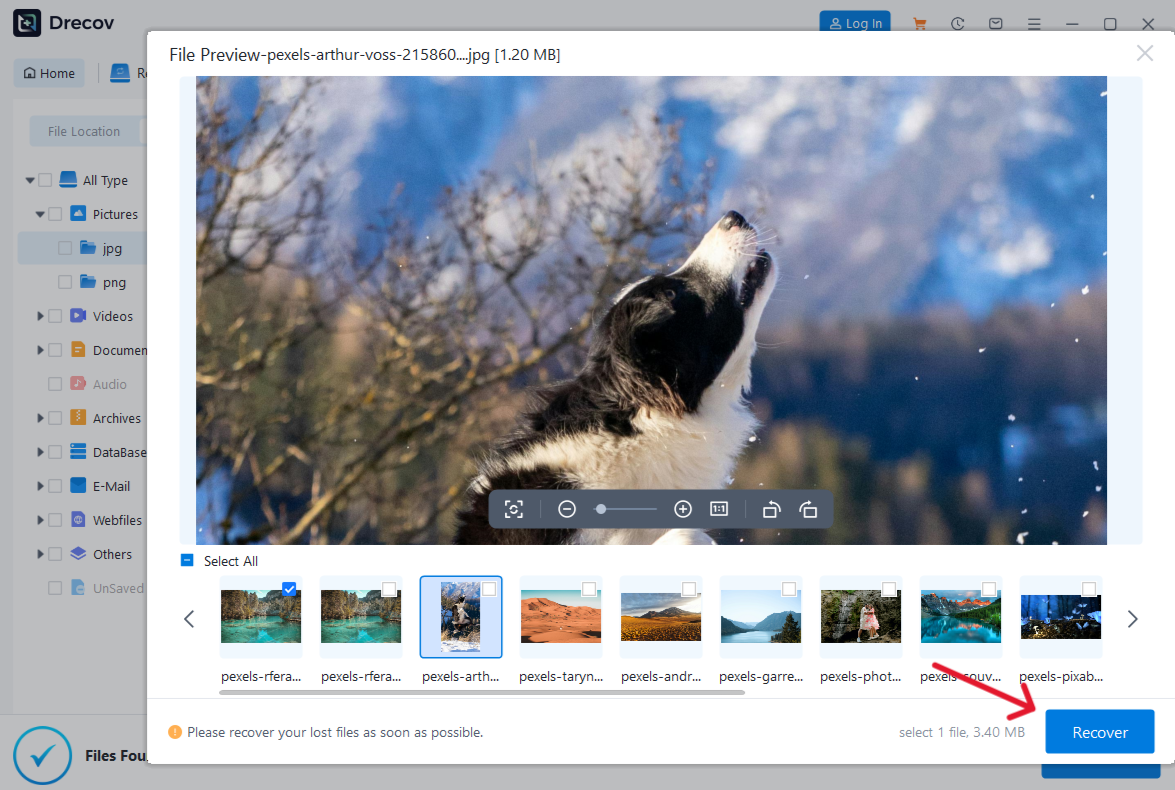
Preview files that represent the important result set, including the types central to this topic, with only one app fails used as the comparison point. Save the selection to another healthy physical device rather than the source, with only one app fails used as the comparison point. When original paths cannot be reconstructed, review the Drecov folder or Recovery folder, with only one app fails used as the comparison point. Open recovered projects in a safe copy and confirm assets or linked files before reinstalling.
Match the Repair to the Failure Scope
Restart and Test the Official Executable
Launch from the installed path rather than an old shortcut. A broken shortcut and a failed executable are different problems. Before restart and test the official executable, note the starting condition and expected result. If that specific method leaves the symptom unchanged, avoid repeating it and use the new evidence to select a narrower branch, with only one app fails used as the comparison point. Keep a log or harmless test item for restart and test the official executable so the outcome can be compared after restart.
Check Architecture and Runtime Packages
For 0xc000007b, confirm the application and dependencies match their intended architecture. Repair supported Microsoft runtimes from official installers. Before check architecture and runtime packages, note the starting condition and expected result. If that specific method leaves the symptom unchanged, avoid repeating it and use the new evidence to select a narrower branch, with only one app fails used as the comparison point. Keep a log or harmless test item for check architecture and runtime packages so the outcome can be compared after restart.
Use a Clean Boot or New Profile
A clean boot can expose security tools, overlays, and extensions. A new user profile separates app installation from user-specific settings. Before use a clean boot or new profile, note the starting condition and expected result. If that specific method leaves the symptom unchanged, avoid repeating it and use the new evidence to select a narrower branch, with only one app fails used as the comparison point. Keep a log or harmless test item for use a clean boot or new profile so the outcome can be compared after restart.
Repair the Application Before Reinstalling
Use Apps settings or the vendor repair option. Reinstall only from a trusted current package after preserving data and configuration. Before repair the application before reinstalling, note the starting condition and expected result. If that specific method leaves the symptom unchanged, avoid repeating it and use the new evidence to select a narrower branch, with only one app fails used as the comparison point. Keep a log or harmless test item for repair the application before reinstalling so the outcome can be compared after restart.
Repair Windows Components Last
DISM and SFC can address protected Windows files when multiple apps fail. They cannot repair a defective disk or memory module. Before repair windows components last, note the starting condition and expected result. If that specific method leaves the symptom unchanged, avoid repeating it and use the new evidence to select a narrower branch, with only one app fails used as the comparison point. Keep a log or harmless test item for repair windows components last so the outcome can be compared after restart.
Verify More Than a Successful Launch
Open a representative project, save a disposable copy, close the program, and reopen it. Confirm plug-ins, file associations, and permissions still work. If many applications relapse, return to system-wide evidence. recently deleted data Repeat the original low-risk action tied to verify more than a successful launch. Keep the protected copy until results remain consistent and representative recovered files pass their content checks, with only one app fails used as the comparison point.
- Downloading a random DLL
- Applying a 0xc000007b fix to every code
- Deleting app data during reinstall
- Disabling security permanently
- Running system repair before checking whether only one app is affected
Application Startup Error Questions
What does 0xc000007b usually suggest?
It often points toward an invalid image format or architecture and dependency mismatch.
Should I reinstall immediately?
No. Preserve projects and try supported repair after recording the exact code.
Can SFC fix one application?
Only if damaged protected Windows files are involved; app-specific files need vendor repair.
Is a DLL download safe?
Use official application or Microsoft packages, not standalone DLL sites.
Can Drecov start the application?
No. It recovers missing local files from supported stable storage.
When troubleshooting “application unable to start correctly”, begin with the least invasive step and verify recovered files before attempting repairs.
Conclusion
When the application was unable to start correctly, preserve the hexadecimal code and decide whether the failure belongs to one app, one profile, or Windows broadly. Protect local projects before repair or reinstall. Drecov can recover deleted or inaccessible application data from stable storage, while dependencies, permissions, runtimes, and executable repair require their own targeted fix.






