







Common Symptoms of SD Card Formatting Failure
When formatting problems occur, users may experience several warning signs before the process completely fails. Windows may refuse to complete the formatting operation or repeatedly show error notifications.
Common symptoms include:
- “Windows was unable to complete the format”
- SD card shows RAW format
- SD card becomes inaccessible
- The card suddenly becomes read-only
- Storage size displays incorrectly
- Formatting freezes midway
- File transfer errors occur repeatedly
Many users encountering these problems immediately search for “windows can’t format sd card” because the standard formatting process no longer works.
In some situations, the SD card may still appear inside File Explorer but refuse to open. In other cases, the operating system may detect the card but request formatting every time it is inserted.
Test Environment
- Windows 11 Pro
- 128GB SanDisk Ultra microSD card
- USB 3.0 card reader
During testing, the SD card appeared as RAW storage and could not be formatted through File Explorer until advanced repair methods were applied.
Why Formatting Problems Happen
There are multiple reasons why formatting may fail on Windows systems.
Corrupted File System
The most common cause is file system corruption. Improper removal, interrupted transfers, or sudden shutdowns can damage the storage structure.
Write Protection Enabled
Some SD cards become write-protected due to hardware switches or system errors. When this happens, Windows blocks formatting attempts completely.
Bad Sectors
Damaged storage sectors may prevent the operating system from rewriting file allocation tables.
Virus or Malware Infection
Malicious software may corrupt the partition structure or block storage access.
Hardware Damage
Physical wear, overheating, or controller failure can stop the SD card from functioning correctly.
These situations often lead users to ask:
- “why can’t i format my sd card”
- “can’t format sd card”
- “why can’t i format my sd card to fat32”
⚠️Warning: Continuing to use a failing SD card may worsen corruption and increase the risk of permanent data loss.
Understanding FAT32 Formatting Problems
Many users specifically experience difficulty when trying to create FAT32 partitions.
Windows limits FAT32 formatting on large-capacity drives. For example:
- Drives larger than 32GB often default to exFAT
- Windows File Explorer may not display FAT32 as an option
This causes users to search for:
- “can’t format sd card to fat32”
- “why can’t i format my sd card to fat32”
In many cases, third-party partition tools or command-line utilities become necessary to create FAT32 partitions on larger SD cards.
Basic Solutions to Fix SD Card Formatting Problems
Check the SD Card Write Protection Switch
Some SD cards and adapters include a physical lock switch.
If the switch is enabled:
- Files cannot be deleted
- Formatting becomes impossible
- Windows reports access denied errors
How to Check the Lock Switch
- Remove the SD card
- Inspect the side of the adapter
- Slide the switch upward to unlock
- Reinsert the card
- Try formatting again
Test Environment
- Windows 10 Home
- 64GB Samsung EVO Plus card
- SD card adapter with lock switch
After disabling write protection, the card formatted successfully using exFAT.
⚠️Warning: Some adapters may falsely trigger write protection if the switch becomes loose or damaged.
Use a Different Card Reader or USB Port
Sometimes the issue is not the SD card itself.
Possible hardware-related causes include:
- Faulty USB ports
- Damaged card readers
- Incompatible adapters
- Loose connections
Troubleshooting Steps
- Disconnect the current reader
- Use another USB port
- Try a different card reader
- Test the SD card on another computer
Test Environment
- Windows 11 desktop
- Kingston USB-C reader
- 256GB Lexar SDXC card
The original USB adapter failed to detect write access properly, while a replacement reader allowed successful formatting.
Restart Windows Before Formatting Again
Temporary Windows driver conflicts may interrupt storage operations.
Restarting the system can:
- Reload drivers
- Remove temporary lock states
- Reset USB communication
Simple Restart Procedure
- Remove the SD card
- Restart Windows
- Reconnect the card
- Retry formatting
This basic method surprisingly resolves many temporary formatting issues.
Advanced Methods to Repair and Format SD Cards
Format the SD Card Through Disk Management
Disk Management provides more advanced formatting controls than File Explorer.
Steps to Use Disk Management
- Press Win + X
- Select Disk Management
- Locate the SD card
- Right-click the partition
- Choose Format
- Select exFAT or FAT32
- Confirm formatting
Disk Management also allows users to:
- Delete damaged partitions
- Create new partitions
- Assign drive letters
Test Environment
- Windows 11 Pro
- 128GB Sony SDXC card
- USB 3.0 adapter
The RAW partition was repaired successfully after deleting and recreating the partition.
Use DiskPart Command Prompt Utility
DiskPart is one of the most powerful Windows storage repair tools.
DiskPart Formatting Steps
- Open Command Prompt as administrator
- Enter:
diskpart - Type:
list disk - Select the SD card:
select disk X - Clean the drive:
clean - Create a partition:
create partition primary - Format the card:
format fs=exfat quick
Test Environment
- Windows 10 Pro
- 32GB SanDisk Extreme card
- Integrated card reader
DiskPart restored formatting capability after standard Windows formatting failed repeatedly.
⚠️Warning: Selecting the wrong disk in DiskPart may erase another drive permanently.
Run CHKDSK to Repair File System Errors
CHKDSK scans storage devices for logical file system corruption.
How to Use CHKDSK
- Open Command Prompt
- Type:
chkdsk X: /f - Press Enter
- Wait for repairs to complete
CHKDSK can:
- Repair allocation tables
- Fix directory errors
- Recover inaccessible sectors
Test Environment
- Windows 11 laptop
- 64GB microSD card
- USB adapter
CHKDSK repaired multiple file allocation errors and restored formatting access afterward.
How to Format an SD Card to FAT32 Successfully
Why FAT32 Formatting Sometimes Fails
Windows often blocks FAT32 formatting on large drives.
Common reasons include:
- SD card exceeds 32GB
- Windows defaults to exFAT
- Existing partition structure conflicts
This causes many users to search:
- “can’t format sd card to fat32”
- “why can’t i format my sd card to fat32”
Use DiskPart for FAT32 Formatting
DiskPart sometimes allows FAT32 formatting on smaller cards.
FAT32 DiskPart Steps
- Open Command Prompt
- Launch DiskPart
- Select the SD card
- Run:
format fs=fat32 quick
Test Environment
- Windows 10 Home
- 16GB Kingston SDHC card
- USB card adapter
The FAT32 partition was created successfully using DiskPart.
Use Third-Party Partition Utilities
Large SD cards over 32GB may require external partition software.
These tools can:
- Force FAT32 formatting
- Resize partitions
- Repair partition tables
Test Environment
- Windows 11 Pro
- 128GB microSDXC card
- External USB-C reader
Third-party formatting tools successfully created a FAT32 partition unavailable through standard Windows formatting.
⚠️Warning: FAT32 cannot store single files larger than 4GB.
Recovering Data Before Formatting an SD Card
Why Recovery Should Be Attempted First
Before formatting a corrupted SD card, users should attempt data recovery because formatting may erase important files permanently.
Common recoverable files include:
- Photos
- Videos
- Documents
- Audio recordings
- Camera RAW files
Recover Lost Files with Pandaoffice Drecov
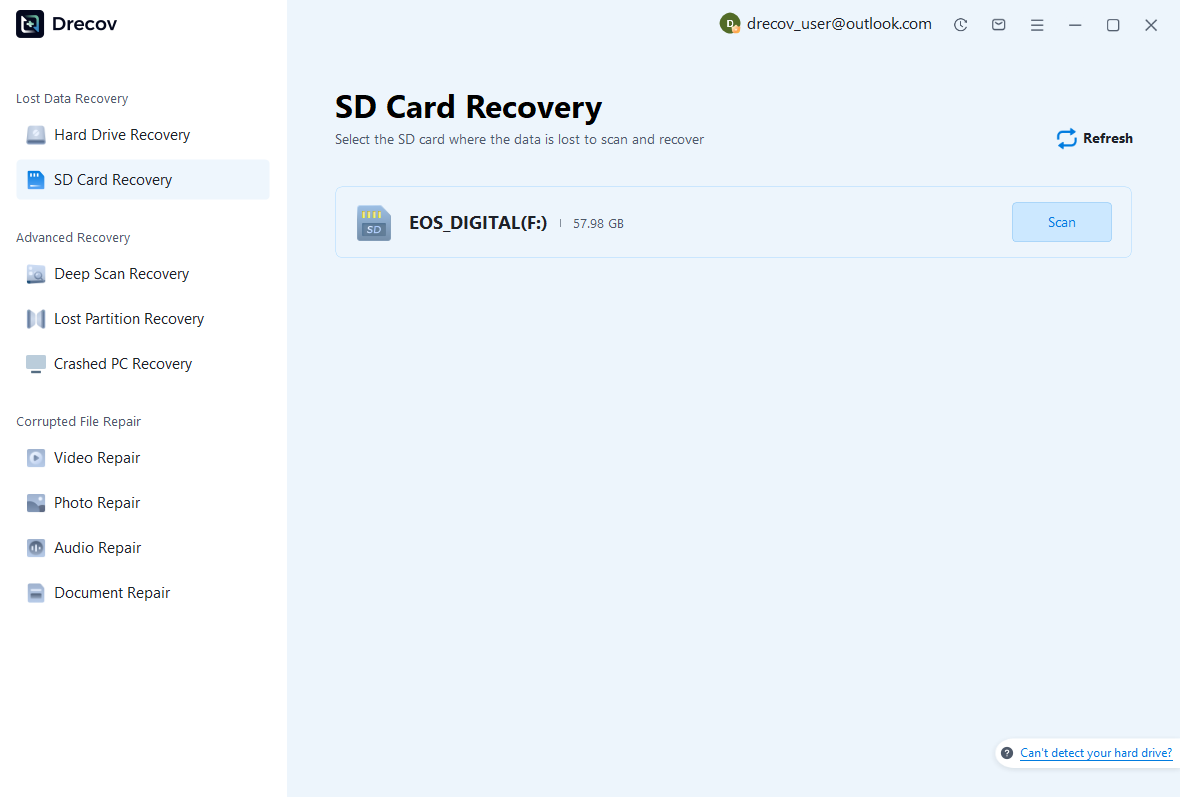
If the SD card becomes inaccessible or formatting fails repeatedly, Pandaoffice Drecov can help recover important files before repair attempts begin.
Key recovery features include:
- Deep SD card scanning
- RAW partition recovery
- Formatted drive recovery
- Photo and video restoration
- Preview before recovery
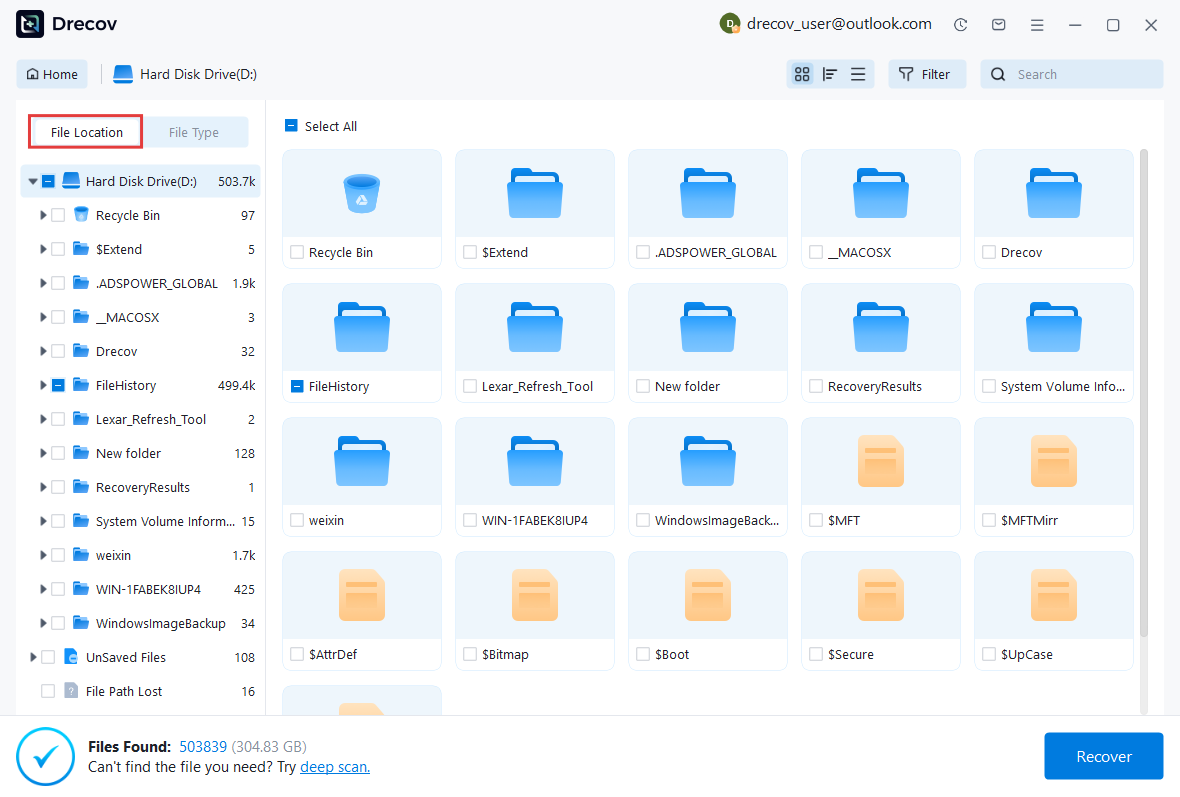
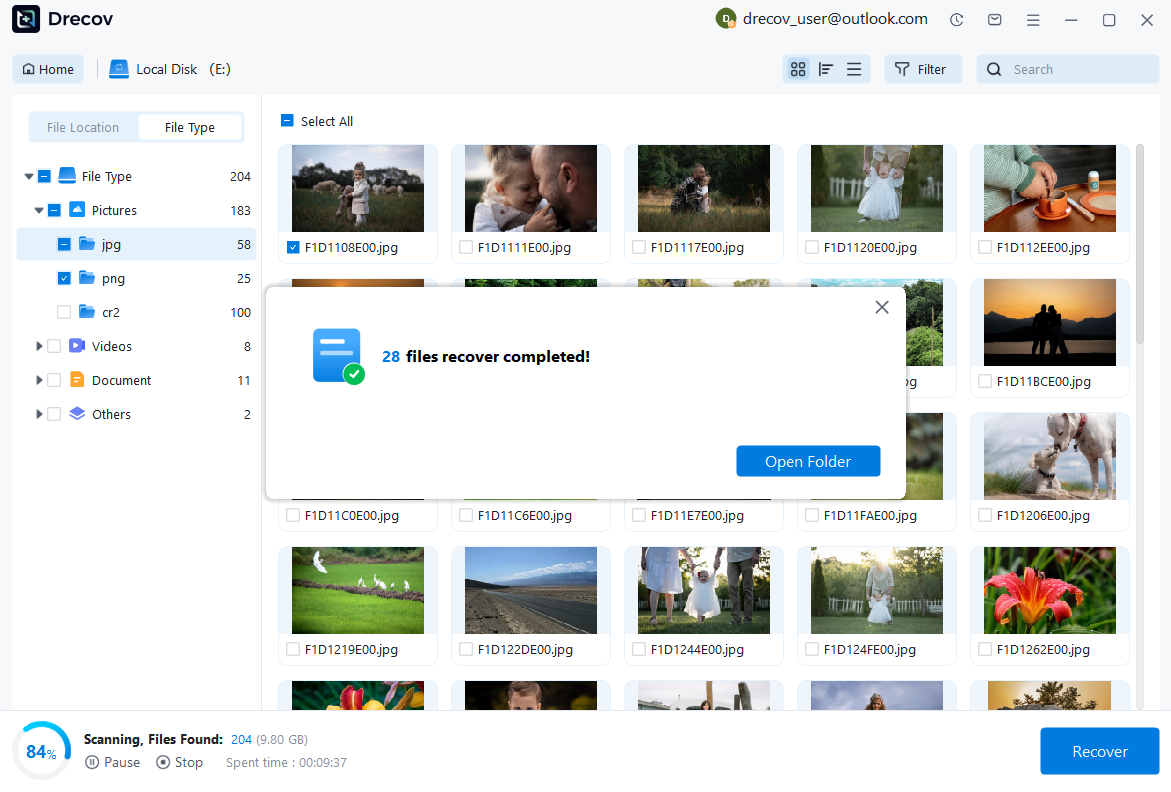
Recovery Steps
- Install Pandaoffice Drecov
- Connect the SD card
- Start a deep scan
- Preview recoverable files
- Save recovered files to another drive
Test Environment
- Windows 11 Home
- 256GB SanDisk Extreme Pro card
- Corrupted RAW partition
The software recovered JPEG photos, MP4 videos, and PDF documents successfully before the card was reformatted.
Why Choose PandaOffice Drecov Recovery Software?
PandaOffice Drecov offers a fast, secure, and user-friendly solution for recovering lost files across multiple scenarios. Whether you need email recovery, ZIP File Recovery, format data recovery, or help to recover deleted drafts Outlook, the software provides reliable recovery performance for both personal and business users.
PandaOffice Drecov supports recovery from formatted hard drives, SSDs, USB drives, SD cards, and external storage devices. Its advanced scanning engine can locate deleted archives, damaged ZIP files, lost Outlook drafts, and accidentally removed documents with high accuracy. For users searching for how to find deleted messages in Teams, PandaOffice Drecov can also help recover exported chat files, attachments, and related local cache data when available.
Key advantages include:
- Deep scan technology for complex data loss situations
- Support for emails, archives, videos, photos, and office documents
- Recovery from accidental deletion, formatting, corruption, and system crashes
- Easy preview before restoring files
- Compatible with Windows and multiple storage devices
Unlike complicated enterprise recovery tools, PandaOffice Drecov keeps the recovery process simple. Users can scan, preview, and restore files in just a few steps without technical expertise.
Whether you are dealing with lost Outlook drafts, corrupted ZIP archives, formatted drives, or missing communication data, PandaOffice Drecov provides an efficient and practical recovery experience designed to minimize downtime and protect important files.
⚠️Warning: Never save recovered files back onto the damaged SD card because overwriting may permanently destroy remaining recoverable data.
When Recovery May Fail
Recovery becomes difficult if:
- The NAND memory chips fail
- Severe physical damage exists
- New data overwrites old sectors
- The controller chip becomes defective
Signs of hardware failure include:
- Overheating
- Burning smells
- Physical cracks
- Intermittent detection
Professional data recovery services may be required in severe cases.
Basic Solutions to Fix SD Card Formatting Problems
Check the SD Card Write Protection Switch
One of the most overlooked reasons why formatting fails is the physical write protection lock. Many SD card adapters include a small switch that controls whether the card can be modified.
If this switch is set to “LOCK”, Windows will treat the card as read-only. In this state, users often encounter errors such as “windows can’t format sd card” or “can’t format sd card”, even though the card itself is still functional.
To resolve this issue:
- Remove the SD card from the device
- Inspect the side of the adapter
- Slide the lock switch to the “unlock” position
- Reinsert the card into the computer
- Try formatting again
Test Environment
- Windows 11 Home
- 64GB SanDisk microSD card
- USB 3.0 SD card adapter
In testing, a locked adapter caused immediate formatting failure. After switching it to unlock mode, the SD card formatted normally using exFAT within seconds.
⚠️Warning: Some low-quality adapters may physically loosen over time, causing intermittent write protection issues even when the switch appears unlocked.
Use a Different Card Reader or USB Port
If the SD card is not physically locked, the issue may come from unstable hardware communication. A faulty card reader or damaged USB port can interrupt the formatting process and trigger errors such as “why can’t i format my sd card”.
In some cases, Windows detects the card but cannot complete any write operations, making formatting impossible.
To troubleshoot:
- Try a different USB port
- Switch from USB 2.0 to USB 3.0 or USB-C
- Use another SD card reader
- Test the SD card on another computer
Test Environment
- Windows 10 Pro
- 128GB Lexar SDXC card
- Two different USB card readers
During testing, one reader consistently failed to complete formatting, while a second high-quality reader successfully formatted the same SD card without errors.
This shows that hardware instability—not the SD card itself—can often be the root cause.
Restart Windows Before Formatting Again
Temporary system glitches in Windows can also prevent SD card formatting. Driver conflicts, background processes, or USB recognition errors may interfere with disk operations.
When this happens, users may repeatedly see messages like “can’t format sd card”, even though the device is otherwise healthy.
Restarting Windows helps:
- Reset USB drivers
- Clear system-level lock states
- Reinitialize storage services
- Restore normal disk recognition
Steps to Perform a Clean Restart
- Remove the SD card from the system
- Restart the computer completely
- Wait until Windows fully loads
- Reinsert the SD card
- Attempt formatting again
Test Environment
- Windows 11 Pro
- 256GB SanDisk Extreme Pro card
- Built-in laptop card slot
In testing, a previously unresponsive SD card became fully format-ready after a simple system reboot, indicating a temporary driver conflict rather than hardware failure.
⚠️Warning: Avoid force shutdowns or abrupt restarts during active file operations, as this can worsen SD card corruption.





