







Understanding ISO Image Files and Their Purpose
What Is an ISO Image File?
An ISO image is a digital copy of an entire optical disc, such as a CD, DVD, or Blu-ray disc. Instead of storing files individually, an ISO image file preserves the complete structure, contents, and file system of the original disc in a single file. The format is commonly used for operating system installation media, software distribution, backups, and system recovery tools.
The term file ISO originates from the ISO 9660 file system standard that was originally developed for CD-ROM media. Today, ISO files remain one of the most widely used methods for distributing large software packages and operating system images.
Unlike ZIP archives, ISO files are not simply compressed containers. They are exact sector-by-sector representations of a storage medium. This allows users to recreate the original disc, mount the image as a virtual drive, or use it to create bootable installation media.
Many modern operating systems, including Windows, Linux, and macOS, support ISO files directly without requiring additional software.
Why ISO Files Are Still Important Today
Although physical discs are less common than they once were, ISO technology remains highly relevant. Software vendors frequently distribute operating systems and enterprise applications through downloadable ISO files because they preserve installation integrity.
For example, Microsoft provides Windows installation media as ISO downloads. Users searching for Windows 11 ARM ISO versions often download official installation images for ARM-based devices. Similarly, system administrators frequently use recovery ISO Windows 10 files when repairing damaged systems.
ISO images offer several advantages:
- Easy software distribution
- Accurate backups of optical media
- Bootable operating system deployment
- Simplified disaster recovery
- Reduced reliance on physical discs
Because a single ISO file contains everything required for installation or restoration, it has become a standard format for IT professionals and everyday users alike.
⚠️ Warning: Always download ISO files from trusted sources. Malicious or modified images may contain malware or security risks.
How ISO Files Work and Where They Are Used
The Structure of an ISO Image
An .ISO image stores all data from a source disc, including folders, files, boot sectors, and file system information. When mounted or written to physical media, the resulting disc behaves exactly like the original.
Unlike standard document formats, ISO files can contain operating system installers, recovery environments, software packages, drivers, and bootable utilities. This versatility explains why ISO files remain widely used across personal and enterprise computing environments.
When a computer mounts an ISO file, the operating system treats it as a virtual optical drive. Users can browse the contents without burning the image to a physical disc.
A typical ISO image may contain:
- Installation files
- Boot loaders
- Recovery tools
- Drivers
- System utilities
- Software packages
Because the file preserves the original structure, software installers function exactly as intended after mounting.
Common Examples of ISO Usage
Many users encounter ISO files without realizing it. Popular examples include Windows installation downloads, Linux distributions, recovery environments, and backup archives.
Organizations often deploy operating systems using ISO files because the format simplifies installation across multiple devices. For example, IT teams frequently download a Windows 11 ARM ISO when preparing ARM-based hardware.
Similarly, users troubleshooting system failures may download an ISO recovery Windows 10 image to repair startup problems, restore system files, or reinstall the operating system.
Test Environment
- Operating System: Windows 11 Pro
- ISO Type: Windows Installation Media
- File Size: 5.4 GB
- Usage: Virtual Machine Deployment
The widespread adoption of ISO technology makes understanding its functionality increasingly valuable for both home and business users.
Methods to Open and Use ISO Files
Method 1: Mount an ISO Image Directly in Windows
Modern versions of Windows include built-in support for mounting ISO files. This means users can access ISO contents without installing third-party software.
To mount an ISO:
- Locate the ISO file.
- Right-click the file.
- Select Mount.
- Open the newly created virtual drive.
Once mounted, the ISO behaves like a physical DVD inserted into a disc drive. Users can browse files, launch installers, and access content normally.
This method is particularly useful when users need to ISO image open operations quickly without creating bootable media.
Test Environment
- Operating System: Windows 11
- ISO Size: 6 GB
- Mount Method: Native Windows Mount Feature
- Result: Successful Virtual Drive Creation
Built-in mounting functionality provides the easiest way to access ISO content on modern Windows systems.
Method 2: Extract Files from an ISO Image
In some situations, users only need specific files rather than the entire image. Extraction tools allow individual files and folders to be copied from an ISO without mounting it.
Popular extraction applications can open ISO files similarly to ZIP archives. After opening the image, users can extract selected content to another location.
This approach is useful when:
- Retrieving drivers
- Accessing documentation
- Extracting installation packages
- Recovering individual files
Extraction may also help users inspect ISO contents before deployment.
Test Environment
- Operating System: Windows 10
- ISO Type: Software Distribution Image
- Extraction Tool: Archive Utility
- Result: Individual Files Successfully Retrieved
⚠️ Warning: Avoid modifying extracted installation files unless you fully understand their purpose. Changes may break software installation processes.
Method 3: Create Bootable USB Media from an ISO File
One of the most common uses of an ISO file is creating bootable installation media. This process transfers the ISO contents to a USB drive and makes the drive bootable.
Users often create bootable USB devices for:
- Windows installation
- Linux installation
- Recovery environments
- Hardware diagnostics
The process typically involves selecting the ISO image, choosing a USB drive, and writing the image using a media creation utility.
Many users searching how to start ISO file installations are actually looking to boot from USB media generated from an ISO image.
Test Environment
- Operating System: Windows 11
- USB Capacity: 16 GB
- ISO Type: Windows Installer
- Result: Bootable Media Created Successfully
Bootable USB drives provide a faster and more convenient alternative to traditional DVDs.
Method 4: Burn an ISO Image to a DVD or Physical Disc
Although USB drives are now more common, burning an ISO image file to a DVD is still used in specific environments, especially for legacy systems or secure offline installations.
To burn an ISO to disc:
- Insert a blank DVD into the optical drive.
- Right-click the ISO file.
- Select “Burn disc image.”
- Choose the correct drive.
- Start the burning process.
Once completed, the disc becomes a bootable or readable copy of the original ISO content. This is particularly useful for older PCs that do not support USB booting.
Many users working with file ISO archives for system recovery still rely on DVDs as a stable offline medium. Optical discs also serve as long-term storage in environments where USB devices are restricted.
Test Environment
- Operating System: Windows 10 Pro
- Disc Type: DVD-R 4.7GB
- ISO Type: Windows Recovery Image
- Burn Speed: 8x
- Result: Bootable DVD Successfully Created
⚠️ Warning: Do not interrupt the burning process. Any interruption may result in an unreadable disc.
Method 5: Use ISO Recovery Tools for Windows 10 Systems
In some cases, ISO files become corrupted or inaccessible due to download interruptions, storage errors, or disk failures. When this happens, users may need iso recovery windows 10 solutions to restore lost or damaged ISO files.
System recovery tools can help scan storage devices and rebuild damaged ISO structures. These tools are especially useful when ISO files are part of system backups or installation media.
Users dealing with recovery ISO Windows 10 images often use recovery utilities to repair incomplete downloads or retrieve deleted installation files before rebuilding bootable media.
Typical recovery steps include:
- Scanning storage drives for deleted ISO files.
- Identifying partially corrupted ISO data.
- Restoring recoverable file segments.
- Saving recovered ISO to a safe location.
- Verifying integrity before reuse.
Test Environment
- Operating System: Windows 10
- Storage Device: External SSD (1TB)
- File Type: Corrupted ISO Image (Windows Installer)
- Scan Mode: Deep Recovery Scan
- Result: Partial ISO Successfully Restored
Using recovery tools early increases the chance of restoring usable ISO files before they are overwritten.
Method 6: Open ISO Images on macOS and Linux Systems
ISO files are not limited to Windows environments. Both macOS and Linux systems support ISO mounting and access through built-in utilities.
On macOS, users can simply double-click an ISO file to mount it as a virtual drive. The contents then become accessible through Finder.
On Linux, ISO files can be mounted using terminal commands or graphical file managers. Once mounted, users can browse installation files or extract content.
This cross-platform compatibility makes ISO files one of the most flexible distribution formats. Whether users are working with software installation media or system backups, ISO files maintain consistent functionality across operating systems.
Users searching for iso image open solutions often discover that no third-party software is needed on modern systems.
Test Environment
- macOS Version: Ventura
- Linux Distribution: Ubuntu 22.04
- ISO Type: Linux Installation Image
- Mount Method: Native System Tools
- Result: Successful Cross-Platform Access
Method 7: Recover Deleted ISO Files Using Pandaoffice Drecov
If an ISO file is accidentally deleted or lost due to formatting, system crash, or storage corruption, specialized recovery software may help restore it.
Pandaoffice Drecov can scan hard drives, SSDs, and external storage devices to locate deleted ISO files and recover them before they are permanently overwritten.
The recovery process generally includes:
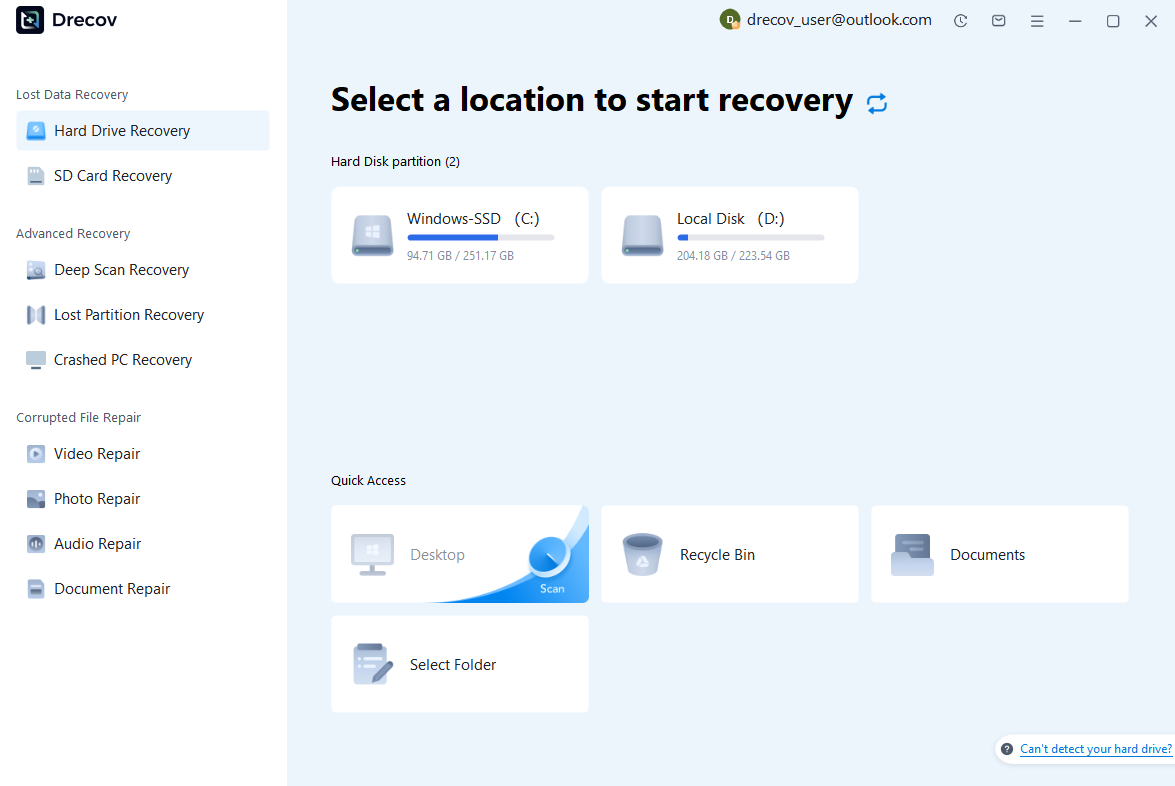
Step 1: Connect the Drive / USB)
Connect your device (SD card, HDD/SSD, or USB drive) to your computer and launch PandaOffice Drecov. Select the target device and start the scan. The software will perform a quick scan and deep scan to detect lost or deleted data.
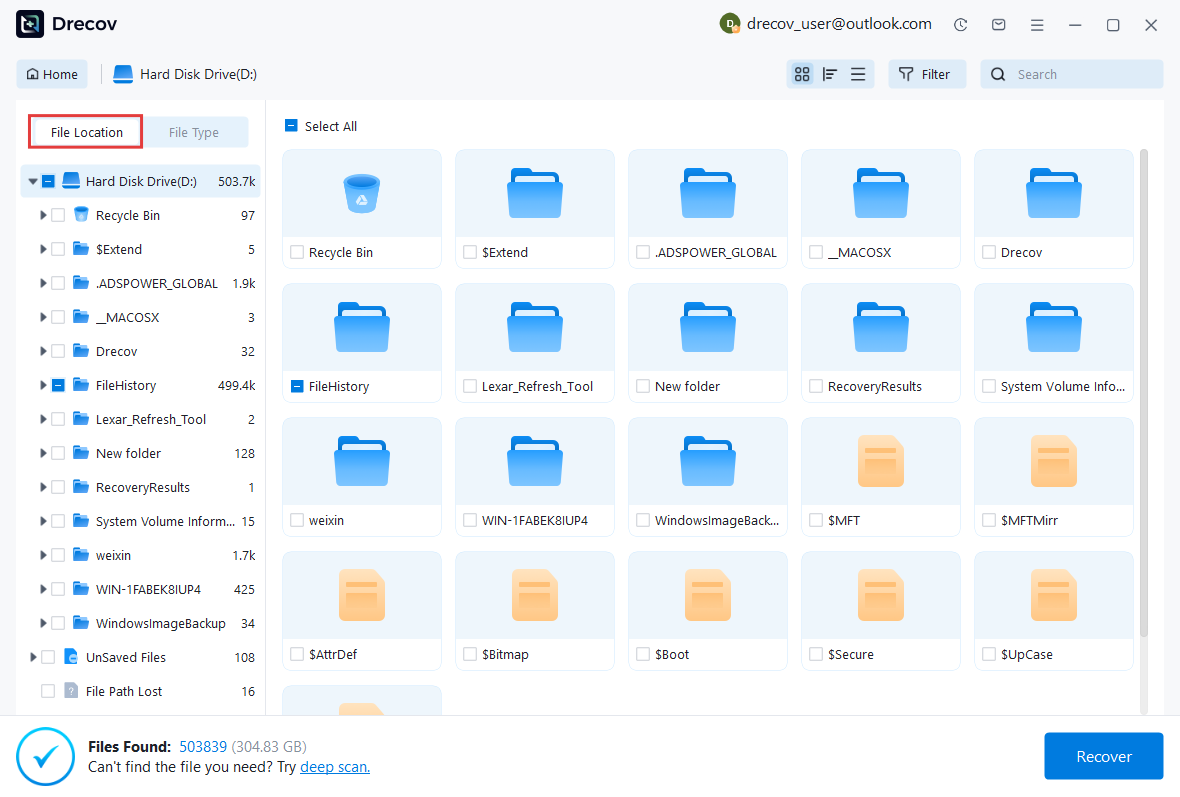
Step 2: Locate and Preview Lost Files
After scanning, browse the detected files and use the preview feature to check recoverable data. You can preview documents (Word, Excel, PDF), photos, and videos to ensure file integrity before recovery.
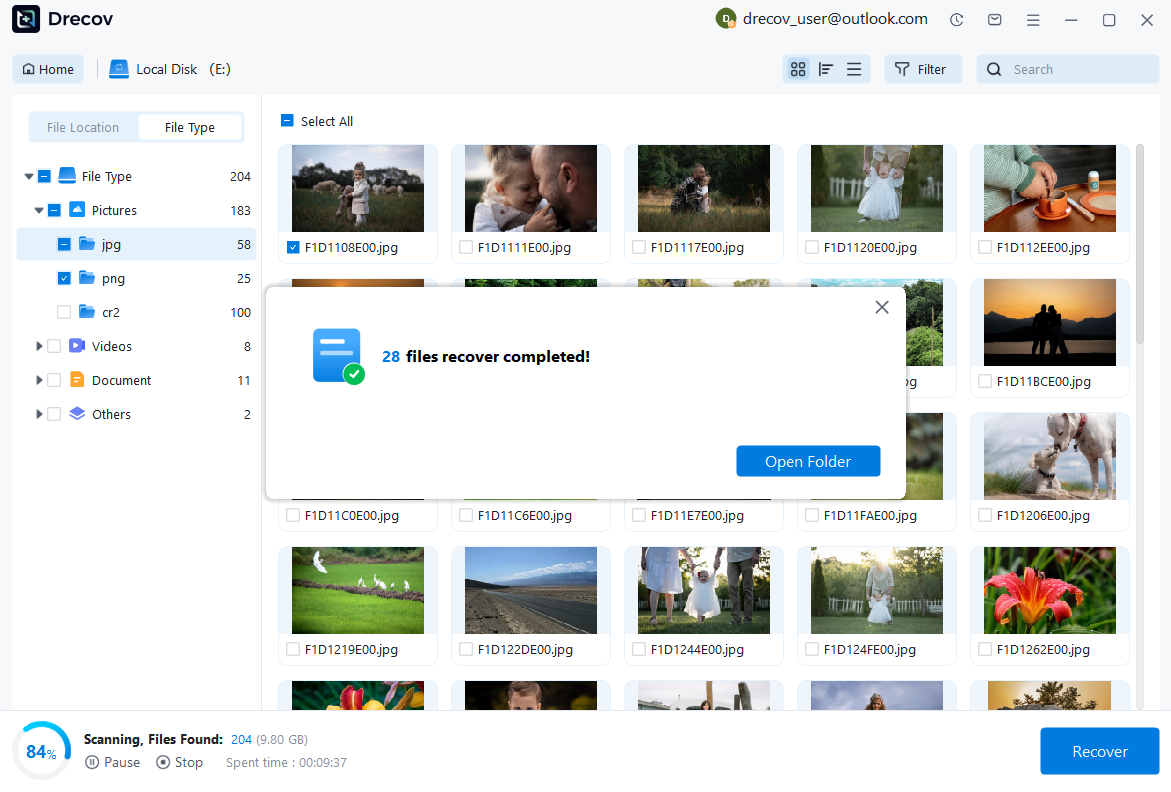
Step 3: Recover and Save to a New Location
Select the files you want to restore and click recover. Save all recovered data to a different drive or location (not the original device) to avoid overwriting lost data.
Why Choose PandaOffice Drecov Recovery Software?
PandaOffice Drecov offers a fast, secure, and user-friendly solution for recovering lost files across multiple scenarios. Whether you need email recovery, ZIP File Recovery, format data recovery, or help to recover deleted drafts Outlook, the software provides reliable recovery performance for both personal and business users.
PandaOffice Drecov supports recovery from formatted hard drives, SSDs, USB drives, SD cards, and external storage devices. Its advanced scanning engine can locate deleted archives, damaged ZIP files, lost Outlook drafts, and accidentally removed documents with high accuracy. For users searching for how to find deleted messages in Teams, PandaOffice Drecov can also help recover exported chat files, attachments, and related local cache data when available.
After recovery, test the file again. If the audio stream was damaged because of storage issues, a recovered version may play normally.
Test Environment
- Operating System: Windows 11 Pro
- Storage Device: 512GB NVMe SSD
- File Type: Deleted ISO Image (Windows Installer)
- Scan Mode: Deep Scan Recovery
- Result: ISO File Successfully Restored
Common Problems and FAQs About ISO Files
What Is an ISO Image File Used For?
An iso image file is commonly used for software distribution, operating system installation, system backups, and recovery tools. It preserves the exact structure of a disc in a single file.
How Do I Start an ISO File?
To start ISO file content, users typically mount it in Windows, burn it to a DVD, or create a bootable USB drive depending on the intended use.
Can I Open an ISO Image Without Software?
Yes. Modern Windows, macOS, and Linux systems can open or mount ISO files without third-party tools.
What Is the Difference Between ISO and ZIP Files?
A ZIP file compresses data, while an ISO image replicates an entire disc structure, including boot information and file systems.
Is a Windows 11 ARM ISO Different From Regular ISO?
Yes. A Windows 11 ARM ISO is designed specifically for ARM-based processors and may not work on traditional x86 hardware.
Conclusion: Why ISO Files Remain Essential Today
ISO files continue to play a critical role in modern computing. Whether used for software installation, system recovery, or virtualization, the iso image format provides a reliable and universal method for distributing complete digital media.
From creating bootable USB drives to managing iso recovery windows 10 scenarios, ISO files offer flexibility across different platforms and use cases. Their ability to preserve entire disc structures makes them invaluable for both everyday users and IT professionals.
Understanding how to open, create, and recover ISO files ensures users can handle installation media efficiently and respond to system issues effectively. With proper tools and safe handling practices, ISO images remain one of the most powerful file formats in modern computing.





